
Core operational differences between AI security vs. AI safety
Corporate governance requires a clear distinction between AI security and AI safety to manage technical risks effectively. While security focuses on protecting the system from external threats, safety ensures the system functions as intended without causing harm to users or society.
Misaligning these two domains often leads to vulnerabilities where a secure system remains prone to dangerous, unintended behaviors.
AI Security as a defensive perimeter
AI security functions as the shield for your machine learning infrastructure. It prioritizes the integrity, confidentiality, and availability of models and their training data. Key operational priorities include:
- Adversarial Robustness: Implementing defenses against adversarial attacks, such as evasion attacks where subtle input perturbations cause a model to misclassify data.
- Data Poisoning Prevention: Securing the training pipeline to prevent malicious actors from injecting corrupted data that creates backdoors or degrades model performance.
- Access Control: Managing API keys, model weights, and training datasets to prevent unauthorized extraction or intellectual property theft.
Security teams typically deploy tools like Adversarial Robustness Toolbox (ART) or Microsoft’s Counterfit to stress-test models against these specific threats. The goal is to harden the perimeter so that the model remains a reliable asset rather than a target, a core aspect of AI security posture management.
AI Safety as an alignment mandate
AI safety focuses on the internal logic and output quality of a model, regardless of malicious intent. It is an alignment challenge: ensuring the model’s objectives match the organization’s ethical standards and operational requirements. Core focus areas include:
- Bias Mitigation: Identifying and correcting skewed training data that leads to discriminatory outcomes in hiring, lending, or automated decision-making.
- Preventing Unintended Harm: Establishing guardrails to stop models from generating toxic, hallucinated, or dangerous content that violates safety policies.
- Interpretability and Explainability: Developing mechanisms to understand why a model reached a specific conclusion, which is critical for auditability in regulated sectors like finance and healthcare.
While security asks, “Is this system protected from hackers?” safety asks, “Is this system behaving predictably and ethically?” Strong governance frameworks must integrate both to ensure that a model is not only impenetrable to outside interference but also inherently safe for its intended deployment environment.
Risk assessment criteria for choosing between AI Security vs. AI Safety
Corporate governance requires a nuanced approach to AI risk management, as the objectives of these domains often diverge. Security focuses on protecting the system from malicious intent, such as data exfiltration or model inversion attacks.
Safety, conversely, addresses the prevention of unintended, harmful outcomes resulting from model hallucinations, bias, or misalignment with human intent. Organizations must evaluate their specific use cases against these distinct threat vectors to allocate resources effectively.
Prioritization of security for public-facing APIs and sensitive data
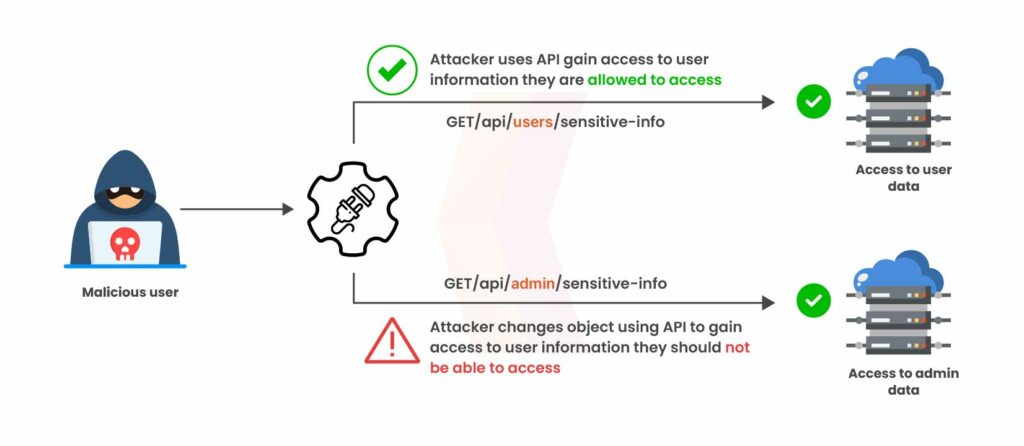
Security is the primary concern when an AI system acts as an entry point for external interaction or manages proprietary assets. For public-facing APIs, the risk of prompt injection and denial-of-service (DoS) attacks is immediate.
Implementing robust input sanitization and rate limiting is essential to prevent unauthorized access to backend infrastructure. In financial modeling, where models process high-value transactional data, the priority shifts to data integrity and confidentiality. Here, security frameworks like NIST’s Cybersecurity Framework (CSF) are critical to defend against AI security risks and issues, where attackers might attempt to manipulate model weights or extract sensitive training data through membership inference attacks.
Prioritization of safety for decision-support and autonomous systems
Safety becomes the governing priority when a system’s output directly influences human well-being or physical environments. In healthcare diagnostics, the risk is not necessarily a malicious hacker, but rather a model providing an incorrect clinical recommendation due to data drift or lack of robustness.
Governance in these sectors requires rigorous validation, verification, and explainability (XAI) to ensure the system behaves predictably under edge cases. For autonomous agents, safety protocols must include “human-in-the-loop” overrides and fail-safe mechanisms that trigger when the model encounters scenarios outside its training distribution. In these contexts, the focus is on minimizing the probability of catastrophic failure rather than merely hardening the system against external intrusion.
Technical implementation trade-offs in production
Integrating robust protection mechanisms into production AI pipelines creates a direct tension between operational efficiency and risk mitigation. Security protocols often require deep-packet inspection and input sanitization, while safety protocols demand real-time output filtering and behavioral monitoring.
Balancing these requirements necessitates architectural choices that prioritize either speed or strict adherence to AI security governance, privacy, and compliance.
Latency and throughput constraints
Deep-packet inspection (DPI) for AI security involves scanning incoming prompts for adversarial patterns, such as prompt injection or jailbreak attempts. Implementing this at the API gateway level adds a sequential processing step before the model even receives the request.
For high-frequency trading or real-time customer service bots, this latency overhead—often ranging from 50ms to 200ms—can degrade user experience significantly. Organizations must decide whether to perform these checks asynchronously, which risks exposure, or synchronously, which sacrifices throughput.
Real-time output filtering for AI safety introduces a different bottleneck. Systems like Llama Guard or custom moderation endpoints must evaluate the model’s generated tokens before they reach the end user. This process often requires a secondary inference pass, effectively doubling the latency per request.
To mitigate this, engineering teams often implement:
- Speculative Filtering: Running lightweight classifiers in parallel with the main model to flag non-compliant content before the full response is finalized.
- Caching Mechanisms: Storing safe, pre-validated responses for common queries to bypass the safety stack entirely for known-good inputs.
- Edge Deployment: Moving safety classifiers to the network edge to reduce the round-trip time between the model host and the moderation service.
The trade-off is clear: stricter safety and security controls increase the computational cost per token. Companies must weigh the financial impact of higher GPU utilization and increased infrastructure costs against the potential liability of a security breach or a brand-damaging safety failure, reflecting the broader AI security benefits and disadvantages.
Integrated governance models for overlapping threats
Corporate governance must reconcile the distinct objectives of AI security and AI safety to prevent operational silos. While security focuses on defending against adversarial attacks like prompt injection or data poisoning, safety addresses the unpredictable nature of model outputs, such as hallucinations or biased decision-making.
An integrated framework treats these as two sides of the same risk management coin, where a failure in security often triggers a catastrophic failure in safety.
Unified monitoring strategies
Effective oversight requires observability tools that ingest telemetry from both the infrastructure layer and the model inference layer. Security teams typically deploy AI security tools and platforms like Lakera Guard or Giskard to detect malicious input patterns, such as jailbreak attempts or PII leakage.
Simultaneously, safety teams monitor model drift and output toxicity using frameworks like DeepEval or Whylogs. By centralizing these data streams into a single Security Information and Event Management (SIEM) system, organizations can correlate events.
For instance, an unusual spike in high-entropy, nonsensical queries might indicate an ongoing adversarial attack (a security concern) that is simultaneously causing the model to produce unsafe, hallucinated outputs (a safety concern). Integrating these signals allows for automated circuit breakers that can throttle or halt model inference before the business impact escalates.
Governance committees should adopt a shared risk register that maps specific AI threats to business impact. This cross-functional approach ensures that when a model is updated, the security team evaluates the new attack surface while the safety team conducts red-teaming exercises to validate alignment with corporate ethics policies.
Resource allocation and team structure
Integrating AI security vs. AI safety into corporate governance requires distinct operational silos that eventually converge under a unified risk oversight committee. Security teams typically focus on the ‘CIA triad’—confidentiality, integrity, and availability—protecting model weights from exfiltration and preventing prompt injection attacks.
Conversely, safety teams prioritize alignment, robustness, and the mitigation of emergent behaviors that could lead to unintended societal or operational harm. Organizations should allocate budget based on the specific risk profile of their AI deployment, considering AI’s impact on security jobs and roles.
For instance, a firm deploying a customer-facing chatbot requires heavy investment in AI security engineer career guide principles to prevent jailbreaking and data leakage. A firm developing autonomous decision-making systems for logistics must prioritize AI safety to ensure the model adheres to strict ethical constraints and operational boundaries.
Operationalizing the cross-functional model
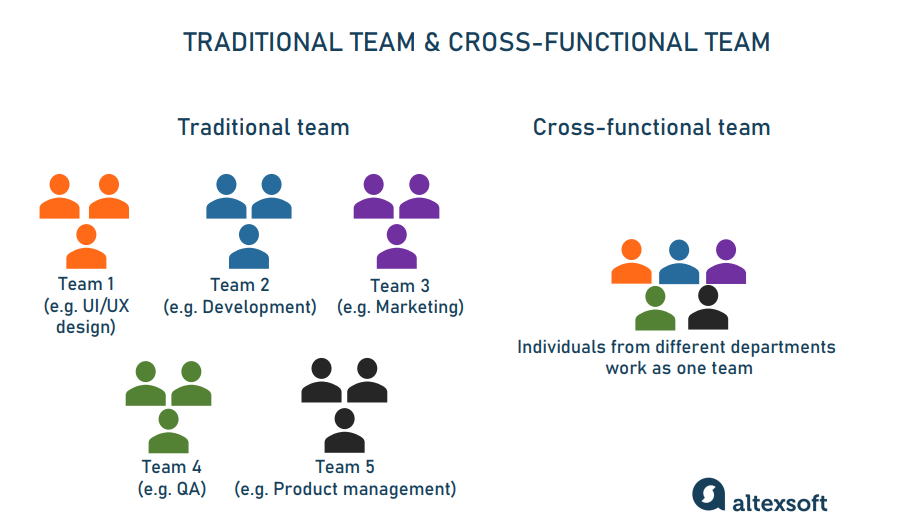
Effective governance demands a structured approach to staffing and resource distribution:
- Security Engineering: Dedicated personnel focused on adversarial testing, red-teaming, and implementing secure MLOps pipelines, often requiring specialized AI security courses and training. These teams utilize tools like Giskard or Microsoft’s Counterfit to stress-test models against known vulnerabilities.
- Safety and Alignment Oversight: A multidisciplinary team including ethicists, domain experts, and AI researchers who define the ‘guardrails’ for model behavior. This group is responsible for conducting impact assessments and ensuring the model’s outputs remain within the company’s risk appetite.
- Unified Compliance Office: A central body that bridges the gap between security and safety. This office ensures that technical controls (security) and policy constraints (safety) are mapped to regulatory requirements such as the EU AI Act or NIST AI RMF.
Avoid the common pitfall of merging these functions under a single technical lead. Security is inherently defensive and reactive, while safety is proactive and value-driven. By maintaining separate reporting lines that feed into a Chief Risk Officer or a dedicated AI Governance Board, corporations ensure that neither security hardening nor safety alignment is sacrificed for the sake of rapid deployment.
Frequently Asked Questions
Distinctions between AI security and AI safety
AI security focuses on protecting systems from adversarial attacks, such as data poisoning or model theft. AI safety focuses on ensuring that AI systems behave as intended and do not cause unintended harm, even in the absence of malicious intent.
Criteria for prioritizing AI safety over AI security
Companies should prioritize AI safety when deploying high-stakes models in critical infrastructure or healthcare where model hallucinations or alignment failures pose existential risks to users, regardless of external cyber threats.