
Core mechanisms of AI security
AI security functions by integrating technical controls directly into the machine learning lifecycle to protect model integrity, data confidentiality, and system availability. Enterprises must move beyond general cybersecurity protocols by addressing the specific attack surfaces introduced by neural networks and large-scale data ingestion pipelines.
Effective risk mitigation requires a defense-in-depth strategy that secures the model from the initial training phase through to production inference.
Adversarial machine learning defense
Adversarial attacks exploit the mathematical vulnerabilities of models to force incorrect outputs. Input manipulation, such as adding imperceptible noise to an image or text prompt, can cause a model to misclassify data or bypass safety filters. To mitigate this, organizations implement adversarial training, where models are intentionally exposed to malicious inputs during the development phase to improve robustness.
Model poisoning represents a more severe threat, occurring when an attacker compromises the training dataset to introduce backdoors or bias. Defending against this requires rigorous data provenance and anomaly detection during the ingestion process. By utilizing tools like the Adversarial Robustness Toolbox (ART), security teams can simulate evasion, extraction, and inference attacks to identify weak points before deployment.
Data privacy in model training
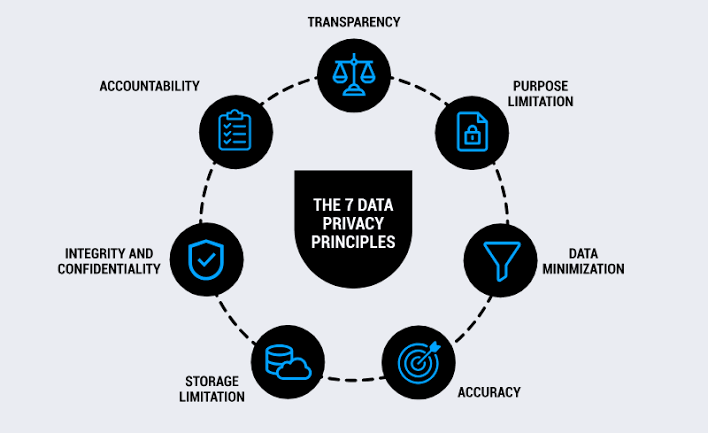
Protecting sensitive information within training sets is a critical component of AI security. Traditional encryption secures data at rest, but models often inadvertently memorize private information, leading to potential data leakage during inference. Differential privacy addresses this by injecting statistical noise into the training process, ensuring that the contribution of any single data point cannot be isolated or reconstructed.
Federated learning offers an alternative architecture for privacy-preserving AI. Instead of centralizing sensitive data, the model is trained locally on edge devices or distributed servers. Only the updated model weights—not the raw data—are transmitted to a central server for aggregation. This approach minimizes the risk of large-scale data breaches, as the primary dataset remains within the perimeter of the original data owner.
Threat vectors in modern AI security
Enterprises deploying artificial intelligence face an expanded attack surface that transcends traditional cybersecurity perimeters. Attackers now target the model weights, training data pipelines, and the inference logic itself, rather than just the underlying infrastructure. Understanding these vectors is essential for implementing robust AI security protocols.
Prompt injection and output manipulation
Prompt injection remains the most prevalent vulnerability for enterprises utilizing Large Language Models (LLMs). This occurs when malicious inputs override the system instructions, forcing the model to bypass safety guardrails or leak proprietary data.
For instance, a user might input a crafted sequence of tokens designed to force an internal customer service bot to reveal its system prompt or perform unauthorized actions, such as executing SQL queries via an integrated plugin. Output manipulation, or “jailbreaking,” involves crafting inputs that trick the model into generating harmful, biased, or unauthorized content. To mitigate this, security teams must implement input sanitization layers and use secondary “guardrail” models that scan both user prompts and model responses for malicious intent.
Supply chain vulnerabilities in open-source models
The reliance on open-source pre-trained models introduces significant supply chain risks. Malicious actors can distribute “poisoned” model weights on platforms like Hugging Face. If an enterprise downloads and deploys these weights without rigorous verification, they may inadvertently introduce backdoors into their production environment. These backdoors can remain dormant for months, only triggering under specific, hidden input conditions.
Furthermore, the dependency on third-party libraries—such as PyTorch, TensorFlow, or specialized vector database connectors—creates a complex web of vulnerabilities. Each dependency increases the risk of transitive software supply chain attacks. Enterprises must treat model weights as executable code. This requires maintaining a Software Bill of Materials (SBOM) for all AI components, performing cryptographic signing of model artifacts, and conducting isolated sandbox testing before integrating any third-party model into the enterprise stack.
Implementing AI security controls
Enterprise AI security requires a layered defense strategy that integrates directly into the machine learning lifecycle. Rather than treating security as an afterthought, organizations must embed controls within the CI/CD pipeline to ensure that models remain resilient against adversarial attacks and data leakage.
Automated monitoring and anomaly detection
Real-time observability is the primary defense against model drift and prompt injection attacks. Security teams should deploy specialized tools such as Arize AI or Fiddler AI to monitor model inputs and outputs for statistical deviations. These platforms track performance metrics, identifying when a model begins providing inaccurate or biased results due to data poisoning or shifts in production data distributions.
Furthermore, implementing automated monitoring for malicious queries is essential. By integrating tools like Lakera Guard or Giskard, developers can intercept prompts designed to bypass safety filters—often referred to as jailbreaking. These systems analyze incoming requests against a baseline of expected behavior, automatically flagging or blocking inputs that exhibit patterns associated with prompt injection, PII exfiltration, or unauthorized code execution.
Access control and governance policies
Strict access control prevents unauthorized modification of training datasets and model weights. Organizations should implement Role-Based Access Control (RBAC) specifically tailored for the AI stack, ensuring that only authorized data scientists have write access to training environments, while production environments remain read-only for inference tasks.
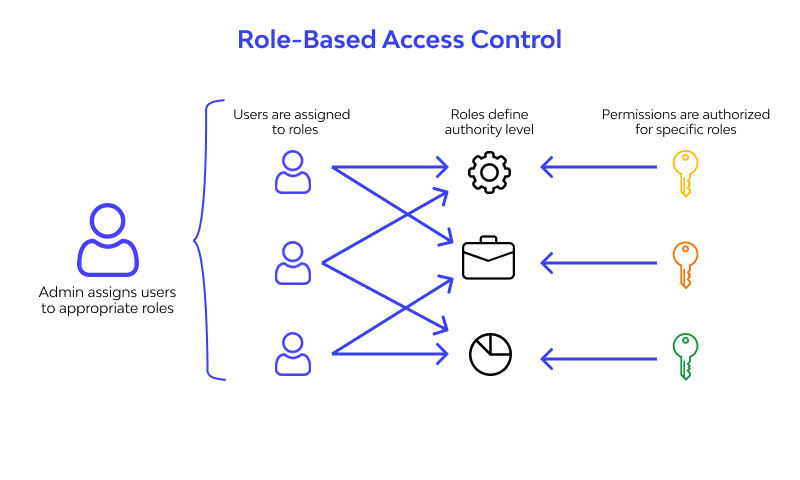
Governance policies must also mandate the use of secure model registries, such as MLflow or Amazon SageMaker Model Registry, to maintain a clear audit trail. Every version of a model should be cryptographically signed, documenting who trained it, what data was used, and the security scan results from the training phase. By enforcing these granular permissions, enterprises minimize the risk of internal threats and accidental configuration errors.
Regulatory compliance and AI security standards
Enterprises must reconcile rapid AI deployment with an increasingly complex web of global regulations. Compliance is no longer a peripheral legal concern but a core component of AI security, requiring organizations to map technical controls directly to mandates like the EU AI Act, the California Consumer Privacy Act (CCPA), and emerging sector-specific guidelines. Failure to align security protocols with these standards risks significant financial penalties and operational shutdowns.
Alignment with NIST AI risk management framework
The NIST AI Risk Management Framework (AI RMF) provides a structured methodology for enterprises to audit their internal AI security posture. Implementing this framework involves four core functions: Govern, Map, Measure, and Manage. To apply these standards effectively, security teams should follow these practical steps:
- Govern: Establish an AI governance committee that defines risk appetite. This group must document accountability for model performance and security failures, ensuring that AI security is integrated into the broader enterprise risk management strategy.
- Map: Identify the specific context of AI use cases. This involves mapping data flows, identifying potential adversarial attack surfaces, and documenting the intended purpose of the model to understand where security vulnerabilities are most likely to manifest.
- Measure: Utilize quantitative metrics to assess risk. Instead of qualitative assessments, implement automated testing for model robustness, bias detection, and data leakage. Tools like the NIST AI RMF Playbook offer specific test cases for evaluating system reliability against known threat vectors.
- Manage: Prioritize risks based on impact. Enterprises should maintain a living risk register that tracks the effectiveness of security controls over time. If a model drifts or a new vulnerability is discovered, the management function triggers a re-evaluation of the security controls applied during the development phase.
By adopting the NIST framework, organizations move away from ad-hoc security patches toward a defensible, audit-ready posture. This alignment ensures that security teams can demonstrate due diligence to regulators while maintaining the agility required for modern AI operations.
Limitations of current AI security tools
While enterprise AI security frameworks provide a necessary foundation, current defensive tools often struggle with the speed and complexity of modern large language models (LLMs). Many existing solutions rely on static rule-based filtering or signature-based detection, which are insufficient against prompt injection attacks or adversarial perturbations that evolve faster than security patches can be deployed.
These tools often fail to distinguish between legitimate complex queries and malicious attempts to bypass safety guardrails, leading to either high false-positive rates that disrupt workflows or dangerous false negatives that expose sensitive data.
Balancing latency with security inspection
Integrating real-time security inspection into the AI inference pipeline introduces a significant performance trade-off. Every input must be sanitized and every output scanned for data leakage, which adds milliseconds—or sometimes seconds—to the total response time.
For high-frequency enterprise applications, such as automated customer support bots or real-time financial trading assistants, this latency can render the application unusable. Security teams must choose between deep, multi-layered inspection that guarantees safety but degrades user experience, and lightweight, heuristic-based checks that offer lower latency but higher risk exposure.
To mitigate these performance bottlenecks, many organizations are adopting asynchronous scanning architectures. Instead of blocking the initial request, the system processes the query while running parallel security checks. If a violation is detected, the system immediately terminates the session or redacts the output. This approach requires robust middleware capable of handling stateful monitoring without creating a single point of failure. Furthermore, the industry is shifting toward model-based security, where smaller, specialized “guardrail” models are trained specifically to detect malicious patterns.
Frequently Asked Questions
Primary risks addressed by AI security
AI security focuses on mitigating risks such as prompt injection, model inversion attacks, training data poisoning, and unauthorized access to sensitive data processed by large language models.
Distinctions between AI security and traditional IT security
While traditional security protects infrastructure and data at rest, AI security specifically addresses the unique vulnerabilities of machine learning models, including adversarial inputs that manipulate model outputs.
- Strategic trade-offs regarding the benefits and disadvantages of AI in security
- Systematic audit procedures for addressing AI security risks and issues
- Real-world performance analysis of AI security cameras: guide and best picks
- AI security engineer career guide: Adapting to model poisoning and adversarial threats