
The rising demand for specialized AI security expertise
This AI Security Engineer Career Guide provides the roadmap for professionals transitioning into a mission-critical role that protects organizations from adversarial inputs, prompt injection, and data poisoning. As enterprises integrate generative AI into production, they face a unique attack surface that traditional cybersecurity frameworks fail to address, highlighting the AI security benefits and disadvantages.
Unlike standard software vulnerabilities, AI systems are susceptible to AI security risks and issues like adversarial inputs, prompt injection, and data poisoning. This requires a specialized skill set that blends data science with offensive security.
Companies are currently struggling to bridge the gap between AI development and security operations. Developers often prioritize latency and model accuracy, while security teams lack the technical depth to interpret model weights or training datasets. This disconnect creates a massive market opportunity for professionals who can audit model integrity and implement robust guardrails.
According to recent industry reports, organizations are actively seeking engineers capable of performing red-teaming exercises specifically designed to bypass alignment training and extract sensitive training data.
To succeed in this field, you must move beyond generic IT security certifications. The current landscape demands proficiency in the following technical domains:
- Adversarial Machine Learning: Understanding how to manipulate input data to force model misclassification or bypass safety filters.
- Model Supply Chain Security: Securing the provenance of datasets and pre-trained weights to prevent backdoors during the fine-tuning process.
- Prompt Engineering for Defense: Designing system-level prompts that resist jailbreaking attempts and unauthorized instruction overrides.
- Differential Privacy Implementation: Applying mathematical techniques to ensure that training data cannot be reconstructed from model outputs.
The demand is not merely for generalists; it is for practitioners who can quantify the risk of model inversion attacks and deploy real-time monitoring tools like Giskard or Fiddler to detect drift and malicious behavior. As regulatory bodies like the EU AI Act begin to mandate transparency and risk management, the AI governance, privacy, and compliance aspects have become the primary line of defense against both operational failure and catastrophic data leakage.
Essential skills and technical foundations for an AI security engineer career
Transitioning into this specialized field requires a dual-competency approach. You must bridge the gap between traditional software security and the non-deterministic nature of machine learning models. A successful AI security engineer operates at the intersection of data science and defensive security architecture.
Mastering machine learning fundamentals and model vulnerabilities
You cannot secure what you do not understand. An AI security engineer must grasp the mathematical foundations of neural networks, including backpropagation, loss functions, and gradient descent. This knowledge is critical for identifying how an attacker might manipulate model behavior.
Specifically, you must master the following vulnerability vectors:
- Data Poisoning: Understanding how malicious training data can be injected to create backdoors or degrade model accuracy.
- Model Inversion and Membership Inference: Learning how to detect and prevent unauthorized extraction of training data or sensitive attributes from a trained model.
- Adversarial Examples: Studying how subtle, human-imperceptible perturbations to input data can cause misclassification in computer vision or natural language processing models.
Tools like the Adversarial Robustness Toolbox (ART) or CleverHans are industry standards for testing model resilience against these specific attacks.
Core cybersecurity principles in an AI context
Traditional security frameworks remain the bedrock of AI infrastructure. However, their application shifts when protecting AI pipelines. You must adapt standard security domains to the unique lifecycle of AI development.
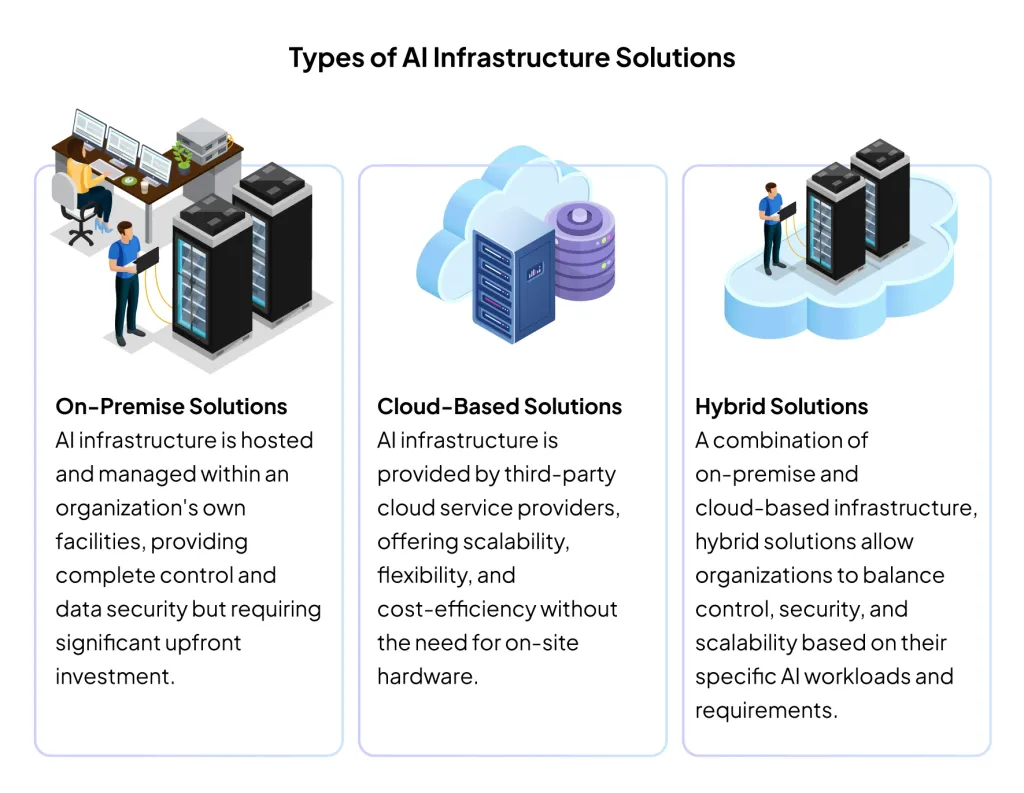
Network Security and Access Control: AI models often rely on complex data pipelines. You must secure the data ingestion layer, ensuring that training datasets are encrypted and access-controlled. This prevents unauthorized tampering with the supply chain of your model.
Incident Response for AI: Traditional incident response plans focus on unauthorized access or data exfiltration. In an AI context, you must develop playbooks for model drift and anomalous output detection.
If a model begins producing biased or harmful content, your response should involve rapid rollback to a known-safe version, retraining on sanitized datasets, and auditing the inference logs to identify the specific input that triggered the failure.
Secure Software Development Lifecycle (SSDLC): Integrating security into the MLOps pipeline is mandatory. This includes automated scanning of container images for ML libraries and implementing static analysis tools that specifically flag insecure model configurations or hardcoded API keys in Jupyter notebooks.
Navigating the regulatory maze: compliance as a core competency
Modern AI security engineers must move beyond technical hardening to become experts in the regulatory landscape. As organizations face increasing scrutiny over algorithmic transparency and data privacy, compliance is no longer a legal department silo; it is a fundamental pillar of secure AI architecture. Integrating regulatory requirements into the development lifecycle prevents costly retrofitting and mitigates the risk of non-compliance penalties.
Understanding global AI governance frameworks
The regulatory environment is fragmented, requiring engineers to understand overlapping mandates. The EU AI Act stands as the most comprehensive legislative effort, categorizing AI systems by risk level and imposing strict governance, transparency, and human oversight requirements.
In the United States, the NIST AI Risk Management Framework (AI RMF) provides a voluntary but increasingly industry-standard approach to mapping, measuring, and managing AI risks. Meanwhile, China’s Cyberspace Administration (CAC) regulations focus heavily on content control and algorithmic registration.
Security engineers must track these frameworks to ensure that model deployment strategies—such as data residency requirements and model auditability—align with regional legal obligations.
Practical implications for secure AI system design
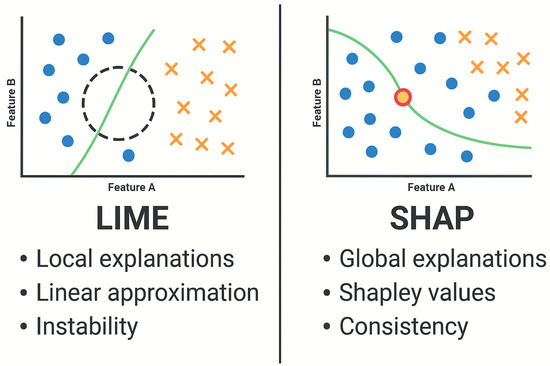
Regulatory compliance dictates specific technical constraints that influence system design. For instance, the requirement for ‘explainability’ under GDPR and the EU AI Act necessitates the implementation of model interpretability tools like SHAP or LIME during the testing phase.
Engineers must design systems that maintain an immutable audit trail of training data provenance and model decision-making processes to satisfy regulatory transparency mandates. For those monitoring physical environments, integrating AI security cameras: guide and best picks can provide an additional layer of physical oversight for server rooms and data centers.
Furthermore, privacy-preserving technologies are now mandatory rather than optional. Implementing differential privacy during the training phase or utilizing federated learning architectures allows organizations to adhere to data minimization principles while still extracting value from sensitive datasets.
Security engineers must also build automated ‘kill switches’ and monitoring systems that can demonstrate compliance with human-in-the-loop requirements, ensuring that automated decisions can be overridden or audited in real-time. By embedding these controls directly into the CI/CD pipeline, engineers transform compliance from a bureaucratic hurdle into a robust security feature that protects both the organization and the end-user.
Confronting advanced threats: adversarial AI and data integrity challenges
As an AI security engineer, your primary objective is to protect models from manipulation that standard cybersecurity tools cannot detect. Unlike traditional software, AI systems are vulnerable to inputs designed to deceive the model’s decision-making process, often referred to as adversarial attacks.
Detection and mitigation strategies for adversarial attacks
Adversarial examples involve subtle, often invisible, perturbations added to input data that cause a model to misclassify objects or perform unauthorized actions. To defend against these, you must implement robust adversarial training, where models are retrained on datasets containing known adversarial samples.
Tools like CleverHans and the IBM Adversarial Robustness Toolbox (ART) are industry standards for benchmarking model resilience against evasion attacks.
Beyond training, you should deploy input sanitization layers that detect anomalous data distributions before they reach the inference engine. Monitoring for “model drift” is also critical; if a model’s confidence scores drop significantly on specific data clusters, it may indicate an ongoing evasion attempt rather than natural data evolution.
Securing the AI/ML pipeline from data to deployment
Securing an AI system requires a holistic approach that treats the entire ML lifecycle as a potential attack surface. Security must be integrated into the CI/CD pipeline, often referred to as MLOps security.
- Data Poisoning Prevention: Implement strict data lineage tracking. Use cryptographic hashing to verify training datasets and perform outlier detection to identify malicious samples injected into the training pool.
- Model Integrity: During the training phase, ensure the environment is isolated. Use tools like Sigstore to sign model artifacts, ensuring that the model deployed in production is identical to the one validated in the sandbox.
- Deployment and Inference: Apply the principle of least privilege to model APIs. Use rate limiting to prevent model inversion attacks, where an attacker queries the model repeatedly to reconstruct sensitive training data.
- Continuous Monitoring: Deploy automated logging for all inference requests. Analyze these logs for patterns consistent with prompt injection or model extraction, ensuring that your security posture evolves alongside the model’s performance.
By focusing on these specific technical layers, you move beyond reactive patching and build a resilient architecture capable of withstanding sophisticated adversarial threats.
Strategic career progression in AI security engineering
Advancing as an AI security engineer requires a shift from traditional cybersecurity foundations toward specialized knowledge of machine learning lifecycles. Professionals typically begin by securing data pipelines before moving into model-specific defense mechanisms. Success in this field relies on understanding how model weights, training data, and inference APIs interact with standard network security protocols.
Specializations: from MLOps security to AI red teaming
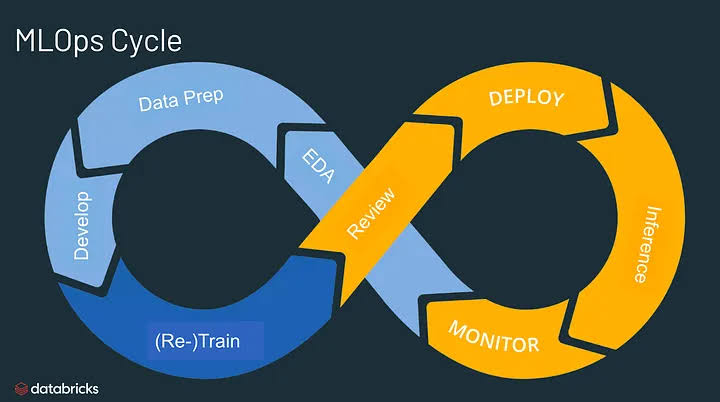
The field is branching into distinct technical niches, allowing engineers to align their career path with specific interests:
- MLOps Security: Focuses on the integrity of the CI/CD pipeline for machine learning. Engineers in this role implement automated scanning for malicious dependencies in model repositories like Hugging Face and ensure secure model deployment in production environments.
- Privacy-Preserving AI: Centers on techniques such as differential privacy, homomorphic encryption, and federated learning. This specialization is critical for industries handling sensitive PII (Personally Identifiable Information) where data must remain private during training.
- AI Red Teaming: An offensive security role involving adversarial testing. Practitioners simulate prompt injection, model inversion, and membership inference attacks to identify vulnerabilities before models are released to the public.
Continuous learning and professional development
The rapid emergence of new attack vectors, such as indirect prompt injection and supply chain poisoning, necessitates a rigorous approach to skill maintenance. Relying on static knowledge is insufficient; practitioners must actively monitor research papers from venues like NeurIPS or ICLR to understand emerging threats, and consider specialized AI security courses and training.
Practical professional development should include:
- Hands-on Certifications: Pursuing specialized training such as the MITRE ATLAS framework certification or cloud-native security credentials (e.g., AWS Certified Security) provides a baseline for technical credibility.
- Capture-the-Flag (CTF) Participation: Engaging in AI-specific CTFs and bug bounty programs hosted by platforms like Bugcrowd or HackerOne allows engineers to practice exploiting LLM vulnerabilities in a controlled setting.
- Community Engagement: Contributing to open-source security tools, such as the OWASP Top 10 for LLMs, helps build a professional reputation while keeping the engineer at the forefront of industry standards.
Transitioning into this career path is less about mastering every tool and more about developing a deep intuition for how AI systems fail under pressure.
Future trajectory of AI security: anticipating evolving demands
The role of an AI security engineer is moving beyond simple perimeter defense toward proactive model resilience. As organizations integrate Large Language Models (LLMs) into core business workflows, the focus is shifting from protecting data at rest to securing the inference pipeline itself.
You must prepare for a landscape where automated red-teaming and adversarial robustness testing become standard operational requirements rather than specialized research tasks.
Emerging technical competencies for long-term growth
To remain competitive in this field, professionals need to master specific technical domains that go beyond traditional cybersecurity:
- Adversarial Machine Learning: Understanding the mechanics of prompt injection, data poisoning, and model inversion is critical. You need hands-on experience with frameworks like Adversarial Robustness Toolbox (ART) to simulate attacks against your own production models.
- Model Observability: Implementing monitoring tools such as Arize AI or WhyLabs allows you to detect drift and anomalous input patterns in real-time. Security is no longer just about access control; it is about detecting when a model’s output deviates from its intended safety alignment.
- Privacy-Preserving Computation: As regulations tighten, proficiency in Differential Privacy and Federated Learning will be essential. These techniques allow for model training without exposing sensitive raw data, a key requirement for enterprise-grade AI deployments.
Strategic alignment with enterprise risk management
The AI Security Engineer Career Guide emphasizes that technical skill must be paired with risk management expertise. You will increasingly work alongside legal and compliance teams to ensure that AI implementations meet frameworks like the NIST AI Risk Management Framework.
Understanding how to quantify the financial impact of a model compromise—such as intellectual property theft or brand damage from biased outputs—will distinguish senior engineers from entry-level practitioners.
The demand for this role will likely bifurcate into two distinct paths: the deep-tech researcher focused on novel defense mechanisms and the security architect focused on integrating AI into secure cloud environments. Regardless of the path, the ability to translate complex model vulnerabilities into actionable business risks will define the top tier of the profession over the next decade.
Frequently Asked Questions
What is the primary focus of an AI Security Engineer Career Guide?
This guide focuses on the intersection of data science and cybersecurity, specifically addressing how to protect machine learning models from adversarial attacks like prompt injection, data poisoning, and model inversion.
Do I need a PhD to pursue an AI security career?
No, a PhD is not strictly required. While deep mathematical knowledge is helpful, many professionals enter the field by combining traditional cybersecurity experience with hands-on proficiency in ML frameworks like PyTorch or TensorFlow and adversarial testing tools.How does AI security differ from traditional network security?
Traditional security focuses on protecting infrastructure and software vulnerabilities, whereas AI security focuses on the integrity of the data pipeline, the robustness of model weights, and the prevention of malicious inputs designed to manipulate model outputs.
What are the most important tools for an AI security engineer?
Essential tools include the Adversarial Robustness Toolbox (ART), CleverHans for testing model resilience, and observability platforms like Arize AI or Fiddler for monitoring model drift and anomalous behavior.