
Mapping AI security frameworks and controls to existing infrastructure
Integrating AI security frameworks and controls requires mapping abstract NIST AI RMF guidelines directly onto your existing CI/CD pipelines and cloud architecture. By aligning these standards with your specific technical stack, you transform high-level compliance goals into actionable security gates that prevent unauthorized model manipulation and data leakage.
Inventorying AI assets and model dependencies
Start by creating a centralized registry of every LLM, API, and training dataset currently in use across your organization. Use automated discovery tools like Snyk or Wiz to scan for shadow AI usage, ensuring every model endpoint is documented with its associated version, hosting environment, and data sensitivity level.
Selecting appropriate control layers
Effective defense relies on a layered strategy that separates input sanitization from model access. Implement input filtering at the API gateway level, utilize output moderation for PII redaction, and enforce strict identity-based access controls (RBAC) to ensure only authorized services can trigger model inference.

Implementing input validation and prompt injection defenses
Hardening the interface between users and AI models prevents malicious actors from bypassing safety guardrails through prompt injection. By treating every user input as untrusted data, you mitigate AI security risks and issues associated with indirect prompt injection and jailbreaking attempts.
Deploying automated prompt screening mechanisms
Integrate regex-based filters to block known attack patterns and deploy secondary LLM checks to validate user intent. Modern AI security tools like Guardrails AI or NeMo Guardrails allow you to define custom schemas that reject inputs containing prohibited topics or structural anomalies before they reach your primary model.
Establishing rate limiting for model endpoints
Prevent resource exhaustion and automated scraping by enforcing strict rate limits on all model endpoints. Configure your API management layer to throttle requests based on user identity, preventing attackers from flooding your model with high-volume queries designed to extract training data or trigger denial-of-service conditions.
Securing model training and fine-tuning pipelines
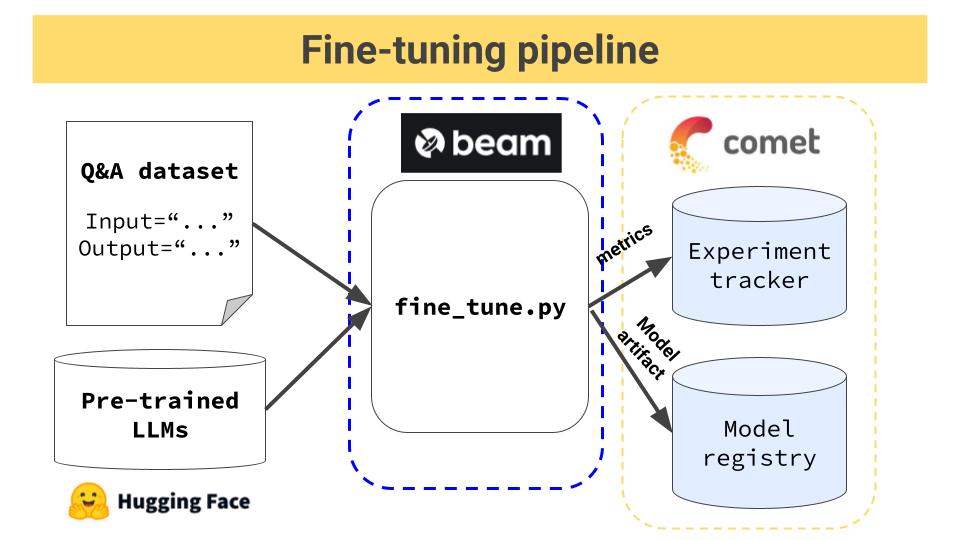
Protecting the integrity of your training data is critical to preventing model poisoning and adversarial manipulation. Secure your pipeline by implementing rigorous data provenance and strict access controls over model artifacts.
Data provenance and lineage tracking
Verify the source and cleanliness of every dataset before ingestion into your training environment. Use tools like DVC (Data Version Control) to maintain a complete audit trail of data lineage, ensuring that every model version can be traced back to its original, verified training source.
Access control for model weights and checkpoints
Restrict read and write access to sensitive model weights and training checkpoints using hardware security modules (HSMs) or encrypted cloud storage buckets. Limit access to these artifacts to a minimal set of authorized service accounts to prevent unauthorized exfiltration or tampering.
Monitoring and auditing AI model behavior
Continuous monitoring detects drift and unauthorized usage, providing the visibility needed to maintain a secure AI posture. Real-time telemetry allows your security team to identify anomalous output patterns that signal potential compromise.
Configuring real-time telemetry for model inference
Track latency, error rates, and anomalous output patterns using observability platforms like Datadog or Prometheus. Set alerts for spikes in specific token usage or unexpected shifts in model response distributions, which often serve as early indicators of adversarial probing.
Automating incident response for AI-specific threats
Define clear triggers for model suspension when security thresholds are breached, such as a high frequency of rejected inputs or detected PII leakage. Automate the isolation of compromised model instances to prevent further exploitation while your team investigates the incident.
Compliance and governance documentation workflows
Maintaining audit trails for regulatory requirements like the EU AI Act requires standardized documentation for every model deployment. Repeatable workflows ensure that your AI security governance, privacy, and compliance remains consistent as your AI portfolio scales.
Standardizing model cards and impact assessments
Create standardized model cards that detail training data, intended use cases, and known limitations for every model in production. Pair these with formal impact assessments to document your risk management process, ensuring full transparency for internal stakeholders and external auditors.
Advanced Strategies for AI Security Frameworks and Controls
Beyond basic perimeter defense, organizations must adopt a ‘Zero Trust’ approach to AI. This involves verifying the integrity of the model weights themselves, often through cryptographic signing, to ensure that the model running in production has not been tampered with post-deployment. Furthermore, implementing ‘Red Teaming’ exercises—where security teams simulate adversarial attacks against the model—is essential to uncover edge-case vulnerabilities that automated scanners might miss. By continuously updating your threat models based on these simulations, you ensure that your security posture evolves alongside the rapidly changing landscape of adversarial AI techniques.
Frequently Asked Questions
Definition of AI security
AI security is the practice of protecting artificial intelligence systems from adversarial attacks, data poisoning, unauthorized access, and model manipulation.
Pathways to becoming an AI security engineer
To become an AI security engineer, build a strong foundation in cybersecurity, machine learning operations (MLOps), and cloud infrastructure, while gaining familiarity with AI-specific threats like prompt injection.
Role of AI in modern cybersecurity
AI enhances cybersecurity by automating threat detection, analyzing massive datasets for anomalies in real-time, and accelerating incident response times.
Core benefits of AI in security operations
Benefits include faster threat identification, reduced false positives, automated vulnerability patching, and the ability to detect complex, multi-stage attack patterns.
Primary risks and disadvantages of AI in security
Primary risks and disadvantages include the risk of adversarial attacks against the AI itself, high computational costs, and the potential for AI models to be exploited by attackers.
Recommended AI security certifications
Currently, there is no single ‘best’ certification, but industry-recognized best AI security certifications from organizations like ISACA or specialized AI safety training programs are highly valued.