
The trade-off between automated efficiency and human intuition
Understanding AI’s impact on security jobs is essential for professionals navigating the shift from manual log review to the orchestration of automated systems. While machine learning handles high-volume, low-complexity tasks in security operations centers (SOCs), it simultaneously elevates the requirement for high-level cognitive oversight. Security roles are evolving from repetitive monitoring toward the validation and strategic management of automated outputs.
Operational speed versus contextual judgment
AI-driven security platforms, such as CrowdStrike Falcon or Palo Alto Networks Cortex XSOAR, process millions of events per second to identify anomalies. These systems excel at pattern recognition, effectively filtering out the noise of routine network traffic. By automating the initial triage of alerts, AI reduces the mean time to detect (MTTD) and mean time to respond (MTTR) significantly. However, these tools operate within defined parameters and often struggle with the ambiguity of sophisticated, human-led social engineering attacks.

Consider a spear-phishing campaign that leverages legitimate business communication styles. An AI model might flag the email as low-risk because the sender’s domain is authenticated and the attachment is a standard file format. A human analyst, however, can identify the subtle disconnect between the sender’s tone and the unusual request for sensitive credentials. This contextual judgment remains the primary barrier for current AI systems. The shift in security jobs is therefore not toward replacement, but toward a division of labor: machines handle the scale, while humans handle the nuance.
Professionals who adapt to this environment are moving away from repetitive ticket closing and toward threat hunting and incident response strategy. The value proposition for a security analyst now lies in their ability to tune AI models, interpret false positives, and investigate the outliers that automated systems miss. This transition requires a deeper understanding of data science principles alongside traditional network security expertise, as the ability to audit an AI’s decision-making process becomes a critical skill for modern security teams.
Evaluating AI’s impact on security jobs in specialized sectors
The integration of machine learning into security operations centers (SOCs) is fundamentally altering the professional landscape. While automation handles repetitive tasks, it simultaneously creates a vacuum for high-level analytical roles that require human judgment, ethical oversight, and strategic decision-making.
Automation in Tier 1 SOC roles: Assessing the decline of entry-level triage positions due to AI-driven alert suppression
Traditionally, Tier 1 analysts spent the majority of their shifts manually triaging thousands of alerts, most of which were false positives. AI-driven platforms, such as Darktrace or Palo Alto Networks’ Cortex XSOAR, now automate this triage process by correlating telemetry data and suppressing noise before it reaches a human operator. This shift has led to a measurable reduction in the need for junior staff dedicated solely to alert monitoring.
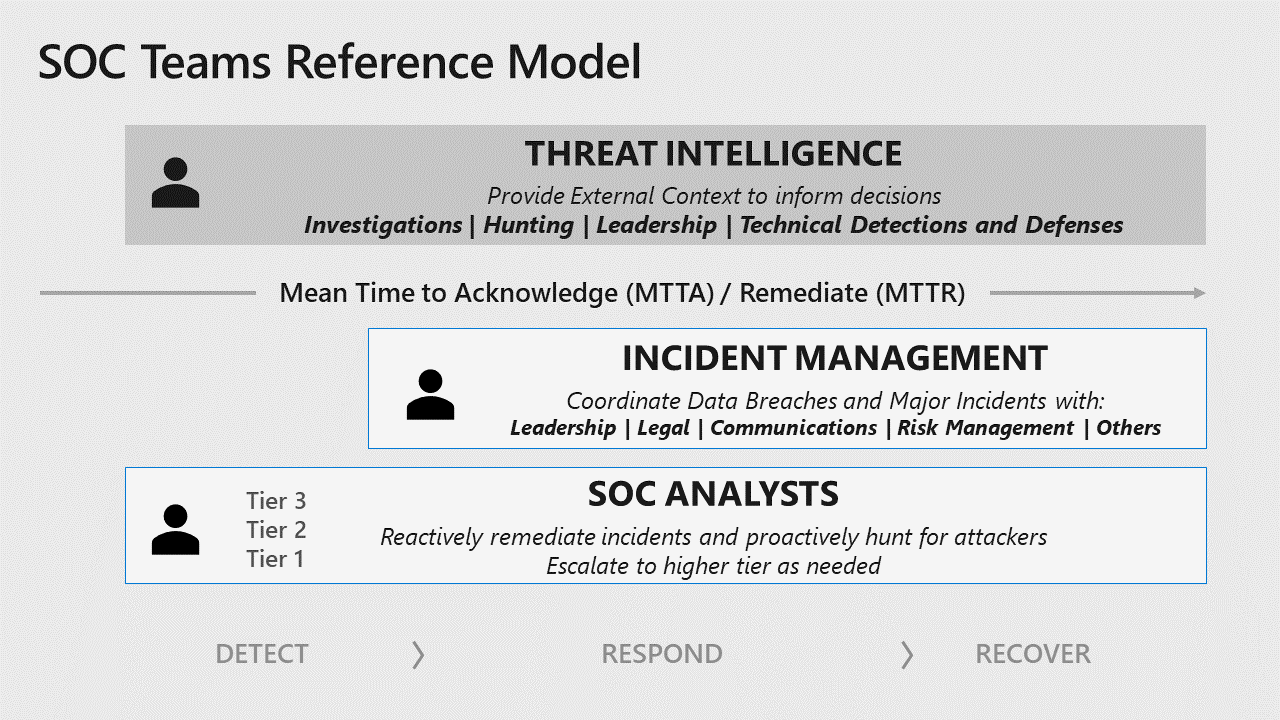
The consequence is a higher barrier to entry for newcomers. Organizations are moving away from hiring entry-level analysts to perform simple log reviews. Instead, they prioritize candidates who possess foundational knowledge in scripting, cloud architecture, and incident response orchestration. Professionals who previously relied on manual triage experience must now pivot toward threat hunting or platform engineering to remain relevant in a market that prioritizes automated detection efficiency.
Growth in AI security governance and compliance: Identifying the surge in demand for experts who can audit AI model behavior and data privacy
As enterprises deploy Large Language Models (LLMs) and automated decision engines, the demand for AI security governance has eclipsed traditional IT auditing roles. Organizations now face significant regulatory pressure, such as the EU AI Act, which requires rigorous documentation of model provenance, bias mitigation, and data handling practices.
Security professionals are increasingly transitioning into roles focused on AI Red Teaming and Model Security. These experts are tasked with testing models for prompt injection vulnerabilities, data leakage, and adversarial manipulation. Unlike standard compliance roles, this specialty requires a deep understanding of both cybersecurity frameworks and the technical architecture of neural networks. Professionals who can bridge the gap between technical model auditing and corporate risk management are currently seeing a premium in compensation, as companies struggle to find talent capable of securing their proprietary AI deployments against emerging attack vectors.
Skill set requirements for the AI-integrated workforce
The integration of artificial intelligence into security operations centers (SOCs) shifts the professional requirement from manual monitoring to high-level system orchestration. Security analysts are no longer expected to manually parse every log entry; instead, they must possess the ability to validate AI-generated insights and manage the underlying logic of automated security pipelines. Proficiency in data literacy, cloud architecture, and understanding the adversarial manipulation of machine learning models has become the new baseline for job security.
Transitioning from manual scripting to prompt engineering and model tuning
The traditional reliance on Bash or Python scripts for repetitive log analysis is being supplanted by natural language interfaces and model-specific tuning. To remain competitive, security professionals must pivot their technical focus toward the following practical steps:
- Mastering Contextual Prompting: Security teams are now using Large Language Models (LLMs) to query SIEM data. Professionals must learn how to structure prompts that minimize hallucinations and ensure the AI focuses on specific indicators of compromise (IoCs) rather than generic patterns.
- Model Fine-Tuning: Rather than building security tools from scratch, analysts should learn to fine-tune existing open-source models using proprietary threat intelligence data. This involves understanding the basics of vector databases and retrieval-augmented generation (RAG) to ensure the AI provides context-aware alerts based on the organization’s specific network topology.
- Adversarial ML Awareness: Understanding how attackers poison training data or bypass AI filters is critical. Professionals should dedicate time to studying frameworks like MITRE ATLAS (Adversarial Threat Landscape for Artificial-Intelligence Systems) to identify vulnerabilities in the very tools they are deploying.
This transition requires moving away from the “gatekeeper” mentality toward a “systems architect” approach. By focusing on how to configure, audit, and supervise AI agents, security professionals ensure they remain the primary decision-makers in the incident response lifecycle, rather than being replaced by the automation they help maintain.
Risk assessment of over-reliance on AI security platforms
Organizations deploying automated security orchestration and response (SOAR) platforms often fall into the trap of treating AI as a “set-and-forget” solution. While these tools excel at pattern recognition and log aggregation, they lack the contextual intuition required to distinguish between a sophisticated, low-and-slow breach and a benign system anomaly. Relying exclusively on black-box algorithms creates a single point of failure where a misconfigured model can lead to catastrophic false negatives, leaving critical infrastructure exposed.
Adversarial machine learning and model poisoning
The integration of AI into security operations introduces a novel attack surface: adversarial machine learning. Threat actors are increasingly targeting the training data of security models to induce “model poisoning.” By injecting malicious samples into the data pipeline, attackers can force an AI-driven firewall or intrusion detection system to whitelist specific malicious traffic patterns. This creates a dangerous blind spot that automated systems are fundamentally incapable of identifying on their own.
Human-led security research remains the primary defense against these sophisticated manipulation tactics. Security professionals must shift their focus toward:
- Data Integrity Audits: Regularly validating the training sets used by security models to ensure they remain untainted by adversarial inputs.
- Model Explainability (XAI): Implementing tools that force AI systems to provide a rationale for their decisions, allowing analysts to spot illogical patterns or manipulated outputs.

- Red Teaming AI: Actively attempting to “trick” internal security models to identify thresholds where the system fails or produces biased results.
The shift in AI’s impact on security jobs necessitates a transition from manual log monitoring to high-level model governance. Analysts who understand the underlying architecture of these security platforms can identify when a system has been compromised or when its performance is degrading due to adversarial interference. Relying on AI without maintaining human oversight over the model’s decision-making logic effectively hands the keys of the network to the very algorithms that are meant to protect it.
Decision matrix for career path selection
Evaluating your next move amidst AI’s impact on security jobs requires a systematic approach. Professionals should categorize their current skill sets against three primary vectors: technical depth, strategic oversight, and human-centric incident response. Use this matrix to determine whether to specialize, pivot, or integrate AI tools into your current workflow.
High-Technical Specialization versus Strategic Governance
If your expertise lies in low-level binary analysis, malware reverse engineering, or kernel-level security, the threat of automation is lower. AI models currently struggle with context-heavy, non-deterministic tasks like zero-day vulnerability research. In this path, focus on deepening your knowledge of low-level systems programming and formal verification methods. These roles remain largely immune to basic automation because they require original research rather than pattern recognition.
Conversely, if your role involves security operations center (SOC) management, compliance auditing, or policy development, your career path should pivot toward strategic governance. AI excels at automating log analysis and alert triage, which commoditizes entry-level analyst roles. Instead of competing with machine speed, transition into roles that define the “rules of engagement” for AI systems. Focus on certifications like CISM or CRISC to shift your value proposition from manual monitoring to risk management and AI-driven security architecture design.
The Human-Centric Pivot
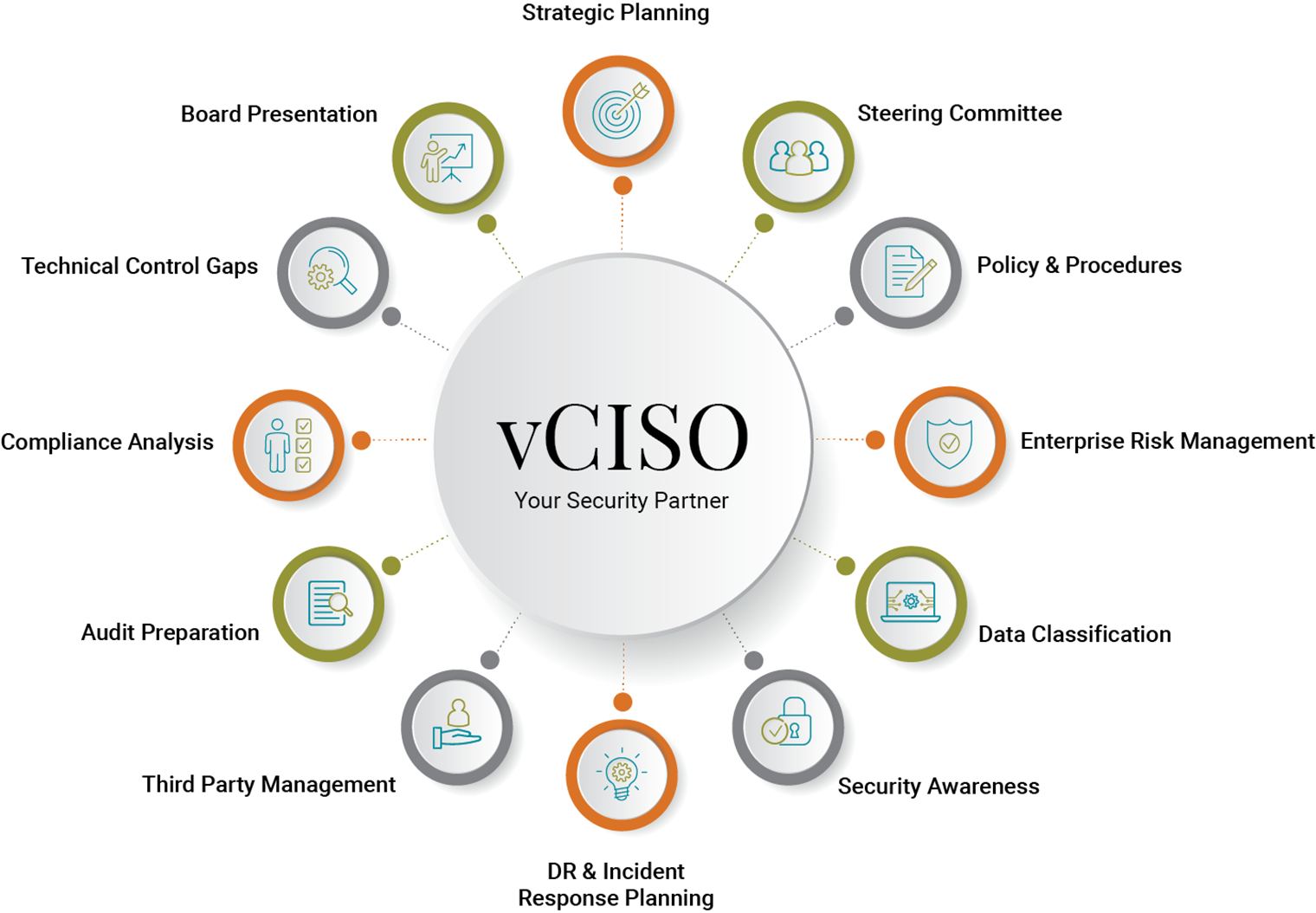
Security remains a human-driven discipline when it involves negotiation, social engineering defense, and complex incident response. AI can identify a breach, but it cannot navigate the legal, ethical, and organizational fallout of a major data exfiltration event. Professionals who bridge the gap between technical security and business operations—often referred to as vCISO (Virtual Chief Information Security Officer) roles—are seeing increased demand.
By mapping your current capabilities to these tracks, you can avoid the “automation trap” and position yourself as an indispensable architect of the modern security landscape.
Frequently Asked Questions
Outlook for entry-level security analyst roles in an automated environment
AI is increasingly automating Tier 1 triage and log analysis, which reduces the need for manual entry-level monitoring. However, it creates a higher demand for security engineers who can manage, audit, and refine these AI-driven detection systems.
Skills resistant to AI automation in security
Skills involving complex incident response, ethical decision-making, regulatory compliance strategy, and physical security architecture remain highly resistant to automation because they require contextual judgment that current AI models lack.