
Core objectives of AI security training
AI security courses and training programs provide the technical framework necessary to identify, assess, and mitigate vulnerabilities unique to machine learning models and their supporting infrastructure. These programs move beyond traditional network security by focusing on the mathematical and architectural weaknesses inherent in neural networks and automated data pipelines.
Critical demand for specialized AI security expertise
Traditional cybersecurity focuses on protecting data at rest or in transit through encryption, firewalls, and access controls. AI systems introduce a new attack surface where the model itself is the target. Malicious actors can manipulate training data to create backdoors or craft specific inputs that force a model to misclassify objects, a process known as adversarial machine learning. Standard IT security training does not cover the nuance of gradient-based attacks or model inversion, necessitating specialized education to prevent catastrophic system failures in production environments.
Essential modules and topics in AI security courses and training
Comprehensive training programs must address the full lifecycle of an AI model, from data ingestion to inference. Curricula typically prioritize the intersection of software engineering, data science, and offensive security.
Securing AI models against data poisoning and evasion attacks
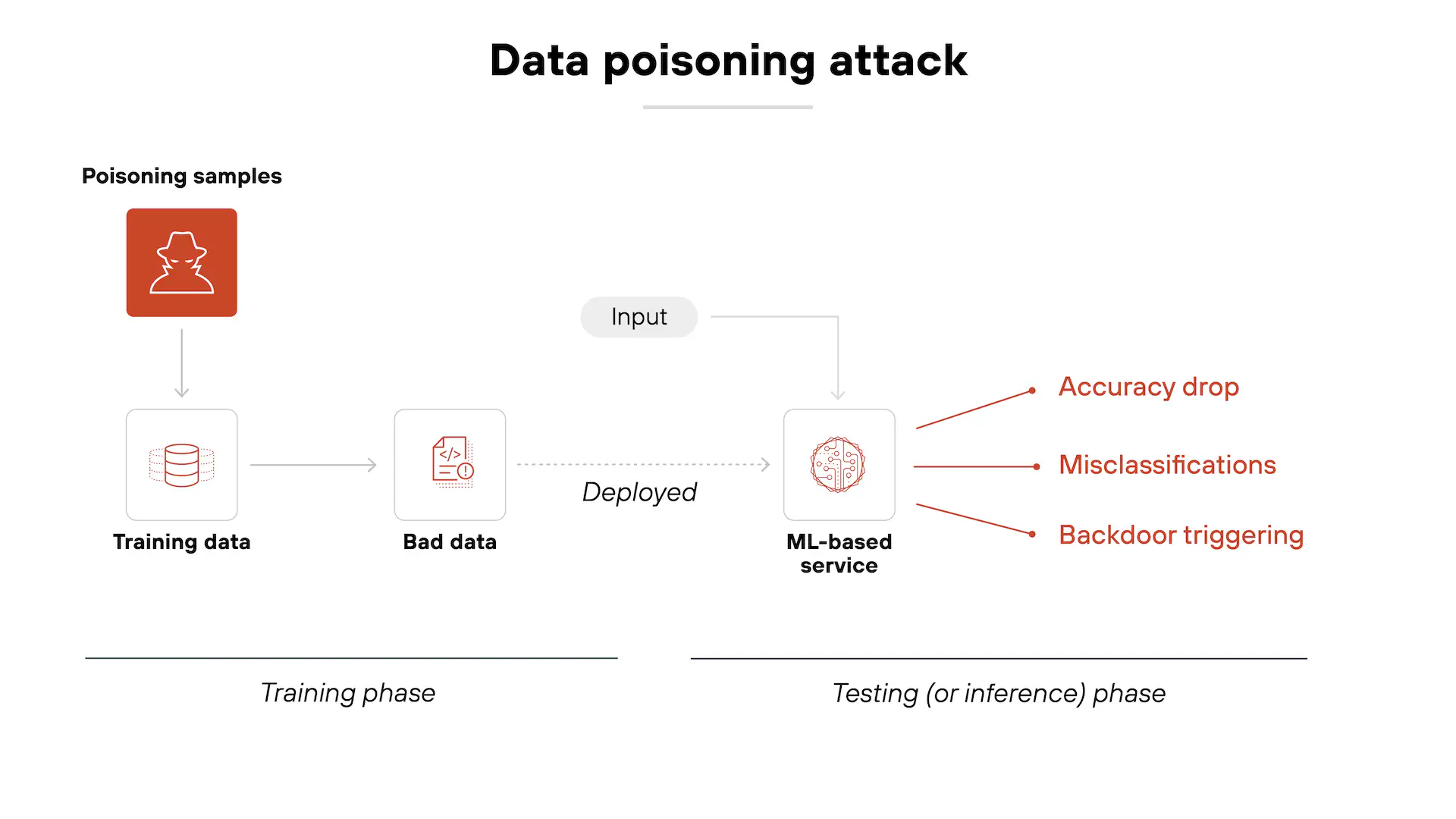
This module focuses on the integrity of the training process. Students learn how attackers inject malicious samples into training datasets to bias model behavior, a technique called data poisoning. The training also covers evasion attacks, where attackers apply subtle, imperceptible perturbations to input data—such as changing a few pixels in an image—to cause the model to output an incorrect prediction with high confidence.
Protecting AI systems from infrastructure and deployment vulnerabilities
AI models do not exist in a vacuum; they rely on complex MLOps pipelines. This section of training addresses the security of model registries, API endpoints, and the underlying cloud infrastructure. Key topics include securing containerized deployments, managing secrets for model access, and auditing data lineage to ensure that inputs have not been tampered with during the inference phase.
Practical skills and tools gained from AI security courses
Effective training emphasizes hands-on application over theoretical concepts. Participants engage in red-teaming exercises where they attempt to break models using industry-standard tools.
Hands-on experience with AI security frameworks and libraries
Learners gain proficiency in specialized open-source tools designed to stress-test AI systems. Key frameworks often included in these courses are:
- IBM Adversarial Robustness Toolbox (ART): A library for developers and researchers to defend and test machine learning models against adversarial attacks.
- Microsoft Counterfit: An open-source command-line tool for security professionals to automate the assessment of AI models for vulnerabilities.
- Adversarial Robustness Evaluation: Practical labs using these tools to generate adversarial examples and measure model resilience against evasion.
Advanced technical requirements for lab environments
To master these concepts, students require access to specific hardware and software configurations. Effective AI Security Courses and Training must provide GPU-accelerated environments, as testing adversarial robustness on large-scale models is computationally expensive. Participants should expect to work with Jupyter Notebooks integrated into secure, isolated cloud containers (such as AWS SageMaker or Azure Machine Learning) to simulate real-world production environments without risking internal corporate data.
Integrating LLM-specific security modules
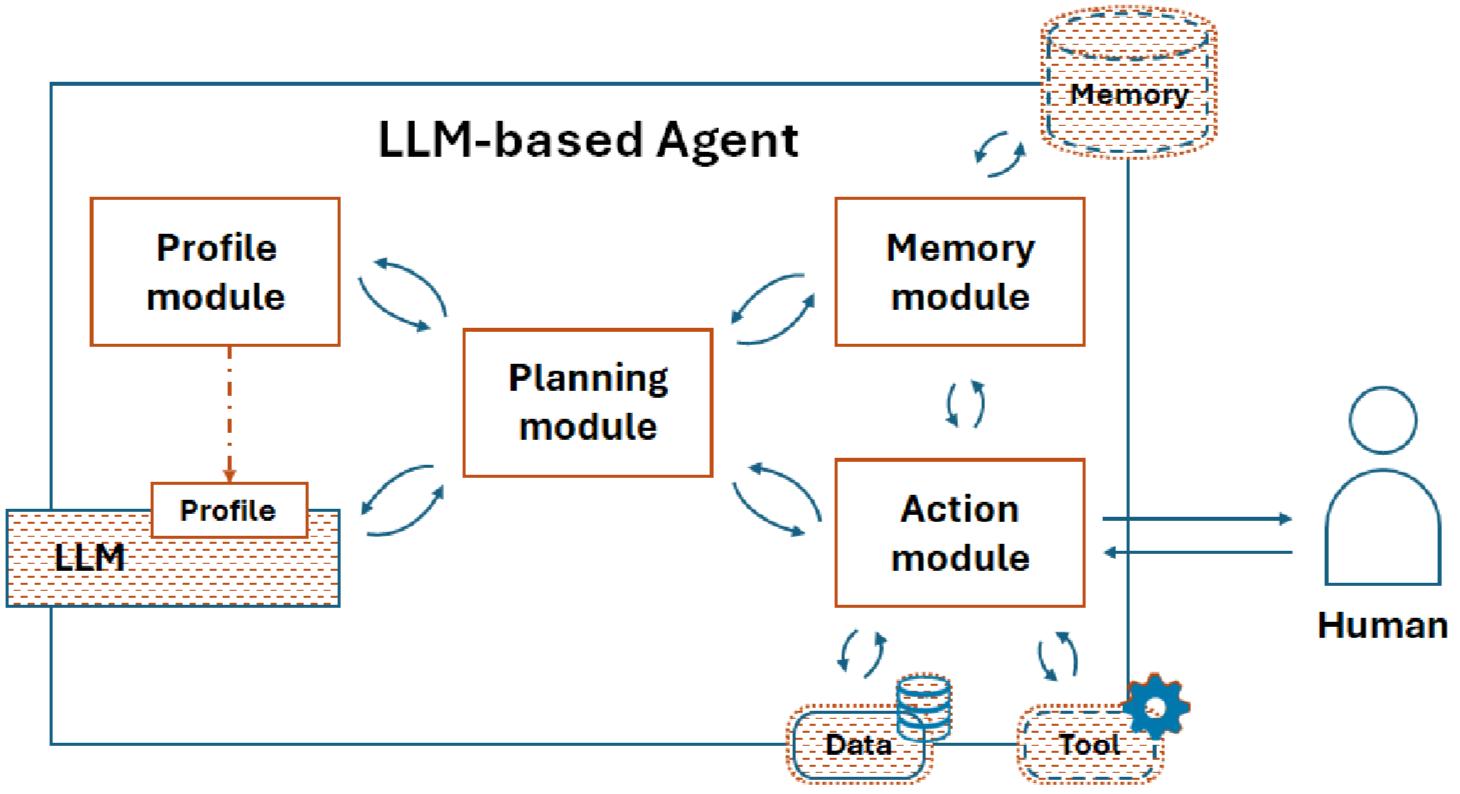
Modern training must now include specific modules on Large Language Model (LLM) security. This involves learning to mitigate prompt injection, where users manipulate model instructions to bypass safety filters, and training on techniques like Retrieval-Augmented Generation (RAG) security. Students should practice implementing guardrails using tools like NeMo Guardrails or Guardrails AI to validate model outputs before they reach the end user.
Program selection criteria for certifications and specializations
Selecting the right program requires balancing academic rigor with practical industry utility. Professionals should look for courses that offer lab-based environments rather than purely lecture-based content.
Evaluation standards for course providers and instructor expertise
When vetting providers, prioritize institutions that employ practitioners currently working in AI red-teaming or MLOps security. Verify that the curriculum is updated at least quarterly, as the field of adversarial machine learning evolves rapidly. Look for programs that provide access to cloud-based sandboxes, allowing you to test security controls against live, deployed models. If you are looking to advance your professional standing, consider pursuing the best AI security certifications to validate your expertise.
Current limitations and development of AI security education
The primary challenge in this field is the speed of innovation. New attack vectors, such as prompt injection in large language models, emerge faster than textbooks can be updated. Current training often struggles to keep pace with these shifts, meaning that the most valuable education comes from continuous engagement with research papers and open-source security communities. Acknowledge that no course provides a silver bullet; security in AI remains a process of constant monitoring and iterative defense.
Frequently Asked Questions
Definition of AI security
Understanding AI security frameworks is the practice of protecting artificial intelligence systems from adversarial attacks, data poisoning, and unauthorized manipulation of model inputs or outputs.
Pathways to becoming an AI security engineer
To become an AI security engineer, you should build a foundation in machine learning, gain proficiency in Python and MLOps, and complete specialized training in adversarial machine learning and secure software development.
Integration of AI in cybersecurity operations
AI helps in cybersecurity by automating threat detection, identifying anomalous patterns in network traffic at scale, and responding to incidents faster than manual processes.
Operational benefits of AI in security
The benefits include improved detection of zero-day threats, reduced response times for security operations, and the ability to analyze massive datasets for hidden vulnerabilities.
Operational limitations of AI in security
Disadvantages include the risk of adversarial attacks against the AI models themselves, high false-positive rates, and the potential for attackers to use AI to automate sophisticated phishing or malware generation. For those deploying physical monitoring, it is also vital to review AI security cameras: guide and best picks to ensure your hardware is as resilient as your software.
Top-rated AI security certifications
There is no single ‘best’ certification, but industry-recognized programs from organizations like MIT, SANS Institute, and specialized cloud-security providers offer the most practical value for current professionals.