
Core benefits and disadvantages of AI in security for threat detection
Integrating artificial intelligence into cybersecurity infrastructure transforms how organizations process telemetry, shifting from reactive manual reviews to proactive, automated threat hunting. While AI significantly accelerates the identification of anomalous behavior, it simultaneously introduces new attack surfaces that require sophisticated defense strategies.
Efficiency gains in real-time monitoring
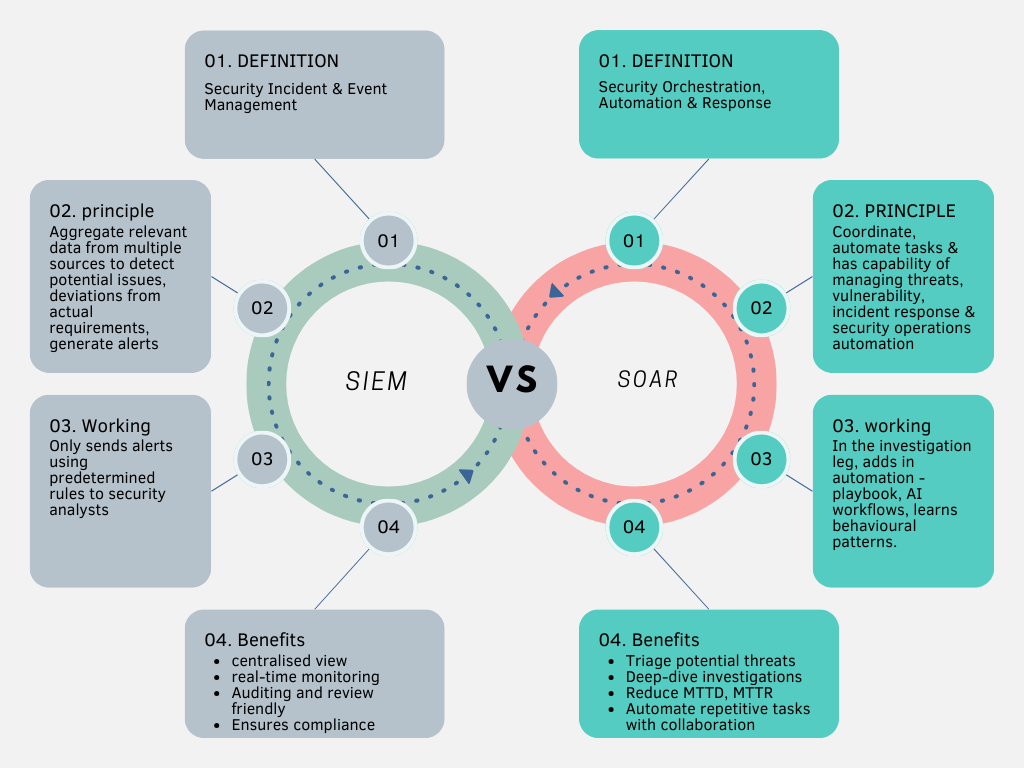
AI-driven security platforms, such as CrowdStrike Falcon or Palo Alto Networks Cortex XSOAR, drastically reduce the Mean Time to Detect (MTTD) by automating the correlation of disparate log data. Traditional Security Information and Event Management (SIEM) systems rely on static rules that often trigger high volumes of false positives, leading to alert fatigue for SOC analysts.
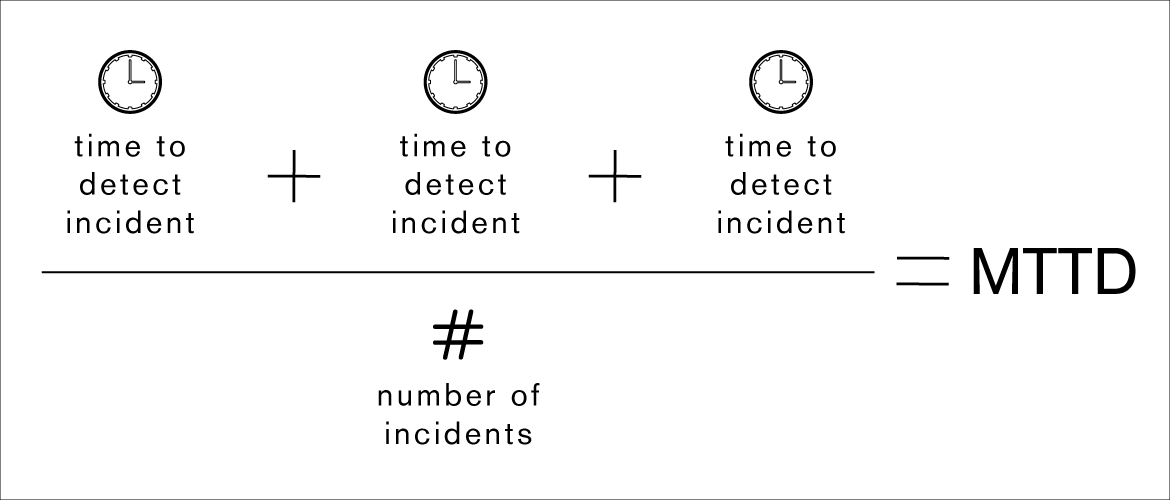
In contrast, machine learning models establish a baseline of normal network activity. This allows the system to flag deviations—such as unusual lateral movement or unauthorized API calls—in milliseconds. By automating the triage process, AI allows human analysts to focus on high-fidelity alerts rather than sifting through millions of benign logs. This shift effectively compresses the detection window, often identifying breaches in minutes rather than the days or weeks typically required by manual log analysis.
The challenge of adversarial machine learning
Despite these operational improvements, the benefits and disadvantages of AI in security are nuanced by the emergence of adversarial machine learning. Attackers now actively manipulate the inputs fed into security models to induce misclassification. This occurs through techniques like data poisoning, where malicious actors inject corrupted data into the training set to create “blind spots” in the model’s logic. To better understand these threats, teams should review AI security risks and issues regularly.
Another common tactic involves evasion attacks, where adversaries subtly modify malware or exploit payloads to bypass detection algorithms. By adding “noise” to a file that remains invisible to human eyes but alters the feature set perceived by the AI, attackers can force the system to label malicious code as benign. Consequently, relying solely on AI models without a layered defense strategy—such as incorporating behavioral heuristics and sandboxing—leaves critical infrastructure vulnerable to sophisticated, model-aware threats.
Resource allocation between AI-driven automation and human oversight
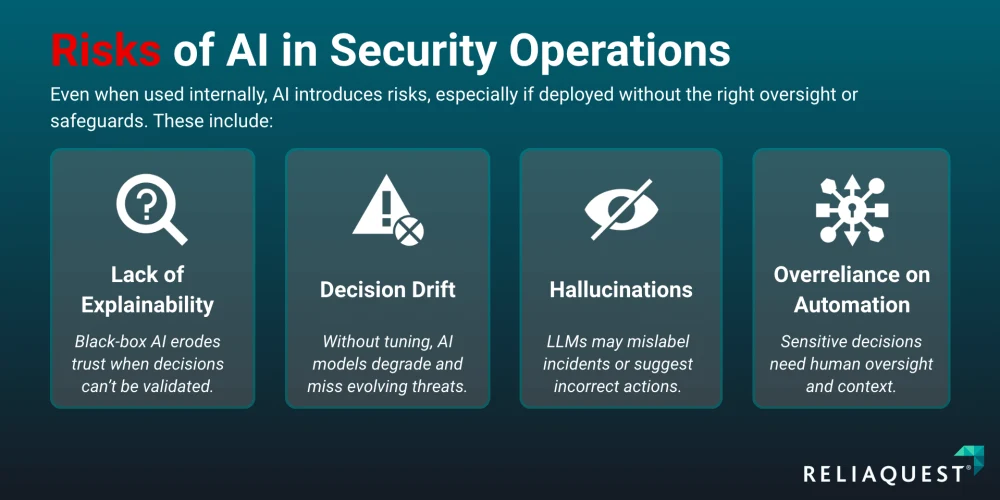
Deploying artificial intelligence within security operations requires a delicate balance between machine-speed response and human-led decision-making. Organizations often fall into the trap of over-automating, which can lead to alert fatigue or the misclassification of complex threats. Effective security architectures utilize AI to filter high-volume, low-context telemetry, allowing human analysts to focus exclusively on high-fidelity incidents that require contextual judgment.
Cost-benefit analysis of AI integration

Evaluating the ROI of AI security frameworks involves more than just comparing software licensing fees against manual labor costs. While AI platforms like CrowdStrike Falcon or Palo Alto Networks Cortex XSOAR significantly reduce the time-to-detect (TTD) and time-to-respond (TTR), they introduce substantial overhead in terms of specialized talent. An organization must account for the following financial and operational trade-offs:
- Infrastructure and Licensing: High-end AI security platforms often operate on a per-endpoint or per-data-volume pricing model. Scaling these tools can lead to unpredictable operational expenditures as data ingestion grows.
- Specialized Talent Acquisition: Implementing AI does not eliminate the need for security engineers; it shifts the requirement toward professionals capable of tuning algorithms, managing false positives, and interpreting machine-generated insights. These roles command a premium in the current labor market.
- Maintenance and Model Drift: AI models are not static. They require continuous retraining on new threat intelligence feeds to remain effective. Failing to allocate budget for this ongoing maintenance results in model drift, where the system becomes increasingly inaccurate over time.
The primary benefit of AI in this context is the reduction of operational friction. By automating the triage of routine alerts, companies can prevent the burnout of Tier 1 analysts. However, the disadvantage remains the ‘black box’ nature of many proprietary models. When an AI system blocks a legitimate business process, the cost of downtime and the human resources required to debug the automated decision can quickly offset the initial efficiency gains.
Organizations must prioritize tools that provide explainable AI (XAI) features. This ensures that human oversight remains an active, informed component of the security lifecycle rather than a passive observer.
Data privacy risks in AI security deployments
Integrating artificial intelligence into security infrastructure introduces significant vulnerabilities regarding data privacy. Because machine learning models require massive datasets to identify anomalies or threats, they often ingest sensitive information, including personally identifiable information (PII) and proprietary network traffic logs. If these datasets are not properly anonymized, the AI system itself becomes a high-value target for adversaries seeking to reconstruct private user data. Adhering to AI security governance, privacy, and compliance standards is essential to mitigate these exposures.
Mitigating model inversion and data leakage
Model inversion attacks represent a critical threat where an attacker queries an AI model repeatedly to infer the underlying training data. To safeguard against these extraction attempts, security teams must implement rigorous technical controls:
- Differential Privacy: Injecting mathematical noise into the training process ensures that the contribution of any single data point remains obscured. This prevents attackers from isolating specific records within the model’s weights.
- Federated Learning: Instead of centralizing raw data, this approach trains models locally on edge devices. Only the model updates—not the raw sensitive data—are transmitted to the central server, significantly reducing the attack surface.
- Homomorphic Encryption: This advanced cryptographic method allows the AI to perform computations on encrypted data without ever decrypting it. While computationally intensive, it ensures that even if a model is compromised, the underlying data remains unreadable.
- Data Minimization and Masking: Before data enters the pipeline, automated masking tools should strip PII. Adopting a ‘least privilege’ approach to data access ensures that the AI model only processes the specific features required for detection, rather than raw, unfiltered logs.
The benefits and disadvantages of AI in security often hinge on this tension between predictive accuracy and data exposure. While deep learning models thrive on large-scale data, the risk of ‘memorization’—where a model inadvertently stores exact fragments of its training set—remains a persistent challenge. Organizations must balance the need for high-fidelity threat detection with the implementation of robust privacy-preserving technologies to avoid regulatory non-compliance and catastrophic data breaches.
Criteria for selecting AI-enhanced security solutions
Organizations evaluating the benefits and disadvantages of AI in security must move beyond vendor marketing claims. Selecting the right tool requires a rigorous assessment of how the model handles data privacy, false positive rates, and integration complexity within existing infrastructure.
Technical evaluation metrics
Before deployment, security teams should prioritize solutions that offer transparent performance metrics. Look for the following benchmarks:
- Precision and Recall Rates: Demand documented evidence of how the AI performs on historical datasets. A high recall rate is essential for threat detection, but excessive false positives can lead to alert fatigue, effectively neutralizing the security team’s efficiency.
- Explainability (XAI): Avoid ‘black box’ models. Effective security AI must provide context behind its decisions, such as identifying the specific indicators of compromise (IoCs) that triggered an alert. This allows human analysts to validate findings rapidly.
- Data Privacy and Residency: Verify where the training data is processed. For highly regulated industries like finance or healthcare, ensure the AI architecture supports on-premises processing or private cloud environments to maintain compliance with GDPR or CCPA standards.
Operational integration and scalability
The utility of an AI security tool is often dictated by its interoperability. A solution that operates in a silo creates more work for analysts rather than reducing it. Assess the platform’s API capabilities to ensure seamless integration with your existing SIEM (Security Information and Event Management) or SOAR (Security Orchestration, Automation, and Response) tools. Furthermore, investing in AI security courses and training for staff ensures that your team can manage these complex integrations effectively.
Furthermore, consider the maintenance overhead. AI models require continuous retraining to remain effective against evolving adversarial tactics. Evaluate whether the vendor provides automated model updates or if your internal team must dedicate significant engineering hours to fine-tuning the algorithms. A tool that demands constant manual intervention may negate the initial productivity gains promised by the automation.
Finally, perform a cost-benefit analysis that accounts for the total cost of ownership (TCO). This includes not only the licensing fees but also the hidden costs of cloud compute resources and the specialized talent required to manage the AI-driven security stack effectively.
Frequently Asked Questions
Primary benefits of AI in security systems
The core benefits include real-time anomaly detection, the ability to process massive datasets faster than human analysts, and the automation of repetitive incident response tasks, which significantly reduces mean time to respond (MTTR).
Main disadvantages of AI in security
Key disadvantages include the risk of adversarial AI attacks (where hackers manipulate training data), high rates of false positives that cause alert fatigue, and the lack of contextual reasoning required for complex, non-standard security incidents.