
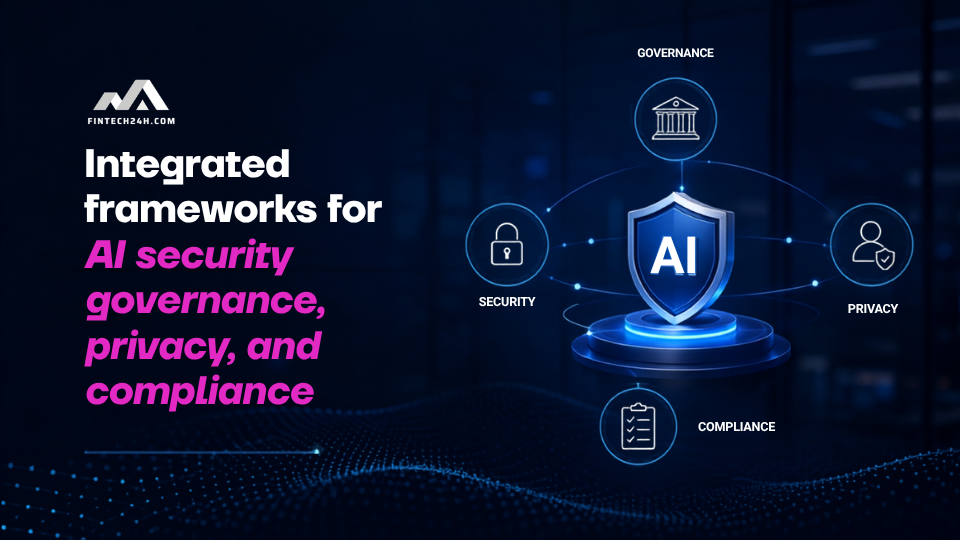
Core pillars of AI security governance, privacy, and compliance
Effective AI security governance, privacy, and compliance requires a unified approach that treats machine learning systems as dynamic assets rather than static software. Organizations must move beyond traditional IT security by implementing controls that address the unique vulnerabilities of neural networks.
These controls should specifically focus on data lineage, model robustness, and regulatory adherence throughout the entire development lifecycle.
Model integrity and adversarial defense
Protecting models from adversarial attacks necessitates a multi-layered defense strategy. Prompt injection remains a primary threat, where malicious inputs manipulate large language models (LLMs) into bypassing safety filters or leaking sensitive system instructions.
To mitigate this, engineers should deploy input sanitization layers that utilize secondary, smaller models to classify and block adversarial prompts before they reach the primary inference engine. Data poisoning presents a more insidious risk, where attackers inject corrupted samples into the training dataset to create backdoors.
Maintaining model integrity requires rigorous data provenance tracking—using tools like DVC (Data Version Control) to audit every training iteration. By implementing automated anomaly detection during the ingestion phase, teams can identify statistical outliers in training data that indicate potential poisoning attempts, ensuring the model remains reliable under adversarial pressure.
Data privacy in machine learning lifecycles
Compliance with various frameworks like GDPR and the EU AI Act demands that privacy is embedded into the model architecture, not applied as an afterthought. Differential privacy serves as a critical mechanism here, where mathematical noise is injected into training datasets to ensure that the inclusion or exclusion of a single individual’s data does not significantly alter the model’s output. This prevents the reconstruction of private records from model weights.

For scenarios where raw data cannot be used due to strict regulatory constraints, synthetic data generation offers a viable pathway. By training generative models to create statistically accurate but non-identifiable datasets, organizations can conduct model testing and validation without exposing PII (Personally Identifiable Information). This approach allows data scientists to maintain high performance in predictive models while strictly adhering to data minimization principles required by modern privacy regulations.
Implementation strategies for AI Security Governance, Privacy, and Compliance
Automated compliance monitoring tools
Manual audits are insufficient for the speed at which AI models operate and evolve. To maintain continuous oversight, firms should integrate specialized platforms that track model behavior in real-time.
Fiddler AI serves as a critical tool for explainability and monitoring, allowing teams to detect performance degradation and bias in production environments before they escalate into compliance violations. Similarly, IBM OpenPages provides a robust GRC (Governance, Risk, and Compliance) platform that helps map AI model risks to specific regulatory requirements, such as the EU AI Act or NIST AI RMF. By utilizing these tools, certified AI security professionals can automate the logging of model decisions, which is essential for forensic analysis and regulatory reporting.
Establishing clear accountability structures
Governance fails when responsibilities are siloed or poorly defined. A successful framework bifurcates duties between high-level oversight and technical execution.
The AI Ethics Committee acts as the strategic body, responsible for setting the organization’s risk appetite, reviewing high-impact use cases, and ensuring alignment with corporate values and legal mandates. This committee typically includes stakeholders from legal, privacy, and business leadership.
Conversely, the technical AI security team focuses on the implementation of guardrails. Their mandate includes managing adversarial robustness testing, securing training data pipelines, and ensuring that model access controls are strictly enforced. While the Ethics Committee defines the “what” and “why” of AI deployment, the technical security team owns the “how.” This separation ensures that ethical considerations are not bypassed for the sake of performance, while technical teams remain empowered to implement the necessary security infrastructure without administrative bottlenecks.
Regulatory landscape and legal constraints
Organizations deploying machine learning models must reconcile rapid innovation with a fragmented global regulatory environment. The EU AI Act, the GDPR, and emerging frameworks like the NIST AI Risk Management Framework create a complex matrix of obligations. Regulatory compliance requires embedding legal constraints directly into the model development lifecycle.
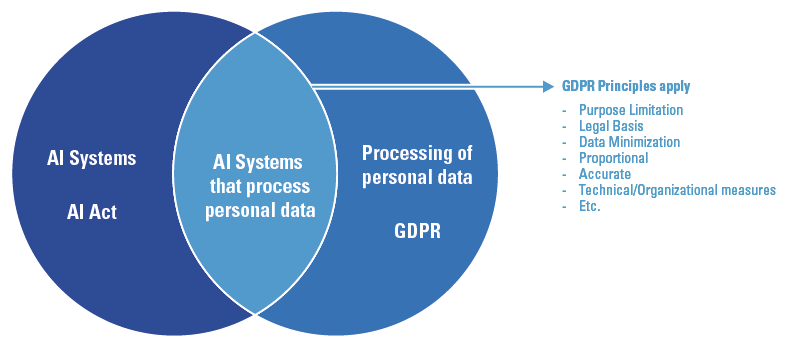
Mapping technical controls to legal mandates
Translating abstract legal requirements into actionable AI security governance, privacy, and compliance protocols is the primary challenge for data engineering teams. Under GDPR Article 22, individuals have the right not to be subject to decisions based solely on automated processing. To comply, organizations must implement specific technical safeguards:
- Data Minimization via Differential Privacy: Instead of raw datasets, inject statistical noise into training data. This ensures that individual records cannot be reconstructed, satisfying the GDPR requirement for data protection by design.
- Explainability (XAI) as Legal Evidence: Use tools like SHAP (SHapley Additive exPlanations) or LIME to document how specific features influence model outputs. This provides the necessary audit trail to satisfy the “right to explanation” mandates found in both the EU AI Act and local financial regulations.
- Automated Data Lineage: Deploy metadata management tools like Apache Atlas or Collibra to track the provenance of training data. Legal teams require proof that data used for model training was obtained with valid consent and is free from bias, which is only possible through immutable lineage records.
The intersection of these mandates requires a shift from static policy documents to automated compliance-as-code. By integrating automated testing for bias and data drift into CI/CD pipelines, firms can verify that their models remain within legal boundaries throughout their operational lifespan.
Failure to map these technical controls effectively leads to significant exposure, particularly when models inadvertently ingest sensitive PII (Personally Identifiable Information) during the training phase, violating core privacy principles.
Managing trade-offs between innovation and risk
Organizations often face a tension between rapid AI deployment and the rigorous requirements of AI Security Governance, Privacy, and Compliance. Prioritizing speed can lead to technical debt, while over-engineering security controls can stifle the agility that makes AI models valuable. A balanced approach requires embedding security into the CI/CD pipeline rather than treating it as a final hurdle.
Performance impact of security layers
Implementing real-time input filtering and output sanitization introduces measurable latency. When deploying Large Language Models (LLMs) in production, every millisecond counts for user experience. Standard security proxies that inspect prompts for prompt injection or PII leakage can add 50ms to 300ms per request depending on the complexity of the regex or model-based guardrails.
To mitigate this, engineering teams should adopt a tiered inspection strategy:
- Asynchronous scanning: Offload non-critical logging and audit trails to background processes to keep the primary request path lean.
- Edge-based filtering: Deploy lightweight security checks at the CDN or API gateway level to block known malicious patterns before they reach the inference engine.
- Model-based guardrails: Use smaller, distilled models specifically trained for classification tasks (e.g., detecting PII or toxicity) rather than routing every request through a general-purpose LLM for security validation.
The trade-off is clear: stricter security reduces the risk of data poisoning and unauthorized access but consumes compute resources. Organizations must define an acceptable latency budget based on the use case.
For internal analytical tools, a slight delay is often acceptable. For customer-facing chatbots, security must be optimized for speed, often by prioritizing heuristic-based filters over heavy, multi-step LLM-based verification.
Ultimately, compliance is a continuous operational requirement. By automating the documentation of these trade-offs—such as logging why certain security thresholds were chosen over others—firms provide auditors with a clear trail of risk-based decision-making. This transparency satisfies regulatory mandates while allowing developers to maintain the performance levels required for competitive AI applications.
Frequently Asked Questions
Primary objectives of AI security governance
The primary goal is to establish oversight mechanisms that ensure AI systems operate within defined risk tolerances, maintaining data integrity, model robustness, and alignment with organizational policies.Distinctions between privacy and security in AI deployments
Security focuses on protecting the AI model and its infrastructure from unauthorized access or manipulation, whereas privacy focuses on ensuring that training data and user inputs are processed in accordance with regulations like GDPR or CCPA.