
Symptoms of professional misalignment in the AI Security Job Market and Career Outlook
The current AI security landscape is defined by a widening gap between traditional cybersecurity expertise and the specific demands of adversarial machine learning. Professionals often find their applications stalled because their experience centers on network perimeters and identity management rather than the unique vulnerabilities of neural networks and large language models.
Limitations of generalized security certifications
Standard credentials like CISSP, CEH, or CompTIA Security+ provide a foundational understanding of risk management but offer negligible coverage of AI-specific threat vectors. These certifications focus on securing static infrastructure, whereas best AI security certifications require deep knowledge of model inversion, data poisoning, and prompt injection. Relying solely on legacy certifications creates a false sense of competency that hiring managers quickly identify during technical screenings.
Technical skill gaps in the AI Security Job Market and Career Outlook
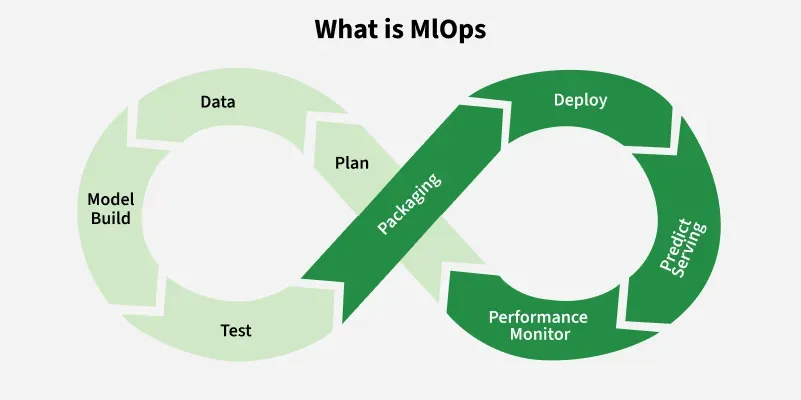
Candidates frequently struggle to transition into high-level AI security roles because they lack a background in data science or machine learning operations (MLOps). The market is not looking for generalists; it is looking for engineers who can bridge the gap between security policy and the mathematical reality of model training and inference.
Prioritizing model-specific threat modeling
Effective AI security risks and issues management requires moving beyond traditional network-based threat modeling to address the integrity of the model itself. Security professionals must understand how to audit training datasets for bias, implement robust input validation to prevent adversarial attacks, and monitor model outputs for data leakage. This shift demands proficiency in AI security frameworks and controls like MITRE ATLAS, which specifically catalogs adversary tactics and techniques against machine learning systems.
The role of Red Teaming in AI
Beyond standard auditing, companies are actively seeking professionals capable of performing AI red teaming. This involves simulating adversarial attacks to identify weaknesses in model robustness before deployment. Unlike traditional penetration testing, this requires familiarity with AI security tools and platforms like Giskard or Fiddler AI to stress-test model behavior against edge cases and malicious inputs. Demonstrating the ability to document these findings in a structured report is a high-value skill that directly addresses the current talent shortage.
Navigating the MLOps security pipeline
Securing the machine learning lifecycle requires integrating security checks directly into CI/CD pipelines. Professionals must learn to implement automated scanning for secrets in training code, verify the provenance of third-party datasets, and enforce access controls on model registries. Understanding how to secure the supply chain—specifically the libraries and dependencies used in frameworks like PyTorch or TensorFlow—is a critical differentiator for candidates entering this space.
Market demand versus candidate supply
Enterprises are currently facing a severe shortage of talent capable of securing AI deployments, leading to a high demand for specialized roles. This situation highlights the significant impact of AI on security jobs. While many applicants possess cybersecurity backgrounds, few demonstrate the ability to apply those principles to the non-deterministic nature of AI systems. This mismatch results in prolonged hiring cycles for companies and frustration for job seekers who lack the necessary niche technical skills.
Shift toward AI governance and compliance roles
As regulatory frameworks like the EU AI Act take effect, companies are increasingly prioritizing AI security governance, privacy, and compliance expertise over pure offensive security research. Organizations need professionals who can translate complex technical risks into understandable business impacts for stakeholders. This trend favors candidates who combine technical security knowledge with an understanding of data privacy laws and ethical AI standards.
Strategic pivots for career longevity
Reorienting your career toward high-growth AI Security Engineer Career Guide niches requires a deliberate focus on practical, hands-on experience. Moving away from generic security roles involves demonstrating an ability to secure the entire machine learning lifecycle, from data ingestion to model deployment.
Building a portfolio of adversarial research
Practical experience is the most effective way to differentiate yourself in this competitive market. Engaging in open-source contributions to projects like the Adversarial Robustness Toolbox (ART) or participating in AI-focused bug bounty programs provides tangible evidence of your skills. By documenting your research on model vulnerabilities and sharing your findings, you establish yourself as a practitioner capable of addressing the specific challenges of the AI landscape.
Frequently Asked Questions
Definition of AI security
AI security is the practice of protecting artificial intelligence systems from adversarial attacks, data poisoning, and model manipulation while ensuring the privacy and integrity of the data used for training and inference.
Pathways to becoming an AI security engineer
To become an AI security engineer, you should build a foundation in both cybersecurity and data science, gain hands-on experience with adversarial machine learning frameworks, and contribute to open-source AI security projects.
Mechanisms of AI in cybersecurity
AI helps in cybersecurity by automating threat detection, analyzing massive datasets for anomalous patterns in real-time, and accelerating incident response times compared to manual monitoring, showcasing the benefits of AI in security.
Benefits of AI in security operations
The primary benefits include improved scalability, the ability to detect zero-day threats through behavioral analysis, and the reduction of human error in complex security operations.
Disadvantages of AI in security
Disadvantages include the potential for adversarial attacks against the AI models themselves, high computational costs, and the risk of ‘black box’ decision-making that can complicate incident investigation.
Recommended AI security certifications
There is no single ‘best’ certification, but industry-recognized options like the AI Security Alliance (AISA) certifications or specialized courses from platforms like Coursera and SANS are highly regarded for building relevant skills.