
Market demand for AI security expertise
Organizations face a critical shortage of professionals capable of securing machine learning pipelines, leading to higher compensation for those holding specialized credentials. As companies transition from experimental AI deployments to production-grade infrastructure, the focus has shifted from basic software security to the mitigation of adversarial attacks, data poisoning, and model inversion. The best AI security certifications bridge the gap between traditional cybersecurity frameworks and the unique vulnerabilities inherent in neural networks and large language models.
Identifying high-growth AI security roles
Career paths in this domain are diverging into specialized niches that require distinct skill sets. Mapping your certification strategy to these roles ensures your credentials align with current market requirements:
- AI Red Teamer: These professionals simulate adversarial attacks to identify flaws in model outputs and safety guardrails. Certifications focusing on penetration testing for AI, such as those covering prompt injection and model evasion, are highly valued here.
- Model Governance Officer: This role centers on regulatory compliance, such as adherence to the EU AI Act or NIST AI Risk Management Framework. Professionals in this space benefit from certifications that emphasize auditing, bias detection, and explainability standards.
- AI Infrastructure Security Engineer: Focusing on the MLOps pipeline, these engineers secure the data ingestion, model training, and deployment environments. Expertise in securing cloud-native AI services like AWS SageMaker or Google Vertex AI is essential for this trajectory.
The premium placed on these roles is driven by the high cost of model failure. A single successful prompt injection or data leakage incident can result in significant financial and reputational damage. Consequently, hiring managers prioritize candidates who demonstrate a structured approach to risk assessment, moving beyond general cybersecurity experience toward deep, model-specific defensive strategies.
Evaluating the best AI security certifications by technical depth
Selecting a certification requires matching your current technical stack with the depth of the curriculum. High-tier programs focus on adversarial machine learning, model poisoning, and data privacy compliance, while entry-level options often prioritize governance and basic risk assessment. To distinguish the best AI security certifications, identify whether the syllabus covers the mathematical foundations of model robustness or focuses primarily on policy-based compliance frameworks.
Comparing vendor-neutral vs vendor-specific frameworks
The choice between vendor-neutral and vendor-specific certifications dictates your career trajectory. Vendor-neutral credentials, such as those offered by the Cloud Security Alliance (CSA) or the AI Security Alliance, emphasize universal principles like model explainability, bias mitigation, and secure development lifecycles (SDLC) for AI. These are essential for professionals working in multi-cloud environments or organizations that prioritize open-source LLMs over proprietary black-box models.
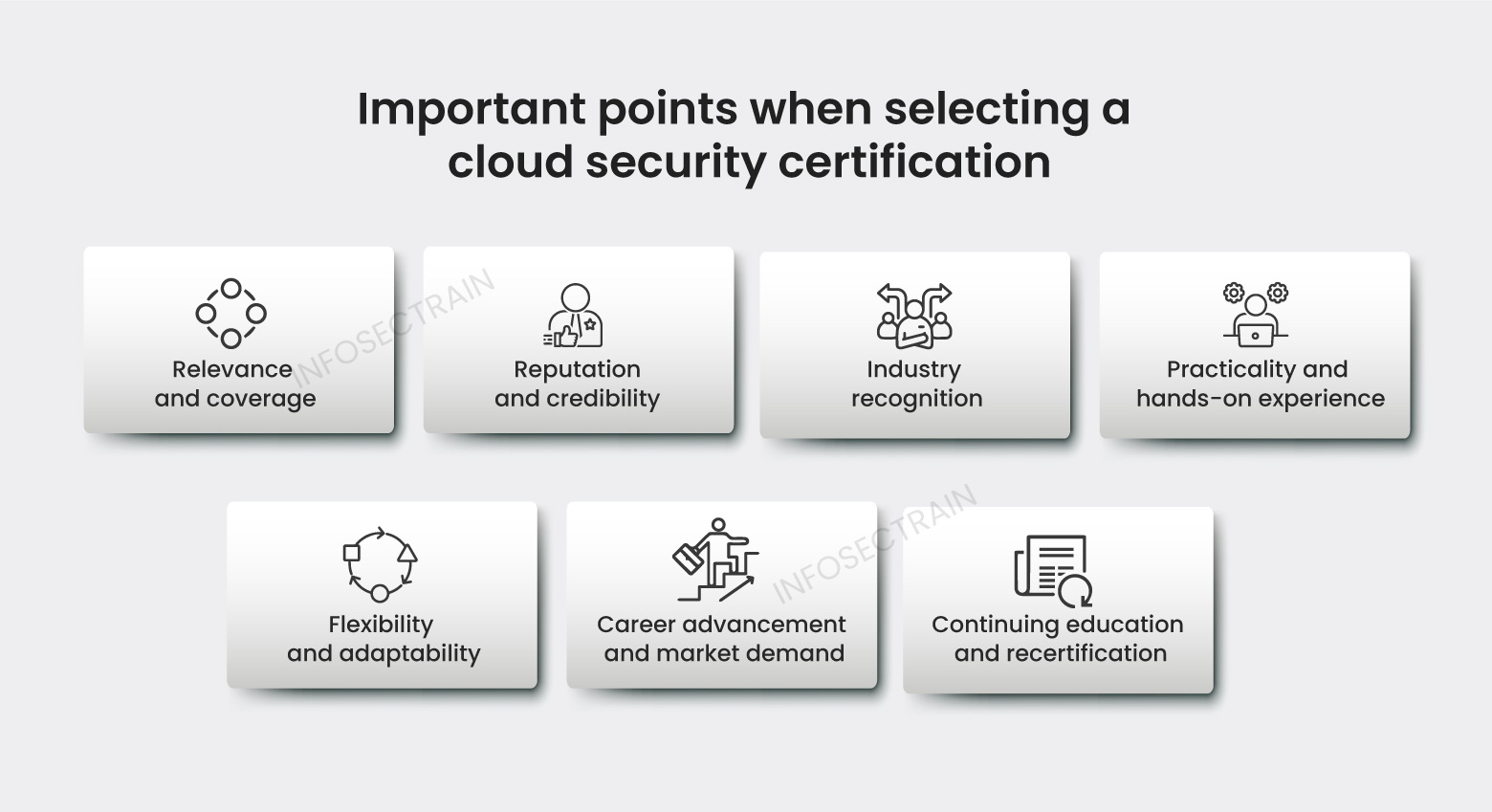
Conversely, vendor-specific certifications—such as those tied to Microsoft Azure AI or Google Cloud Vertex AI—provide deep-dive training on platform-native security tools. These programs are effective if your infrastructure relies exclusively on a single provider’s ecosystem. For instance, a certification focused on Azure AI security will teach you how to implement Microsoft’s specific guardrails, content filtering, and private endpoint configurations. Vendor-neutral certifications offer portability across different tech stacks, whereas vendor-specific training provides immediate, actionable expertise for managing the security posture of a particular cloud environment.
When evaluating these options, look for hands-on labs that require you to perform red-teaming exercises on neural networks. Certifications that rely solely on multiple-choice theory often fail to prepare practitioners for the reality of prompt injection attacks or data exfiltration via model inversion. Prioritize programs that mandate practical application, as the ability to configure a firewall for a standard web application does not translate directly to securing a Large Language Model deployment.
Practical application of AI security frameworks
Acquiring the best AI security certifications is the first step; the true value lies in translating theoretical knowledge into hardened production environments. Certification programs like the AI Security Alliance (AISA) or MITRE ATLAS-based training provide the vocabulary and methodology needed to bridge the gap between standard cybersecurity and machine learning-specific threats. Professionals must move beyond compliance checklists to integrate security directly into the MLOps pipeline.
Implementing adversarial machine learning defenses
Applying techniques learned through professional certification requires a systematic approach to model integrity. Follow this workflow to secure production models against common adversarial tactics:
- Data Sanitization and Input Validation: Use tools like the Adversarial Robustness Toolbox (ART) to perform input sanitization. Before a model processes user data, validate inputs against expected distributions to prevent evasion attacks, such as pixel-perturbation in image classifiers.
- Model Hardening through Adversarial Training: Integrate adversarial examples into your training sets. By training your model on both clean and perturbed data, you increase its resilience against gradient-based attacks. This is a core competency taught in advanced AI security curricula.
- Differential Privacy Deployment: To prevent membership inference attacks where adversaries attempt to determine if specific data was used in the training set, implement differential privacy libraries like Google’s DP library or PySyft. This adds mathematical noise to the training process, protecting individual data points without sacrificing overall model utility.
- Continuous Monitoring and Drift Detection: Deploy monitoring agents that track input feature distributions. A sudden shift in input patterns often signals an adversarial attempt to induce model drift. Use tools like Evidently AI or Arize to trigger automated alerts when performance metrics deviate from the established baseline.
Successful implementation requires a shift toward ‘Security by Design.’ Rather than treating the AI model as a black box, security engineers must map the model’s architecture to the MITRE ATLAS framework to identify specific attack surfaces. By documenting these defenses, you protect the model and create an audit trail that demonstrates the practical application of your certification-backed expertise.
Risk assessment in AI security certification selection
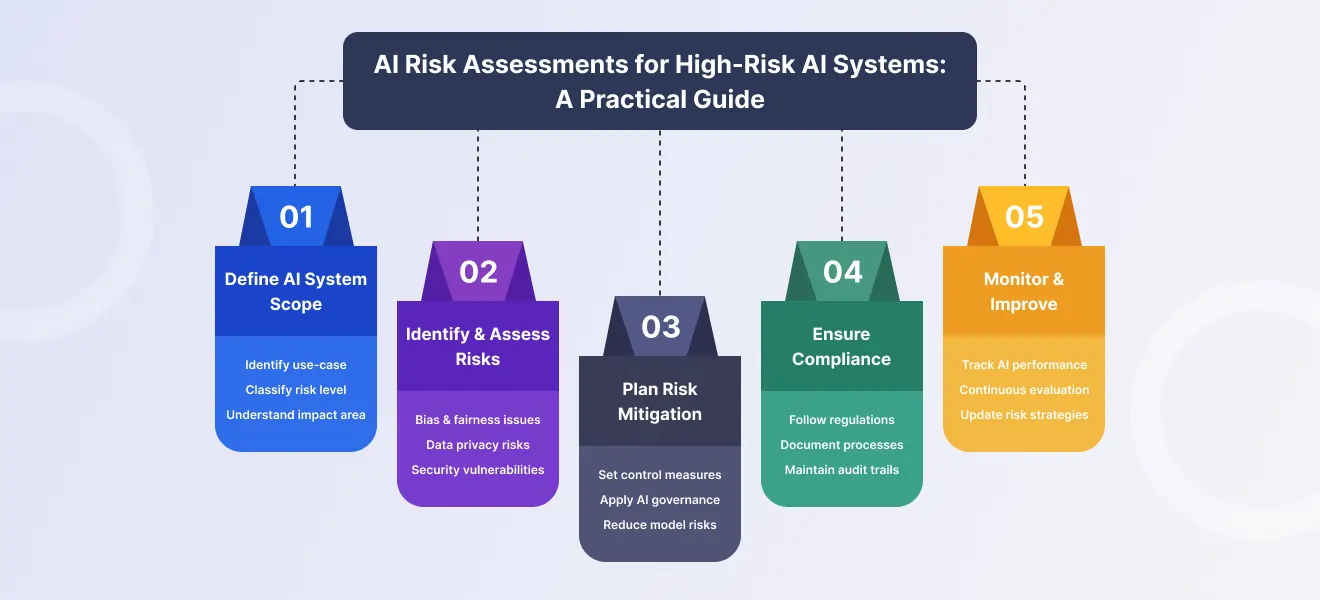
Selecting the right credential requires a rigorous evaluation of the curriculum’s alignment with current threat vectors, such as prompt injection, model inversion, and adversarial machine learning. Many programs offer theoretical knowledge but fail to address the practical, hands-on defense mechanisms required to secure production-grade AI pipelines. Before committing your budget, verify that the certification provider mandates lab-based assessments rather than relying solely on multiple-choice examinations.
Avoiding low-value certification traps
The market contains many “AI-certified” badges that lack industry recognition and technical depth. To ensure your investment yields career dividends, apply these vetting criteria before enrollment:
- Curriculum Transparency: Reputable providers publish a detailed syllabus. If a course description uses vague buzzwords like “AI safety” without specifying frameworks like MITRE ATLAS or the OWASP Top 10 for LLMs, treat it as a red flag.
- Instructor Credibility: Check the professional background of the course creators. Are they active contributors to AI security research, or are they content generalists? Prioritize certifications backed by organizations with a history in cybersecurity, such as ISC2, ISACA, or specialized firms like SANS Institute.
- Industry Adoption: Search LinkedIn for the specific certification title. If you find fewer than 500 holders globally, or if the holders are not working in security-adjacent roles, the certification likely lacks the hiring manager approval necessary to justify the cost.
- Maintenance Requirements: High-value certifications require Continuing Professional Education (CPE) credits. This ensures the material remains relevant as AI threats evolve. Avoid “lifetime” certifications that do not require periodic recertification, as these quickly become obsolete.
When evaluating the best AI security certifications, prioritize those that integrate directly with existing security operations center (SOC) workflows. A certification that teaches you how to implement guardrails within a CI/CD pipeline is more valuable than one that focuses exclusively on AI ethics or high-level policy governance. Prioritize technical proficiency over broad theoretical awareness to remain competitive.
Prioritization roadmap for professional development
Building a career in AI security requires a deliberate approach that balances foundational cybersecurity knowledge with specialized machine learning expertise. Rather than chasing every available badge, focus on certifications that demonstrate both defensive engineering capabilities and an understanding of adversarial AI threats.
Sequencing certifications for maximum career impact
The optimal path follows a layered strategy, starting with core infrastructure security before moving into the niche domain of AI model protection. If you lack a formal background in security, begin with the CompTIA Security+ or the Certified Information Systems Security Professional (CISSP). These provide the necessary framework for risk management, identity access, and network security, which remain the bedrock of any AI deployment.
Once your foundation is secure, pivot toward specialized credentials. The Best AI Security Certifications to pursue next include the AI Security Professional (AISP) from the AI Security Alliance or the Certified AI Security Professional (CAISP). These certifications specifically address the OWASP Top 10 for Large Language Models, covering critical vulnerabilities like prompt injection, data poisoning, and model inversion attacks.
Follow this sequence to maximize your marketability:
- Phase 1: Foundational Security. Obtain CISSP or Security+ to prove you understand the broader threat landscape.
- Phase 2: Technical Specialization. Pursue the AISP or similar vendor-neutral AI security credentials to gain expertise in model-specific threat modeling.
- Phase 3: Cloud & Architecture. Earn a cloud-native security certification, such as the AWS Certified Security – Specialty or Google Professional Cloud Security Engineer, as most AI models reside in these environments.
- Phase 4: Advanced Adversarial Research. Engage in specialized training focused on red-teaming AI systems, which often involves hands-on labs rather than traditional exams.
Prioritize certifications that require hands-on performance-based testing over those that rely solely on multiple-choice questions. Employers in the AI sector value candidates who can demonstrate the ability to mitigate real-world adversarial attacks against neural networks. Regularly update your portfolio by attending industry-specific workshops, as the threat vectors in machine learning evolve significantly faster than traditional IT security standards.
Frequently Asked Questions
Current landscape of dedicated AI security certifications
While few certifications are exclusively labeled ‘AI Security,’ the industry standard involves combining specialized AI-focused modules from organizations like Cloud Security Alliance (CSA) with foundational cybersecurity credentials like CISSP or CCSP.
Valuation metrics for AI security engineering credentials
The CCSP (Certified Cloud Security Professional) is currently the most practical choice, as most AI security challenges are rooted in cloud infrastructure and data pipeline vulnerabilities.