
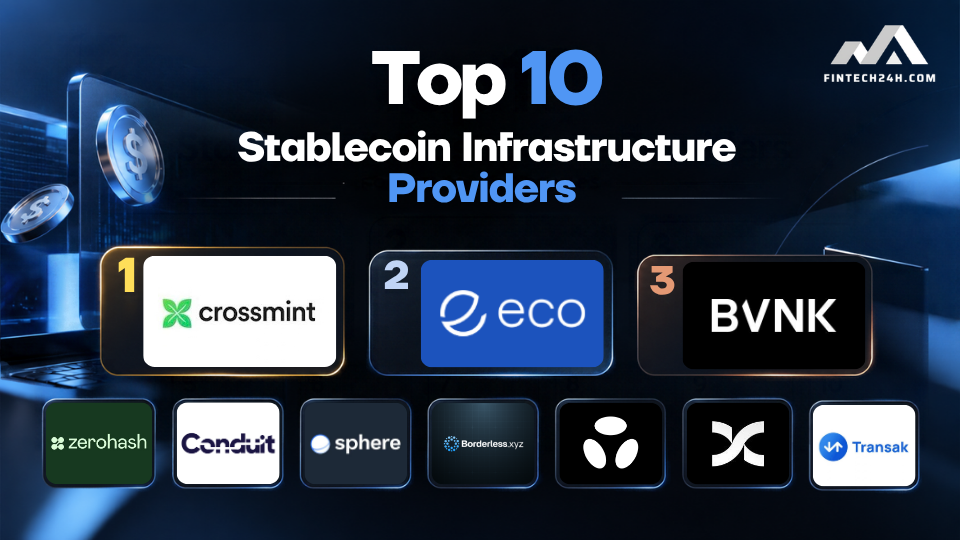
The top 10 stablecoin infrastructure providers for SaaS companies offer specialized blockchain connectivity and developer tools to streamline global payments, cross-border payouts, and programmable financial workflows without building blockchain connectivity from scratch. These platforms provide essential components like wallet management, fiat on/off-ramps, and settlement systems tailored for software-as-a-service business models.
Instead of building blockchain connectivity, wallets, settlement systems, compliance processes, and fiat conversion infrastructure from scratch, SaaS companies can integrate specialized stablecoin infrastructure providers through APIs and developer tools.
The market, however, is not made up of identical providers. Some companies focus on payment orchestration, while others specialize in programmable wallets, stablecoin-to-fiat payouts, on/off-ramps, treasury infrastructure, or stablecoin issuance. Recent 2026 industry comparisons similarly divide the market into several infrastructure layers rather than treating stablecoin infrastructure as a single product category.
For SaaS businesses, this distinction matters. A platform building international payroll may need different infrastructure from a SaaS product adding stablecoin checkout or an enterprise application creating embedded wallets.
This guide covers 10 specialized stablecoin infrastructure providers for SaaS companies, with a focus on companies operating within the crypto, fintech, payments, and Web3 infrastructure ecosystem rather than enormous global technology or financial corporations.
Note: This list is an editorial comparison based on publicly documented product capabilities and intended use cases. It is not a guarantee of performance, pricing, regulatory eligibility, or suitability for a particular business.
How We Selected These Stablecoin Infrastructure Providers
The providers in this list were selected based on their relevance to SaaS and software businesses and their publicly documented infrastructure offerings.
The comparison considers:
- API and developer accessibility
- Stablecoin support
- Payment infrastructure
- Wallet functionality
- Payout capabilities
- Fiat on/off-ramp infrastructure
- Cross-border functionality
- Compliance and onboarding tools
- Multi-chain support
- Potential SaaS use cases
The companies are not identical competitors. Some operate at different layers of the stablecoin stack, which is important when evaluating infrastructure for a specific SaaS product.
Top 10 stablecoin infrastructure providers for SaaS companies
1. Crossmint
Crossmint provides a broad infrastructure stack for companies building stablecoin-enabled products.
Its current platform combines programmable wallets, onramps, offramps, stablecoin orchestration, payments, and other infrastructure components. Crossmint describes its platform as an integrated stablecoin infrastructure layer for enterprises and developers.
For SaaS companies, this broader architecture can be useful when stablecoins are expected to become more than a single payment option.
For example, a SaaS platform may initially want to accept stablecoin payments and later add user wallets, automated payouts, treasury operations, or additional blockchain networks.
Key capabilities
- Programmable wallets
- Stablecoin orchestration
- Onramps
- Offramps
- Stablecoin payments
- Treasury wallets
- Tokenization infrastructure
- Multi-chain support
- API-based integrations
Crossmint’s current materials describe support across more than 50 chains and infrastructure spanning wallets, compliance, onramps, orchestration, and offramps.
Best suited for: SaaS companies looking for a broader stablecoin infrastructure stack rather than a single payment API.
2. Eco
Eco focuses on programmable stablecoin infrastructure and payment orchestration.
Its infrastructure is particularly relevant to developers that need stablecoin movement across different networks without managing every individual chain integration themselves.
Recent 2026 comparisons describe Eco as a multi-rail stablecoin orchestration platform supporting multiple stablecoins and blockchain networks.
For SaaS companies, the appeal is primarily architectural: a product can integrate stablecoin functionality without necessarily exposing end users to the underlying complexity of blockchain routing.
Key capabilities
- Stablecoin payment APIs
- Cross-chain orchestration
- Stablecoin transfers
- Developer APIs
- Settlement infrastructure
- Multi-chain support
Best suited for: Developer-focused SaaS platforms that need programmable stablecoin movement and settlement.
3. BVNK
BVNK focuses on stablecoin payments and business money movement.
Its infrastructure is designed around connecting stablecoins with traditional financial systems, including payment acceptance, payouts, wallets, and fiat settlement.
Industry comparisons in 2026 identify BVNK as a provider focused on enterprise stablecoin payments, virtual accounts, settlement, and business payment infrastructure.
For SaaS companies, BVNK can be particularly relevant when stablecoins are being integrated into a broader B2B payment workflow.
Key capabilities
- Stablecoin payments
- Business wallets
- Fiat settlement
- Payouts
- Payment APIs
- Virtual accounts
- Cross-border payment infrastructure
Best suited for: SaaS platforms, fintech products, marketplaces, and businesses processing larger B2B payment flows.
4. Zero Hash
Zero Hash provides embedded crypto infrastructure for businesses that want to integrate these capabilities into their own products.

Its infrastructure includes APIs and SDKs for crypto functionality, stablecoin settlement, funding, and payouts. Industry comparisons describe Zero Hash as particularly relevant to fintechs and platforms embedding crypto functionality behind their own user experience.
This model can be useful for SaaS companies that do not want customers to leave their application to interact with a separate crypto platform.
Key capabilities
- APIs and SDKs
- Embedded crypto infrastructure
- Stablecoin settlement
- Funding
- Payouts
- Compliance infrastructure
- Embedded financial functionality
Best suited for: Fintech SaaS, marketplaces, platforms, and applications embedding digital-asset functionality.
5. Conduit
Conduit focuses on financial infrastructure connecting fiat and stablecoin rails.
Its infrastructure is relevant to companies building cross-border payment products and financial applications that need to move between traditional currencies and digital dollars.
Current industry comparisons identify Conduit as particularly relevant for emerging-market corridors across regions such as Latin America, Africa, and Asia.
For SaaS companies serving international customers, this can be important because supporting stablecoins is only one part of the payment problem. The other part is how those digital assets eventually interact with local financial systems.
Key capabilities
- Stablecoin transactions
- Fiat on/off-ramps
- Cross-border payments
- Local payment rails
- API infrastructure
- Treasury-related workflows
Best suited for: International SaaS businesses and platforms dealing with cross-border money movement.
6. Sphere
Sphere provides infrastructure for businesses integrating stablecoins with traditional payment rails.
Its offering is oriented toward API-based payment flows, including stablecoin transactions, fiat movement, and local payment connectivity.
Recent industry comparisons describe Sphere as a developer-oriented infrastructure provider supporting rails such as ACH, wire, SEPA, and Pix alongside on-chain settlement.
This can make Sphere relevant to SaaS businesses that need to connect blockchain-based value with conventional banking infrastructure.
Key capabilities
- Stablecoin payments
- Fiat transfers
- On/off-ramps
- API integration
- Local payment rails
- KYC/KYB workflows
- Cross-border transactions
Best suited for: SaaS and fintech products that need both stablecoin and fiat payment functionality.
7. Borderless
Borderless focuses on connecting stablecoins with local payment infrastructure.
Rather than requiring a business to build individual integrations for every market, its infrastructure is designed around connecting stablecoin flows with local payment providers and financial rails.
Industry comparisons currently describe Borderless as a provider using partner networks to support local payout and collection functionality.
For SaaS companies expanding into multiple countries, this type of abstraction can help reduce the technical complexity associated with supporting different payment environments.
Key capabilities
- Stablecoin payouts
- Local payment connectivity
- Stablecoin collections
- Cross-border transactions
- API infrastructure
- Partner-based payment rails
Best suited for: SaaS platforms with international payout or collection requirements.
8. Brale
Brale focuses on stablecoin issuance and infrastructure for companies looking to create or integrate customized digital-dollar products.
Unlike providers that primarily focus on payment acceptance, Brale is particularly relevant to businesses exploring stablecoin issuance, management, and related financial workflows.
This makes it potentially useful for SaaS platforms whose business model requires a branded or purpose-specific stablecoin rather than simply accepting an existing asset.
Key capabilities
- Stablecoin issuance
- Stablecoin management
- Fiat-to-stablecoin functionality
- Stablecoin-to-fiat functionality
- API infrastructure
- Payments
- Payouts
Best suited for: SaaS and fintech platforms exploring branded stablecoins or customized digital-dollar infrastructure.
9. BlindPay
BlindPay focuses on stablecoin payment infrastructure, particularly for cross-border transactions and local-currency payouts.

Its current materials describe infrastructure for businesses that need to move between stablecoins and local bank payment rails. Its 2026 comparisons highlight payout and collection workflows across multiple markets.
For SaaS companies, this can be relevant when the product needs to receive stablecoins or use stablecoins as part of a backend settlement process while recipients ultimately receive local currency.
Key capabilities
- Stablecoin payouts
- Stablecoin collections
- Local-currency payouts
- Cross-border payments
- REST APIs
- Developer SDKs
- Local payment rails
Best suited for: SaaS platforms handling international payouts, contractor payments, marketplace payments, or cross-border collections.
10. Transak
Transak focuses on fiat-to-crypto and crypto-to-fiat payment infrastructure.
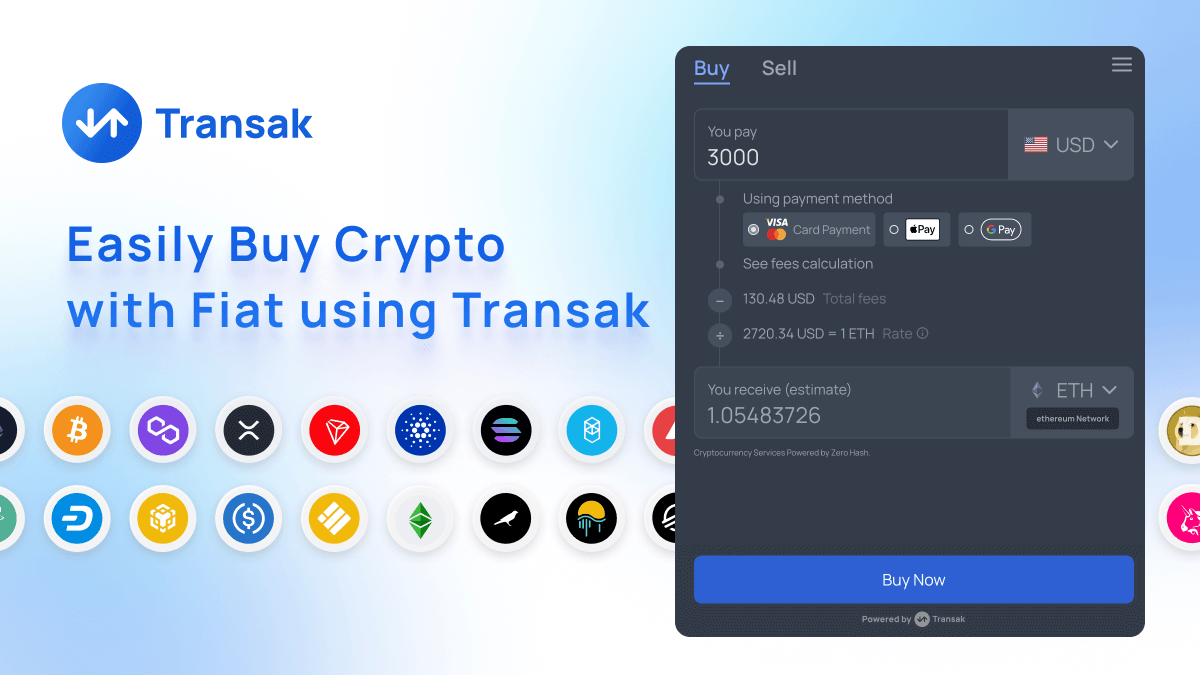
Its developer infrastructure can be integrated into applications that need users to purchase digital assets or convert digital assets back into fiat.
For SaaS products, this can be useful when the application needs to provide an on-ramp or off-ramp without developing payment integrations independently.
Transak is also identified in recent 2026 industry research as one of the infrastructure providers focused on the on/off-ramp layer of the stablecoin ecosystem.
Key capabilities
- Fiat onramps
- Fiat offramps
- API integration
- Payment methods
- Digital-asset conversion
- Embedded checkout functionality
Best suited for: SaaS platforms that need fiat-to-stablecoin or stablecoin-to-fiat conversion functionality.
How to Choose a Stablecoin Infrastructure Provider for SaaS
There is no single infrastructure model that fits every SaaS company.
The right choice depends on what the product actually needs to do with stablecoins.
1. Start With the Exact Payment Flow
Before comparing vendors, define the transaction.
For example:
Customer → SaaS platform → stablecoin → bank account
is a different infrastructure problem from:
SaaS platform → stablecoin → global contractor
or:
User → fiat → stablecoin → SaaS wallet
Writing the payment flow down first can make it much easier to identify which infrastructure layer is actually required.
2. Decide Whether You Need Wallet Infrastructure
Not every SaaS company needs customer-facing wallets.
A platform may simply need:
- Stablecoin acceptance
- Backend settlement
- Treasury transfers
- Automated payouts
Another SaaS product may need every customer to have an embedded wallet.
If wallets are not part of the product experience, paying for a full wallet infrastructure stack may introduce unnecessary complexity.
3. Evaluate API and Developer Experience
For a SaaS business, the API can be just as important as the financial functionality itself.
Look at:
- API documentation
- SDK availability
- Sandbox environment
- Webhooks
- strong authentication
- Transaction status tracking
- Error handling
- Idempotency
- Developer support
- Production onboarding
A technically capable infrastructure provider can still create friction if the integration is difficult to maintain.
4. Examine Supported Stablecoins and Networks
Different SaaS products may have different requirements.
Some may primarily need USDC.
Others may need multiple stablecoins or multiple blockchain networks.
Before choosing a provider, verify:
- Supported stablecoins
- Supported chains
- Deposit networks
- Withdrawal networks
- Confirmation requirements
- Settlement times
- Network fees
- Cross-chain capabilities
Crossmint, for example, currently describes support across 50+ chains, while other infrastructure providers take a narrower approach focused on specific payment or settlement workflows.
Frequently Asked Questions
What are stablecoin infrastructure providers?
Stablecoin infrastructure providers offer APIs, wallets, payment rails, settlement systems, on/off-ramps, treasury tools, or issuance infrastructure that allow businesses to integrate stablecoins into their products.
Why would a SaaS company use stablecoin infrastructure?
SaaS companies may use stablecoin infrastructure to support international payments, cross-border payouts, embedded wallets, digital-dollar settlement, treasury operations, or stablecoin payment acceptance without building the entire infrastructure stack themselves.
What is a stablecoin API?
A stablecoin API allows software applications to interact programmatically with stablecoin-related financial infrastructure, such as sending payments, receiving funds, managing wallets, converting assets, or initiating payouts.
Which stablecoin infrastructure is suitable for SaaS companies?
Suitability depends on the use case. Companies building embedded wallets may need a different provider from companies primarily looking for cross-border payouts or fiat-to-stablecoin conversion.
Do SaaS companies need their own crypto infrastructure?
Not necessarily. SaaS companies can integrate third-party infrastructure providers instead of developing blockchain connectivity, wallet systems, payment rails, and other components internally.