
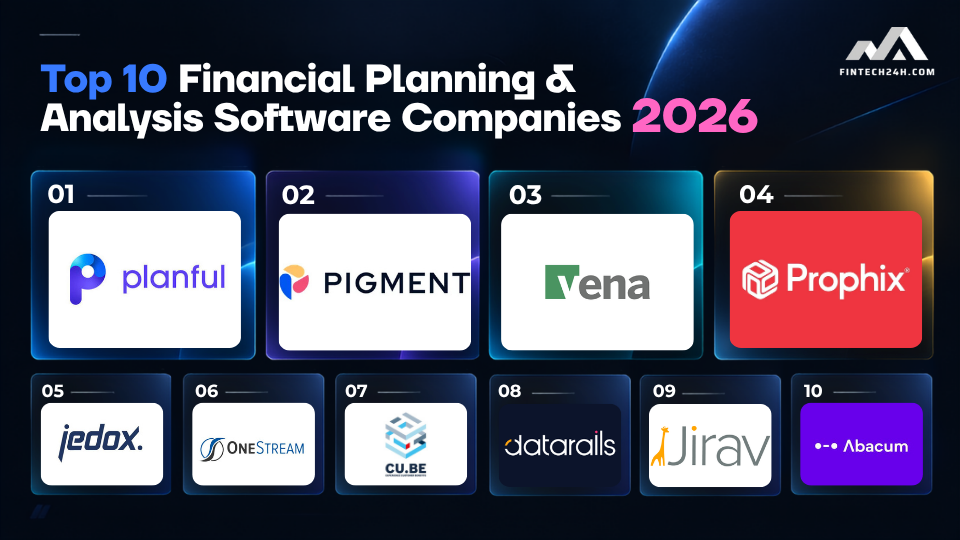
The Top 10 financial planning & analysis software companies 2026 provide the essential infrastructure for finance teams to move beyond static annual budgets toward continuous forecasting, scenario modeling, and real-time decision support. These platforms help organizations connect financial data, automate planning workflows, and build accurate forecasts to support better business decisions.
In 2026, the FP&A software market is evolving particularly quickly. AI-powered forecasting, driver-based planning, connected data models, collaborative workflows, and automated reporting are becoming increasingly important. At the same time, many finance teams still want to preserve familiar tools such as Excel rather than completely replace them. For those exploring broader digital transformation, many businesses are also looking into top 10 SaaS technology companies supporting business digital transformation to streamline their operations.
This has created a diverse market of FP&A vendors. Some platforms focus on enterprise-scale financial performance management, while others are designed for mid-market organizations, high-growth companies, or finance teams that want to remain within spreadsheet-based workflows.
In this guide, we look at 10 Financial Planning and Analysis (FP&A) software companies to know in 2026, focusing on established specialists and growing industry players rather than the largest global technology corporations.
Editorial note: This list is based on product capabilities, market positioning, customer presence, specialization, and relevance to modern FP&A workflows. It is not intended to represent a universal ranking for every organization.
What Is Financial Planning and Analysis (FP&A) Software?
Financial Planning and Analysis (FP&A) software is designed to help finance teams manage budgeting, forecasting, financial modeling, reporting, scenario analysis, and performance planning in a more connected environment.
Traditional FP&A processes often depend heavily on spreadsheets, manual data collection, disconnected models, and repetitive reporting tasks. Dedicated FP&A platforms can centralize financial and operational data while providing structured workflows for planning and analysis. As these systems become more complex, many firms are also prioritizing infrastructure for AI security to ensure their financial data remains protected.
Modern FP&A software commonly supports:
- Budgeting and annual planning
- Rolling forecasts
- Financial modeling
- Scenario and what-if analysis
- Management reporting
- Variance analysis
- Cash-flow planning
The market has also expanded beyond purely financial planning. Many platforms now support extended planning and analysis (xP&A), connecting finance with areas such as sales, HR, marketing, workforce planning, and operations.
Top 10 financial planning & analysis software companies 2026
1. Planful
Planful is a financial performance management platform focused on helping finance teams connect planning, budgeting, forecasting, reporting, and analysis within one environment.
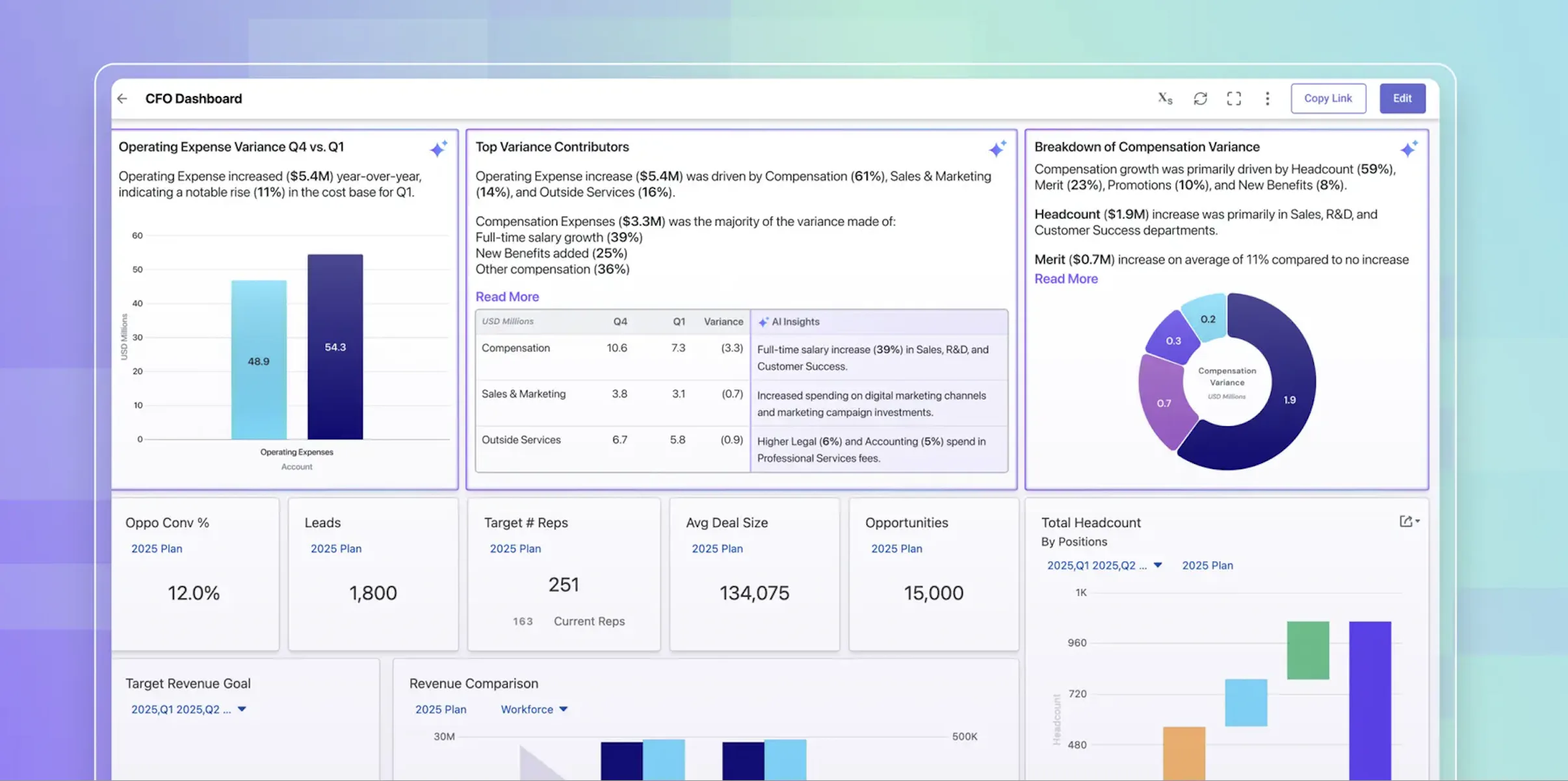
The platform positions itself as a complete finance platform, combining planning and budgeting with reporting and analysis. Planful currently states that more than 1,500 customers use its platform, giving it a substantial presence among established FP&A vendors.
Key capabilities
- Financial planning
- Budgeting
- Forecasting
- Financial reporting
- Scenario planning
- Workforce planning
- Management reporting
- Financial performance management
- AI-assisted planning
One of Planful’s strengths is its focus on bringing multiple finance workflows together rather than treating budgeting, forecasting, and reporting as completely separate processes.
The platform also aims to preserve familiar spreadsheet behavior while adding structured workflows and centralized data. This can be particularly useful for finance teams transitioning away from disconnected spreadsheets without forcing users into an entirely unfamiliar working environment.
Why consider Planful?
Planful is particularly relevant for organizations that want a mature FP&A platform without moving toward the largest general-purpose enterprise software ecosystems. For those interested in broader industry trends, our blockchain development companies guide provides a look at the wider fintech landscape.
Best suited for: Mid-market companies and larger organizations looking for an integrated finance planning environment.
2. Pigment
Pigment has become one of the more prominent modern planning platforms in the FP&A market, particularly around collaborative planning, connected business models, and AI-powered planning.

Its platform covers financial and operational planning, including budgeting and forecasting, financial consolidation, workforce planning, sales forecasting, OPEX planning, CAPEX planning, cash-flow monitoring, and other business planning use cases.
Pigment has also expanded its AI capabilities significantly in 2026. The company introduced its Modeler Agent and has been positioning AI as part of the core planning experience rather than simply as a chatbot layered onto an existing product.
Key capabilities
- Financial planning
- Budgeting and forecasting
- Scenario modeling
- Workforce planning
- OPEX planning
- Revenue planning
- Financial consolidation
- AI-assisted planning
- Collaborative modeling
Pigment’s customer base includes recognizable organizations such as Uber, Anthropic, Siemens, Unilever, Snowflake, and Deliveroo.
Why consider Pigment?
Pigment is especially interesting for companies looking for a modern planning interface that can connect finance with operational teams. It is also increasingly focused on continuous planning and AI-supported modeling.
Best suited for: Mid-market and enterprise organizations looking for collaborative, modern planning.
3. Vena Solutions
Vena Solutions takes a different approach to modern FP&A by maintaining a strong connection to Microsoft Excel.
Instead of asking finance teams to abandon spreadsheet-based workflows, Vena provides structured planning, budgeting, forecasting, reporting, and governance around the Microsoft environment teams already understand.
Its FP&A platform combines Excel-based planning with workflow management, version control, audit trails, financial data, analytics, and AI capabilities.
Key capabilities
- Excel-based budgeting
- Financial forecasting
- Scenario planning
- Reporting
- Financial consolidation
- Workflow management
- Audit trails
- Microsoft integration
- AI-powered insights
Vena has also built a substantial portfolio of customer implementations. Its customer stories cover organizations using the platform for global budgeting, financial consolidation, workforce planning, scenario modeling, and management reporting.
Why consider Vena?
The biggest attraction is the ability to modernize FP&A without completely abandoning Excel. This can reduce the organizational resistance that often appears when finance teams are asked to replace familiar spreadsheet workflows.
Best suited for: Finance teams that rely heavily on Excel but need stronger governance, automation, and centralized planning.
4. Prophix
Prophix is an established provider of corporate performance management and FP&A software, with a particular focus on mid-market organizations.
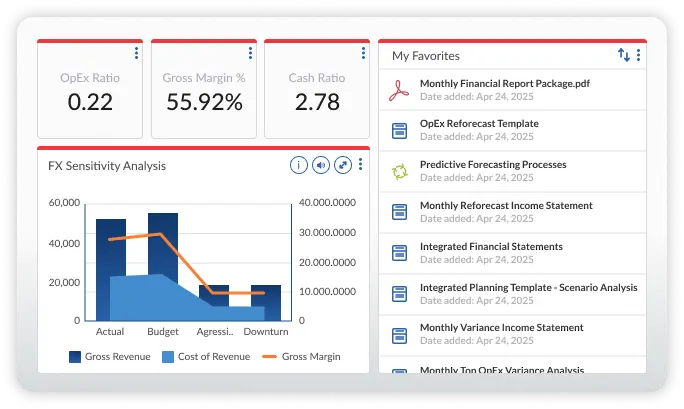
Its current platform, Prophix One, connects FP&A with financial close, consolidation, reporting, analytics, and related finance workflows. The company describes its platform as a unified environment for moving from planning through financial close.
Key capabilities
- Financial planning
- Budgeting
- Forecasting
- Scenario analysis
- Workforce planning
- Financial consolidation
- Reporting
- Financial close
- Management analytics
- AI-assisted workflows
Prophix emphasizes structured, driver-based planning and automated workflows, while maintaining Excel compatibility for teams that still depend on spreadsheets.
The company’s customer portfolio includes organizations across industries such as healthcare, construction, financial services, and consumer businesses.
Why consider Prophix?
Prophix can be relevant for organizations that need more than basic budgeting software and want FP&A connected with broader financial performance management.
Best suited for: Mid-market organizations with increasingly complex budgeting, forecasting, consolidation, and reporting requirements.
5. Jedox
Jedox is a global planning and performance management software company with a strong focus on integrated planning, budgeting, forecasting, reporting, and analytics.
The platform currently serves more than 2,900 companies, according to Jedox, and its product includes financial planning as well as integrated business planning.
Key capabilities
- Financial planning
- Budgeting
- Forecasting
- Scenario planning
- Revenue planning
- Integrated business planning
- Financial consolidation
- Reporting
- AI-assisted planning
- Data integration
Jedox emphasizes creating a single source of truth for financial and operational data. Its planning tools are designed to allow organizations to move between P&L, balance sheet, cash planning, and broader operational planning.
The platform is also designed for organizations that want to connect planning across multiple departments instead of limiting the system to the finance function.
Why consider Jedox?
Jedox is particularly relevant when FP&A needs to expand toward integrated business planning and cross-functional performance management.
Best suited for: Mid-market and enterprise organizations with complex, cross-functional planning requirements.
6. OneStream
OneStream is an enterprise-focused financial performance management platform that combines financial close, consolidation, reporting, planning, and operational data.

Its FP&A capabilities include top-down and bottom-up planning, driver-based budgeting, zero-based budgeting, rolling forecasts, and scenario analysis.
The platform has also been expanding its AI and operational planning capabilities throughout 2026. At its 2026 Splash conference, OneStream announced additional planning functionality intended to connect operational activity more closely with financial outcomes.
Key capabilities
- Enterprise FP&A
- Financial consolidation
- Budgeting
- Rolling forecasts
- Scenario planning
- Operational planning
- Workforce planning
- Financial reporting
- AI-powered planning
- Data integration
OneStream is more enterprise-oriented than several of the other companies on this list. Its platform is designed for organizations dealing with multiple entities, complex financial structures, and significant volumes of financial and operational data.
Why consider OneStream?
OneStream is a strong consideration for organizations looking to connect FP&A with financial consolidation and broader corporate performance management.
Best suited for: Large and complex organizations with sophisticated finance requirements.
7. Cube
Cube is a modern FP&A platform built around the idea that finance teams should not have to abandon the tools they already use.
The platform connects financial planning, forecasting, reporting, and analysis with tools such as Excel and Google Sheets while providing a centralized data layer.
Cube currently describes its platform as an AI-powered FP&A environment focused on planning, forecasting, reporting, governed data, and AI-assisted workflows.
Key capabilities
- Financial planning
- Forecasting
- Budgeting
- Scenario modeling
- Variance analysis
- Reporting
- Excel integration
- Google Sheets integration
- AI-powered analysis
- Data management
Cube is particularly interesting for finance teams that want a more modern FP&A infrastructure but do not want to force users into a completely new interface.
Why consider Cube?
Its positioning makes it particularly relevant for finance organizations somewhere between spreadsheet-based planning and traditional enterprise EPM implementations.
Best suited for: SMB and mid-market finance teams that want modern FP&A without abandoning spreadsheets.
8. Datarails
Datarails is another major player in the Excel-connected FP&A category.
Its approach is centered on keeping Excel as the working environment while automating the data consolidation, reporting, planning, and forecasting processes surrounding it.
Datarails currently states that finance teams at more than 2,000 companies use its platform and that the product connects with more than 600 data sources.
Key capabilities
- Excel-native FP&A
- Budgeting
- Forecasting
- Financial consolidation
- Financial reporting
- Scenario planning
- Variance analysis
- AI-powered commentary
- Data integration
- Dashboarding
Datarails can consolidate data from multiple systems and entities while keeping the finance team’s Excel models at the center of the workflow. Its platform also supports live financial reporting and scenario analysis.
Why consider Datarails?
For companies that have invested heavily in Excel-based financial models, the ability to add governance and automation without rebuilding everything from scratch can be a significant consideration.
Best suited for: SMB and mid-market finance teams with Excel-heavy FP&A processes.
9. Jirav
Jirav focuses primarily on small and midsize organizations, accounting firms, and growing companies that need structured budgeting, forecasting, reporting, and financial modeling.
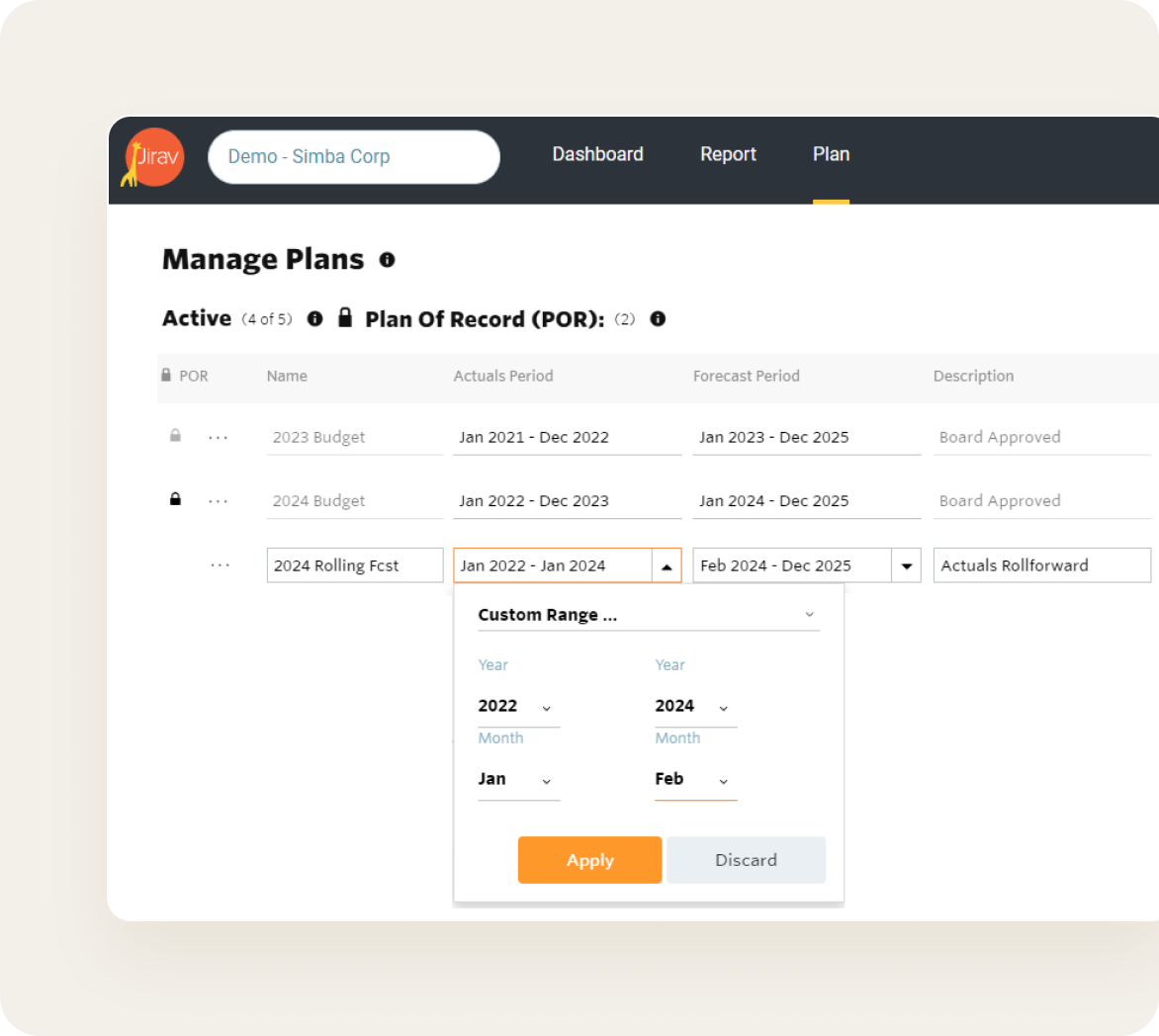
Its platform supports three-statement financial modeling, budgeting, rolling forecasts, scenario planning, dashboards, and management reporting.
Key capabilities
- Budgeting
- Financial forecasting
- Three-statement modeling
- Scenario planning
- Cash-flow forecasting
- Reporting
- Dashboards
- KPI tracking
- Financial modeling
Jirav also positions its software for accounting firms that provide FP&A advisory services to their clients, making its customer profile somewhat different from enterprise-focused platforms.
Why consider Jirav?
Jirav is designed around practical financial modeling and forecasting rather than highly complex enterprise performance management. That makes it relevant for organizations that need FP&A capabilities without an overly heavy implementation.
Best suited for: Small and midsize businesses, finance teams, and accounting firms providing FP&A services.
10. Abacum
Abacum is a newer-generation FP&A platform that emphasizes AI-native financial planning, collaborative planning, automated data management, and continuous forecasting.

The company positions its platform around connecting source systems, assumptions, financial models, and reporting in one environment. Its product includes AI-assisted data cleaning, classification, anomaly detection, modeling, scenario planning, and forecasting.
Key capabilities
- Financial planning
- Budgeting
- Forecasting
- Scenario planning
- Driver-based planning
- Financial reporting
- Dashboards
- AI data cleaning
- AI anomaly detection
- AI-assisted modeling
Abacum has also developed a customer base that includes companies such as Acorns, Replit, Strava, Papaya Global, and other growing businesses.
Why consider Abacum?
Abacum is particularly relevant for finance teams that want to move toward continuous planning while reducing the manual work involved in maintaining financial models and preparing recurring reports.
Best suited for: Growing and mid-market organizations looking for an AI-native FP&A platform.
How to Choose Financial Planning and Analysis (FP&A) Software
There is no single FP&A platform that fits every organization. Finance teams should evaluate software according to their existing processes and future planning requirements.
1. Consider your company size
Smaller companies may not need a complex enterprise performance management platform.
Tools such as Jirav, Cube, Datarails, and Abacum can be relevant for growing finance teams, while larger organizations may require the broader governance and modeling capabilities available from platforms such as OneStream, Planful, Pigment, Jedox, or Prophix.
2. Evaluate your relationship with Excel
Excel remains deeply embedded in financial planning.
If your finance team wants to preserve existing spreadsheet workflows, Excel-connected platforms such as Vena, Datarails, and Cube may be particularly relevant.
If the goal is to move toward a more centralized planning environment, platforms such as Pigment, Planful, or OneStream may provide a different operating model.
3. Look beyond budgeting
Modern FP&A is not limited to annual budgeting.
A platform should ideally support:
- Rolling forecasts
- Scenario planning
- Driver-based modeling
- Variance analysis
- Workforce planning
- Cash-flow planning
- Revenue planning
- Management reporting
The ability to update assumptions and quickly understand their impact can be particularly important in fast-changing businesses.
4. Examine data integration
An FP&A platform is only as useful as the data supporting it.
Before selecting a platform, finance teams should evaluate how it connects with:
- ERP systems
- Accounting software
- CRM platforms
- HR systems
- Payroll systems
- Data warehouses
- Spreadsheets
- Business intelligence tools
Automated data integration can significantly reduce the manual effort required during every forecasting and reporting cycle. For those managing large datasets, reviewing top synthetic data companies and providers can provide insights into better backend management.
Key FP&A Software Trends in 2026
The FP&A market is moving beyond static annual budgeting toward more continuous and connected planning.
AI-powered forecasting
AI is increasingly being incorporated into forecasting, anomaly detection, variance analysis, scenario modeling, and financial commentary. As these technologies advance, many firms are also keeping an eye on crypto tools analysis to stay ahead of regional innovation.
Rather than simply generating summaries, newer platforms are beginning to use AI to assist with actual planning workflows.
Continuous planning
Organizations are increasingly moving away from treating the annual budget as the only major planning event.
Rolling forecasts and frequent scenario updates allow finance teams to respond to changing revenue, hiring, costs, and market conditions.
Connected planning
Finance is increasingly connected to operational functions such as HR, sales, marketing, and supply chain.
This creates a broader planning environment where financial assumptions can be connected to operational drivers.
Spreadsheet modernization
Excel is unlikely to disappear from FP&A overnight.
Instead, many vendors are building products that add governance, automation, integration, and centralized data around existing spreadsheet workflows. For teams looking to optimize their technical stack, exploring web3 marketing companies can help in building custom data connectors.
Frequently Asked Questions
1. What is Financial Planning and Analysis (FP&A) software?
Financial Planning and Analysis (FP&A) software helps finance teams manage budgeting, forecasting, financial modeling, reporting, scenario planning, and performance analysis. Modern platforms can also connect financial planning with operational data from departments such as HR, sales, and marketing.
2. What are the best FP&A software companies in 2026?
The leading group of specialist FP&A vendors in this 2026 list includes Planful, Pigment, Vena, Prophix, Jedox, OneStream, Cube, Datarails, Jirav, and Abacum. Each platform targets different company sizes, planning requirements, and technology environments.
3. Is FP&A software better than Excel?
FP&A software does not necessarily replace Excel. Many modern platforms are designed to work with Excel while adding centralized data, workflow management, automation, audit trails, and governance. The right approach depends on how complex the organization’s planning process has become.
4. What features should FP&A software have?
Important features include budgeting, forecasting, scenario modeling, financial reporting, variance analysis, data integration, driver-based planning, dashboards, workflow management, and security. In 2026, AI-powered forecasting and analysis are also becoming increasingly common.
5. How much does FP&A software cost?
Pricing varies significantly depending on company size, number of users, modules, integrations, implementation requirements, and contract structure. Many professional FP&A platforms use customized pricing rather than publishing a fixed monthly price.