
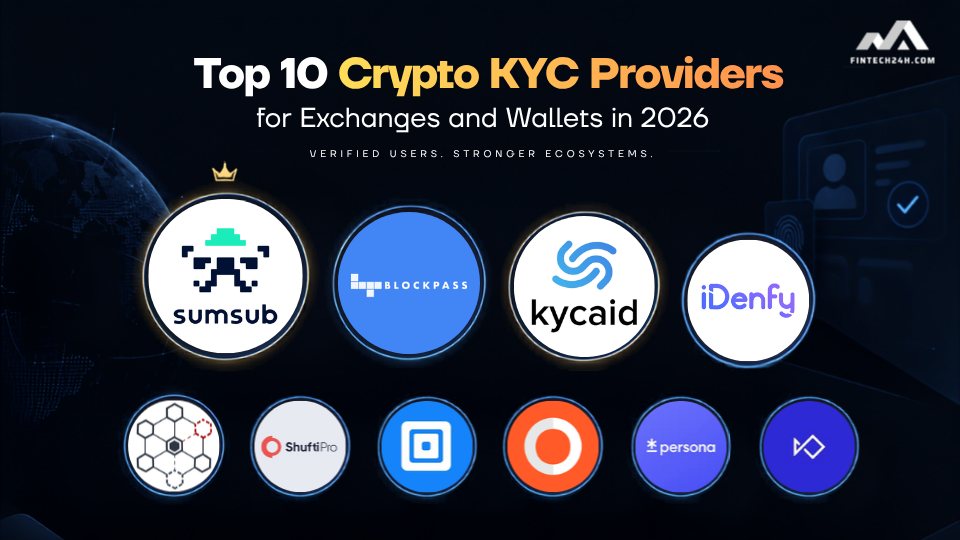
The top 10 crypto KYC providers for exchanges and wallets in 2026 include specialized platforms like Sumsub, Blockpass, and KYCAID that help digital asset businesses manage compliance, identity verification, and AML screening. As cryptocurrency markets mature, KYC has become a core part of operating a compliant exchange, wallet, or digital asset platform. Crypto businesses increasingly need to verify who their customers are, screen users against sanctions and PEP databases, detect identity fraud, assess customer risk, and monitor activity after onboarding.
At the same time, crypto compliance is becoming more complex. Traditional identity verification alone may not be enough for an exchange handling deposits and withdrawals. Businesses may also need to verify corporate customers, screen blockchain addresses, identify wallet ownership, monitor transactions, and support Travel Rule requirements.
This has created a growing market for specialized crypto KYC providers. Some focus primarily on identity verification, while others combine KYC with KYB, AML screening, wallet screening, transaction monitoring, and Travel Rule infrastructure.
For this list, we focus on established providers that are relevant to crypto exchanges, custodial and non-custodial wallets, Web3 platforms, and digital asset businesses. We have intentionally avoided extremely large general technology companies and concentrated on specialist compliance and identity-verification providers.
Note: This list is organized around practical relevance to crypto businesses rather than simply company size. Features, geographic coverage, integrations, and regulatory requirements can change, so businesses should validate current capabilities for their target markets before choosing a provider.
What Should Crypto Businesses Look for in a KYC Provider?
Choosing a KYC vendor for a crypto platform is different from choosing a standard identity verification service.
A useful provider should ideally cover several layers of the compliance lifecycle.
1. Identity Verification
The foundation is verifying that a customer is a real person. Common checks include:
- Government ID verification
- Document authenticity checks
- Selfie verification
- Facial matching
- Liveness detection
- Database verification
- Proof of address
2. AML and Sanctions Screening
KYC should not stop after confirming someone’s identity. Crypto businesses may also need to screen customers against:
- Sanctions lists
- PEP databases
- Adverse media
- Criminal or regulatory databases
- Other financial crime indicators
3. Crypto Wallet Screening
For exchanges and platforms handling blockchain transactions, wallet-level risk can be just as important as customer-level identity.
Wallet screening can help identify addresses associated with sanctions, fraud, scams, ransomware, mixers, or other high-risk activity.
4. KYB and UBO Verification
Crypto businesses increasingly onboard companies rather than only retail users. A suitable provider may therefore need to verify:
- Business registration
- Company ownership
- Directors
- Ultimate beneficial owners
- Authorized representatives
- Corporate risk information
The strongest solution depends on the business model rather than simply the number of countries or documents supported.
Top 10 crypto KYC providers for exchanges and wallets in 2026
1. Sumsub
Best for: Exchanges looking for an integrated crypto compliance platform

Sumsub has developed from an identity verification provider into a broader compliance platform covering KYC, KYB, AML, transaction monitoring, Travel Rule workflows, and crypto-specific compliance. If you are looking to scale your operations, you might also want to explore how to achieve interoperability between mobile wallets to ensure your infrastructure grows with your user base.
For crypto businesses, one of its notable advantages is that identity verification does not have to operate separately from blockchain-related compliance. Sumsub provides tools for unhosted wallet verification, Travel Rule workflows, crypto monitoring, and VASP due diligence alongside traditional KYC and KYB.
Its 2026 product updates also show continued investment in crypto-specific workflows. For example, Sumsub added additional options for unhosted wallet verification, including Satoshi Test support across additional blockchain networks.
The platform also supports business verification, allowing exchanges and other digital asset businesses to conduct KYB and verify associated parties. Its Travel Rule ecosystem includes VASP onboarding and due diligence workflows.
Key features
- Identity verification
- KYC and KYB
- AML screening
- Sanctions and PEP screening
- Transaction monitoring
- Crypto monitoring
- Travel Rule
- Unhosted wallet verification
- VASP due diligence
- Fraud detection
- Case management
Why consider Sumsub?
Sumsub is particularly relevant for crypto companies that want to consolidate multiple compliance functions rather than operate several disconnected vendors.
2. Blockpass
Best for: Web3 businesses, crypto exchanges, and wallets requiring crypto-native identity verification

Blockpass is one of the more crypto-focused providers in this list. Its product portfolio is built specifically around the needs of the digital asset ecosystem, including KYC, KYB, AML, Travel Rule solutions, and wallet verification. For those managing their own assets, understanding best Binance alternatives can provide a useful benchmark for storage security.
One of Blockpass’s distinguishing features is Unhosted Wallet KYC, which allows businesses to verify whether users control a particular crypto address. This can be useful for platforms interacting with non-custodial wallets.
Blockpass also offers On-Chain KYC, allowing businesses to verify attributes such as identity, age, geography, accredited-investor status, and AML or sanctions status while reducing the need to directly access sensitive personal information.
Its newer Crypto AML API-first solution can also screen wallet addresses without requiring the user to complete a full KYC flow, which can be useful for wallet-level risk checks before deposits, withdrawals, or other blockchain transactions.
Key features
- KYC
- KYB
- AML screening
- PEP and sanctions checks
- Unhosted Wallet KYC
- Wallet ownership verification
- Crypto AML screening
- On-Chain KYC
- Travel Rule
- API integration
Why consider Blockpass?
Blockpass stands out when crypto-native workflows and wallet verification are more important than simply performing conventional document verification.
3. KYCAID
Best for: Crypto businesses looking for configurable KYC and compliance workflows
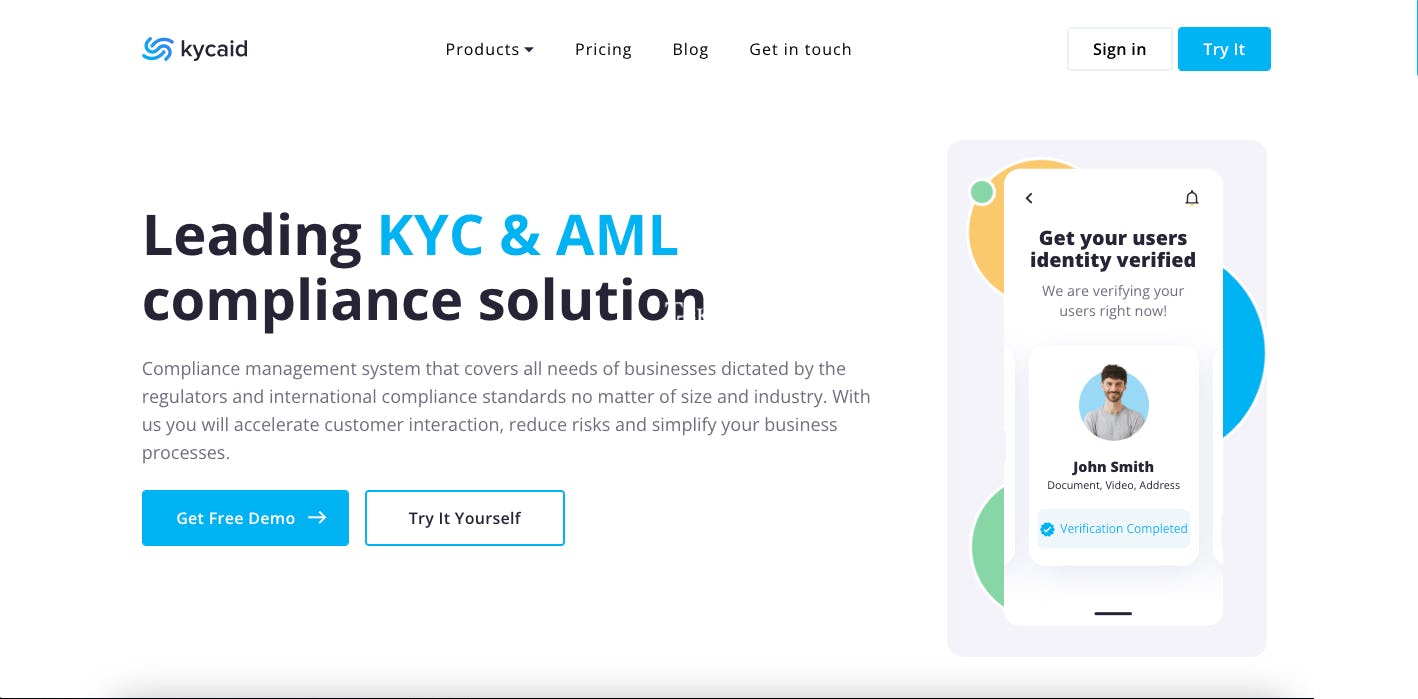
KYCAID provides a broader KYC and AML infrastructure designed for businesses across fintech, crypto, asset exchanges, NFT projects, and other regulated industries.
Its platform combines user verification with business verification, biometric checks, database screening, AML services, and risk-related tools. Crypto businesses can use these capabilities for onboarding customers while building additional checks into their compliance workflow.
KYCAID also supports crypto-related compliance functions, including continuous crypto transaction monitoring and Travel Rule workflows through third-party providers and specialized protocols.
The platform offers multiple integration approaches, including API, hosted forms, and mobile SDK options, giving development teams different ways to integrate KYC into an existing onboarding experience.
Key features
- Identity verification
- Biometric verification
- Liveness checks
- KYB
- UBO verification
- AML screening
- Adverse media
- Proof of address
- Crypto transaction monitoring
- Travel Rule support
- API and SDK integration
Why consider KYCAID?
KYCAID can be a practical option for businesses that want KYC, KYB, AML, and crypto compliance capabilities in a configurable workflow rather than a single-purpose identity check.
4. iDenfy
Best for: Crypto exchanges, DeFi projects, stablecoin businesses, and token launches
iDenfy has built a strong presence around identity verification and compliance for cryptocurrency and blockchain businesses. If you are looking for a comprehensive overview of the market leader, you can read our Binance CEO: Leadership and Vision for the Exchange.
Its crypto-focused offering covers KYC, KYB, AML screening, fraud prevention, and customer risk assessment. The platform states that it can extract information from more than 3,000 ID documents and support customers across more than 190 countries for crypto-related onboarding.
A particularly useful feature for crypto businesses is the ability to connect identity and risk information with wallet activity. iDenfy also provides options for IP and phone verification, fraud scoring, and reauthentication for higher-risk actions.
The company has also developed a dedicated stablecoin compliance offering that combines customer onboarding, sanctions and PEP screening, risk scoring, and compliance controls around asset movement.
Key features
- KYC
- KYB
- AML screening
- Sanctions and PEP screening
- Proof of address
- Fraud scoring
- Wallet-related risk assessment
- Customer risk assessment
- Face authentication
- Stablecoin compliance workflows
Why consider iDenfy?
iDenfy is particularly relevant for growing crypto companies that need more than basic KYC but may not want an excessively complex enterprise compliance stack.
5. KYC-Chain
Best for: Crypto businesses that want identity verification and blockchain wallet screening together

KYC-Chain focuses on combining traditional KYC and KYB processes with crypto-specific AML and wallet analysis.
Its platform supports document verification, selfie and liveness checks, sanctions and PEP screening, adverse media monitoring, business verification, and beneficial-owner checks.
The crypto side of the platform adds wallet screening and blockchain analytics. KYC-Chain states that its technology can analyze blockchain transaction patterns and more than 270 risk indicators and profiles.
Its wallet screening functionality can generate risk reports covering wallet risk scores, transaction history, exposure to illicit activity, and other risk indicators. The platform is positioned for exchanges, payment providers, fintech companies, and other businesses operating in digital assets.
Key features
- KYC
- KYB
- AML screening
- Sanctions and PEP screening
- Adverse media
- UBO verification
- Crypto wallet screening
- Blockchain analytics
- Wallet risk scoring
- Transaction monitoring
Why consider KYC-Chain?
Its main advantage is the connection between customer identity and blockchain risk, making it worth considering for businesses where wallet activity is an important part of compliance.
6. Shufti Pro
Best for: Crypto platforms wanting identity verification and wallet screening under one compliance framework

Shufti Pro offers KYC and AML infrastructure across a wide range of industries, with an increasingly crypto-specific product offering. As you refine your growth strategy, consider how a professional crypto community management agency can help you reach new users while maintaining high compliance standards.
Its crypto wallet screening solution is designed to connect a blockchain address with the verified identity of its owner. This creates a more complete risk picture than simply checking a wallet address in isolation.
The platform currently states that its crypto wallet screening covers more than 240 regions, with screening across sanctions lists and thousands of watchlists. It also provides KYC, KYB, AML, wallet screening, continuous monitoring, API integration, and risk scoring.
This identity-linked approach can be particularly relevant for exchanges and custodial businesses that need to connect customer due diligence with blockchain transaction risk.
Key features
- KYC
- KYB
- AML screening
- Sanctions screening
- PEP checks
- Crypto wallet screening
- Wallet-owner verification
- Continuous monitoring
- Risk scoring
- API and SDK integration
Why consider Shufti Pro?
Shufti Pro is worth considering when a crypto business wants to connect traditional customer verification with wallet-level compliance instead of treating them as completely separate systems.
7. ComplyCube
Best for: Growing exchanges and international digital asset platforms
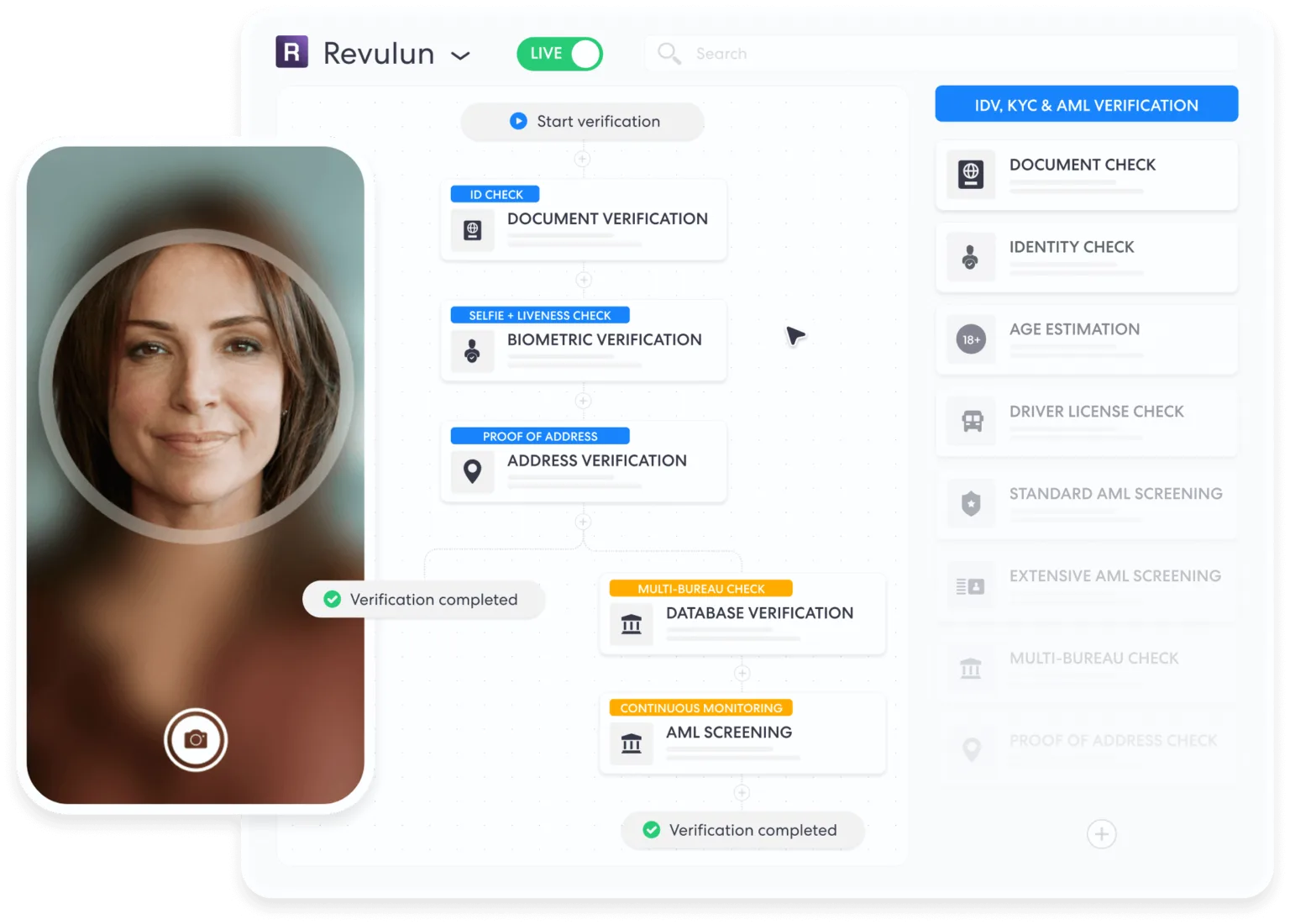
ComplyCube is a broader identity and compliance platform rather than a crypto-only company. However, it specifically supports cryptocurrency and digital asset businesses.
Its KYC capabilities include identity verification, document verification, biometric verification, liveness detection, AML screening, sanctions and PEP checks, adverse media, customer risk assessment, ongoing due diligence, and continuous monitoring.
ComplyCube also positions its infrastructure for international operations, supporting verification and compliance workflows across more than 220 countries and territories. Its customer base includes cryptocurrency exchanges, wallets, trading platforms, and other digital asset businesses.
Key features
- Identity verification
- Document verification
- Biometric verification
- Liveness detection
- KYC
- KYB
- AML screening
- Sanctions and PEP screening
- Adverse media
- Ongoing monitoring
- Customer risk assessment
Why consider ComplyCube?
ComplyCube makes sense for crypto businesses that prioritize global identity infrastructure and flexible compliance workflows, especially when they also operate in fintech or other regulated sectors.
8. Ondato
Best for: Crypto businesses prioritizing fast onboarding and customer due diligence
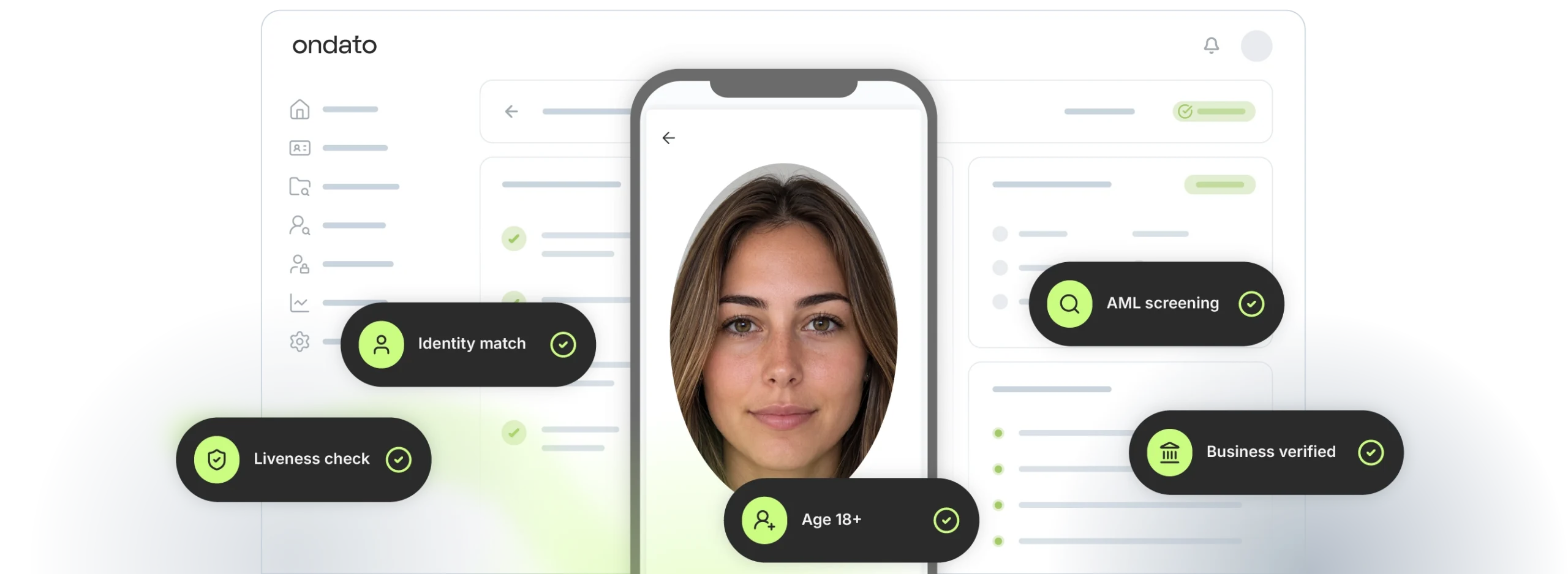
Ondato provides identity verification, AML, KYB, and customer due diligence solutions for businesses operating across international markets.
Its cryptocurrency offering specifically targets exchanges, wallet providers, and blockchain companies. The platform supports CDD workflows for both individual and business customers, including enhanced due diligence capabilities.
Ondato reports coverage across 192 countries and an average onboarding time of around 30 seconds, alongside document verification, biometric and liveness checks, AML screening, and business verification.
Key features
- KYC
- Customer due diligence
- Enhanced due diligence
- AML screening
- Sanctions screening
- PEP screening
- Adverse media
- KYB
- Biometric verification
- Liveness detection
- Ongoing monitoring
Why consider Ondato?
Ondato can be relevant for crypto businesses that need to balance compliance requirements with a relatively low-friction onboarding experience.
9. Persona
Best for: Crypto platforms that need highly configurable identity workflows
Persona is a general identity infrastructure provider with dedicated solutions for crypto businesses.
Its KYC and Crypto Watchlist solution combines government ID verification, selfie liveness, and crypto wallet address screening. Businesses can also create workflows that automatically trigger crypto watchlist reports after a user completes identity verification.
This workflow-based architecture can be useful when a crypto platform wants more control over how different verification and risk checks are triggered.
Persona has also continued expanding its identity infrastructure in 2026, including reusable identity functionality and support for digital identity ecosystems. Its 2026 product releases also mention work involving on-chain finance and verified identity credentials.
Key features
- KYC
- ID verification
- Selfie verification
- Liveness
- Crypto wallet watchlist screening
- Custom workflows
- Risk decisioning
- Reusable identity
- API integration
- KYB capabilities
Why consider Persona?
Persona is particularly interesting for platforms where workflow customization and user experience are as important as the underlying identity checks.
10. Sardine
Best for: Crypto businesses with significant fraud and transaction-risk concerns
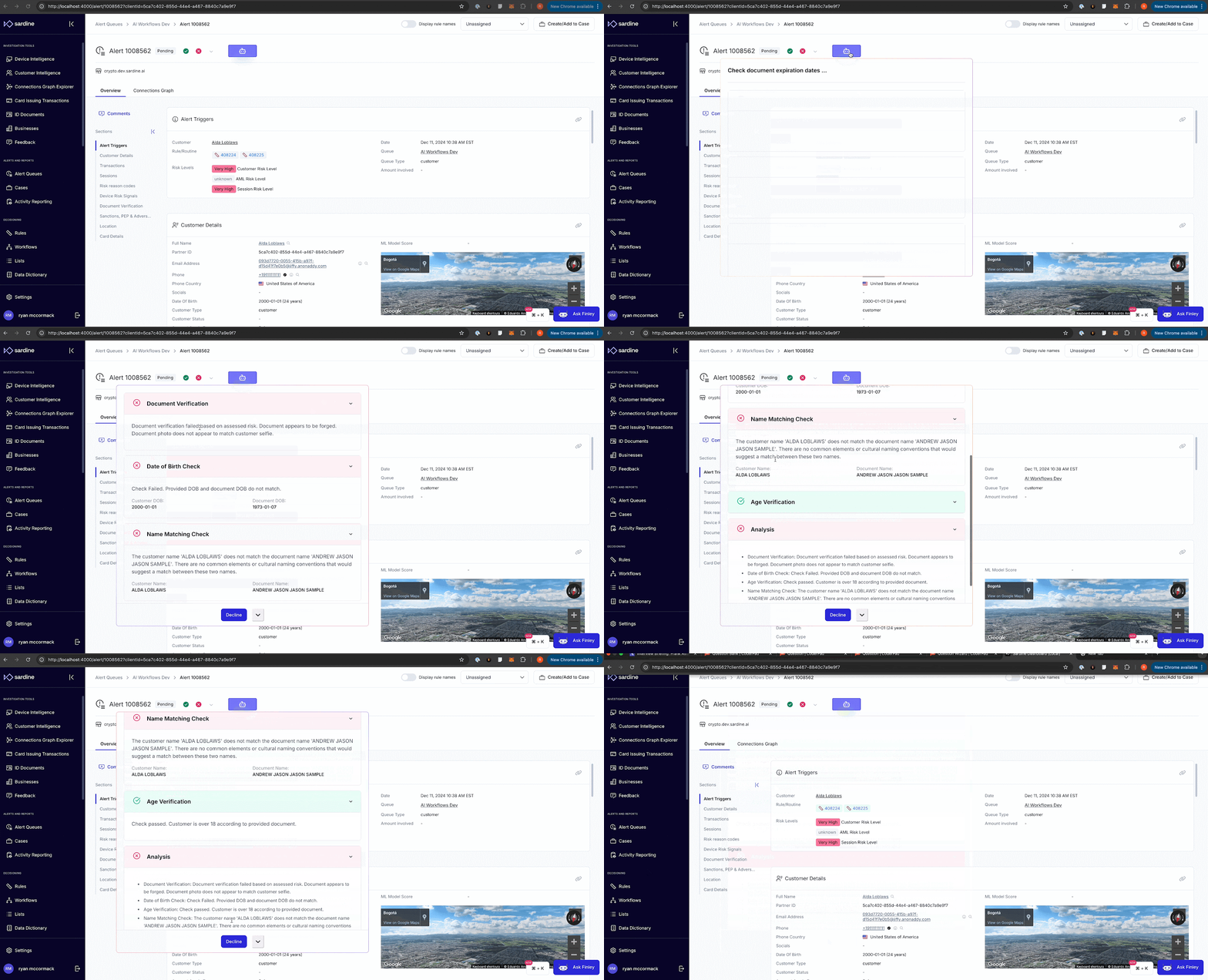
Sardine takes a somewhat different approach from traditional KYC providers. Its platform combines identity verification with fraud prevention, AML, transaction monitoring, and crypto risk intelligence.
That makes it relevant to exchanges and financial platforms where simply verifying an ID is not enough.
Sardine’s 2026 product updates show continued development of crypto monitoring. Its platform added crypto risk-delta detection, allowing teams to focus on meaningful changes in wallet risk rather than repeatedly reviewing unchanged risk profiles. It also expanded batch crypto screening to 126 blockchain networks.
Sardine also supports broader KYC and compliance workflows, including international tax ID verification, counterparty sanctions monitoring, and business verification.
Key features
- KYC
- Identity verification
- Fraud prevention
- AML
- Sanctions screening
- Crypto wallet screening
- Transaction monitoring
- Device intelligence
- Behavioral risk signals
- KYB
- Risk-based workflows
Why consider Sardine?
Sardine is especially relevant for businesses where fraud prevention and transaction risk are closely connected to KYC.
How to Choose the Right Crypto KYC Provider
There is no single KYC provider that fits every crypto business.
A centralized exchange processing millions of retail users may have very different requirements from a non-custodial wallet, stablecoin platform, DeFi application, or institutional crypto service.
For a centralized crypto exchange
Look for a combination of:
- High-volume identity verification
- AML screening
- KYB
- Transaction monitoring
- Wallet screening
- Travel Rule support
- Case management
- Global document coverage
A broader platform such as Sumsub or Blockpass may be relevant when several of these functions need to work together.
For a crypto wallet
Wallet businesses should pay particular attention to:
- Wallet ownership verification
- Unhosted wallet compliance
- AML wallet screening
- Sanctions screening
- User identity verification
- Transaction monitoring
Blockpass, KYC-Chain, Shufti Pro, Persona, and other providers with wallet-related capabilities can be evaluated based on the wallet model and regulatory footprint.
For a DeFi or Web3 platform
Web3 businesses may want to minimize unnecessary collection of personal data while still meeting applicable compliance requirements.
Features such as reusable identity, on-chain KYC, wallet ownership verification, and configurable verification rules can therefore become important.
For a rapidly expanding international platform
Geographic coverage becomes particularly important.
A provider may claim broad global coverage, but that does not necessarily mean that every document type, identity database, or verification method performs equally well in every country.
Businesses should test the provider against their actual target customer base, especially emerging markets and countries where local documents can be more difficult to verify.
Key Trends Shaping Crypto KYC in 2026
1. KYC Is Moving Beyond Initial Onboarding
Modern compliance programs increasingly treat KYC as an ongoing process rather than a one-time event.
Continuous monitoring, periodic reviews, transaction monitoring, and risk reassessment are becoming increasingly important as customer behavior changes.
2. Wallet Risk Is Becoming Part of Customer Risk
For crypto platforms, the identity of the customer is only one part of the picture.
The wallets a customer interacts with can provide additional information about potential exposure to sanctions, scams, illicit services, or other high-risk activity.
This is why several providers in this list now combine identity verification with wallet screening.
3. Unhosted Wallets Require More Attention
Self-hosted or unhosted wallets create a different compliance problem because there may be no regulated intermediary on the other side of the transaction.
Providers such as Blockpass and Sumsub have developed specific wallet ownership verification capabilities for this use case.
4. Travel Rule Infrastructure Is Becoming More Important
The Travel Rule requires relevant virtual asset businesses to exchange specified information about the originator and beneficiary of certain transfers, with exact requirements varying by jurisdiction.
For example, current requirements differ significantly between the EU, Australia, the UK, Hong Kong, Singapore, the US, and other markets.
Frequently Asked Questions
1. What is a crypto KYC provider?
A crypto KYC provider supplies technology that helps cryptocurrency businesses verify customer identities and meet applicable compliance requirements. Depending on the provider, services can include identity verification, biometric checks, AML screening, KYB, sanctions screening, wallet screening, transaction monitoring, and Travel Rule support.
2. Why do crypto exchanges need KYC?
Crypto exchanges may be subject to KYC and AML requirements depending on their jurisdiction, licensing status, business model, and activities. KYC helps businesses establish customer identity and support customer due diligence and financial crime controls.
3. What is the best KYC provider for a crypto exchange?
The right provider depends on the exchange’s requirements. Factors such as geographic coverage, transaction volume, AML capabilities, KYB, wallet screening, Travel Rule support, integration options, pricing, and manual-review requirements should be evaluated before making a decision.
4. Do crypto wallets need KYC?
It depends on the type of wallet, business model, jurisdiction, and services offered. Custodial wallets and businesses providing regulated services may face different obligations from purely self-custodial software wallets. Businesses should assess their specific regulatory position before implementing a KYC program.
5. What is crypto wallet screening?
Crypto wallet screening analyzes blockchain addresses for potential risk indicators. Depending on the provider, screening can identify exposure to sanctions, fraud, illicit services, ransomware, mixers, or other high-risk entities.