
Performance overhead and runtime constraints
While developers often ask if you can python develop mobile apps, the reality involves significant runtime trade-offs compared to Swift or Kotlin. Python is an interpreted language, meaning it requires a virtual machine layer to execute code on mobile operating systems.
This architecture introduces a baseline performance tax. It manifests as slower startup times and higher CPU utilization during complex UI rendering or data processing tasks.
Memory management in Kivy and BeeWare
Frameworks like Kivy and BeeWare function by bundling a Python interpreter within the application package. This approach creates a substantial memory footprint before your business logic even executes.
On mobile devices, where the OS aggressively manages background processes to preserve battery, this overhead can trigger premature application termination if the memory threshold is exceeded. Unlike native environments that leverage Automatic Reference Counting (ARC) or precise garbage collection, Python’s garbage collector must operate within the constraints of the bundled interpreter. This often leads to non-deterministic memory spikes during heavy object instantiation.
Native API bridging latency
Mobile applications frequently require access to hardware-specific features like the camera, GPS, or biometric sensors. When you use Python to develop mobile apps, your code must communicate with native APIs through a Foreign Function Interface (FFI) or a bridge layer.
Every time a Python function calls a native method, the system must perform type conversion and context switching between the Python runtime and the underlying C/Objective-C/Java environment. This bridging process introduces micro-latencies that accumulate during high-frequency operations, such as real-time sensor data processing or complex gesture handling. For those considering alternatives, a deeper dive into Python programming vs Java can be insightful.
While these delays are negligible for simple CRUD applications, they become critical bottlenecks in performance-sensitive scenarios like image processing or high-frame-rate animations, similar to identifying performance bottlenecks in Python programming for data science.
Evaluating if you can python develop mobile apps for production
While Python is a powerhouse for backend logic and data science, its application in mobile development relies on frameworks like Kivy or BeeWare to bridge the gap between Python code and mobile operating systems. These tools function by wrapping Python scripts within a native container, but they do not compile to native machine code in the same way Swift or Kotlin do.
This architectural difference introduces specific trade-offs regarding performance and platform integration that developers must weigh before committing to a python development roadmap.
UI/UX consistency across platforms
Frameworks like Kivy utilize their own graphics engine, such as OpenGL ES, to render interface elements. This approach ensures that your application looks identical on both Android and iOS, which simplifies the design process.
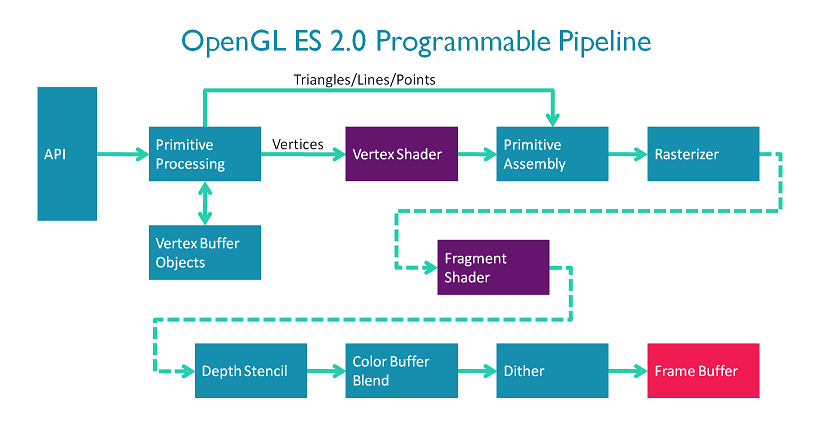
However, this creates a significant disconnect from the native “look and feel” that users expect. Native components—such as the specific way a scroll view bounces on iOS or the Material Design ripple effect on Android—are not automatically inherited. Developers often find themselves manually recreating these subtle interactions, which can lead to a non-standard user experience that feels foreign to the platform’s ecosystem, raising questions about is Python programming hard for such tasks.
Binary size and distribution challenges
A primary technical hurdle when you can python develop mobile apps is the resulting binary size. Because mobile operating systems do not include a Python interpreter by default, your application must bundle the entire Python runtime, standard libraries, and any external dependencies within the APK or IPA file.
A simple “Hello World” application written in Python can easily exceed 20MB to 50MB, whereas an equivalent native app might occupy less than 2MB. This bloat increases download times for users and can negatively impact conversion rates in app stores, particularly in regions with limited cellular bandwidth.
Furthermore, managing these large binaries requires careful attention to build pipelines. Linking C-based Python extensions for cross-compilation often triggers complex dependency errors that are absent in standard native development environments. Tools for efficient Python development with VSCode can help streamline such processes.
Common failure points in Python mobile deployment
Deploying Python applications to mobile environments often hits a wall due to the fundamental architectural differences between desktop OS environments and mobile sandboxes. While frameworks like Kivy or BeeWare attempt to bridge this gap, developers frequently encounter runtime crashes and performance bottlenecks that do not exist in standard Python environments.
Dependency resolution issues — Troubleshooting missing C-extensions and library compatibility on mobile architectures
Python relies heavily on C-extensions for performance, such as NumPy, Pandas, or cryptography libraries. When you attempt to compile these for mobile architectures like ARM64, the build process often fails because the underlying C code expects headers or system libraries absent in Android or iOS.
You must cross-compile these dependencies manually using tools like python-for-android or Briefcase. Even then, binary compatibility is not guaranteed. If a library depends on specific POSIX features or dynamic linking behaviors not supported by the mobile kernel, the application will throw an ImportError or Segmentation Fault immediately upon launch. Always check the requirements.txt against the target architecture’s specific limitations before initiating a build.
App store submission hurdles — Navigating platform-specific restrictions regarding interpreted code execution
Apple’s App Store Review Guidelines present a significant challenge for Python-based mobile apps, such as a Binance app for mobile trading. Section 2.5.2 of the guidelines strictly prohibits apps from executing code that is downloaded or interpreted at runtime, unless it is a standard scripting language used for legitimate user-facing functionality.
Because Python is an interpreted language, Apple’s automated scanners may flag your application for containing a dynamic interpreter. To mitigate this risk, you must ensure your Python bytecode is bundled as static assets within the application bundle and that you are not using exec() or eval() on remotely fetched data.
Google Play Store is generally more permissive, but both platforms require that your app maintains a consistent performance profile. If the overhead of the Python interpreter causes the app to exceed startup time thresholds, your submission will likely be rejected for poor user experience.
Alternative architectural patterns for Python developers
When you realize the constraints of direct mobile deployment, shifting your strategy toward architecture-heavy patterns allows you to leverage Python’s strengths without fighting the limitations of mobile runtimes. Rather than forcing Python to act as a primary UI driver, these methods treat it as a robust engine for logic and data.
Backend-driven mobile development — Moving business logic to Python-based APIs to minimize client-side complexity
This approach offloads heavy computation, complex validation, and data orchestration to a Python-based backend, typically using FastAPI or Django. By exposing these functions through RESTful or GraphQL APIs, the mobile application acts primarily as a thin client.

This architecture ensures that your core business logic remains in a single, testable Python codebase, while the mobile app focuses strictly on UI rendering and user interaction. For example, a financial calculation engine written in Python can process real-time market data and return JSON payloads to a Swift or Kotlin frontend. This separation of concerns prevents the need to port complex algorithms to mobile-native languages, reducing the risk of logic drift between platforms. Investing in professional python development practices can help teams maintain this separation effectively.
Hybrid integration strategies — Using Python for data processing modules while keeping UI in native languages
For applications requiring local data processing or machine learning inference, hybrid integration allows Python to run as a sidecar or a library within the mobile environment. Tools like Chaquopy for Android or PyObjC for iOS enable developers to execute Python scripts directly within the native host app, making it accessible even for beginners.
This is particularly effective for offloading tasks like image processing, natural language analysis, or local data parsing to Python libraries like NumPy or Pandas. The native UI layer handles the user experience, while the Python bridge manages the heavy lifting in the background.
This strategy mitigates performance bottlenecks associated with full-stack Python frameworks by isolating Python execution to specific, performance-critical modules rather than the entire application lifecycle. Developers must carefully manage the bridge overhead, as frequent data serialization between the native environment and the Python interpreter can introduce latency if not optimized for asynchronous execution.
Frequently Asked Questions
Production viability of Python for mobile applications
Yes, but with significant caveats. Frameworks like Kivy and BeeWare allow Python code to run on mobile, but they often struggle with native UI performance, large binary sizes, and limited access to platform-specific APIs compared to Swift or Kotlin.
Diagnostic signs of Python performance degradation in mobile environments
Key indicators include high memory consumption, sluggish UI thread response, difficulty integrating native SDKs (like ARKit or complex payment gateways), and excessive app startup times.