
Quantifying the total cost of ownership in a python development roadmap
A realistic python development roadmap must account for the lifecycle cost of technical debt, scaling infrastructure, and human capital. Financial planning for a Python-based project often fails because stakeholders underestimate the long-term maintenance of the Global Interpreter Lock (GIL) and the necessity of horizontal scaling strategies.
By mapping out resource allocation against specific development milestones, firms can avoid the common trap of under-budgeting for performance optimization during the transition from prototype to production. If your project requires specialized infrastructure, you might consider consulting blockchain development companies to leverage their expertise in high-concurrency systems.
Infrastructure and cloud compute overhead: Analyzing the cost-to-performance ratio of Python applications

Python is notoriously memory-intensive compared to compiled languages like Go or Rust. When building your roadmap, you must allocate budget for high-memory instances on platforms like AWS (e.g., r6g instances) or GCP.
A critical financial metric is the cost per request; because Python’s execution speed is slower, you will likely require 2x to 3x the compute instances to handle the same throughput as a C++ service. Your roadmap should include a dedicated phase for profiling with tools like py-spy or cProfile before major scaling events to ensure that cloud spend does not spiral as user concurrency increases.
Talent acquisition and retention expenditures: Calculating the financial impact of hiring versus outsourcing
The roadmap for scaling a Python team involves a choice between internal expertise and external agencies. Hiring a senior engineer in the US market currently commands a salary range of $140,000 to $190,000, plus overhead.
If your roadmap includes building complex data pipelines using libraries like Pandas or PySpark, you need specialists who understand memory management. Outsourcing to blockchain development agencies can reduce short-term burn rates by 30-40%, but it creates a long-term dependency risk. A prudent roadmap allocates 15% of the total budget for knowledge transfer and documentation, ensuring that if you choose to outsource, the internal team retains the ability to maintain the codebase once the contract concludes.
Strategic value drivers of a python development roadmap
A structured enterprise software strategy functions as a capital allocation tool, ensuring engineering resources align with long-term financial objectives. By mapping technical milestones against business KPIs, organizations move from reactive coding to proactive infrastructure investment.
This roadmap identifies where technical debt reduction yields the highest ROI, specifically by prioritizing modular architecture over monolithic legacy systems.
Accelerating time-to-market for data-intensive products
The primary financial advantage of a well-defined roadmap is the reduction of the software development lifecycle (SDLC) through the strategic selection of Python’s mature library ecosystem. Instead of building from scratch, a roadmap prioritizes the integration of high-performance libraries like Pandas for data manipulation, NumPy for numerical computing, and PyTorch or TensorFlow for machine learning pipelines.
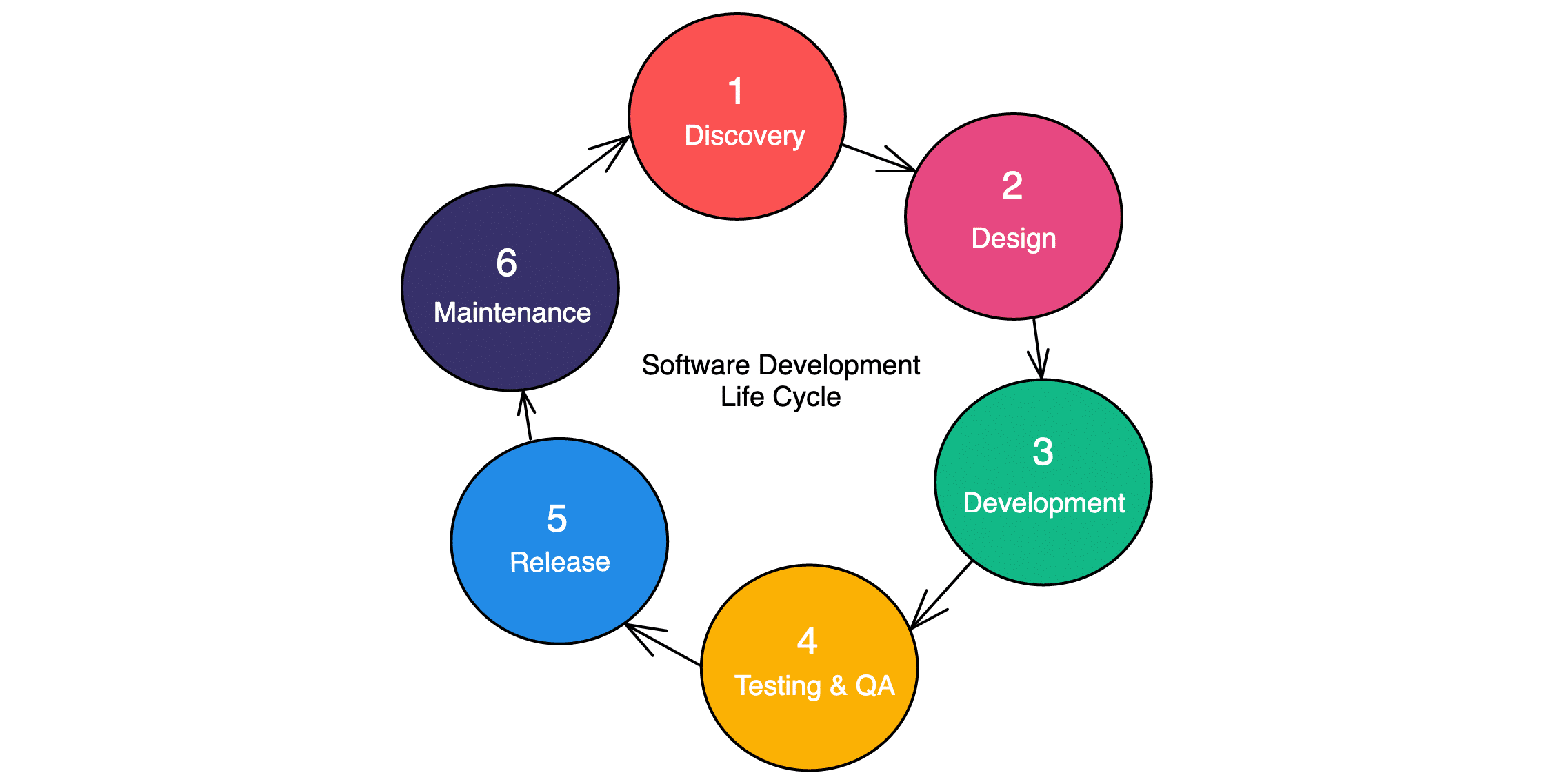
By scheduling the adoption of these pre-built frameworks early in the development cycle, teams can bypass months of low-level implementation. For example, implementing a predictive analytics module using Scikit-learn typically requires 60-70% less development time compared to custom-coded statistical engines, directly impacting the burn rate and enabling faster revenue generation from data-driven features.
Operational efficiency through automation
A roadmap identifies high-frequency, low-value manual tasks that act as a drag on operational margins. By scheduling the implementation of Python-based automation scripts—using libraries like Selenium for web testing or Airflow for data pipeline orchestration—firms can quantify cost savings through reduced manual labor hours.
A typical roadmap milestone might involve replacing manual spreadsheet reconciliation with a Pandas-based automation script. If an analyst spends 10 hours weekly on manual data cleaning, automating this process at a cost of 40 development hours results in a break-even point within just one month of operation. This shift from human-in-the-loop processes to automated Python workflows lowers the cost-per-transaction, allowing the business to scale its data processing capacity without a proportional increase in headcount expenses.
Measuring return on investment for technical debt management
Quantifying the financial impact of a scalable python architecture requires mapping technical milestones to capital expenditure (CapEx) and operational expenditure (OpEx) cycles. When teams prioritize feature velocity over architectural integrity, they incur technical debt that functions like a high-interest loan.
To measure ROI, track the ‘Interest Rate’ of your codebase: the delta between the time spent on new feature development versus the time consumed by bug fixes and refactoring legacy Python modules.
Balancing rapid prototyping against production stability
Early-stage Python projects often utilize frameworks like FastAPI or Flask for rapid prototyping to reach product-market fit. While this accelerates the roadmap, it frequently leads to ‘spaghetti’ dependency management.
Financial risk manifests when the cost of refactoring these prototypes for production-grade stability exceeds the revenue generated by the initial speed-to-market advantage. To evaluate this trade-off, apply the Technical Debt Ratio (TDR) formula:
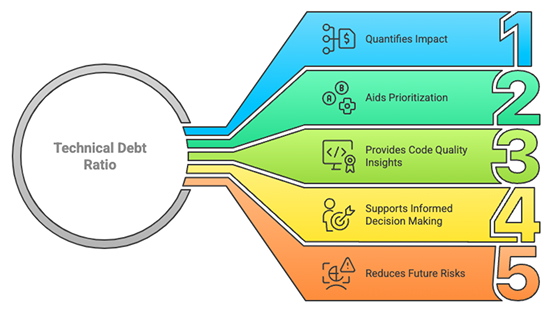
- Remediation Cost: The estimated hours to refactor code to meet production standards, multiplied by the hourly developer rate.
- Development Cost: The total historical cost to build the current codebase.
- TDR Calculation: (Remediation Cost / Development Cost) 100.
A TDR below 5% is generally considered manageable. If your roadmap forces the TDR above 20%, the financial burden of maintenance will likely stall future development, as resources shift from innovation to debt servicing. Use tools like SonarQube or Radon to calculate cyclomatic complexity metrics, which serve as leading indicators for when your roadmap must pivot from feature expansion to infrastructure hardening. By formalizing these checkpoints into your roadmap, you transform technical debt from an invisible liability into a managed financial instrument.
Risk mitigation and financial forecasting
Integrating a Python development roadmap into your financial planning requires accounting for technical debt and the cost of talent acquisition. A well-structured roadmap acts as a risk register, allowing CFOs to allocate budget for refactoring cycles before performance degradation impacts revenue.
By mapping milestones to specific capital expenditures, you avoid the common trap of underfunding the transition from prototype to production-grade infrastructure.
Scalability bottlenecks and their financial implications
Python’s Global Interpreter Lock (GIL) often creates a performance ceiling that necessitates architectural shifts as user concurrency grows. When your roadmap reaches the threshold of high-frequency data processing or real-time analytics, you will likely encounter CPU-bound bottlenecks.
Failing to account for this in your financial projections leads to emergency spending on cloud infrastructure or expensive migrations to C-extensions or Rust-based microservices. To mitigate these risks, your roadmap should include specific checkpoints for performance benchmarking using tools like Py-Spy or Scalene. Financial forecasting must incorporate the following cost drivers:
- Infrastructure Scaling: Moving from vertical scaling (larger cloud instances) to horizontal scaling (distributed task queues like Celery or Redis) increases operational complexity and DevOps overhead.
- Engineering Talent: As the roadmap progresses toward complex asynchronous programming using asyncio or FastAPI, the salary requirements for senior-level Python developers with high-concurrency expertise typically rise by 20-30% compared to standard backend roles.
- Technical Debt Interest: If the roadmap prioritizes rapid feature delivery over code quality, the cost of refactoring legacy Python scripts for multi-core utilization can exceed the original development cost by a factor of 1.5x.
By scheduling these technical pivots as distinct financial line items, you transition from reactive spending to proactive investment. This ensures that the roadmap remains a viable document for stakeholders, rather than a source of unexpected budget overruns when the system hits its scaling limit.
Performance metrics for tracking roadmap success
Measuring the efficacy of a python development strategy requires moving beyond simple milestone completion. You must track quantitative output against capital allocation to ensure the technical trajectory aligns with financial objectives. Use the following KPIs to audit your progress at each quarterly review.

Technical debt ratio and velocity
A successful roadmap should show a decreasing trend in technical debt relative to new feature delivery. Monitor your Code Churn and Cyclomatic Complexity using tools like SonarQube or Radon.
If your roadmap prioritizes rapid prototyping without scheduled refactoring phases, your technical debt ratio—calculated as (Remediation Cost / Development Cost)—will spike, signaling a high risk of future budget overruns.
Resource utilization and cost-per-feature
Track the actual burn rate against the projected roadmap budget. Calculate the cost-per-feature by dividing the total sprint cost (including developer salaries, cloud infrastructure, and tool licensing) by the number of story points delivered.
If the cost-per-feature exceeds the initial roadmap estimate by more than 15%, investigate whether the bottleneck is due to inefficient architectural choices or scope creep in the development plan.
Deployment frequency and mean time to recovery
A robust roadmap should facilitate a transition toward CI/CD maturity. Track your Deployment Frequency and Mean Time to Recovery (MTTR). If the roadmap is functioning correctly, you should observe an increase in deployment frequency alongside a decrease in MTTR.
Use GitHub Actions or GitLab CI logs to generate these metrics. If these numbers remain stagnant, the roadmap is failing to address the underlying infrastructure automation required for scalable Python development.
Dependency management and security audits
Your roadmap must include specific milestones for auditing third-party libraries. Use Safety or Bandit to scan your environment for vulnerabilities. Track the number of outdated dependencies versus the number of patched vulnerabilities per quarter.
A roadmap that ignores the security lifecycle of the Python ecosystem—specifically the management of PyPI packages—creates a hidden financial liability that can lead to catastrophic data breach costs later in the project lifecycle.
Frequently Asked Questions
Calculation methods for the ROI of a python development roadmap
ROI is calculated by comparing the total cost of ownership (TCO)—including developer salaries, cloud infrastructure, and library licensing—against the projected efficiency gains or revenue growth generated by the software lifecycle.
Key financial metrics for evaluating a python development roadmap
Key metrics include Cost Per Feature (CPF), Time-to-Market (TTM) for critical modules, and the ratio of technical debt remediation costs versus new feature development expenditure.