
Quantifying the baseline cost of technical training
Organizations investing in python programming for beginners face a dual-layered financial commitment: immediate capital outlay for educational resources and the latent cost of reduced output during the initial skill-acquisition phase. For entry-level staff with no prior coding background, the learning curve is steeper, requiring a structured approach that balances theoretical foundations with immediate, practical application.
Direct expenditure on curriculum and platforms
The cost structure for training novice developers varies significantly based on the delivery model. Subscription-based platforms like Coursera (specifically the Google IT Automation with Python Professional Certificate) or Udemy offer low-cost, scalable entry points, typically ranging from $30 to $50 per month per user.
These platforms are ideal for self-paced learning but often lack the accountability required for absolute beginners, leading to higher attrition rates. Conversely, instructor-led corporate workshops—such as those provided by General Assembly or specialized boutique firms—command a premium, often costing between $1,500 and $3,000 per employee for a multi-week cohort.
While the upfront cost is higher, these programs provide real-time feedback loops and curriculum customization. This is critical for beginners who require immediate correction of syntax errors and logical fallacies before they become ingrained habits.
Opportunity costs of employee time
The most significant, yet often overlooked, expense is the opportunity cost of lost productivity. For a beginner, the transition from non-technical roles to basic Python proficiency typically requires 80 to 120 hours of focused study. If an employee earns an average hourly rate of $40, the hidden cost of this training time reaches $3,200 to $4,800 per person.
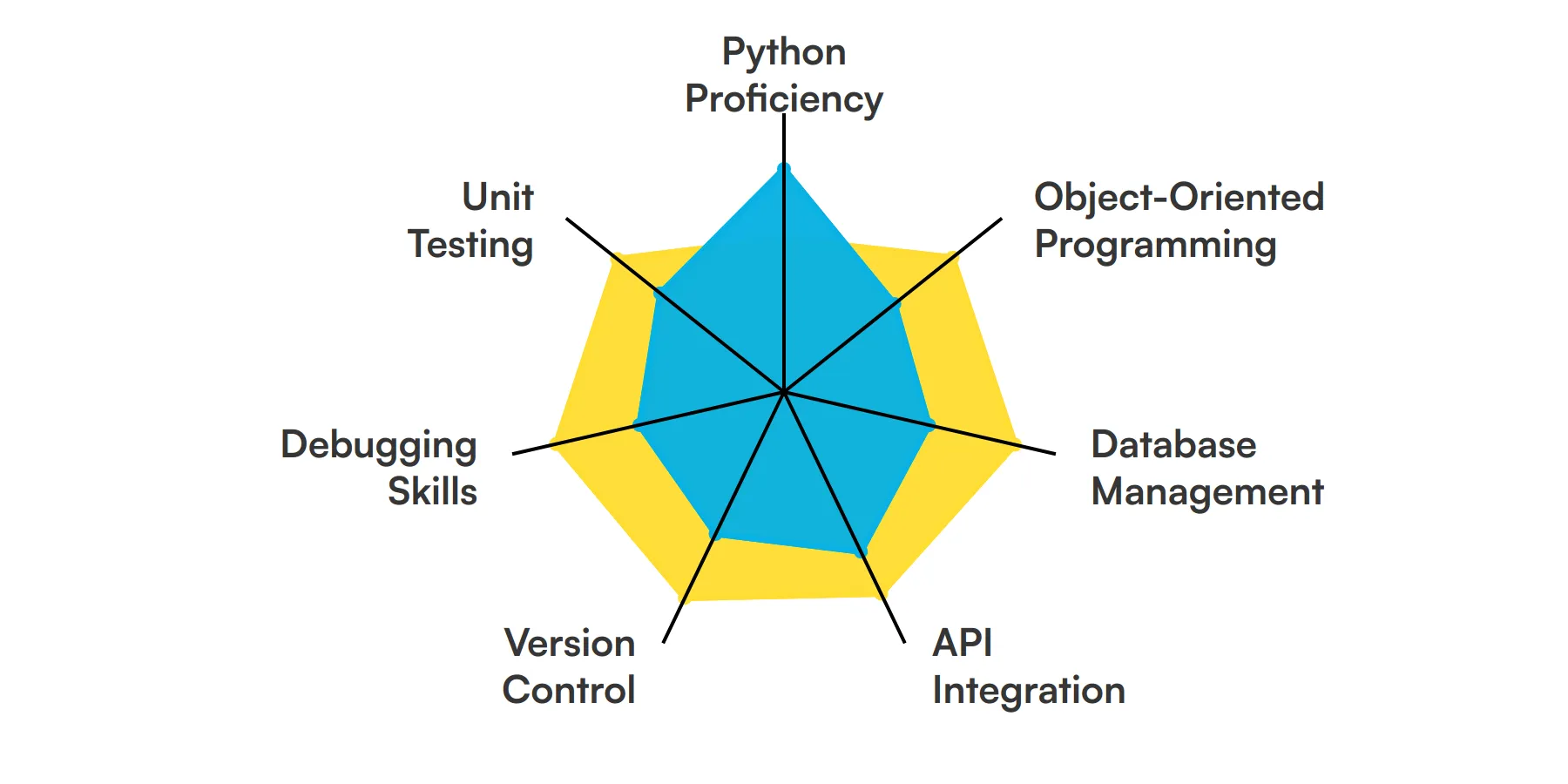
During the first four to six weeks of training, employees experience a ‘productivity dip’ where their output in their primary role decreases by approximately 30-50%. To mitigate this, firms must account for the ‘ramp-up’ period, ensuring that the training schedule does not overlap with critical project deadlines.
For beginners, the focus should remain on high-impact, low-complexity tasks—such as automating spreadsheet data entry or basic web scraping. This ensures that the training provides a measurable return on investment within the first quarter of implementation.
Measuring productivity gains from python programming for beginners
For entry-level analysts and financial clerks, the transition from manual spreadsheet manipulation to Python scripting yields immediate, quantifiable efficiency gains. By replacing repetitive manual data entry with basic libraries like pandas and openpyxl, beginners can reduce the time spent on routine tasks by 60-80%. This shift transforms the role of a junior employee from a data processor to a data analyst, significantly increasing the output value per hour worked.
Automation of repetitive data workflows
Beginners often spend 10 to 15 hours weekly on manual tasks such as reconciling transaction logs or formatting CSV reports from legacy banking systems. Implementing a simple Python script to automate these workflows—such as using os and shutil modules to move files or pandas to merge datasets—can reduce this time to under 30 minutes.
For a financial firm, this represents a recovery of approximately 50 hours of productive labor per month per employee. When calculating the economic impact, multiplying these saved hours by the employee’s hourly wage provides a direct metric for the return on investment (ROI) of training programs.
Reduction in dependency on external software vendors
Many organizations pay high annual licensing fees for proprietary data visualization or reporting tools that offer limited customization. Beginners who learn Python can build internal, lightweight tools, often leveraging integrated development environments for Python development with VSCode, using libraries like Streamlit or Matplotlib to generate bespoke reports tailored to specific business needs.
This reduces the necessity for expensive enterprise software seats, which can cost between $500 and $2,000 per user annually. By developing internal solutions, companies avoid vendor lock-in and eliminate the overhead associated with third-party software updates and integration support.
The cost-benefit analysis for beginners is clear: the one-time investment in foundational Python training is frequently offset by the savings from canceling just one or two redundant software subscriptions within the first six months of implementation.
Framework for calculating training ROI
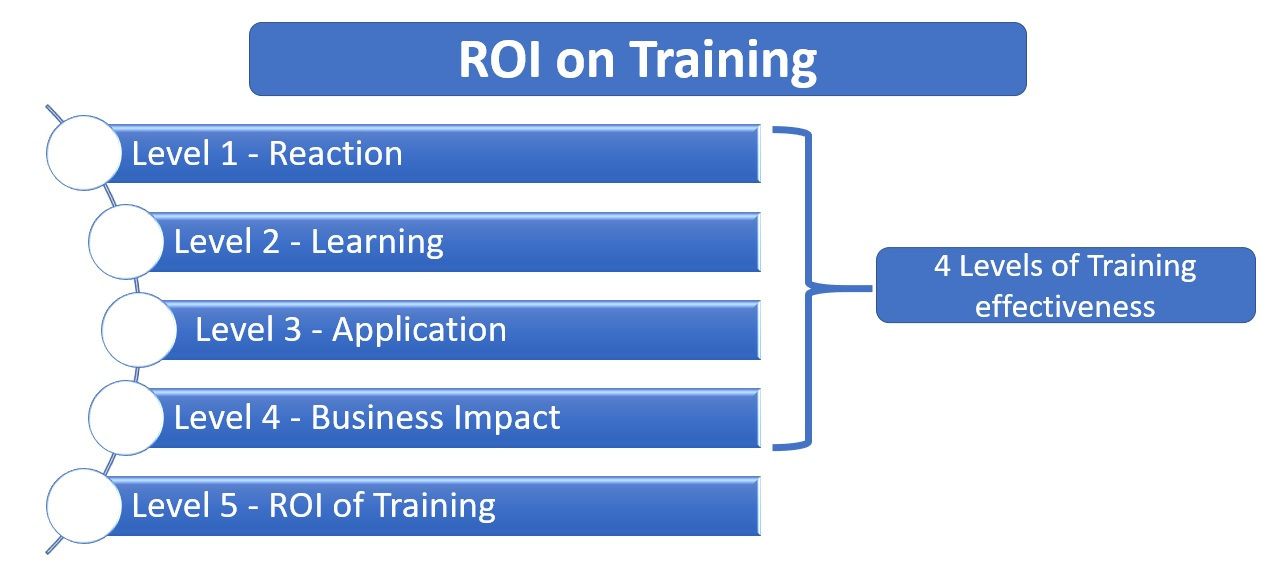
Quantifying the economic impact of python programming for beginners requires a shift from measuring hours spent in training to tracking tangible output improvements. Organizations often fail to capture value because they treat coding literacy as a generic skill rather than a specific tool for operational efficiency.
To calculate ROI, divide the total net benefit—calculated as the value of time saved plus new revenue generated—by the total cost of training, including licenses for platforms like DataCamp or Coursera, instructor fees, and the opportunity cost of employee time.
Defining key performance indicators for technical literacy
Selecting metrics that link coding skills to specific business outcomes is essential for justifying training budgets. For beginners, the focus should remain on automation of repetitive tasks rather than complex software engineering. Effective KPIs include:
- Time-to-Task Completion: Measure the reduction in hours spent on manual data cleaning or reporting using Python scripts compared to legacy spreadsheet methods.
- Error Rate Reduction: Track the decrease in manual data entry errors after transitioning to automated Python-based workflows.
- Tool Adoption Rate: Monitor the percentage of beginners who successfully deploy at least one functional script to production environments within 90 days of training.
- Workflow Integration: Count the number of internal processes migrated from manual Excel macros to Python-based automation.
When beginners learn Python, the primary economic gain comes from the ‘automation dividend.’ For instance, an analyst who spends 10 hours a week manually consolidating CSV files can reduce this to 15 minutes through a basic 20-line Pandas script. By assigning a dollar value to these reclaimed hours, firms can demonstrate a direct correlation between foundational coding training and increased billable capacity. Avoid tracking vanity metrics like ‘number of lines written’ or ‘courses completed,’ as these do not reflect operational efficiency or financial impact.
Risk assessment of skill decay and retention
For beginners entering the fintech space, Python programming skills face a high rate of decay if not applied consistently within the first 90 days of training. Unlike experienced developers who rely on deep-seated mental models, novices often struggle with syntax retention when moving from structured bootcamp environments to real-world financial data analysis.
Research indicates that without immediate practical application—such as automating a spreadsheet or querying a SQL database—up to 70% of introductory Python syntax is forgotten within three months.
Mitigating the cost of knowledge loss
Organizations investing in training programs must treat code as a corporate asset rather than a personal skill. To prevent the high cost of retraining, firms should implement these specific strategies for beginners:
- Standardized Documentation Templates: Beginners should use tools like MkDocs or Sphinx to document their scripts immediately. By forcing documentation during the learning phase, the firm captures the logic behind the code, ensuring it remains useful even if the junior analyst leaves.
- Institutionalizing Technical Knowledge: Establish a ‘Code Review Buddy’ system where beginners pair with senior developers to review basic scripts. This practice ensures that best practices, such as PEP 8 compliance and modular coding, are reinforced through social learning rather than isolated practice.
- Version Control Integration: Mandate the use of Git from day one. By requiring beginners to push code to a shared repository like GitHub Enterprise or Bitbucket, the organization creates a searchable knowledge base of past solutions, reducing the need for repetitive training on common financial data tasks.
The financial impact of skill decay is measurable. When a beginner fails to retain Python proficiency, the firm loses the initial training investment—often ranging from $2,000 to $5,000 per employee—and incurs additional ‘shadow costs’ as senior staff are pulled away from high-value projects to debug poorly written, undocumented scripts. By treating Python training as a continuous integration process rather than a one-time event, companies protect their human capital and ensure that technical literacy translates into long-term operational efficiency.
Strategic prioritization of training cohorts
Organizations often waste resources by offering broad-spectrum coding workshops. Instead, economic efficiency in Python training begins by targeting specific departments where manual data entry and repetitive spreadsheet manipulation create the largest bottlenecks. For beginners, the focus should remain on high-utility libraries like Pandas and OpenPyXL, which provide immediate relief for data-heavy workflows without requiring deep software engineering expertise.
Identifying high-leverage roles for Python integration
To maximize the return on investment for Python programming for beginners, firms must prioritize roles that handle high-volume, structured data. Finance analysts, supply chain coordinators, and marketing operations specialists are the primary candidates. These roles frequently rely on legacy Excel macros or manual copy-pasting, which are prone to human error and consume significant billable hours.

When selecting cohorts, prioritize employees who already possess domain expertise in SQL or advanced Excel. These individuals transition faster because they understand data structures, making the syntax of Python a logical extension of their current toolkit rather than a foreign concept.
For instance, a junior analyst who spends four hours daily cleaning CSV files can reduce that task to a five-minute script using the pandas.read_csv() and df.dropna() functions. Implementation should follow a tiered approach to ensure long-term retention:
- Phase 1: The Automation Audit. Identify tasks that take more than 30 minutes of manual effort per day.
- Phase 2: Targeted Skill Mapping. Enroll beginners in courses focused on automation scripts rather than full-stack development, ensuring the curriculum remains relevant to their daily output.
- Phase 3: Peer-Led Support. Establish internal knowledge-sharing sessions where early adopters demonstrate how they replaced legacy tools with Python scripts.
By limiting the scope of training to practical, task-oriented automation, companies avoid the common pitfall of teaching complex object-oriented programming concepts that beginners rarely use in their first year of development. This streamlined approach ensures that training budgets are spent on skills that directly impact operational efficiency and reduce technical debt.
Frequently Asked Questions
Calculation methodology for training ROI
ROI is calculated by subtracting the total investment (course fees, employee time, software licenses) from the value of productivity gains (time saved on manual data tasks, automation of reporting) and dividing by the total investment.
Typical time-to-proficiency for Python learners
For corporate learners, reaching a functional level where they can automate basic spreadsheet tasks or clean datasets typically takes 40 to 60 hours of structured, hands-on training, depending on prior technical exposure.