
Core mechanics behind python programming difficulty
Python is widely considered accessible because its syntax mirrors natural English. However, the perception that is Python programming hard depends entirely on whether you are writing simple scripts or building complex financial data pipelines.
For a financial analyst, the barrier to entry is low. The difficulty spikes when moving from basic data manipulation to managing memory-intensive operations or asynchronous API calls.
Syntactic simplicity versus execution complexity
The primary reason beginners find Python approachable is its use of significant whitespace and high-level abstractions. Unlike C++ or Java, which require explicit variable declarations and complex boilerplate, Python allows you to perform a linear regression with just a few lines of code using libraries like scikit-learn.
However, this simplicity masks the underlying execution complexity that often trips up developers in high-frequency trading or large-scale risk modeling environments.
When you write df = pd.read_csv('data.csv') in a Pandas environment, you are shielded from the memory allocation and pointer arithmetic required in lower-level languages. The difficulty arises when your dataset exceeds available RAM. At this point, the “easy” syntax fails to account for the physical limitations of your machine.

You must then learn to manage memory manually using techniques like chunking or switching to Dask for parallel computing. This shift from writing code that simply works to writing code that is performant and memory-efficient is where the true difficulty of Python lies for financial professionals.
Python’s dynamic typing—while helpful for rapid prototyping—can lead to runtime errors that are notoriously difficult to debug in production financial systems. If a function expects a floating-point number but receives a string from a CSV import, the error may not trigger until the calculation reaches the final output stage.
Implementing type hints and robust unit testing with pytest adds a layer of structural rigor that increases the learning curve significantly. This moves the language from a simple scripting tool to a professional-grade engineering environment.
Evaluation of is Python programming hard through library ecosystems
Python’s perceived difficulty often hinges on the gap between raw syntax and the specialized libraries required for financial engineering. For a newcomer, the language itself is readable, but the complexity arises when integrating domain-specific packages like Pandas, NumPy, and SciPy.
These tools act as force multipliers, abstracting away the low-level memory management that makes languages like C++ notoriously difficult for financial modeling. If you are looking to formalize your skills, enrolling in a free python programming course with certificate can provide the structured foundation needed to master these ecosystems.
Abstraction layers in quantitative libraries
The primary reason Python is considered accessible for financial data analysis is its reliance on high-level abstraction layers. In traditional quantitative finance, implementing a Black-Scholes model or a Monte Carlo simulation from scratch requires handling floating-point precision and vectorization manually. Python libraries handle these under the hood.
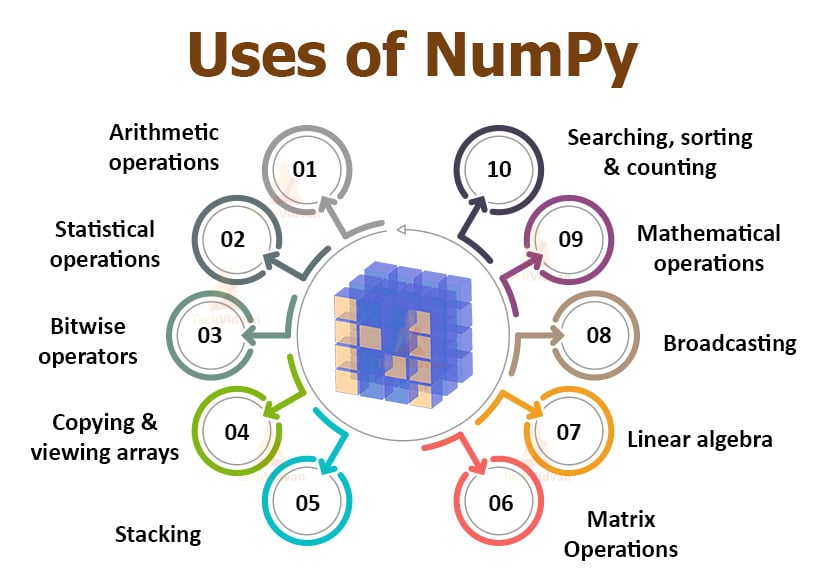
- NumPy Vectorization: Instead of writing nested loops to iterate through price arrays—a common source of performance bottlenecks and logic errors—NumPy allows for array-wide operations. This reduces the cognitive load on the programmer, as the library handles the underlying C-based optimization.
- Pandas DataFrames: Financial time-series data is inherently messy. Pandas provides a high-level API to perform complex operations like rolling windows, resampling, and forward-filling missing data with single-line commands. This abstraction prevents the “hard” aspect of manual data alignment.
- Scikit-learn Pipelines: When building predictive models, managing data transformations can become a source of technical debt. Scikit-learn pipelines encapsulate preprocessing steps, ensuring that the model training process remains reproducible without requiring the programmer to manually track state transitions.
By shifting the burden of mathematical implementation to these battle-tested libraries, Python lowers the barrier to entry for quantitative tasks. The difficulty is not in the language syntax, but in mastering the API surface area of these specific tools. Once a developer understands how to manipulate these abstractions, the “hardness” of building a robust financial engine decreases significantly compared to building equivalent systems in lower-level languages.
Performance bottlenecks and scaling challenges
While Python is often cited for its accessibility, the difficulty arises when scaling financial models to handle real-time market feeds. Python’s Global Interpreter Lock (GIL) prevents multiple native threads from executing Python bytecodes at once, which creates a significant hurdle for multi-core processing in high-frequency trading (HFT) environments.
Developers often find that while the initial logic is easy to write, optimizing code to bypass the GIL using the multiprocessing module or C-extensions like Cython adds a layer of technical complexity that challenges even experienced engineers.
Managing memory constraints in high-frequency data
Python’s dynamic typing and object-oriented nature consume substantially more memory than statically typed languages like C++ or Rust. When processing tick-by-tick data from exchanges like NASDAQ or the CME, a standard Python list of dictionaries can quickly exhaust available RAM.
To mitigate this, developers must transition to specialized libraries such as NumPy or Pandas, which utilize contiguous memory blocks to store numerical data more efficiently.
The trade-off here is clear: you gain development speed by using high-level abstractions, but you pay a penalty in runtime efficiency and memory overhead. If your financial application requires sub-millisecond latency, you will eventually reach a point where Python’s garbage collection triggers unpredictable pauses.
At this stage, the difficulty of the language shifts from syntax and logic to low-level memory management. You must learn to profile your code using tools like memory_profiler or line_profiler to identify bottlenecks, and potentially rewrite critical execution loops in C or Fortran to maintain the throughput required for competitive algorithmic trading.
Learning curve for enterprise-grade software architecture
While basic Python syntax is accessible, the difficulty spikes significantly when moving from data analysis scripts to enterprise-grade fintech architecture. Building production-ready systems requires mastering asynchronous programming, memory management, and strict type safety—areas where Python’s flexibility can become a liability if not managed with rigorous engineering standards.
Transitioning from procedural scripts to modular systems
The cognitive shift from writing a linear Pandas script to architecting a modular, event-driven system is where many analysts find Python programming hard. In a simple script, execution flow is predictable.
In an enterprise environment, you must handle concurrency using libraries like asyncio or FastAPI, which introduces complexities like race conditions and deadlock risks that do not exist in local Jupyter notebooks.
To build scalable infrastructure, developers must move beyond simple scripts and adopt:
- Dependency Injection: Using frameworks like
Dependency Injectorto decouple components, making the codebase testable and maintainable. - Strict Type Hinting: Implementing
mypyorpyrightto enforce static analysis, which prevents runtime TypeErrors in high-frequency trading or risk-modeling pipelines. - Microservices Communication: Managing inter-service data exchange via Protobuf or gRPC, requiring a deep understanding of serialization overhead that is invisible to a standard data analyst.
The difficulty here lies in the transition from ‘it works on my machine’ to ‘it works under load.’ When processing millions of financial transactions, Python’s Global Interpreter Lock (GIL) becomes a tangible bottleneck.

Engineers must learn to circumvent this by offloading compute-intensive tasks to C-extensions or utilizing multiprocessing pools. This architectural complexity is fundamentally different from learning the syntax; it requires a shift toward systems thinking, where the primary challenge is managing state, latency, and system resilience rather than just manipulating dataframes.
Practical limitations in production environments
While Python is accessible for prototyping financial models, the transition to production-grade systems often reveals why developers find Python programming hard to scale. Unlike compiled languages like C++ or Rust, Python’s Global Interpreter Lock (GIL) prevents multiple native threads from executing Python bytecodes at once.
For high-frequency trading (HFT) or real-time risk engines processing millions of data points per second, this limitation forces engineers to implement complex multiprocessing architectures or offload heavy computations to C-extensions using Cython or Pybind11.
Dependency management with virtual environments
Maintaining stable production pipelines is frequently cited as a major hurdle for teams moving beyond simple scripts. Python’s reliance on a global package index (PyPI) often leads to ‘dependency hell,’ where conflicting library versions break automated trading models.
Using venv or conda is the industry standard for isolation, but these tools do not solve the underlying issue of transitive dependencies. A single update to a library like pandas or numpy can introduce breaking changes in downstream quantitative analysis modules, requiring rigorous integration testing.
To mitigate these risks, production teams must adopt strict version pinning via requirements.txt or poetry.lock files. Even with these tools, the difficulty persists in ensuring that the production environment exactly mirrors the development environment with VSCode.
Discrepancies in system-level dependencies—such as BLAS/LAPACK library versions—can lead to subtle numerical differences in financial calculations, which are notoriously hard to debug. Experienced engineers often move toward containerization using Docker to encapsulate the entire runtime environment, effectively treating the Python application as an immutable artifact to bypass the inherent fragility of local environment configurations.
Frequently Asked Questions
Difficulty factors for individuals without coding backgrounds
Python is often ranked as one of the most accessible languages for beginners because its syntax closely resembles English. However, the difficulty increases significantly when moving from basic scripting to building robust, scalable financial applications that require knowledge of data structures and algorithmic efficiency.
Technical challenges of Python in financial contexts
The primary challenge in finance is not the language syntax itself, but the complexity of the ecosystem. Managing dependencies in libraries like Pandas, NumPy, and Scikit-learn, alongside handling memory-intensive datasets and debugging asynchronous execution in high-frequency trading simulations, presents a genuine technical hurdle.