
Execution speed and memory management requirements in python programming vs Java
In high-frequency trading (HFT), the choice between Python programming vs Java hinges on the trade-off between development velocity and raw execution latency. Java operates on a compiled-to-bytecode model executed by the JVM, which allows for predictable, low-latency performance once the code is warmed up.
Python, conversely, is an interpreted language that introduces significant overhead due to dynamic typing and object management. It often requires C++ extensions like Cython to achieve competitive speeds in order-matching engines.
Java virtual machine optimization for high-throughput tasks
The Java Virtual Machine (JVM) provides a distinct advantage in HFT through Just-In-Time (JIT) compilation. By converting bytecode into native machine code at runtime, the HotSpot compiler identifies frequently executed “hot” code paths and optimizes them for the specific CPU architecture. For HFT firms like Jump Trading or Citadel, this allows Java systems to achieve microsecond-level latency.

Developers can further tune garbage collection (GC) parameters, such as using the Z Garbage Collector (ZGC) or Shenandoah, to minimize stop-the-world pauses that would otherwise disrupt trade execution. By pre-allocating memory pools and utilizing off-heap memory via the sun.misc.Unsafe API, Java developers bypass standard heap management, effectively mimicking the memory control found in low-level languages.
Python execution bottlenecks in CPU-bound operations
Python programming faces fundamental constraints in CPU-bound HFT tasks due to the Global Interpreter Lock (GIL). The GIL ensures that only one thread executes Python bytecode at any given time, preventing true parallel execution of CPU-intensive tasks on multi-core processors.
While libraries like multiprocessing exist, they introduce inter-process communication overhead that is often too slow for tick-to-trade cycles. Furthermore, Python’s memory management relies on reference counting and a cyclic garbage collector, which can trigger unpredictable latency spikes. While Python remains the industry standard for quantitative research and signal generation, its role in the execution path is typically limited to non-latency-sensitive components, such as risk management dashboards or post-trade analysis, unless offloaded to specialized C-based extensions like NumPy or Pandas.
Development velocity and ecosystem maturity
Python programming allows for rapid prototyping and iterative testing, which is critical when backtesting algorithmic trading strategies. Its concise syntax enables quants to translate mathematical models into executable code in significantly fewer lines than Java. However, the trade-off for this velocity is execution speed, as Python is an interpreted language with a Global Interpreter Lock (GIL) that can hinder multi-threaded performance in latency-sensitive environments. Firms looking to scale these models should consider a structured python development approach to maintain long-term efficiency.

Java offers a more rigorous development lifecycle, requiring explicit type definitions and a compilation step that catches errors before runtime. While this increases initial development time, it provides a stable foundation for high-frequency trading (HFT) systems where system crashes or memory leaks can result in catastrophic financial loss. The Java Virtual Machine (JVM) provides Just-In-Time (JIT) compilation, allowing the code to reach near-native execution speeds after the initial warm-up phase.
Library availability for data science versus enterprise integration
Python dominates the quantitative research domain due to its specialized library ecosystem. Tools like Pandas and NumPy are industry standards for time-series analysis and matrix manipulation, while Scikit-learn and PyTorch provide immediate access to machine learning capabilities. For a firm prioritizing research speed and model experimentation, Python is the clear choice for the pre-trade analysis phase.
Conversely, Java excels in enterprise integration and low-latency execution. Its ecosystem is built for robustness and high-concurrency, featuring mature frameworks like LMAX Disruptor—a high-performance inter-thread messaging library specifically designed for low-latency financial systems.
When the requirement shifts from model development to the production order-execution engine, Java’s ability to handle massive throughput with predictable garbage collection pauses makes it the preferred choice for building the actual trading gateway. Most HFT firms adopt a hybrid architecture: using Python for the research and strategy development, then migrating the finalized logic into a high-performance Java execution core to minimize tick-to-trade latency.
Type safety and refactoring complexity
In high-frequency trading (HFT), the cost of a runtime exception during market hours can reach millions of dollars. The choice between Python programming vs Java often hinges on how each language handles type validation before code execution. Python utilizes dynamic typing, which allows for rapid prototyping but defers error detection until the code path is actually triggered. Conversely, Java enforces strict compile-time type checking, which serves as an automated gatekeeper for complex financial algorithms.
Static typing benefits for complex financial logic
Java’s static typing system, enforced by the Java Virtual Machine (JVM), ensures that variables are bound to specific data types at compile time. In a trading system, this prevents common bugs such as passing a floating-point price value into a function expecting an integer order quantity. By using tools like the javac compiler or IDEs such as IntelliJ IDEA, developers receive immediate feedback on type mismatches before the binary is ever deployed to a production environment.
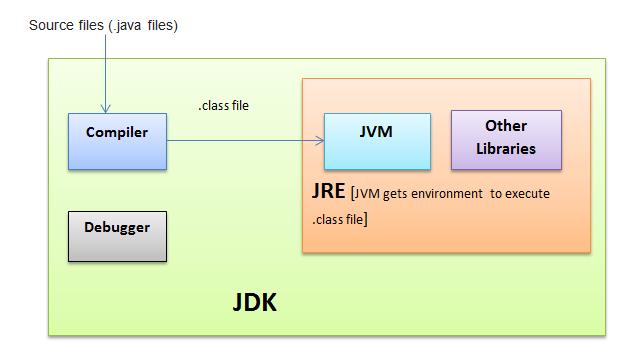
Refactoring large-scale HFT codebases—often spanning millions of lines of code—is significantly safer in Java. Because the compiler understands the entire object hierarchy, automated refactoring tools can safely rename methods, change interface signatures, or move classes across packages without breaking downstream dependencies.
In Python, these operations are inherently riskier; developers must rely heavily on comprehensive unit test suites and tools like mypy to simulate the safety that Java provides natively. While Python’s flexibility is an asset for data science research, Java’s rigidity provides the structural integrity required for low-latency execution engines where code stability is the primary performance metric.
Furthermore, Java’s use of explicit interfaces and abstract classes forces developers to define clear contracts between trading modules. When integrating a new exchange gateway or a risk management engine, the JVM ensures that all components adhere to the expected API. This reduces the cognitive load on developers during large-scale refactors, as the compiler highlights every location that requires an update, effectively mapping out the ripple effects of a change across the entire trading stack.
Talent acquisition and operational overhead
Building a high-frequency trading (HFT) desk requires a rigorous assessment of the human capital cost associated with your chosen technology stack. Python programming offers a lower barrier to entry, allowing quantitative researchers to prototype strategies rapidly. However, scaling these systems into production-grade HFT engines often necessitates a transition to Java to manage memory concurrency and garbage collection latency effectively.
Market availability of specialized engineering skill sets
The labor market for Java architects in the HFT space is characterized by a premium on low-latency systems expertise. Unlike general-purpose Java developers, HFT-focused engineers must possess deep knowledge of the JVM (Java Virtual Machine) internals, specifically regarding off-heap memory management using sun.misc.Unsafe or the newer Foreign Function & Memory API.
Firms like Citadel or Optiver often seek engineers who can tune the Garbage Collector (GC) to avoid “stop-the-world” pauses that are catastrophic in sub-millisecond trading environments. Conversely, the talent pool for Python is significantly larger but often lacks the systems-level rigor required for HFT.
While you can find thousands of Python developers capable of building data pipelines, finding those who understand how to optimize Python-to-C++ bindings via Cython or Pybind11 is rare. The operational overhead for Python teams often manifests as “technical debt” when early prototypes fail to handle the throughput of a live exchange feed, forcing a costly rewrite into Java or C++.
When evaluating your hiring strategy, consider these trade-offs:
- Java Recruitment: Higher base salary requirements due to the scarcity of engineers who understand mechanical sympathy and lock-free data structures (e.g., LMAX Disruptor pattern).
- Python Recruitment: Faster time-to-market for strategy development, but requires a secondary layer of “infrastructure engineers” to bridge the performance gap between research code and production execution.
- Maintenance Costs: Java systems require specialized monitoring tools like JProfiler or YourKit to diagnose memory leaks in long-running trading processes, whereas Python environments rely more heavily on external C-extensions for performance-critical paths.
Ultimately, the decision rests on whether your firm prioritizes the speed of strategy iteration or the stability of the execution core. Java remains the industry standard for the latter, despite the higher cost of acquiring engineers capable of mastering the JVM’s performance nuances.
Deployment and infrastructure compatibility
High-frequency trading (HFT) systems require deterministic infrastructure where startup times and memory overhead are critical. Java, leveraging the Java Virtual Machine (JVM), provides a robust environment for long-running processes, while Python often relies on external C-extensions for performance, complicating deployment pipelines. Teams starting their journey should follow a clear python development roadmap to ensure their infrastructure choices align with long-term performance goals.
Java applications benefit from Just-In-Time (JIT) compilation, which optimizes bytecode into machine code during runtime, a process that can cause latency spikes if not properly warmed up using tools like GraalVM or tiered compilation settings.

Container orchestration and microservices integration
In Kubernetes environments, the footprint and startup latency of Python versus Java services differ significantly. Java applications typically require a larger memory heap allocation to manage the JVM overhead, often necessitating higher resource requests in K8s manifests.
To mitigate cold-start issues in auto-scaling scenarios, HFT engineers often utilize -XX:+UseZGC or -XX:+UseShenandoahGC to keep pause times under 1ms, a level of control that is harder to replicate with standard Python interpreters. Python services, conversely, offer faster cold starts but struggle with CPU-bound tasks in containerized environments due to the Global Interpreter Lock (GIL).
When deploying Python microservices, developers frequently use uvicorn with gunicorn workers to manage concurrency, but this still lacks the native multi-threading efficiency of Java’s java.util.concurrent package. For HFT systems requiring strict micro-segmentation, Java’s ability to run within a single, highly-optimized JVM instance often outweighs the lightweight startup advantage of Python. Furthermore, Java’s integration with service meshes like Istio is more mature, providing native support for gRPC and Protobuf, which are industry standards for low-latency communication between trading components.
Frequently Asked Questions
Performance limitations of Python in high-frequency trading environments
Python is typically used for strategy research, data analysis, and backtesting due to its rich ecosystem like Pandas and NumPy. However, for the execution path where microsecond latency is critical, Java or C++ is preferred because Python’s Global Interpreter Lock (GIL) and garbage collection overhead can introduce non-deterministic delays.
Rationale for Java dominance in trading execution engines
Java provides a Just-In-Time (JIT) compiler that optimizes bytecode into machine code at runtime, offering performance closer to C++. Furthermore, Java’s mature multithreading capabilities and low-latency garbage collection tuning (using ZGC or Shenandoah) allow it to handle high-throughput market data feeds more reliably than standard Python implementations.