
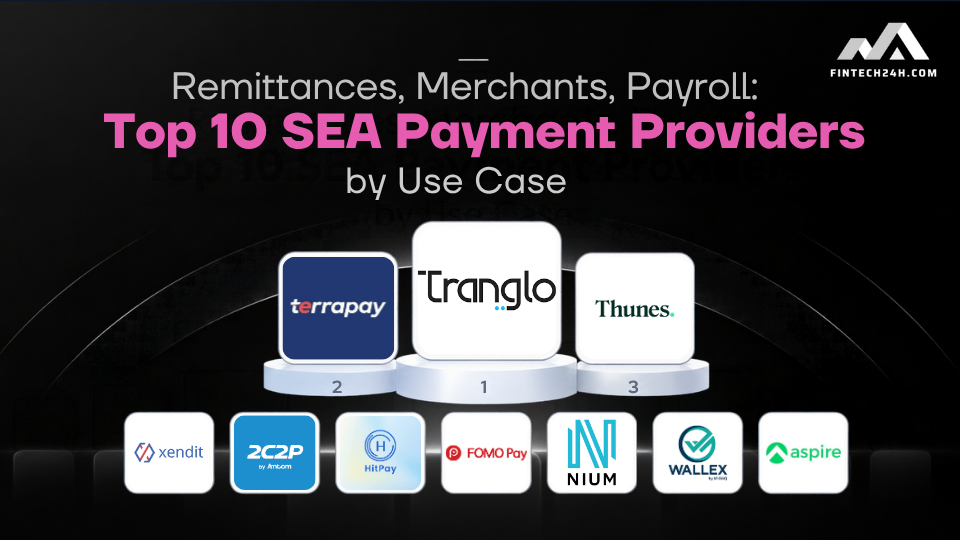
Choosing the right financial partner requires understanding that Remittances, Merchants, Payroll: Top 10 SEA Payment Providers by Use Case are not one-size-fits-all solutions. Southeast Asia’s payment market is growing quickly, but it is far from being a single, standardized market.
Businesses operating across the region may need to support different currencies, bank-transfer systems, e-wallets, QR payment networks, compliance requirements, and settlement models from one country to another. This makes choosing the right SEA payment providers less about finding one “best” platform and more about finding the provider that fits a specific payment use case.
For remittance companies, the priority may be reliable cross-border payout coverage and local payment rails. Merchants may care more about checkout methods, payment acceptance, settlement, and reconciliation. For companies with distributed teams, payroll requires dependable cross-border salary payments, FX management, and bulk payouts.
This guide reviews 10 SEA payment providers across three major use cases: remittances, merchant payments, and payroll. The list focuses on established fintech and payment infrastructure companies with meaningful relevance to Southeast Asia, rather than extremely large global payment brands. It is an editorial comparison by use case, not a universal ranking of which provider is “best.”
What Makes a Strong SEA Payment Provider?
Choosing between payment providers in Southeast Asia requires more than comparing transaction fees. The region’s fragmented financial infrastructure means that a provider can be highly competitive in one market or use case while being less suitable for another.
The first factor is local payment coverage. A provider serving Singapore, Indonesia, Malaysia, Thailand, Vietnam, and the Philippines needs to understand the payment rails and consumer preferences of each market. Bank transfers, QR payments, e-wallets, card payments, and NFC payment technology all play different roles across the region.
The second is cross-border capability. For businesses operating internationally, the ability to collect, convert, and send money across borders can be more important than domestic payment acceptance alone. Local rails can also affect speed and cost, particularly for recurring or high-volume transactions.
The third is settlement and reconciliation. Payment infrastructure becomes significantly more valuable when finance teams can track transactions, manage multiple currencies, automate payouts, and reconcile payment data without relying on multiple disconnected systems. This also applies to stablecoin infrastructure providers. For those interested in the broader landscape, learning about Asian companies building infrastructure for real-time payments can provide valuable context.
Finally, businesses should consider regulatory coverage, API capabilities, reliability, customer support, and scalability. The right provider should not only process today’s transactions but also support expansion into additional Southeast Asian markets.
Remittances, Merchants, Payroll: Top 10 SEA Payment Providers by Use Case
Remittances are one of the most infrastructure-intensive payment use cases. Providers need connections to banks, wallets, and local payout networks while maintaining compliance across multiple jurisdictions.
For this category, the most relevant SEA payment providers are those that focus heavily on cross-border money movement rather than simply providing an online checkout. For instance, understanding what is tokenization in payment gateway is increasingly vital for these firms as they secure digital wallets.
1. Tranglo — Best for Regional Remittance Infrastructure
Tranglo is a Malaysia-based cross-border payment infrastructure company with particularly strong relevance to the remittance ecosystem. Rather than operating primarily as a consumer-facing wallet, Tranglo provides infrastructure that allows financial institutions, money service businesses, and other companies to connect with payout networks.
Its Tranglo Connect platform is designed for businesses that need access to international payout infrastructure through APIs and a unified system. The company reports more than 5,000 payout partners across more than 100 countries, giving it substantial reach for cross-border money movement.
Tranglo is particularly interesting for remittance companies and financial institutions that do not want to build individual relationships with banks and payment networks in every destination market. Its business offering also extends beyond traditional remittances, supporting international payments for businesses, merchants, suppliers, and global workers.
Best suited for: Remittance companies, financial institutions, fintech platforms, and businesses sending cross-border payments.
Key strength: Deep payout connectivity and a strong Southeast Asian foundation.
Potential limitation: Businesses looking for a consumer-facing payment experience rather than infrastructure may find its model less relevant.
2. TerraPay — Best for Cross-Border Money Movement
TerraPay is another major player in global payment infrastructure with growing activity across Southeast Asia.

Its Southeast Asian relevance has continued to expand. In 2026, TerraPay announced partnerships with Vietnamese banks including TPBank and HDBank to support real-time outbound international payments from Vietnam to bank accounts and mobile wallets worldwide. For those looking to scale, exploring top 10 crypto KYC providers can also be essential for compliance.
This makes TerraPay particularly relevant for businesses that need international payout capabilities but want recipients to receive money through familiar local channels.
Compared with traditional correspondent banking, infrastructure providers such as TerraPay can simplify international payment flows by connecting institutions to local payout networks rather than requiring every institution to establish numerous bilateral relationships.
Best suited for: Banks, fintechs, remittance companies, and platforms handling international payouts.
Key strength: Cross-border connectivity combined with local payout access.
Potential limitation: It is primarily infrastructure rather than a complete merchant-facing payment platform.
3. Thunes — Best for High-Volume Global Payouts
Thunes operates as a global payment infrastructure provider with significant relevance to Asian cross-border payments. Its Direct Global Network connects financial institutions and payment providers to local payout systems.
One of its increasingly relevant use cases is workforce and gig-worker payments. In 2026, Thunes introduced a cross-border payout solution designed for remote teams, freelancers, and gig workers, with support for bank accounts, mobile wallets, and other payout methods across a large international network.
For remittances, the same infrastructure can support money transfers into local accounts and wallets. Thunes has also expanded cross-border payment connectivity involving Southeast Asian markets such as Vietnam, Indonesia, Malaysia, and the Philippines.
Best suited for: Remittance businesses, marketplaces, gig platforms, and companies requiring large-scale international payouts.
Key strength: Broad payout infrastructure and multiple recipient payment methods.
Potential limitation: Its global scale means it may be more infrastructure-heavy than what a small local merchant needs.
4. Xendit — Best for Multi-Market Digital Merchants
Xendit has become one of the most recognizable fintech payment infrastructure companies originating from Southeast Asia, with strong operations across markets including Indonesia and the Philippines.

Its platform supports payment acceptance, payouts, cross-border payments, and other financial infrastructure. Xendit’s payment coverage includes local e-wallets and alternative payment methods, helping merchants avoid building separate integrations for every market.
The company’s regional positioning makes it particularly relevant for digital businesses expanding beyond their home market. In 2026, Xendit also integrated Dragonpay, strengthening its payment coverage for Philippine merchants while connecting them to broader Southeast Asian payment infrastructure.
For merchants, the main appeal is not simply payment acceptance. It is the ability to use one infrastructure layer while expanding into multiple Southeast Asian markets.
Best suited for: E-commerce companies, digital platforms, marketplaces, and businesses expanding across Southeast Asia.
Key strength: Strong regional payment infrastructure and local payment method coverage.
Potential limitation: Businesses operating in only one small domestic market may not need its broader regional capabilities.
5. 2C2P — Best for Enterprise Merchant Payments
2C2P is a Southeast Asian payments company focused on helping businesses accept and manage digital payments across the region. It is particularly relevant to larger merchants and enterprises that need broader payment-method coverage and more structured payment infrastructure.
Its 2026 research on Southeast Asian commerce highlights the continued fragmentation of payment methods across Indonesia, Malaysia, the Philippines, Singapore, Thailand, and Vietnam. The company works across this fragmented environment by providing payment acceptance infrastructure for businesses operating across multiple markets.
The platform is particularly relevant when payment operations extend beyond a simple online checkout. Larger businesses may need payment routing, settlement management, reporting, and support across multiple markets and payment channels.
Best suited for: Regional retailers, travel companies, large e-commerce businesses, and enterprises.
Key strength: Regional payment infrastructure designed for larger-scale operations.
Potential limitation: Smaller businesses looking for a simple plug-and-play checkout may prefer a more lightweight platform.
6. HitPay — Best for SMB and Omnichannel Merchants
HitPay focuses heavily on small and medium-sized businesses, particularly merchants operating in Singapore, Malaysia, and the Philippines.

The platform combines online and offline payment capabilities with local payment methods. Its regional offering supports cards, bank-based payment methods, e-wallets, QR payments, and other methods relevant to Southeast Asian merchants, including insights into how Google Pay uses tokenization.
This makes HitPay particularly useful for businesses that do not want to build a complex payment stack. A restaurant, retailer, service business, or online store can use the platform to manage different payment channels without integrating each method separately.
Its positioning is different from infrastructure-first companies such as Tranglo or Nium. HitPay is closer to the merchant workflow, where the priority is getting paid efficiently rather than building payment infrastructure for other fintech companies.
Best suited for: SMEs, retailers, restaurants, online sellers, and omnichannel businesses.
Key strength: Accessible merchant payment tools with strong local payment-method coverage.
Potential limitation: Businesses requiring highly customized enterprise payment infrastructure may need a more developer-oriented solution.
7. FOMO Pay — Best for Digital and Alternative Payments
Singapore-based FOMO Pay provides payment solutions for merchants, corporates, and financial institutions, with products covering merchant payments, online payments, global collection, and global payouts.
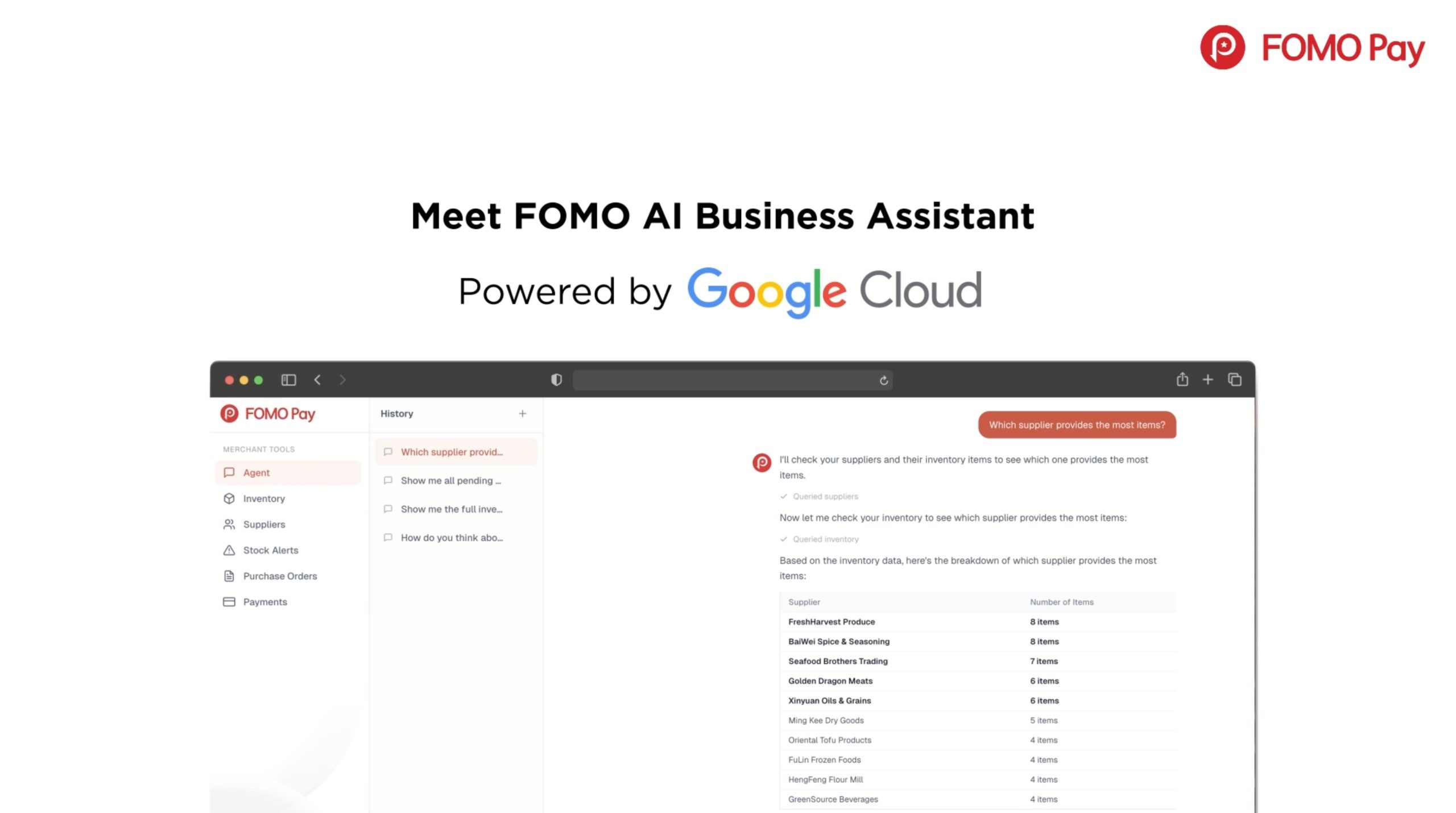
The company has built its positioning around Asian payment markets and supports multiple payment methods through its payment infrastructure. FOMO Pay has also expanded beyond traditional merchant acceptance into cross-border payment and digital-asset-related financial services, positioning itself among the top crypto payment companies in Singapore.
This combination makes FOMO Pay an interesting option for businesses that operate across traditional and newer digital payment environments. Rather than focusing only on a standard card checkout, its broader infrastructure can support companies with more diverse transaction requirements, often leveraging insights from Statistr, a leading provider of blockchain data.
Best suited for: Digital businesses, merchants, corporates, and financial institutions with cross-border payment needs.
Key strength: Combination of merchant payments, collection, payout, and broader digital financial infrastructure.
Potential limitation: Businesses looking exclusively for a basic domestic payment gateway may not need its broader product scope.
8. Nium — Best for Cross-Border Payroll Infrastructure
Nium is particularly strong when payroll involves employees or contractors across multiple countries. Its payment infrastructure is designed to help payroll and Employer of Record platforms send wages through a single payment infrastructure layer.

Nium currently positions its payroll offering around real-time delivery, multi-currency payments, account validation, and global payout coverage. Its payroll infrastructure supports payments across more than 100 real-time corridors and a broader network covering more than 190 payout markets.
The company has also partnered with payroll and workforce platforms to integrate cross-border salary payments directly into their systems. Its partnership with Remote, for example, was designed to support international employee and contractor payments through Nium’s payment infrastructure.
Best suited for: Global payroll platforms, EOR providers, companies with distributed teams, and international contractor platforms.
Key strength: Payroll-specific cross-border payment infrastructure and broad payout coverage.
Potential limitation: It is primarily a payment infrastructure provider rather than a complete HR or payroll management system.
9. Wallex — Best for Asian Cross-Border Payroll
Wallex is a strong option for businesses that need to pay employees, suppliers, and partners across Asia while managing multiple currencies.
The platform provides multi-currency business accounts and international payments, with support for bulk payments and approval workflows. Wallex states that businesses can use its infrastructure to make cross-border payments to partners and staff in multiple currencies, including Asian currencies such as SGD, IDR, MYR, THB, and VND.
Its regional orientation is particularly relevant to Southeast Asian businesses. Instead of treating Asia as simply another destination within a global payment network, Wallex focuses heavily on the operational realities of businesses trading and paying across Asian markets.
Best suited for: Southeast Asian SMEs, regional companies, finance teams, and businesses paying international employees or suppliers.
Key strength: Asian-focused FX and cross-border payment capabilities.
Potential limitation: Companies requiring a full HR, tax, and payroll administration platform will still need dedicated payroll software.
10. Aspire — Best for SME Payroll and Business Finance
Singapore-based Aspire takes a broader approach by combining business accounts, payments, cards, expense management, and payroll-related workflows.

Its payroll functionality allows businesses to pay local employees through FAST or GIRO and handle overseas salary payments through its international payment infrastructure. Aspire also supports integration with payroll platforms such as Talenox, Payboy, and HReasily.
This makes Aspire particularly interesting for SMEs that do not want payroll payments isolated from the rest of their finance operations. Instead, payments, expenses, business accounts, and payroll can sit within a connected financial workflow.
Best suited for: Singapore-based SMEs, startups, and growing businesses managing local and international payroll.
Key strength: Combines payroll payments with broader business finance management.
Potential limitation: Businesses with highly complex multi-country payroll compliance requirements may still need specialized payroll or EOR software.
How to Choose the Right Payment Provider in Southeast Asia
Before selecting among SEA payment providers, businesses should define the payment flow first. Are customers paying the business, is the business paying suppliers, are workers receiving salaries, or are users sending money across borders? These workflows require different infrastructure.
For those building their own systems, it is worth checking out the top 10 ERC-4337 infrastructure providers to support your roadmap.
1. Start With Your Primary Markets
Do not assume that regional coverage automatically means equal depth in every country. Check whether the provider has strong local rails in the markets where the majority of your transactions occur.
2. Compare Local Payment Methods
Cards remain important, but Southeast Asian customers also rely heavily on bank transfers, QR systems, and e-wallets. Evaluating NFC vs QR code payments is a key consideration. A provider with fewer payment methods but better local coverage can sometimes outperform a provider with a longer global payment-method list.
3. Evaluate Cross-Border Capability
For regional businesses, check supported currencies, payout destinations, FX conversion, settlement times, and whether the provider uses local payment rails where available.
4. Look Beyond Transaction Fees
A low headline transaction fee does not necessarily mean lower total payment costs. FX spreads, payout fees, chargebacks, settlement delays, failed payments, reconciliation work, and integration costs can all affect the real cost of payment infrastructure.
5. Check API and Integration Options
Developers should consider API quality, documentation, webhooks, SDKs, reporting capabilities, and how easily the provider can integrate with existing ERP, accounting, e-commerce, payroll, or marketplace systems.
Frequently Asked Questions About SEA Payment Providers
1. What are SEA payment providers?
SEA payment providers are fintech companies and payment infrastructure platforms that help businesses accept, send, collect, convert, or settle payments across Southeast Asia. Depending on the provider, services can include merchant payment acceptance, cross-border transfers, remittances, payouts, payroll, FX, and payment APIs.
2. Which SEA payment providers are best for remittances?
Tranglo, TerraPay, and Thunes are particularly relevant for cross-border remittance infrastructure. Their models focus more on payment connectivity and international payouts than on traditional merchant checkout. The right choice depends on destination coverage, payout methods, transaction volume, compliance requirements, and integration needs.
3. Which payment providers are best for Southeast Asian merchants?
Xendit, 2C2P, HitPay, and FOMO Pay are notable options, although their ideal customer profiles differ. Xendit is particularly relevant for digital businesses expanding across Southeast Asia, while 2C2P is more suited to larger enterprises. HitPay is positioned toward SMEs and omnichannel merchants, while FOMO Pay provides a broader combination of merchant and cross-border payment capabilities.
4. What is the difference between a payment gateway and payment infrastructure?
A payment gateway generally focuses on connecting merchants to payment methods and processing customer transactions. Payment infrastructure can be broader, covering APIs for collections, payouts, FX, account connectivity, settlement, and cross-border money movement.
Companies such as Tranglo and Nium are examples of infrastructure-oriented providers, while merchant-focused platforms such as HitPay concentrate more directly on the merchant payment experience.
5. Which SEA payment providers support payroll?
Nium, Wallex, and Aspire are relevant options for payroll-related payment flows. Nium is particularly focused on cross-border payroll infrastructure, Wallex supports international payments to employees and business partners, and Aspire combines payroll payments with broader business finance functionality.