
Building a smart wallet or account abstraction product requires specialized tooling, making the selection of the right partner critical. These top 10 ERC-4337 infrastructure providers for developers in 2026 offer the essential bundlers, paymasters, and SDKs needed to implement UserOperations, gas sponsorship, and smart account logic without building every component from scratch.
The market has become increasingly modular. Some providers focus primarily on bundling and paymasters, while others combine smart accounts, wallet SDKs, gas sponsorship, authentication, and application-level tooling. In 2026, developers also need to consider how ERC-4337 works alongside newer account abstraction approaches such as EIP-7702.
This guide looks at 10 ERC-4337 infrastructure providers worth evaluating in 2026, with a focus on companies that are established in the Web3 developer ecosystem without relying on the largest global technology platforms.
Note: The providers below are presented for comparison, not as a universal ranking. Their capabilities, supported networks, pricing, and protocol versions can change over time.
What Is ERC-4337 Infrastructure?
ERC-4337 is an account abstraction standard that allows developers to build smart contract accounts without requiring changes to Ethereum’s consensus layer. Ensuring robust smart contract security is essential when implementing these protocols to protect user assets.
Instead of sending a conventional transaction directly from an externally owned account, a user signs a UserOperation. A bundler collects valid UserOperations and submits them to the EntryPoint contract. A paymaster can optionally sponsor the gas or allow users to pay transaction fees through alternative mechanisms.
A simplified ERC-4337 flow looks like this:
User → Smart Account → UserOperation → Bundler → EntryPoint → Blockchain
When gas sponsorship is involved, the flow also includes:
Paymaster → Gas Sponsorship → UserOperation
This architecture creates several opportunities for developers:
- Gasless onboarding
- Transaction batching
- Smart contract wallets
- Session-based permissions
- Programmable transaction policies
- Alternative gas payment methods
- More flexible authentication
- Better onboarding for consumer applications
The infrastructure provider therefore becomes an important part of the developer stack. Instead of implementing bundling, paymaster logic, gas management, and account interaction independently, teams can use managed services or open-source components.
Top 10 ERC-4337 Infrastructure Providers for Developers in 2026
1. Pimlico
Best known for: Developer-focused bundler, paymaster, and ERC-4337 tooling
Pimlico is one of the most specialized names in the ERC-4337 infrastructure ecosystem. Rather than positioning itself primarily as a consumer wallet, Pimlico focuses heavily on the infrastructure layer that developers need to build smart account applications. For those building advanced financial systems, researching Singaporean companies shaping AI-powered infrastructure can provide valuable insights into global trends.
Its stack includes a hosted bundler, paymaster infrastructure, and Permissionless.js, a TypeScript library designed for working with smart accounts and ERC-4337 components.
One of Pimlico’s most notable infrastructure projects is Alto, its open-source ERC-4337 bundler. The company also provides verifying and ERC-20 paymaster functionality, allowing applications to sponsor gas or support alternative payment flows.
Key capabilities
- ERC-4337 bundler infrastructure
- Alto open-source bundler
- Verifying paymaster
- ERC-20 paymaster
- Permissionless.js
- Sponsorship policies
- Support for multiple smart account implementations
- Multi-chain infrastructure
Pimlico’s developer-oriented architecture can be particularly useful when a team does not want its smart account architecture completely tied to a single wallet provider.
Its Permissionless.js ecosystem also supports integrations with different smart account implementations, including Safe and other modular account approaches.
Why developers consider Pimlico
The main attraction is infrastructure specialization. A team can use Pimlico for bundling and sponsorship while maintaining more control over the account layer and application architecture.
Potential fit: DeFi applications, wallets, Web3 consumer products, and teams building custom smart account experiences.
2. ZeroDev
Best known for: Modular smart accounts and Kernel
ZeroDev approaches ERC-4337 from the smart account side of the infrastructure stack.
Its Kernel smart account architecture is designed around modularity, allowing developers to extend account functionality through validators, executors, and other modules. ZeroDev has continued developing Kernel across multiple generations based on production experience with ERC-4337 applications.
The platform also provides developer tooling for creating smart accounts and interacting with ERC-4337 infrastructure.
Key capabilities
- Kernel smart accounts
- ERC-4337 SDK
- Modular account architecture
- Paymaster integration
- Session-based permissions
- Bundler infrastructure through ZeroDev’s RPC layer
- Support for different infrastructure providers
ZeroDev’s infrastructure layer can route traffic through multiple bundler providers. Its documentation currently lists UltraRelay alongside infrastructure from providers such as Alchemy, Gelato, and Pimlico.
This approach can give developers flexibility while still providing a unified account abstraction development experience.
Why developers consider ZeroDev
Kernel is particularly relevant for applications that need programmable accounts rather than simple smart wallets.
Features such as modular validation and session-based permissions can be useful for:
- Web3 games
- AI agents
- Automated applications
- DeFi strategies
- Applications requiring granular permissions
ZeroDev also introduced its Omni SDK in 2026, extending its developer tooling toward cross-platform ERC-4337 smart account development.
Potential fit: Developers building modular smart accounts, programmable wallets, games, and agent-based applications.
3. Rhinestone
Best known for: Modular smart accounts and account abstraction interoperability

Rhinestone focuses on the modular smart account layer of the account abstraction ecosystem. Its infrastructure is built around ERC-4337 and ERC-7579, allowing developers to extend smart accounts through modular components rather than relying on a single fixed wallet architecture.
The platform provides a developer stack for building smart accounts with modules such as validators, executors, hooks, and fallback handlers. This modular approach is particularly relevant for applications that need programmable permissions, account recovery, session-based functionality, or specialized transaction execution.
Key capabilities
- ERC-4337 smart account infrastructure
- ERC-7579 modular account support
- Smart account modules
- Validators
- Executors
- Hooks
- Fallback modules
- Account interoperability
- Cross-chain account abstraction
- Smart account SDK
One of Rhinestone’s main goals is to address fragmentation between different smart account implementations. Its protocol was designed as an interoperability layer so developers can build modular functionality that can work across compatible smart account architectures.
Rhinestone also supports using existing smart accounts rather than forcing developers to create an account exclusively through its own SDK. Its documentation describes a Bring Your Own Account approach, including compatibility with accounts created using other SDKs such as Permissionless.js.
Why developers consider Rhinestone
Rhinestone can be relevant when the main requirement is not simply “send ERC-4337 UserOperations”, but rather “build a smart account that can evolve through modular functionality.”
4. Candide
Best known for: ERC-4337 infrastructure with a strong Safe-oriented ecosystem
Candide provides account abstraction infrastructure around its Voltaire bundler and related tooling.
The company positions Voltaire as an ERC-4337 bundler capable of handling UserOperation mempools, bundling, and transaction submission. Candide also develops tools for smart wallet infrastructure and Safe-compatible applications.
Key capabilities
- Voltaire ERC-4337 bundler
- Paymaster infrastructure
- AbstractionKit
- Safe-compatible infrastructure
- Smart account tooling
- Account abstraction APIs
Candide can be particularly relevant for teams already working with Safe-based smart accounts. For those looking to secure their operations, evaluating top 10 crypto KYC providers is a critical step for compliance.
Its infrastructure approach is different from providers that focus primarily on consumer onboarding. The emphasis is closer to the underlying account abstraction and smart account infrastructure.
Why developers consider Candide
Safe compatibility can matter for organizations building:
- Treasury applications
- DAO infrastructure
- Multi-signature workflows
- Institutional wallets
- Programmable smart accounts
Candide is therefore worth evaluating when the smart account architecture is as important as the gas sponsorship layer.
Potential fit: Safe-oriented applications, treasury products, DAOs, and infrastructure teams.
5. Etherspot
Best known for: Account abstraction and cross-chain transaction infrastructure
Etherspot combines account abstraction infrastructure with a broader focus on chain abstraction and multi-chain application development.
Its stack includes Skandha, an ERC-4337 bundler, Arka Paymaster, and the Etherspot Modular SDK. The company describes Skandha as a modular TypeScript bundler with features including shared mempool support and MEV-related protections.
Key capabilities
- Skandha ERC-4337 bundler
- Arka Paymaster
- Modular SDK
- TransactionKit
- Smart account infrastructure
- Account abstraction
- Multi-chain transaction workflows
Etherspot’s positioning is particularly relevant for applications where account abstraction and multi-chain interactions overlap.
Instead of treating the smart account as an isolated wallet component, developers can use its infrastructure as part of a broader transaction orchestration layer.
Why developers consider Etherspot
Cross-chain applications often require more than a basic ERC-4337 integration.
For example, a user may need to:
- Connect a smart account.
- Execute multiple transactions.
- Move assets between networks.
- Sponsor gas.
- Complete the workflow without exposing the underlying blockchain complexity.
Etherspot’s infrastructure is designed around these types of application flows.
Potential fit: Multi-chain dApps, wallets, DeFi applications, and developers exploring account or chain abstraction.
6. Gelato
Best known for: Transaction automation, relaying, bundling, and gas abstraction
Gelato has a broader infrastructure footprint than many ERC-4337 specialists. Its account abstraction offering includes Paymaster and Bundler infrastructure, supporting gas sponsorship and alternative gas payment flows.
Gelato currently promotes ERC-4337 and EIP-7702 compatibility across more than 100 networks, with a unified gas management approach for supported applications.
Key capabilities
- ERC-4337 bundler
- Paymaster
- Gas sponsorship
- ERC-20 gas payments
- Multi-chain gas management
- Transaction relaying
- Automation infrastructure
- EIP-7702 support
One differentiating aspect of Gelato is that account abstraction sits within a larger transaction infrastructure ecosystem. For those analyzing the market, reviewing top synthetic data companies and providers can offer a broader view of data-driven infrastructure.
The company has previously integrated its bundler and paymaster infrastructure with ZeroDev’s smart wallet stack, illustrating how infrastructure providers can operate as complementary layers rather than isolated competitors.
Why developers consider Gelato
Gelato can make sense for applications where account abstraction is only one part of a larger transaction execution architecture.
For example, developers may need:
- Gas sponsorship
- Automated transactions
- Multi-chain execution
- Relaying
- Smart account infrastructure
Potential fit: Multi-chain dApps, DeFi, consumer applications, automated Web3 workflows, and applications requiring gas abstraction.
7. Particle Network
Best known for: Wallet abstraction, ERC-4337 infrastructure, and chain abstraction
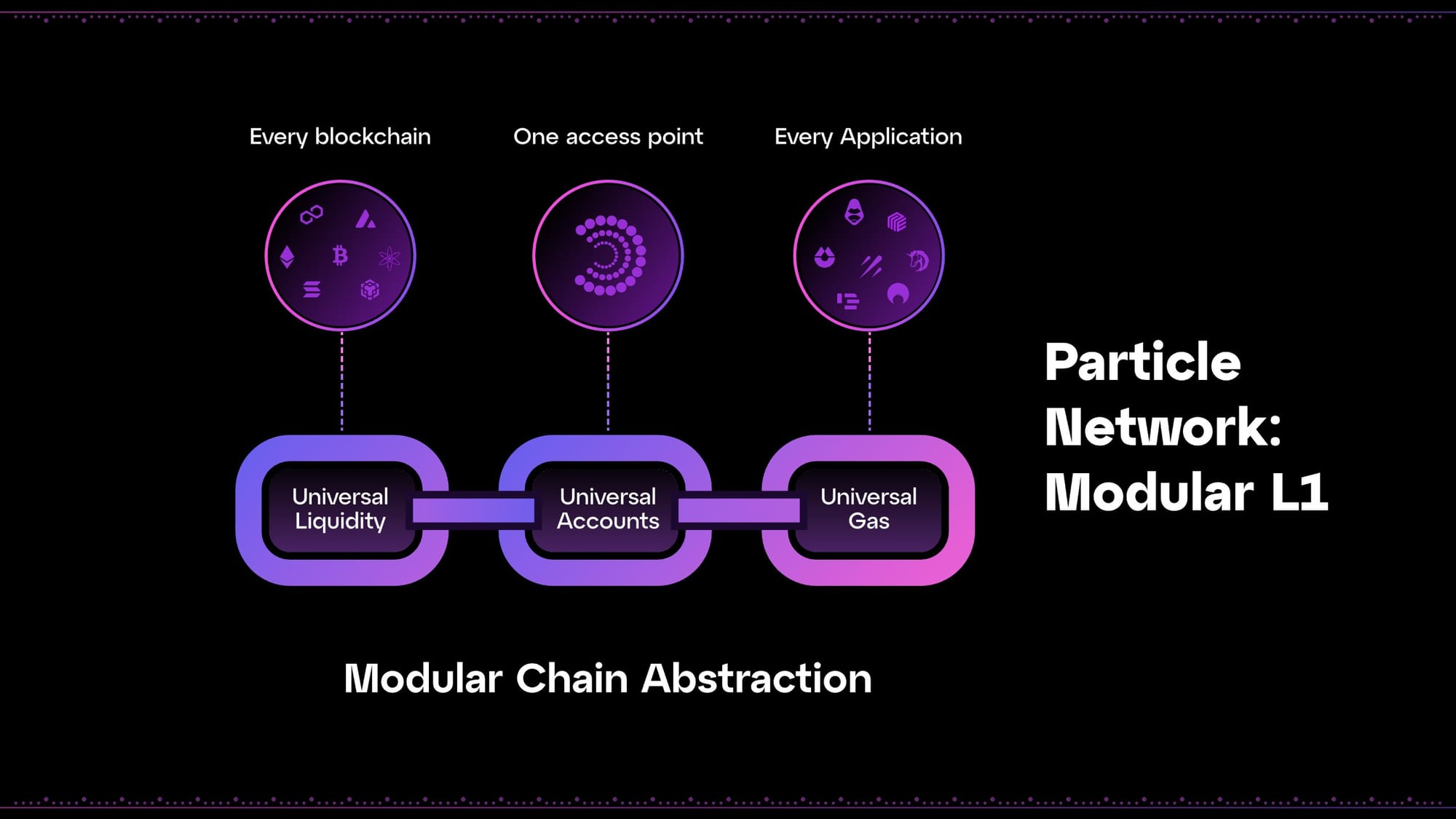
Particle Network takes a broader approach to account abstraction by combining wallet infrastructure, smart accounts, and chain abstraction.
Its Smart Wallet-as-a-Service stack includes ERC-4337 infrastructure, a bundler, paymaster functionality, and developer SDKs. Particle has also developed Universal Accounts, which use ERC-4337 smart account implementations as part of a broader chain abstraction architecture.
Key capabilities
- ERC-4337 bundler
- Paymaster
- Smart Wallet-as-a-Service
- AA SDK
- Universal Accounts
- Chain abstraction
- Cross-chain wallet experiences
- Social authentication integrations
Particle also open-sourced its account abstraction bundler and reported significant UserOperation processing during the early development of its ERC-4337 infrastructure.
Why developers consider Particle Network
The biggest distinction is the combination of account abstraction and chain abstraction.
For consumer-facing products, developers may want users to think in terms of:
“My account”
rather than:
“My Ethereum account + my Base account + my Arbitrum account + my Polygon account.”
Particle’s Universal Accounts architecture is designed around this type of unified experience.
Potential fit: Consumer Web3 applications, wallets, games, multi-chain applications, and products seeking simplified cross-chain UX.
8. thirdweb
Best known for: Full-stack Web3 development with ERC-4337 smart wallets
thirdweb approaches ERC-4337 from a broader developer-platform perspective.
Its smart account infrastructure allows developers to create ERC-4337 smart accounts programmatically, support batched transactions, and sponsor gas through its paymaster infrastructure.
Key capabilities
- ERC-4337 smart accounts
- Smart account factories
- Gas sponsorship
- Bundler infrastructure
- SDKs
- Wallet integrations
- Account abstraction APIs
- Application development tooling
thirdweb’s smart wallets support different account factory approaches, including simple and managed account configurations.
This gives developers control over how smart accounts are deployed and whether account functionality can be upgraded later.
Why developers consider thirdweb
One of thirdweb’s biggest advantages is that ERC-4337 infrastructure does not exist in isolation.
A team can use its broader development stack for:
- Smart contracts
- NFTs
- Tokens
- Wallets
- Authentication
- Account abstraction
- Application infrastructure
That can reduce the number of separate infrastructure vendors involved in a project.
thirdweb also documents support for ERC-4337 smart accounts across its developer ecosystem and has continued expanding account abstraction support into additional networks.
Potential fit: Startups, dApp developers, Web3 games, NFT applications, and teams wanting an integrated developer platform.
9. Openfort
Best known for: Account abstraction infrastructure for games and consumer applications

Openfort is focused on wallet infrastructure and account abstraction, with particular relevance for gaming and consumer-facing applications.
Its stack includes ERC-4337 bundler and paymaster infrastructure, smart accounts, wallet authentication, gas sponsorship, and policy controls.
Openfort’s current documentation describes its own ERC-4337 bundler and paymaster infrastructure, with support across several EntryPoint versions. It also supports EIP-7702 alongside ERC-4337.
Key capabilities
- ERC-4337 bundler
- Paymaster
- Smart accounts
- Gas sponsorship
- ERC-20 gas payments
- Session keys
- Passkeys
- EIP-7702
- Wallet authentication
- Policy engine
Openfort is particularly interesting for applications where the wallet should feel almost invisible to the user.
This is highly relevant to games.
A player should ideally be able to:
- Create an account.
- Enter the game.
- Receive or purchase assets.
- Perform on-chain actions.
- Avoid manually managing ETH for every transaction.
Account abstraction can move much of this complexity behind the application interface.
Openfort also provides policy controls that allow developers to define conditions around transaction sponsorship and wallet permissions.
Potential fit: Web3 games, consumer applications, embedded wallets, AI agents, and applications requiring programmable wallet policies.
10. Safe
Best known for: Smart account infrastructure and programmable wallets
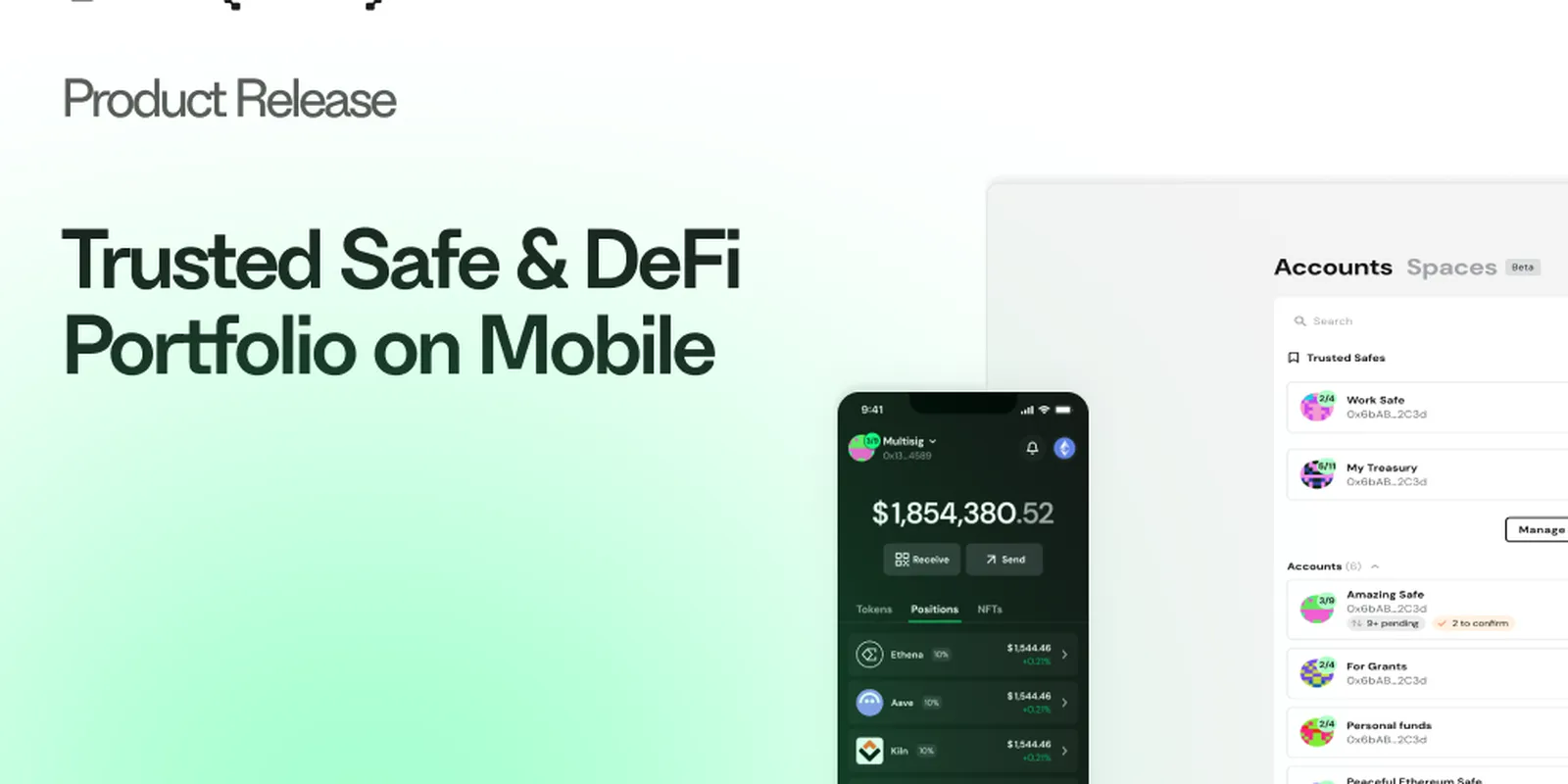
Safe is slightly different from several providers on this list.
It is not primarily a hosted ERC-4337 bundler or paymaster provider. Instead, Safe provides smart account infrastructure and an SDK ecosystem that can connect to external bundlers and paymasters.
Its ERC-4337 implementation enables Safe accounts to interact with UserOperations, while developers can select the infrastructure provider used for bundling and gas sponsorship.
Key capabilities
- Smart contract accounts
- ERC-4337 compatibility
- Safe{Core} SDK
- Safe4337Module
- Programmable account infrastructure
- Multi-signature functionality
- External bundler support
- External paymaster support
This distinction is important.
A developer choosing Safe is often choosing an account architecture, rather than simply buying a hosted bundler endpoint.
Safe’s provider-agnostic approach means developers can connect their smart accounts to infrastructure from companies such as Pimlico and others.
Why developers consider Safe
Safe is especially relevant when account security and organizational control are central requirements.
Typical applications include:
- Treasury management
- DAOs
- Institutional wallets
- Multisig applications
- Smart account infrastructure
- Developer platforms
Potential fit: Organizations that need programmable smart accounts and want flexibility in choosing their ERC-4337 infrastructure providers.
ERC-4337 Infrastructure Providers: Key Differences
There is no single infrastructure model that works for every application.
The biggest differences are usually found in where the provider sits in the stack.
Infrastructure-first providers
Pimlico and Stackup are examples of companies that can be evaluated primarily at the bundler and infrastructure layer.
These providers can be attractive when developers already have their own smart account architecture.
Smart-account-first providers
ZeroDev and Safe put more emphasis on the account itself.
The smart account becomes the foundation for permissions, modules, authentication, and transaction execution.
Full-stack developer platforms
thirdweb and Openfort cover a wider range of application infrastructure.
This can reduce the number of vendors developers need to integrate.
Cross-chain and transaction infrastructure
Etherspot, Gelato, and Particle Network extend beyond basic ERC-4337 functionality into broader transaction or chain abstraction use cases.
ERC-4337 vs EIP-7702: What Developers Should Know in 2026
ERC-4337 is no longer the only account abstraction architecture developers need to understand.
ERC-4337 creates smart contract accounts and uses UserOperations, bundlers, EntryPoint, and optional paymasters.
EIP-7702 allows an existing EOA to temporarily delegate its execution to smart contract code while retaining its existing address.
That difference matters.
For a new application where users need programmable smart accounts, ERC-4337 remains highly relevant.
For an existing wallet ecosystem where users already hold assets at EOA addresses, EIP-7702 can provide another route toward smart-account functionality without requiring users to migrate to a completely new address.
Several infrastructure providers now support both approaches, although implementation details and network coverage vary.
Frequently Asked Questions
1. What is an ERC-4337 infrastructure provider?
An ERC-4337 infrastructure provider offers some or all of the services required to build applications using account abstraction. These can include bundlers, paymasters, smart accounts, SDKs, APIs, gas sponsorship, and transaction infrastructure.
2. What is an ERC-4337 bundler?
An ERC-4337 bundler is an off-chain service that receives UserOperations, validates them according to ERC-4337 rules, groups compatible operations, and submits them to the EntryPoint contract for execution.
Bundlers are therefore a core infrastructure component of ERC-4337 applications.
3. What is an ERC-4337 paymaster?
A paymaster is a smart contract that can pay gas costs on behalf of users or allow users to pay transaction fees through supported alternative mechanisms.
For example, an application can sponsor gas so that users do not need to hold ETH before interacting with the product.
4. Which companies provide ERC-4337 infrastructure?
The ecosystem includes infrastructure providers such as Pimlico, ZeroDev, Stackup, Candide, Etherspot, Gelato, Particle Network, thirdweb, Openfort, and account infrastructure platforms such as Safe.
The exact capabilities differ significantly between providers, so developers should compare bundler, paymaster, smart account, SDK, and chain support separately.
5. Is ERC-4337 still relevant in 2026?
Yes. ERC-4337 remains an important part of the account abstraction infrastructure ecosystem, particularly for smart contract accounts, UserOperations, bundlers, and paymasters.
At the same time, developers increasingly need to consider ERC-4337 alongside EIP-7702 and other account abstraction developments rather than treating ERC-4337 as the only available architecture.