
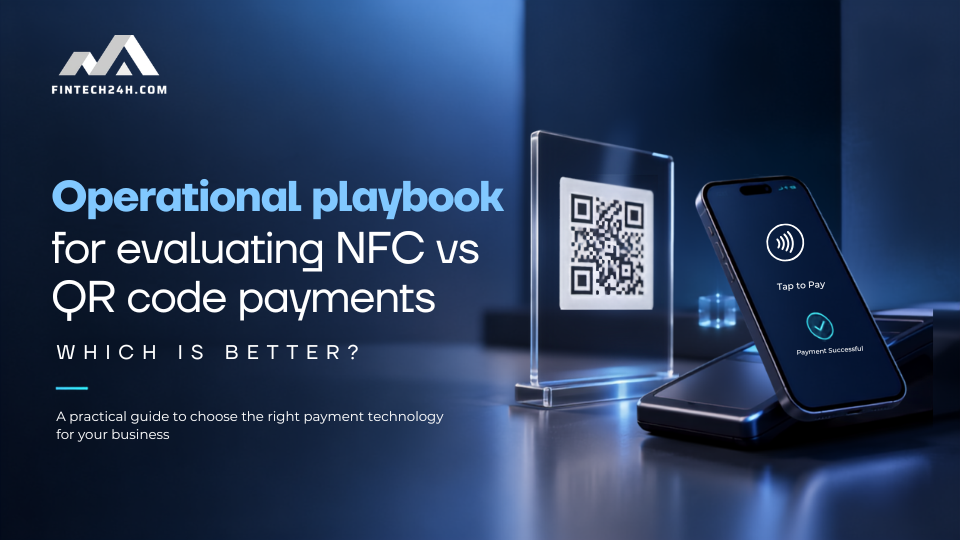
Core operational differences in transaction speed and hardware requirements: NFC vs QR code payments which is better
NFC payments offer superior transaction speed and reliability for high-volume retail, whereas QR code payments provide a low-cost, hardware-agnostic alternative for emerging markets and small-scale merchants. Selecting the right technology depends on your specific throughput needs and the existing infrastructure at your point of sale.
Hardware infrastructure and initial capital expenditure
NFC requires EMV-compliant POS terminals capable of contactless communication, which typically cost between $200 and $600 per unit. Conversely, QR code systems rely on static printed displays or dynamic displays on existing screens, effectively reducing hardware costs to near zero. Merchants opting for QR codes only need a software integration to process the incoming transaction data. If you are planning your deployment, understanding the NFC payment technology explained is essential for a smooth rollout.
Latency metrics at the point of sale
Contactless NFC transactions complete in under 500 milliseconds, as the handshake between the card or device and the terminal is standardized via ISO/IEC 14443. QR code payments involve a multi-step process: opening an app, scanning the code, and waiting for server-side confirmation, which can take anywhere from 2 to 5 seconds depending on network latency and camera focus speed.

Security protocols and fraud mitigation capabilities
Both technologies utilize encryption, but their attack vectors differ significantly based on how they handle sensitive data.
Tokenization standards in contactless hardware
NFC utilizes the same tokenization standards as physical EMV cards. When a device taps a terminal, it transmits a unique, one-time-use cryptogram rather than the actual primary account number (PAN). This ensures that even if a terminal is compromised, the intercepted data is useless for future transactions. For developers, evaluating the tokenization in mobile payments is a critical step in ensuring long-term data integrity.
Dynamic QR code generation as a fraud deterrent
Static QR codes are susceptible to physical tampering, where a fraudster replaces the merchant’s code with their own. Dynamic QR codes mitigate this risk by generating a unique code for every transaction that expires after a few seconds or a single use. This prevents man-in-the-middle attacks and ensures the funds are routed correctly to the intended merchant account.
Customer experience and adoption friction
User behavior dictates the success of a payment channel, particularly regarding the speed of checkout lines and overall payment experience.
Frictionless flow of tap-to-pay systems
NFC is the gold standard for high-traffic environments like transit systems and grocery stores because it requires minimal user interaction. The ‘tap’ motion is intuitive and requires no active app management, leading to lower abandonment rates during peak hours. If you are managing transit payments, you should review the how to secure NFC payments on public transit to protect your users.
Accessibility and device compatibility for QR codes
QR codes excel in accessibility because they do not require specialized NFC-enabled hardware on the customer’s phone. Any smartphone with a camera can scan a QR code, making it the preferred choice in regions where budget smartphones without NFC chips are prevalent.
Decision framework for selecting the optimal payment channel
Use this structured approach to determine your deployment strategy based on your business model.
Criteria for high-volume retail environments
Prioritize NFC if your business processes more than 50 transactions per hour. The speed of contactless payments prevents bottlenecks at the register, directly impacting customer satisfaction and staff efficiency. Be aware of NFC payment limits and transaction caps to ensure your high-volume operations remain uninterrupted.
Criteria for low-cost or emerging market entry
Prioritize QR codes if you are operating in a market with high penetration of entry-level smartphones or if you need to deploy payment acceptance across thousands of small, distributed locations without the budget for expensive POS hardware.
Integration roadmap for hybrid payment systems
Most modern fintech stacks should support both methods to maximize coverage. Implement a unified API layer that treats both NFC and QR inputs as standard payment events.
Unified API management for multi-channel processing
Ensure your backend reconciliation engine normalizes transaction logs from both NFC terminals and QR payment gateways. By using a middleware solution that maps both inputs to a single transaction ID, you maintain clean financial reporting and simplify the audit process for your accounting team.
Regulatory compliance and data sovereignty
When deploying these systems, consider regional data residency laws. NFC transactions often route through global card networks (Visa, Mastercard), which have established compliance frameworks for cross-border NFC payments. QR code systems, particularly those built on proprietary digital wallets like Alipay or UPI, may require specific local data storage configurations to meet regional financial regulations.
Advanced Considerations for Payment Strategy

Handling Offline Transactions and Edge Cases
NFC terminals often support ‘offline’ mode for small-value transactions, where the terminal stores the cryptogram locally and batches it to the processor once connectivity is restored. QR codes, by contrast, are almost exclusively online-dependent because the merchant’s server must validate the dynamic code against the payment gateway in real-time. If your business operates in areas with unstable internet, NFC provides a more robust fallback mechanism.
Merchant Fees and Settlement Timelines
NFC payments typically follow the traditional card network settlement cycle, often taking 1-3 business days for funds to reach the merchant account. QR code payments, especially those integrated with local real-time payment rails (like Pix in Brazil or PromptPay in Thailand), can offer near-instant settlement. This liquidity advantage is a critical factor for small businesses managing daily cash flow.
Frequently Asked Questions
Internet connectivity requirements for NFC transactions
The customer’s device does not always need an active internet connection for the initial tap, but the merchant’s POS terminal must be connected to a network to authorize the transaction.
Security risks regarding proximity-based NFC skimming
This is highly unlikely due to the short range of NFC (typically under 4cm) and the use of dynamic, one-time-use tokens that expire immediately after a transaction. For more details, consider the technical reality of proximity-based NFC skimming.
Smartphone compatibility for NFC payment technology
Most modern smartphones from Apple (iPhone 6 and later), Samsung, Google, and other major manufacturers include NFC chips for contactless payments.
Fee structures associated with NFC payment processing
NFC payments are processed through standard card networks, so merchants pay the same interchange and processing fees as they would for physical card swipes.
Terminal identification for NFC acceptance
Look for the universal contactless symbol, which resembles a radio wave icon, displayed on the payment terminal.
- Operational roadmap for deploying NFC payment technology explained for fintech startups
- Technical reality of NFC payment security and distance vulnerabilities
- Reliability benchmarks for travelers verifying if are NFC payments accepted internationally
- NFC payment limits and transaction caps reality check