
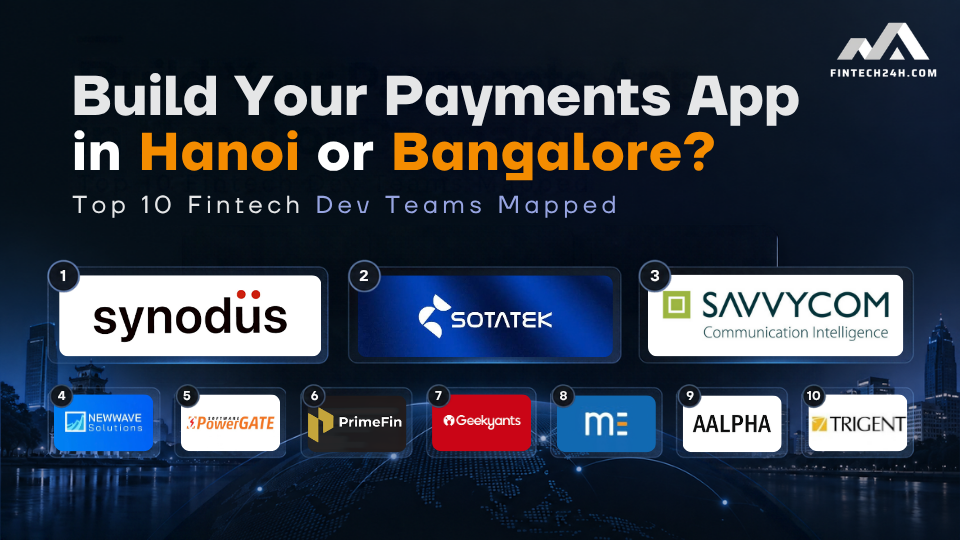
To Build Your Payments App in Hanoi or Bangalore? Top 10 Fintech Dev Teams Mapped, you must evaluate partners based on their specific experience with financial infrastructure, security, and regulatory compliance. Building a payments app is rarely just a mobile development project; a serious fintech product requires payment processing, digital wallets, KYC and AML workflows, secure APIs, and infrastructure capable of handling sensitive financial data. That makes the choice of a development partner particularly important.
For companies comparing Hanoi vs. Bangalore for fintech software development, both locations offer compelling engineering talent, but they tend to present different strengths. Hanoi has a growing ecosystem of software outsourcing and product engineering companies with experience in banking, payments, blockchain, and enterprise applications. Bangalore, meanwhile, has one of India’s deepest technology talent pools and a particularly mature ecosystem around payments, banking technology, SaaS, and financial services.
This list maps 10 companies worth considering across the two markets. It is not intended to declare one city universally better than the other. Instead, the ranking considers fintech relevance, software engineering capabilities, financial-services experience, location, publicly documented services or projects, and overall market presence. Current industry directories also show strong representation from Hanoi in Vietnam’s fintech software-development market and a broad pool of specialized and generalist engineering companies in Bengaluru.
Choosing the Right City to Build Your Payments App in Hanoi or Bangalore? Top 10 Fintech Dev Teams Mapped
The answer depends on what you are building and how you plan to build it. Hanoi can be attractive for companies seeking cost-efficient product engineering, dedicated development teams, and an outsourcing partner with experience working across Asian markets. Bangalore is particularly compelling when a project requires a large engineering ecosystem, specialized backend talent, complex integrations, or experience with India’s rapidly evolving digital payments environment.
For a simple payment-enabled consumer app, both cities have capable teams. For a more complex fintech platform, however, the selection criteria should move beyond hourly rates. Architecture, security, compliance awareness, integration experience, QA, DevOps, and post-launch support can have a much greater impact on the final product. If you are looking for ways to NFC payment technology explained, ensure your chosen partner understands modern transaction flows.
Top 10 Fintech Development Teams in Hanoi and Bangalore
1. Synodus — Hanoi, Vietnam
Best for: Banking, payments, digital finance, and end-to-end fintech product development

Synodus is one of the stronger Hanoi-based options for projects where fintech domain knowledge needs to sit alongside full-cycle software engineering. Its public finance and banking offering covers banking, payments, insurance, wealth and asset management, capital markets, fintech, and related financial infrastructure. The company states that it has delivered more than 30 finance-related projects and works across both financial institutions and fintech businesses.
For a payments app, the interesting part is not simply the ability to build a mobile interface. Synodus positions its team around the full product lifecycle, including business analysis, product design, project management, QA, DevOps, and full-stack development. That model can be useful when a fintech startup needs one engineering partner rather than coordinating several specialist vendors.
Its finance portfolio also indicates experience with API-first digital banking platforms and financial data systems. This makes Synodus a particularly relevant choice for teams considering a payment product that may eventually expand into broader digital banking or financial services.
Why consider Synodus: Strong fintech positioning, banking and payment experience, full-cycle delivery, and a Hanoi-based engineering team.
Potential fit: Digital banking platforms, payment products, financial APIs, fintech SaaS, and modernization projects.
2. SOTATEK JSC — Hanoi, Vietnam
Best for: Blockchain-enabled fintech, financial platforms, and complex custom software
SOTATEK sits at the intersection of custom software development, blockchain, and financial technology. Current industry listings place the company in Hanoi and show substantial experience in custom software, blockchain, mobile applications, and web development. Clutch also lists financial services among the industries in which SOTATEK has demonstrated experience.
That combination can be relevant when a payments product includes more than conventional payment processing. For example, a fintech company exploring tokenization in payment gateway systems, blockchain-based settlement, digital wallets, or Web3 financial infrastructure may want a team that understands both traditional application engineering and decentralized technologies.
SOTATEK’s public portfolio and company profile also show experience serving international clients, making it worth considering for businesses looking for an offshore development partner rather than a purely domestic engineering team. Its Hanoi headquarters and development centers further strengthen its position in this comparison.
Why consider SOTATEK: Strong overlap between fintech, blockchain, and custom software engineering.
Potential fit: Digital wallets, blockchain fintech, tokenization-related products, financial platforms, and complex custom applications.
3. Savvycom — Hanoi, Vietnam
Best for: Digital banking, payment applications, and enterprise fintech modernization
Savvycom has a particularly clear fintech offering. Its public service portfolio covers custom fintech application development, banking systems, payment processing, digital wallets, mobile banking, lending platforms, security, and financial data solutions. The company is headquartered in Hanoi and has a broader international presence.
For a payment app, Savvycom’s positioning is relevant because its fintech services extend beyond front-end application development. The company describes work involving API-driven payment platforms, digital wallets, mobile banking applications, third-party integrations, and security considerations such as PCI DSS, KYC, and AML.
Its portfolio also includes BFSI and fintech projects involving insurance technology, eKYC, fraud prevention, foreign-exchange workflows, and digital banking modernization. That breadth makes it a useful option for organizations looking to build a payments product today while leaving room for additional financial functionality later.
Why consider Savvycom: Clearly defined fintech services, banking experience, payment capabilities, and a broad software engineering stack.
Potential fit: Payment apps, mobile banking, digital wallets, lending, eKYC, and financial enterprise systems.
4. Newwave Solutions — Hanoi, Vietnam
Best for: Fintech apps, digital banking, and cross-platform product development
Newwave Solutions is another established Hanoi-based development company with a broad software engineering portfolio. Its public materials cover custom software, mobile applications, blockchain, QA, UI/UX, and fintech solutions. The company states that its Hanoi headquarters supports a team of more than 300 IT professionals.
The company also has a dedicated digital banking offering covering custom banking applications, legacy systems, UI/UX, POS software, platform modernization, security, and ongoing maintenance. Its public portfolio includes a blockchain wallet application, which adds relevance for fintech products that combine conventional payments with digital assets.
Newwave can therefore be interesting for companies that need both mobile development and backend engineering rather than a narrowly specialized payment infrastructure provider. Its broader technology capabilities may also be useful for fintech companies building customer-facing products that integrate with existing financial systems.
Why consider Newwave Solutions: Broad development capabilities with specific exposure to fintech, banking, mobile apps, and blockchain.
Potential fit: Mobile payment applications, digital banking, wallets, POS systems, and fintech MVPs.
5. PowerGate Software — Hanoi, Vietnam
Best for: Custom mobile and software development for fintech products
PowerGate Software is another Hanoi-based development partner appearing prominently in current fintech software-development rankings. Clutch lists it among the leading custom software development companies for fintech in Vietnam, with a strong emphasis on mobile application development.
This makes PowerGate particularly relevant for businesses where the payment experience is centered around a mobile application. Instead of looking exclusively for a company that markets itself as a payment-infrastructure specialist, companies can also evaluate development partners based on their ability to build the customer-facing application, backend services, integrations, and supporting infrastructure.
For early-stage fintech companies, that distinction can matter. A startup may not need to build its own entire payment rail; it may instead need a secure application layer connected to banking APIs, payment gateways, identity systems, analytics, and third-party services.
Why consider PowerGate: Strong mobile-development orientation and a presence in Vietnam’s fintech software-development landscape.
Potential fit: Payment apps, fintech MVPs, consumer financial applications, and mobile-first products.
6. PrimeFin Labs — Bangalore, India
Best for: Payment gateways, digital wallets, PSP platforms, and payment infrastructure
PrimeFin Labs is the most specialized fintech-focused company on this list. Unlike general software development firms that serve many industries, PrimeFin positions itself specifically around financial technology infrastructure. Its public offering covers payment gateways, digital wallets, remittance software, POS payment systems, payment aggregators, payout engines, and fintech backend infrastructure.
Its payment infrastructure offering includes merchant onboarding, transaction switching, acquirer management, dispute and chargeback workflows, merchant portals, settlement, and ledger layers. These are precisely the types of backend components that can become difficult to engineer correctly when a payment product grows beyond its MVP stage.
For companies asking specifically, “Who can help us build the infrastructure behind a payment product?” PrimeFin deserves serious consideration. Its specialization also makes it different from broader Bangalore development companies that happen to have financial-services clients.
Why consider PrimeFin Labs: Strongest specialization on this list for payment infrastructure.
Potential fit: Payment gateways, PSP platforms, digital wallets, remittance, payment aggregation, payout systems, and financial transaction infrastructure.
7. GeekyAnts — Bangalore, India
Best for: Fintech mobile applications, digital wallets, banking apps, and modern product experiences

GeekyAnts has a strong mobile and web engineering background, but its current public materials also show an increasingly explicit focus on fintech. The company is based in Bengaluru and its engineering roles reference banking, payments, UPI systems, high-scale platforms, and fintech product development.
Its client work also includes financial-services applications. Clutch records a project in which GeekyAnts developed a fintech application for an investment advisory company, covering UI development, backend API integrations, and third-party integrations. Another verified financial-services review describes its work on an investment platform.
That makes GeekyAnts a particularly interesting option when the product needs a polished customer experience alongside serious backend integration work. Its capabilities can suit companies building mobile-first fintech products rather than only back-office financial infrastructure.
Why consider GeekyAnts: Strong mobile engineering combined with growing fintech and payments specialization.
Potential fit: Investment apps, digital wallets, banking applications, payment experiences, and consumer fintech platforms.
8. mTraction Enterprise — Bangalore, India
Best for: Mobile and web fintech products with complex user experiences
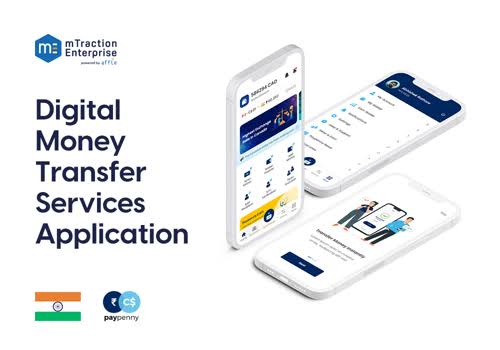
mTraction Enterprise is another Bangalore-based team with documented financial-services experience. Current Clutch information identifies it as a mobile and web application development company and highlights a fintech product development project involving discovery, UI/UX requirements, and backend development.
The company is particularly relevant for organizations that view a fintech application as a broader digital product rather than simply a payment engine. A payment app needs onboarding, account management, transaction history, notifications, analytics, support workflows, and potentially merchant or admin interfaces. These product layers require strong application engineering in addition to financial integrations.
mTraction can therefore be considered when the customer-facing product experience is a major part of the project, especially for businesses that expect their payment product to evolve into a broader financial or commerce platform.
Why consider mTraction Enterprise: Documented fintech application work combined with mobile, web, testing, cloud, and custom software capabilities.
Potential fit: Fintech apps, payment-enabled commerce platforms, financial dashboards, and mobile-first financial products.
9. Aalpha Information Systems — Bangalore, India
Best for: Custom financial software and dedicated engineering teams
Aalpha Information Systems takes a broader custom software development approach rather than positioning itself exclusively as a fintech specialist. However, its Bangalore presence and experience with financial technology make it relevant for organizations evaluating offshore engineering teams. A recent company-published case describes a European fintech company establishing a 50-member development center in Bengaluru with Aalpha, including end-to-end product development and compliance-related work.
The company also has a long-standing international delivery model. Public industry information places Aalpha among the leading custom software developers in Bengaluru, with a service profile covering software development, mobile applications, and other engineering capabilities.
Aalpha may be more attractive to companies that need a dedicated development operation rather than a small specialist team. This distinction becomes important when a fintech product requires several engineering disciplines, including backend, frontend, QA, DevOps, business analysis, and ongoing maintenance.
Why consider Aalpha: International delivery experience and suitability for dedicated or extended engineering teams.
Potential fit: Custom fintech platforms, banking applications, financial software, dedicated development centers, and long-term product engineering.
10. Trigent Software — Bangalore, India
Best for: Enterprise fintech engineering, modernization, data, and scalable software operations

Trigent Software is a more enterprise-oriented option among the Bangalore teams. Its current Bengaluru profile includes custom software development, enterprise application modernization, data and analytics, AI, application testing, and other technology services. Clutch also lists Trigent among Bengaluru companies working in risk management and financial technology-related areas.
The company’s recent work in Bengaluru has also focused on building and scaling engineering capability through Global Capability Centers. This can be relevant to financial institutions and fintech companies that need more than an isolated application-development project and instead require a longer-term engineering setup.
For a payments application, Trigent may make more sense when the project includes legacy modernization, data platforms, testing, cloud transformation, or enterprise-scale integration. It is less narrowly focused on payment infrastructure than PrimeFin Labs, but its broader engineering profile can be valuable for complex organizations.
Why consider Trigent: Enterprise engineering depth, modernization, testing, data capabilities, and scalable delivery models.
Potential fit: Banking modernization, enterprise fintech, financial data platforms, risk systems, and large-scale application engineering.
What Should You Check Before Hiring a Fintech Development Team?
The biggest mistake is choosing a team solely because it offers a low development rate. Financial software has a much higher cost of failure than an ordinary business application. A poorly designed transaction flow, weak authentication system, unreliable reconciliation process, or inadequate audit trail can create operational and financial problems long after launch.
Start with payment architecture. Ask whether the team has experience with payment gateways, payment service providers, banking APIs, wallets, transaction processing, webhooks, reconciliation, refunds, chargebacks, and settlement. If your product will operate across multiple countries, ask how the team approaches regional payment methods and financial integrations.
Next, examine security and compliance awareness. You do not necessarily need a development partner that provides legal compliance advice, but the engineering team should understand concepts such as PCI DSS, KYC, AML, encryption, access control, audit logging, secure API design, tokenization, and data protection. A competent fintech team should be comfortable discussing these topics during technical discovery rather than treating them as an afterthought.
You should also evaluate scalability. A payment application may have relatively few users initially but still generate a high number of transactions. Ask how the team approaches idempotency, transaction consistency, queues, retries, observability, database scaling, failure recovery, and disaster recovery. These architectural decisions are much harder to retrofit once a financial platform is already processing real transactions.
Finally, investigate post-launch support. A payment application is not finished when it enters the app store. Financial integrations change, APIs evolve, bugs appear, fraud patterns shift, and new compliance requirements emerge. Your development partner should have a realistic maintenance and incident-response model. For those scaling up, consider best practices for API documentation to ensure long-term stability.
Frequently Asked Questions
1. Is Hanoi good for fintech software development?
Yes. Hanoi has an established software outsourcing and product-engineering ecosystem with companies working across banking, payments, fintech, blockchain, mobile applications, and enterprise software. Current industry rankings include multiple Hanoi-based companies among Vietnam’s leading fintech software-development providers.
2. Is Bangalore good for building a payment app?
Bangalore is one of India’s strongest locations for software and fintech engineering. Its ecosystem includes specialized payment-infrastructure companies as well as broader software-development firms with experience in banking, financial services, mobile applications, APIs, data, and enterprise systems. If you are exploring the broader region, you might also look at blockchain fintech companies in the UAE trends for comparison.
3. Which is cheaper for fintech development, Hanoi or Bangalore?
There is no universal price difference because the final cost depends on the seniority and specialization of the team, project complexity, engagement model, and required security and compliance capabilities. Comparing only hourly rates can be misleading. A better comparison considers the total cost of development, maintenance, integration, QA, infrastructure, and post-launch support.
4. What technology stack is commonly used for payment applications?
Modern payment applications may use technologies such as Java, Kotlin, Swift, React Native, Flutter, Node.js, Python for mobile apps, Go, PostgreSQL, Redis, cloud infrastructure, REST or event-driven APIs, and microservices. The right stack depends on the payment architecture, transaction volume, integration requirements, security model, and existing systems.
5. What should a fintech development team know before starting a payment project?
At minimum, the team should understand payment flows, API integrations, authentication, authorization, encryption, transaction integrity, error handling, reconciliation, audit logging, security testing, and the relevant compliance requirements. For international payment products, experience with multiple payment providers and regional financial systems is an additional advantage. If you are new to the space, check out our guide on web3 branding building to help establish your market presence.