
Identifying the universal contactless symbol
Travelers often ask if are NFC payment technology accepted internationally; the answer is yes, provided the merchant terminal displays the universal contactless symbol. This icon serves as the primary visual indicator that a point-of-sale (POS) system is configured to process encrypted radio-frequency data from mobile wallets like Apple Pay, Google Pay, or contactless-enabled EMV chip cards. As global financial systems evolve, innovations like Neutronpay revolutionize payment methods, making it easier for users to navigate these digital landscapes.
Recognizing the EMVCo contactless icon
The standard contactless indicator consists of four curved radio waves, often oriented sideways. This symbol is governed by EMVCo, the global technical body that ensures interoperability between payment networks. When you approach a terminal, look for this icon on the display screen or etched onto the card reader chassis.
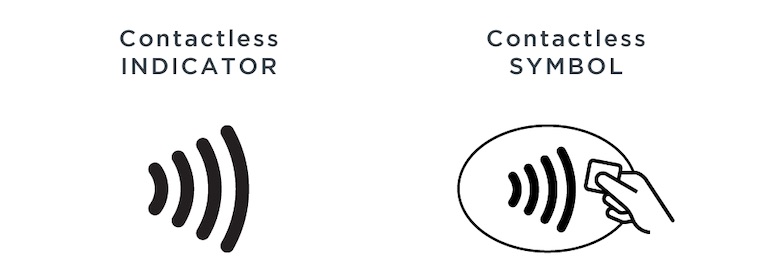
If the terminal lacks this specific symbol, it likely does not support NFC technology, regardless of whether the store accepts card payments. Beyond the icon, pay attention to the physical interaction zone. On modern terminals—such as those manufactured by Verifone or Ingenico—the NFC antenna is typically located behind the screen or directly above the keypad.
If you are traveling abroad, you may notice that some older terminals require you to tap your card or phone specifically over the screen, while newer, integrated units allow for a broader tap area. If the terminal remains unresponsive after a few seconds, it is usually a sign that the NFC reader is either disabled or the merchant relies exclusively on magnetic stripe or contact-chip insertion.
It is also helpful to check for the logos of major payment networks like Visa payWave, Mastercard Contactless, or American Express Contactless. While these are brand-specific, they all utilize the same underlying NFC protocol. If you see the four-wave symbol alongside these logos, you can be confident that your international contactless transaction will be processed through the secure EMV network.
Regional variations in how are NFC payments accepted internationally
NFC payment acceptance is not uniform across the globe; it operates on a spectrum ranging from fully cashless societies to cash-reliant economies. Travelers often find that while major metropolitan hubs in Europe, Australia, and parts of East Asia support contactless payments at nearly every point of sale, rural regions or developing markets may still prioritize magnetic stripe or chip-and-PIN transactions.
Understanding these regional nuances prevents the common mistake of assuming a global standard exists for digital wallets like Apple Pay or Google Pay.
Transit systems versus retail merchant adoption
Public transport networks frequently serve as the primary driver for NFC infrastructure, often outpacing local retail adoption by several years. In cities such as London, Singapore, and New York, transit authorities have integrated open-loop payment systems that allow commuters to tap credit cards or mobile devices directly at turnstiles. This shift is motivated by the need to reduce boarding times and eliminate the overhead costs associated with maintaining ticket vending machines and physical smart cards.
Conversely, small-scale retail merchants in these same cities may lag behind. A local café or a street-side vendor might not have upgraded their point-of-sale (POS) terminals to support NFC, even if the subway station two blocks away is fully contactless.
This discrepancy occurs because transit systems benefit from centralized, government-backed infrastructure investment, whereas individual merchants must weigh the transaction fees and hardware costs of upgrading their proprietary systems. Travelers should therefore maintain a backup physical card or a small amount of local currency, as retail adoption remains subject to the individual business owner’s choice of payment processor.
When assessing whether NFC payments are accepted internationally, focus on the specific merchant category rather than the country’s general technological maturity. Large international chains, hotels, and department stores almost universally support NFC to cater to global travelers. However, independent shops in markets like Germany or Japan often retain a preference for local payment schemes or cash, making reliance on mobile-only payments a risky strategy for international travel.
Technical prerequisites for international NFC functionality
For NFC payments to function seamlessly across borders, your mobile wallet must bridge the gap between your local bank’s NFC payment security protocols and the merchant’s point-of-sale (POS) terminal. The primary requirement is that your device must support the EMVCo standard, which governs the contactless communication between your smartphone or wearable and the payment terminal.

If your device is rooted or jailbroken, the hardware-level security (Secure Element) often disables NFC payment features to prevent fraud, rendering international tap-to-pay impossible regardless of the merchant’s infrastructure.
Card network and digital wallet compatibility
Even if a merchant displays the universal contactless symbol, the transaction will fail if your specific digital wallet token is not recognized by the local acquiring bank. When you add a card to Apple Pay, Google Wallet, or Samsung Pay, the system generates a Device Account Number (DAN) rather than using your actual card number. International acceptance depends on whether the local payment processor supports the specific tokenization scheme used by your card issuer.
- Visa and Mastercard: These networks maintain the most robust global interoperability. If your card is branded with either, the tokenization process is standardized globally, meaning your digital wallet will likely function at any terminal displaying the corresponding network logo.
- American Express: While widely accepted in major global hubs, Amex often relies on proprietary processing networks. In smaller markets or rural areas outside of North America and Europe, terminals may support Visa/Mastercard contactless protocols but reject American Express tokens.
- Regional Restrictions: Some banks restrict international transactions on digital wallets by default to prevent fraud. Before traveling, check your banking app settings to ensure ‘International Transactions’ and ‘Contactless Payments’ are toggled to the ‘On’ position.
Additionally, ensure your device’s region settings match your payment card’s issuing country for the initial setup. Once the card is provisioned into your digital wallet, the physical location of the device becomes irrelevant for the transaction itself, provided the merchant’s terminal is connected to the global payment gateway network.
Limitations of NFC payment acceptance at point-of-sale terminals
While contactless technology is widespread, NFC payments are not universally accepted at every point-of-sale terminal globally. Even in highly digitized economies like the United Kingdom or Singapore, small independent vendors, rural transport systems, and specific parking kiosks may still rely exclusively on legacy magnetic stripe readers or contact-only EMV chip slots.
Relying solely on a mobile wallet such as Apple Pay or Google Pay creates a significant risk of being unable to complete a transaction in regions where NFC infrastructure is either outdated or intentionally disabled to reduce merchant processing fees.
Handling fallback scenarios for non-contactless merchants
Carrying a physical EMV chip card remains a necessary redundancy for any international traveler. When a merchant terminal does not display the universal contactless symbol—four curved lines resembling a radio wave—you must be prepared to insert your physical card. This physical backup ensures you are not stranded if a terminal fails to handshake with your smartphone or if the merchant’s NFC module is malfunctioning.
Beyond hardware limitations, consider these practical fallback strategies:
- Verify terminal capabilities: Always inspect the terminal for the contactless icon before tapping. If the icon is absent, do not attempt to hover your device, as this can occasionally trigger a terminal error that locks the reader for subsequent users.
- Maintain digital backups: Ensure your physical card is linked to your digital wallet. If a terminal accepts NFC but rejects your mobile wallet due to tokenization issues or bank-side security blocks, the physical card provides the ultimate fallback.
- Carry local currency: In markets like Japan or Germany, where cash-heavy traditions persist, even the most advanced NFC-enabled terminal may occasionally be offline. Having a small amount of local currency acts as the final safety net when digital payment rails fail.
Travelers should also note that some international terminals require a PIN for contactless transactions exceeding a specific threshold, such as 50 EUR in many European countries. If your mobile wallet is not configured to handle PIN verification or if the terminal forces a contact-only transaction for high-value items, your physical EMV chip card will be the only reliable method to finalize the purchase.
Currency conversion and transaction fee considerations
While NFC payments are widely accepted, the underlying financial mechanics differ significantly from domestic usage. When you tap your phone or watch abroad, the transaction is processed through the same rails as a physical card, meaning your bank applies the same currency conversion rates and foreign transaction fees. Relying solely on NFC does not bypass the hidden costs of international spending. As we see how Neutronpay revolutionize payment standards, it is clear that transparency in fees remains a priority for modern fintech solutions.
Evaluating foreign transaction fee structures
Banks typically categorize digital wallet transactions—such as Apple Pay, Google Pay, or Samsung Pay—exactly like physical card swipes. If your credit card carries a 3% foreign transaction fee, that fee will trigger regardless of whether you insert the chip or tap your device.
To minimize these costs, prioritize travel-specific credit or debit cards that explicitly waive foreign transaction fees. Cards like the Chase Sapphire Preferred or Capital One Venture X are industry standards for this purpose, as they do not penalize users for cross-border digital wallet usage.
Dynamic Currency Conversion (DCC) remains a critical trap for travelers. When you tap your NFC-enabled device at a point-of-sale terminal, the reader may prompt you to choose between your home currency or the local currency. Always select the local currency. Choosing your home currency allows the merchant’s payment processor to set an arbitrary, often unfavorable, exchange rate.
By selecting the local currency, you ensure the conversion is handled by your issuing bank, which almost always provides a rate closer to the mid-market interbank exchange. Be aware that some digital wallets allow you to link multiple cards. Before traveling, designate a card with no foreign transaction fees as your primary payment method within the wallet settings.
This prevents the accidental use of a high-fee card during a quick tap transaction. Additionally, check if your bank requires travel notifications for digital wallets. While most modern systems detect international usage automatically, some regional banks may flag NFC transactions as suspicious if they originate from an unexpected country, leading to an immediate decline at the register.
Frequently Asked Questions
Methods for identifying merchant NFC acceptance abroad
Look for the universal contactless symbol—four curved lines resembling a radio wave—on the payment terminal. Additionally, check for logos of major card networks like Visa payWave, Mastercard Contactless, or American Express Contactless, which indicate the terminal supports NFC technology.
Common reasons for NFC payment failures at contactless terminals
Failures often occur due to regional card network restrictions, issuer-side security blocks on international transactions, or terminal software that is not configured to accept foreign-issued digital tokens. Always carry a physical EMV chip card as a reliable backup.