
Mapping AI Security Institutes and Research to internal risk profiles
Integrating external intelligence from AI security institutes and research requires a systematic alignment between academic findings and an organization’s specific threat model. Financial institutions must move beyond passive consumption of white papers by mapping vulnerabilities identified in research to their own technical architecture, such as LLM-based customer service bots or automated trading algorithms.
Categorizing research outputs by technical relevance
Not all research carries the same weight for immediate operational security. Organizations should segment incoming data into two distinct buckets: theoretical safety research and actionable security patches.
Theoretical research, often produced by entities like the Center for AI Safety, focuses on long-term alignment and systemic risks like model poisoning or adversarial prompt injection. While critical for strategic planning, these findings rarely require immediate code changes.
Conversely, actionable security patches or vulnerability disclosures—often found in repositories like the MITRE ATLAS framework or specific findings from the AI Safety Institute (AISI)—demand immediate integration into the CI/CD pipeline. By tagging research outputs based on their implementation urgency, security teams prevent alert fatigue and ensure that engineering resources are directed toward patching high-probability attack vectors rather than abstract theoretical concerns.
Prioritizing institutes based on regional compliance standards
The credibility of an AI security governance partner is often tied to their alignment with regional regulatory frameworks. For a fintech firm operating in the European Union, research from the European Union Agency for Cybersecurity (ENISA) regarding AI governance provides more direct utility for GDPR compliance than general research from non-aligned international bodies.
Similarly, organizations subject to CCPA or New York Department of Financial Services (NYDFS) mandates should prioritize research output from institutes that explicitly address data privacy and auditability requirements within those jurisdictions. Selecting research partners based on their regional footprint ensures that the security controls suggested are not just technically sound, but legally defensible.

When an institute publishes findings that incorporate local regulatory requirements, it reduces the internal burden of translating complex academic concepts into compliant security policies. This alignment is essential for maintaining a defensible security posture during regulatory audits.
Establishing a continuous monitoring loop for AI security institutes and research
Organizations must move beyond static compliance by integrating real-time intelligence from AI security tools and platforms directly into their operational workflows. This requires a systematic feedback loop that translates academic findings and threat intelligence into actionable security controls. By treating research as a dynamic data stream rather than a one-time reference, security teams can preemptively address emerging adversarial tactics.
Automated ingestion of research whitepapers and vulnerability disclosures
Manual review of research outputs is insufficient for modern threat landscapes. Security operations centers (SOCs) should leverage automated pipelines to ingest data from primary sources such as the AI Safety Institute (AISI), MITRE ATLAS, and academic repositories like arXiv.
Using RSS feeds and API integrations—such as those provided by GitHub’s security advisories or specialized threat intelligence platforms—teams can trigger automated alerts when new vulnerabilities or mitigation strategies are published. For instance, configuring a webhook to monitor the MITRE ATLAS framework updates ensures that new adversary tactics are immediately mapped against existing internal defense layers.
Internal validation cycles for new security models
Implementing research-backed controls requires a rigorous validation process to prevent operational disruption. Before deploying a new security protocol derived from recent studies, teams must utilize a sandbox environment that mirrors production data distributions.
This environment acts as a controlled testing ground where researchers can evaluate the efficacy of new defensive models against synthetic adversarial inputs. By utilizing tools like Giskard or Fiddler AI, engineers can quantify the impact of these security controls on model performance metrics, such as accuracy and latency. This cycle ensures that security enhancements do not inadvertently introduce bias or degrade the utility of the AI system, allowing for a phased rollout that prioritizes stability while maintaining a high security posture.
Benchmarking internal security posture against global research standards
Organizations must move beyond theoretical compliance by mapping their internal AI security posture management against established global research frameworks. This process involves translating high-level guidelines from AI security institutes and research into actionable technical configurations. By aligning internal protocols with peer-reviewed methodologies, companies can identify blind spots in their model deployment pipelines and adversarial defense strategies.
KPIs derived from NIST and MITRE ATLAS frameworks
Quantifying security maturity requires moving away from qualitative assessments toward data-driven metrics. The NIST AI Risk Management Framework and the MITRE ATLAS (Adversarial Threat Landscape for Artificial-Intelligence Systems) provide the necessary taxonomy to measure resilience against specific attack vectors, such as prompt injection, model inversion, and data poisoning.
To effectively benchmark your security posture, track the following performance indicators:
- Adversarial Coverage Ratio: The percentage of known MITRE ATLAS tactics (e.g., Reconnaissance, Initial Access, Exfiltration) for which your organization has implemented automated detection or prevention controls.
- Model Robustness Score: A quantitative measure of how many adversarial perturbations a model can withstand before its accuracy drops below a predefined threshold, tested using standardized libraries like Adversarial Robustness Toolbox (ART).
- Incident Response Latency for AI: The time elapsed from the detection of an anomalous model output or unauthorized API access attempt to the execution of an automated containment protocol.
- Data Sanitization Efficacy: The rate at which training data pipelines successfully filter out malicious payloads or poisoned samples, measured against historical threat datasets.
Implementing these KPIs transforms security from a reactive overhead into a measurable engineering discipline. When an organization reports its security maturity, it should reference these specific benchmarks to demonstrate alignment with global standards. This approach ensures that investments in security tooling are directed toward the most critical vulnerabilities identified by the broader research community, rather than relying on vendor-specific claims that lack independent validation.
Resource allocation for AI security institutes and research collaboration
Effective resource allocation for AI security requires a strategic balance between funding external research bodies and fostering internal technical expertise. Organizations must weigh the cost of membership fees against the value of proprietary insights and standardized security protocols. Direct participation in AI security courses and training provides early access to threat intelligence, yet it demands a dedicated team to translate academic findings into actionable security controls.
Evaluating the ROI of research consortium memberships
Determining when to join a research body versus building internal capabilities depends on your organization’s risk profile and technical maturity. Membership in established consortiums like the AI Safety Institute (AISI) or MITRE’s ATLAS project offers standardized frameworks for adversarial machine learning defense. These memberships provide a high return on investment for firms lacking the scale to perform independent red-teaming on large language models.

To calculate the ROI, consider the following metrics:
- Time-to-Patch: Does the consortium provide vulnerability disclosures faster than your internal team can identify them?
- Compliance Alignment: Does the research output map directly to regulatory requirements like the EU AI Act or NIST AI Risk Management Framework?
- Talent Acquisition: Does the membership provide access to specialized training or talent pipelines that reduce your internal hiring costs?
If your organization operates in a highly regulated sector like fintech, the cost of membership is often offset by the reduction in legal and compliance risk. Conversely, if your AI stack relies on niche, proprietary architectures, internal research capabilities are essential. Generic consortium findings may not cover specific edge cases in your model’s inference pipeline. A hybrid model—where internal teams focus on model-specific security while consortiums provide the baseline threat landscape—typically yields the most efficient resource utilization.
Ultimately, do not treat these memberships as passive subscriptions. The value lies in active participation: contributing data on adversarial attacks, attending working groups, and implementing the recommended security benchmarks. Organizations that fail to integrate these research findings into their CI/CD pipelines often find that the cost of membership exceeds the realized security benefits.
Mitigating the risks of over-reliance on external research
Organizations often treat findings from AI security institutes and research as universal blueprints. However, applying generalized security frameworks to specialized enterprise environments can create a false sense of security. Relying solely on external benchmarks leaves gaps in threat modeling, particularly when your AI infrastructure integrates legacy databases or proprietary APIs that public research bodies never tested.
Identifying the gap between generic research and proprietary architecture
Public research typically focuses on foundational models like GPT-4 or Llama 3, prioritizing universal vulnerabilities such as prompt injection or model inversion. These findings are essential, yet they rarely account for the unique attack surfaces of custom-built RAG (Retrieval-Augmented Generation) pipelines or internal vector databases.
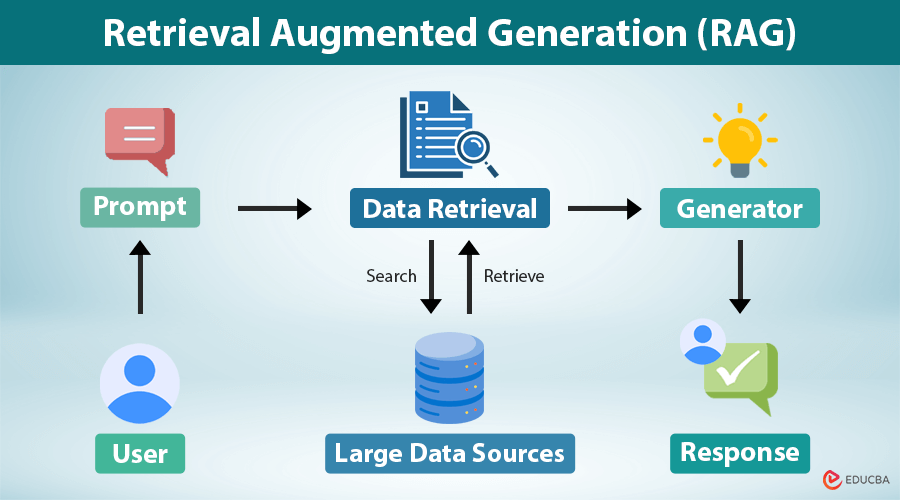
For instance, while a research paper might demonstrate a successful jailbreak on a standard chatbot, it may fail to address how your specific middleware handles data sanitization between the vector store and the LLM. To bridge this gap, security teams must implement a multi-layered verification process:
- Contextual Mapping: Map external research findings against your specific model architecture. If a report identifies a vulnerability in a specific attention mechanism, audit your model’s configuration to see if it utilizes that exact component.
- Red Teaming for Edge Cases: Conduct internal red teaming exercises that simulate attacks on your proprietary data ingestion layers, rather than just testing the model’s chat interface.
- Custom Guardrail Development: Use research-backed threat intelligence to build bespoke guardrails. If external research highlights a new class of indirect prompt injection, develop a custom input-validation layer that specifically inspects the metadata of retrieved documents before they reach the context window.
Over-reliance occurs when firms adopt a ‘set-and-forget’ approach to security patches. Instead, treat external research as a starting point for internal experimentation. By running local stress tests against your specific deployment configurations, you transform theoretical research into actionable, hardened security protocols that protect your unique business logic.
Frequently Asked Questions
Translation of AI security research into internal policy
Start by mapping research findings to your specific threat model. Use the MITRE ATLAS framework to categorize vulnerabilities identified in research papers and prioritize them based on your current AI stack’s exposure.
Selection criteria for actionable AI security data providers
Organizations like the AI Safety Institute (AISI), OWASP for LLMs, and NIST provide the most practical benchmarks. Focus on their ‘Red Teaming’ guidelines and ‘AI Risk Management Framework’ (AI RMF) for immediate implementation.