
The myth of total replacement for primary data collection
Synthetic data in market research is frequently touted as a complete substitute for traditional survey methods, yet this perspective ignores the fundamental nature of statistical generation. While generative adversarial networks (GANs) and large language models can produce high-fidelity datasets that mirror the correlations of existing survey responses, they do not create new empirical truths.
Relying exclusively on synthetic outputs risks creating a closed loop where models reinforce existing biases rather than uncovering shifts in consumer sentiment.
Contextual limitations of generative models
Generative models operate by identifying patterns within training data to predict future distributions. This mechanism inherently struggles with ‘black swan’ events—unprecedented market shocks or sudden shifts in consumer behavior that have no historical precedent in the training set.
For instance, during the initial onset of the 2020 global pandemic, synthetic models trained on 2019 consumer spending habits would have failed to predict the abrupt pivot toward home-office equipment and hygiene supplies. These behaviors lacked the necessary statistical weight in the source data.
Furthermore, synthetic data generation guide often struggles with the nuance of irrational human decision-making. While human respondents may provide contradictory answers due to emotional bias, fatigue, or social desirability, these ‘errors’ are often the most valuable indicators of actual market friction.
Synthetic agents, programmed to optimize for logical consistency based on historical trends, tend to smooth out these anomalies. This creates a sanitized version of the market that lacks the messy, unpredictable reality of human choice. Researchers must treat synthetic datasets as a tool for augmenting sample sizes or testing hypotheses, rather than a replacement for the raw, often chaotic, feedback gathered through direct primary research, raising questions about synthetic data reliability and effectiveness.
Accuracy benchmarks for synthetic data in market research
Evaluating the reliability of synthetic datasets requires moving beyond visual inspection and into statistical parity. Industry-standard benchmarks now rely on comparing the distribution of synthetic variables against ground-truth datasets using metrics such as the Jensen-Shannon Divergence (JSD) or the Kolmogorov-Smirnov test.
These tools measure the distance between probability distributions, providing a quantitative score of how closely the synthetic model replicates the underlying structure of real-world consumer behavior. High-performing models typically achieve a JSD score below 0.05 when compared to original survey data.
However, accuracy is not uniform across all data types. Categorical variables, such as brand preference or geographic location, often reach near-perfect fidelity. Conversely, continuous variables like precise household income or time-spent-on-site metrics are prone to higher variance.
Researchers must validate these outputs using hold-out sets—data points excluded from the training process—to ensure the model is generalizing patterns rather than simply memorizing input noise.
Quantifying bias propagation in synthetic sets
A persistent risk in synthetic generation is the amplification of existing biases present in the source data. If a training set underrepresents a specific demographic or contains skewed sentiment patterns, the generative model will likely treat these anomalies as statistical norms.
This leads to “bias propagation,” where the synthetic output reinforces historical inequalities rather than providing a neutral representation of the market. To mitigate this, sophisticated research teams implement adversarial debiasing techniques, following synthetic data generation best practices. This involves training a secondary model to detect and penalize bias within the synthetic generator.
By measuring the disparate impact ratio—comparing the synthetic output’s treatment of protected groups against the original data—researchers can quantify how much bias has been introduced. If the original data shows a 10% representation gap for a specific age group, but the synthetic set expands this to 15%, the model is actively propagating bias.
Regular audits using these metrics are essential to ensure that top synthetic data companies and providers remain a tool for objective insight rather than a mechanism for repeating past analytical errors.
Privacy compliance and the synthetic data misconception
A persistent myth in the industry suggests that synthetic data and data privacy (GDPR compliance) is inherently synonymous with anonymized data, automatically granting a free pass under strict regulations like GDPR or CCPA. While synthetic datasets do not contain direct identifiers of real individuals, they are not automatically exempt from privacy laws. The legal status of synthetic data depends entirely on the generation process and the risk of re-identification.
Legal thresholds for data anonymization
Distinguishing between mathematical privacy and regulatory compliance is vital for researchers. Mathematical privacy, often achieved through differential privacy, adds noise to a dataset to ensure that the presence or absence of a single individual cannot be inferred.
However, regulators define anonymization as a state where the data subject is no longer identifiable by any means reasonably likely to be used. If the synthetic model is overfitted to the training data, it may inadvertently memorize and reproduce sensitive attributes of specific individuals, rendering the synthetic output personal data under the law.
To maintain compliance when utilizing synthetic data in market research, firms must adopt a rigorous validation framework:
- Membership Inference Attack (MIA) testing: Conduct stress tests to determine if an adversary can identify whether a specific record was used in the training set.
- Distance metrics: Measure the statistical distance between the synthetic distribution and the original source to ensure utility without compromising privacy.
- Data Protection Impact Assessments (DPIA): Document the generation methodology, specifically detailing how the risk of re-identification is mitigated during the training phase of the generative adversarial network (GAN) or variational autoencoder (VAE).
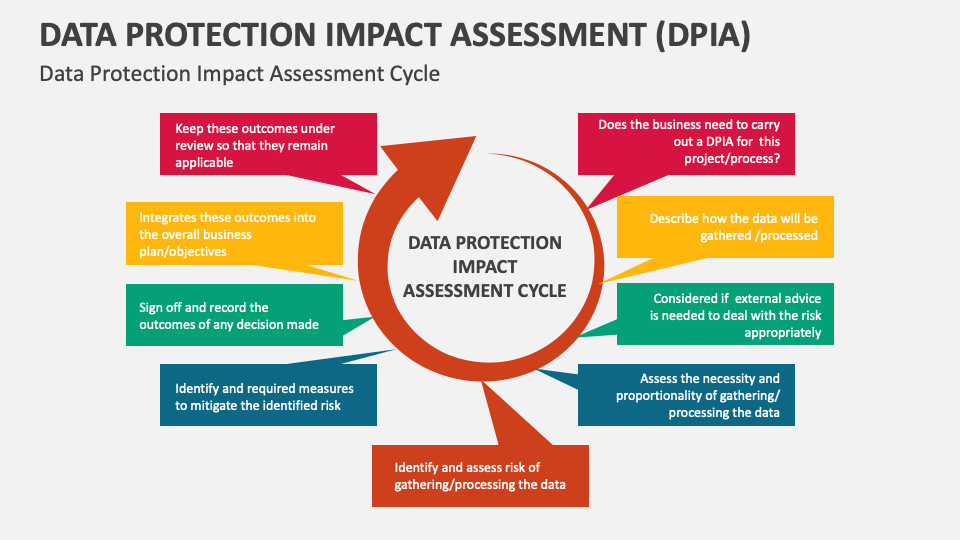
Treating synthetic data as a “privacy panacea” without conducting these technical audits is a significant operational risk. Regulators focus on the outcome—the risk to the individual—rather than the technology used to create the data.
If the synthetic output retains high-fidelity correlations that allow for the reconstruction of rare cohorts, it remains subject to the same governance requirements as the raw data from which it was derived. Compliance teams must therefore treat synthetic generation as a data processing activity that requires clear documentation and ongoing privacy monitoring, aligning with findings from AI security research.
Operational efficiency gains versus model training costs
Integrating synthetic data in market research significantly reduces the time required for data collection, often cutting weeks of survey fielding down to hours of simulation. By generating representative datasets that mirror target demographics, firms bypass the logistical hurdles of recruiting participants, managing incentives, and cleaning messy, incomplete survey responses.
However, these efficiency gains must be weighed against the upfront investment in model architecture and computational resources. Training high-fidelity generative models requires substantial GPU capacity and specialized engineering talent.
While off-the-shelf models like GPT-4 or specialized tabular generators can lower the barrier to entry, fine-tuning these models on proprietary historical data to ensure domain relevance adds to the total cost of ownership. Organizations often find that the break-even point occurs when synthetic generation replaces recurring, large-scale quantitative studies rather than one-off, niche qualitative projects.
Validation workflows for synthetic research
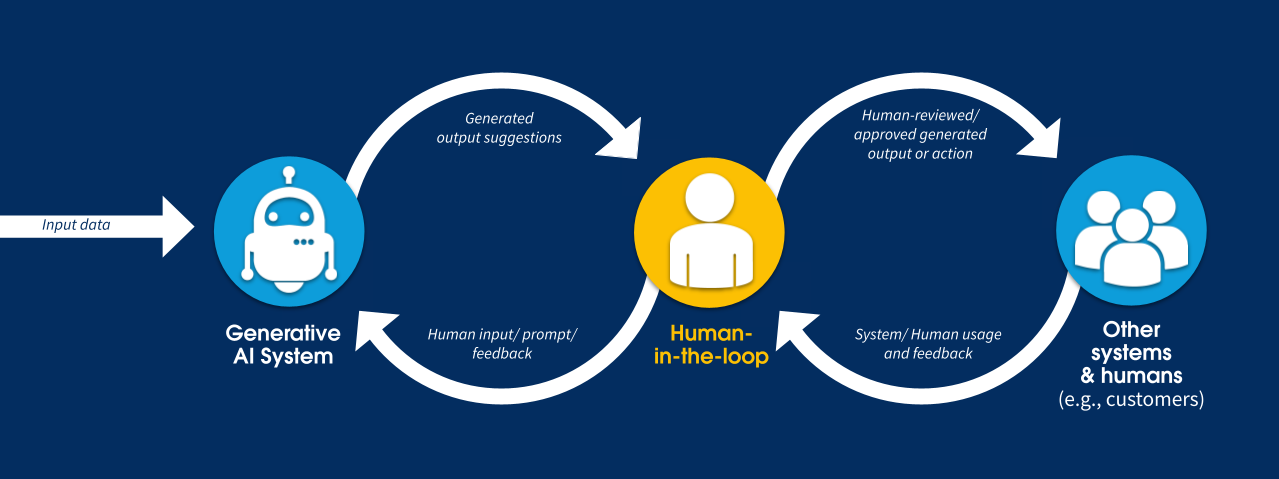
Relying solely on machine-generated output introduces the risk of “hallucinated” trends or statistical biases that do not exist in the real world. A robust human-in-the-loop (HITL) validation workflow is essential to maintain data integrity before these insights reach stakeholders.
- Ground Truth Benchmarking: Compare synthetic outputs against a small, verified “gold standard” dataset collected from real human respondents. If the synthetic model fails to replicate known correlations within this sample, the model parameters require recalibration.
- Statistical Distribution Checks: Utilize Kolmogorov-Smirnov tests or similar statistical measures to ensure that the synthetic population’s distribution matches the intended demographic segments.
- Adversarial Auditing: Task a team of experienced market researchers with attempting to “break” the synthetic data by identifying illogical responses or contradictory sentiment patterns that the model may have inadvertently generated.
- Sensitivity Analysis: Systematically vary the input parameters of the synthetic model to observe how output changes. If minor input adjustments lead to volatile or nonsensical shifts in market insights, the model lacks the necessary stability for reliable decision-making.
By treating synthetic data as a draft that requires expert verification rather than an immutable source of truth, firms can leverage the speed of AI while mitigating the risks of algorithmic error.
Strategic application of synthetic data in market research
Integrating synthetic data into your research workflow requires a shift from traditional data collection to generative modeling. Rather than relying solely on survey responses from existing panels, researchers use synthetic datasets to augment sample sizes, fill gaps in longitudinal studies, and test hypotheses before deploying expensive field campaigns.
This approach allows for the creation of high-fidelity “digital twins” of consumer segments, enabling rapid iteration of product concepts without the latency associated with manual recruitment.
Scenario modeling for niche demographics
Accessing hard-to-reach segments—such as ultra-high-net-worth individuals, rare disease patients, or specialized B2B decision-makers—often presents prohibitive costs and recruitment delays. Synthetic data in market research addresses this by leveraging generative adversarial networks (GANs) or variational autoencoders (VAEs) to simulate responses based on known behavioral patterns and demographic variables of these groups.
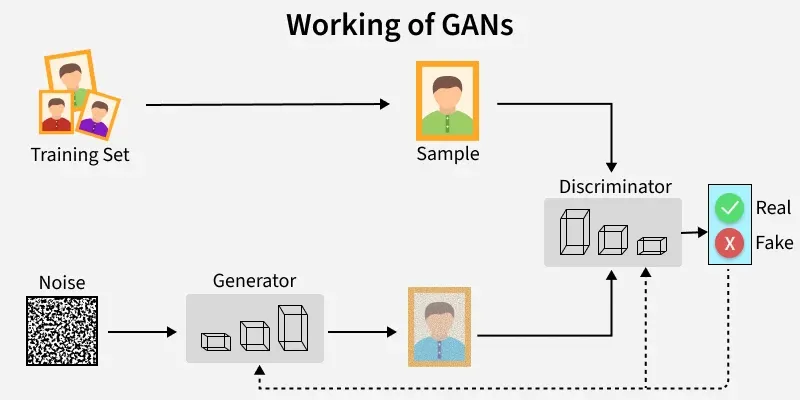
By training models on existing small-scale datasets, researchers can generate thousands of synthetic profiles that mirror the statistical properties of the target demographic. For instance, if you have a limited sample of 50 C-suite executives in the renewable energy sector, you can use that data to seed a model that generates 5,000 synthetic profiles.
These profiles maintain the correlations between variables—such as the relationship between budget authority and risk appetite—allowing you to run complex conjoint analysis or pricing simulations that would be statistically impossible with the original, small sample size.
This method does not replace primary research but serves as a powerful diagnostic tool. It allows teams to identify which variables have the most significant impact on consumer choice before committing budget to a full-scale study.
When deploying these models, ensure that the synthetic output is validated against a hold-out set of real-world data to maintain accuracy and prevent the amplification of biases present in the original training set. By treating synthetic data vs real data comparison as a simulation layer rather than a ground-truth replacement, researchers can significantly reduce the time-to-insight for niche market exploration.
Frequently Asked Questions
Limitations of synthetic data as a replacement for real-world consumer data
No. Synthetic data is best used to augment existing datasets, fill gaps in sparse data, or test models in privacy-sensitive environments. It cannot fully replicate the unpredictable nuances of human behavior found in primary research.
Reality of bias mitigation through synthetic data generation
Not necessarily. If the underlying real-world data used to train the generative model contains historical biases, the synthetic output will likely replicate or even amplify those biases.