
Technical synthetic data vs real data comparison for fintech
Choosing between synthetic and real data requires balancing high-fidelity statistical accuracy against the strict requirements of data privacy and regulatory compliance. A synthetic data vs real data comparison reveals that while real data provides the ground truth for model training, synthetic alternatives offer a scalable pathway to bypass PII (Personally Identifiable Information) constraints in highly regulated environments. 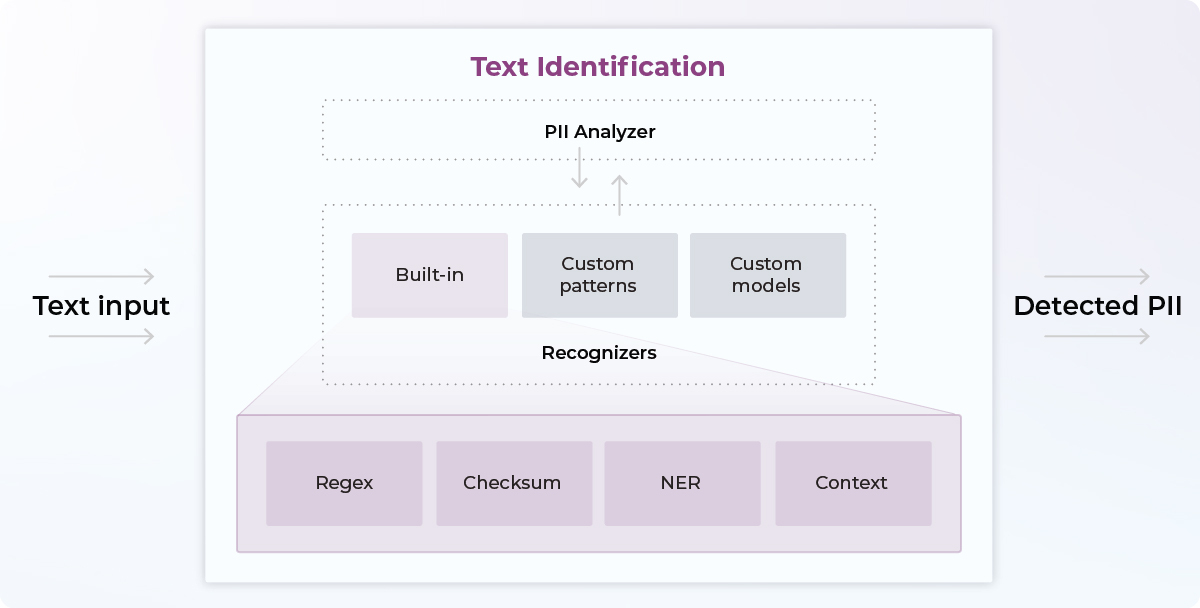 For teams looking to optimize their development, following a synthetic data generation guide is essential for maintaining the integrity of complex financial relationships while ensuring privacy.
Statistical fidelity and distribution drift
Measuring the success of synthetic datasets depends on their ability to replicate the correlation structures of original production data. If a generator fails to capture non-linear relationships—such as the interaction between credit scores and historical loan defaults—the resulting model will suffer from distribution drift. Practitioners must use multivariate analysis to ensure the synthetic output maintains the same mean, variance, and covariance matrices as the source set. Without these checks, models trained on synthetic sets will fail to generalize to real-world market conditions.
Regulatory compliance and data sovereignty
Utilizing high-quality synthetic data serves as a primary tool for de-risking data pipelines by eliminating PII, which is often a requirement under synthetic data and data privacy (GDPR compliance) standards. However, real data remains non-negotiable for final model validation and regulatory reporting. Financial institutions must maintain a clear boundary where synthetic sets are used for iterative development and testing, while production-grade models are audited against real, anonymized, or tokenized datasets to satisfy legal sovereignty requirements.
Technical validation metrics for model training
Quantitative validation is the only way to ensure that your generated information does not introduce bias or hallucinations into your financial models. Relying on visual inspection or simple descriptive statistics is insufficient for production-grade systems.
Jensen-Shannon divergence for distribution matching
The Jensen-Shannon (JS) divergence is a standard metric used to quantify the similarity between two probability distributions. By calculating the JS divergence between your synthetic data and your real production samples, you can identify how much information is lost during the generation process. A lower score indicates higher fidelity, providing a concrete threshold for accepting or rejecting a synthetic batch.
Out-of-sample performance testing
The true test of synthetic data quality is its performance on a real-world holdout set. Train your model on the synthetic dataset, then measure its accuracy, precision, and recall on a sequestered, real-world testing set that the generator never saw. If the model performance drops significantly compared to training on real data, the synthetic generator is likely failing to capture the underlying signal of the market.
Operational cost and infrastructure requirements
The transition to synthetic data involves shifting costs from secure storage and data masking to high-performance compute resources. Understanding these overheads is critical for budget planning. If you are struggling with code efficiency, you might need to review python programming for data science to optimize your generation scripts.
Compute intensity of GANs and diffusion models
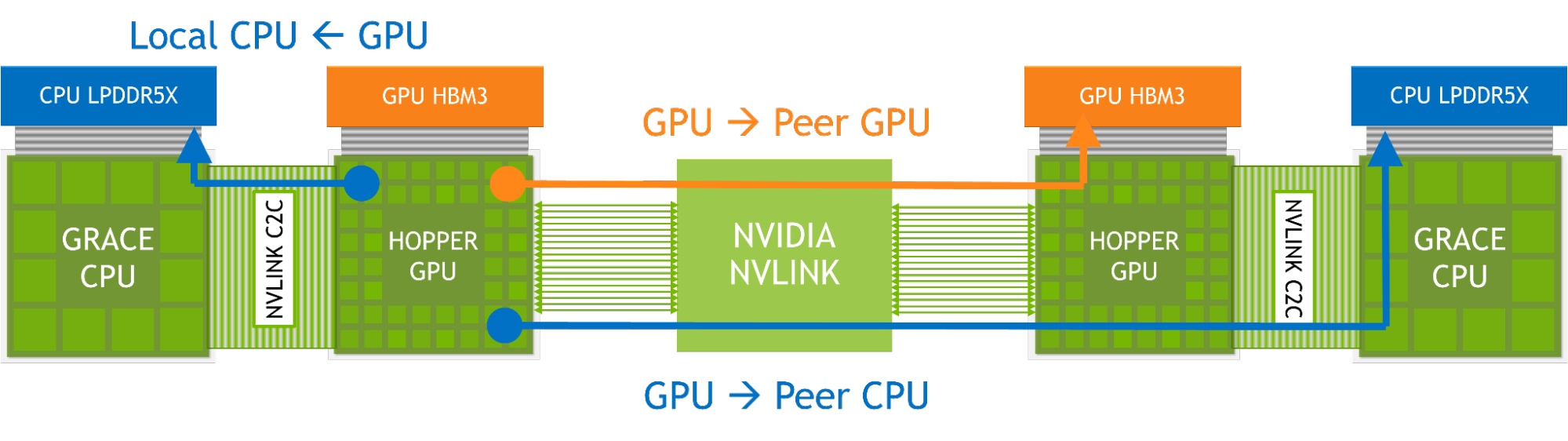
Generative Adversarial Networks (GANs) and diffusion models require substantial GPU resources for training. Generating high-quality synthetic financial data often necessitates clusters of NVIDIA A100 or H100 GPUs to ensure the model converges without mode collapse. Organizations must weigh these cloud compute costs against the expense of maintaining secure, air-gapped environments for real data.
Data pipeline maintenance and latency
Real-time data anonymization introduces latency that can disrupt high-frequency trading or real-time fraud detection pipelines. Synthetic batch generation, while computationally intensive upfront, allows for lower-latency inference once the model is deployed. However, the pipeline must be updated frequently to prevent the synthetic data from becoming stale as market conditions evolve.
Risk assessment for edge cases and rare events
Synthetic generators often struggle to model the ‘fat tails’ of financial distributions, which represent black-swan events or extreme market volatility. Because these events are rare in historical training data, generative models frequently smooth them out, leading to an underestimation of risk.
Handling tail-risk distribution
When training models for risk management or stress testing, synthetic data may provide a false sense of security. If your synthetic generator is trained on a period of market stability, it will not accurately simulate the correlations present during a market crash. Always augment synthetic sets with synthetic ‘stress scenarios’ that manually inject extreme volatility to ensure the model remains robust.
Vendor evaluation checklist for data providers
When vetting third-party platforms, it is helpful to consult an economic evaluation framework for top synthetic data companies and providers to prioritize transparency and technical rigor over marketing claims. Use this checklist to evaluate potential partners:
- Provenance tracking: Does the provider offer a clear audit trail of the training data source?
- Metric transparency: Can the provider supply JS divergence scores or other validation metrics for their outputs?
- Edge case support: Does the platform allow for the manual injection of rare events or specific market scenarios?
- Compliance certification: Is the platform compliant with SOC2, ISO 27001, or industry-specific financial regulations?
Frequently Asked Questions
How are synthetic datasets generated?
Synthetic data is generated using machine learning models, primarily GANs, Variational Autoencoders (VAEs), or diffusion models, which learn the statistical patterns of real data to create new, artificial samples.
What is the definition of synthetic data in AI?
Synthetic data is information that is artificially generated by algorithms rather than collected from real-world events, designed to mirror the statistical properties of real data while protecting privacy.
How do synthetic data pipelines function?
They work by training a generative model on a real dataset to understand its underlying distribution, then using that model to output new data points that share the same characteristics without containing actual PII.
Why is synthetic data important for fintech?
It allows organizations to train AI models in privacy-sensitive sectors like fintech without risking the exposure of sensitive customer information or violating data residency laws.
How can I verify the reliability of synthetic data?
It is reliable only if it passes rigorous statistical validation tests, such as Jensen-Shannon divergence, and demonstrates consistent performance on real-world holdout datasets.
Does synthetic data ensure privacy compliance?
Yes, because synthetic data does not contain one-to-one mappings to real individuals, it effectively mitigates the risk of re-identification and complies with strict data privacy regulations.