
Operationalizing synthetic data for fintech workflows
Synthetic data provides a scalable, privacy-preserving alternative to real-world financial records by using generative models to create artificial datasets that mirror the statistical properties of production data. Financial institutions leverage this technology to accelerate model training and bridge data gaps in rare fraud scenarios.
Furthermore, this approach helps bypass the rigorous compliance hurdles associated with using Personally Identifiable Information (PII) in development environments.
Strategic imperatives for synthetic data adoption
Adopting synthetic data is a strategic necessity for institutions facing data silos and strict privacy regulations like GDPR or CCPA. By decoupling development from sensitive production environments, firms reduce the risk of data breaches during testing while increasing the velocity of their AI and machine learning deployment cycles.
This shift allows data science teams to iterate on models without waiting for lengthy data anonymization requests.
Selecting appropriate generation approaches
Choosing the correct generation method depends on the complexity of your data structure and the intended use case. Financial teams often choose between three primary architectures:
- Statistical modeling: Ideal for simple, tabular data where correlations are well-understood and linear.
- Generative Adversarial Networks (GANs): Highly effective for complex, high-dimensional datasets, though they require significant computational resources and careful tuning to avoid mode collapse.
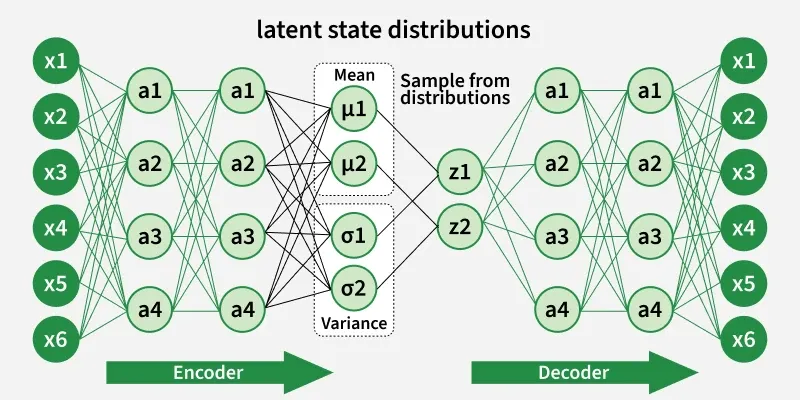
- Variational Autoencoders (VAEs): Preferred for maintaining latent space representations in stable, predictable training environments.
Technical execution and tool selection
Financial teams should evaluate tools like Gretel.ai, Mostly AI, or open-source libraries such as SDV (Synthetic Data Vault) to automate the generation process. These tools allow for differential privacy settings, ensuring that the synthetic output cannot be reverse-engineered to reveal original customer identities.
When implementing these tools, prioritize those that offer built-in validation suites to monitor statistical fidelity automatically.
Validation protocols for synthetic data quality
Validation ensures the synthetic data is statistically representative and fit for purpose before it reaches production-grade models. Use metrics such as Jensen-Shannon divergence or Kolmogorov-Smirnov tests to compare the distributions of synthetic features against real-world benchmarks.
Correlation matrices should be mapped to ensure that the relationships between variables—such as income and credit limit—remain consistent with the original data.
Utility assessment and benchmarking
Conduct a ‘train-on-synthetic, test-on-real’ experiment. If a model trained exclusively on synthetic data achieves performance metrics within a pre-defined margin, such as 95% accuracy compared to a model trained on real data, the synthetic dataset is considered validated for that specific use case.
Addressing data imbalance with synthetic data
Financial institutions often struggle with highly imbalanced datasets, particularly in fraud detection where legitimate transactions vastly outnumber fraudulent ones. By using synthetic data to oversample the minority class, firms can train more robust classifiers that are less prone to false negatives.
This approach allows data scientists to create ‘synthetic fraud’ scenarios that mimic sophisticated attack vectors without needing to wait for real-world incidents to occur, effectively hardening enhancing healthcare data security systems against emerging threats.
Managing the synthetic data lifecycle
Just as production code requires version control, synthetic datasets must be managed through a lifecycle process. When the underlying production data distribution shifts—such as during a market volatility event or a change in consumer spending habits—the generative model must be retrained.
Implementing a versioning system for synthetic datasets ensures that model performance can be traced back to specific training data iterations, preventing ‘model drift’ caused by outdated synthetic inputs.
Common pitfalls in synthetic data deployment
While synthetic data offers significant advantages, teams must avoid common traps. A primary risk is ‘overfitting’ the generative model to the training set, which results in synthetic records that are essentially copies of real data, thereby defeating the purpose of privacy preservation.
Additionally, failing to account for temporal dependencies in time-series financial data can lead to models that ignore market trends. Always ensure that your generation pipeline includes a ‘privacy audit’ step to verify that no PII leakage occurs during the training of the generative model itself.
Integrating synthetic data into CI/CD pipelines
To maximize efficiency, integrate synthetic data generation directly into your CI/CD pipelines. By automating the creation of fresh, compliant datasets every time a new model branch is pushed, developers can run integration tests against realistic data without manual data provisioning.
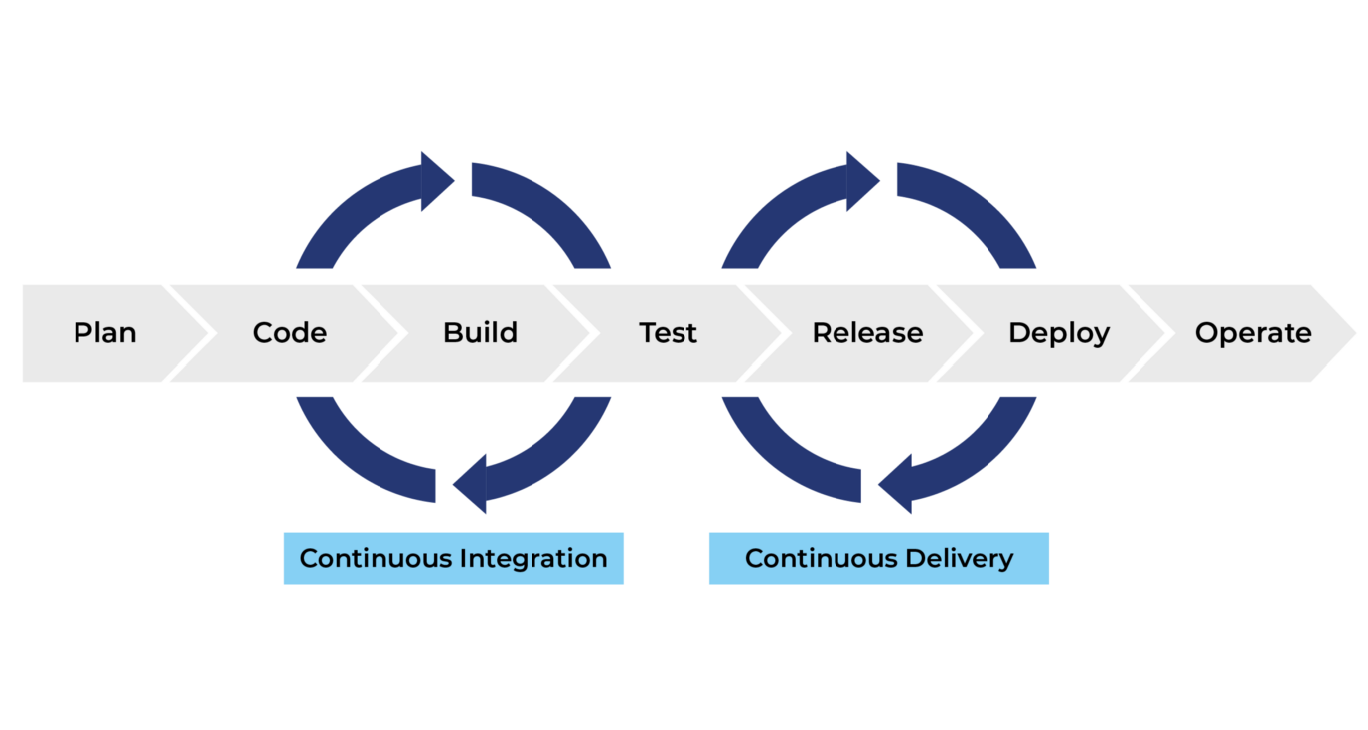
This automation reduces the ‘data bottleneck’ that often delays model deployment in highly regulated environments. Use APIs provided by platforms like Gretel.ai to trigger generation jobs programmatically, ensuring that your testing environment always mirrors the latest production schema changes. For those looking to optimize their workflows, mastering python programming for data science is essential for building scalable pipelines.
Advanced Considerations for Synthetic Data Scalability
As organizations scale, they must address the computational overhead of generating high-fidelity synthetic data. Distributed computing frameworks like Apache Spark can be integrated with generation libraries to parallelize the creation of large-scale datasets.
Furthermore, implementing a ‘data catalog’ for synthetic assets allows teams to track which synthetic versions were used for specific model training runs, ensuring full auditability for regulatory reporting. By treating synthetic data as a first-class asset in the data engineering stack, firms can maintain high throughput in their development environments without compromising on security or statistical integrity.
Handling Edge Cases in Financial Synthetic Data
Beyond standard tabular data, financial institutions must address complex edge cases like multi-table relational databases. When generating synthetic data for a banking core, maintaining referential integrity across tables—such as linking a customer ID to their specific transaction history—is critical.
Advanced generative models now utilize graph-based approaches to preserve these relationships, ensuring that the synthetic output remains logically consistent for downstream applications like stress testing or liquidity analysis. Without this relational awareness, synthetic datasets often fail to capture the systemic dependencies required for accurate risk modeling.
Regulatory Compliance and Synthetic Data Governance
Beyond technical utility, synthetic data serves as a powerful tool for regulatory compliance. Financial regulators increasingly demand proof that models are tested against diverse, non-biased datasets.
By generating synthetic populations that include underrepresented demographics or rare financial events, firms can demonstrate that their credit scoring or loan approval algorithms are fair and robust. This proactive approach to data governance helps institutions meet ‘Explainable AI’ (XAI) requirements, as the synthetic data generation process itself can be documented as part of the model risk management (MRM) framework, providing a clear audit trail for regulators.
Actionable synthetic data implementation checklist
Follow this sequence to ensure a structured deployment within your organization:
- Identify a single, non-critical use case to pilot.
- Select a generation tool that supports your specific data schema.
- Clean and normalize your source data to remove outliers.
- Generate the synthetic dataset using differential privacy parameters.
- Validate statistical fidelity against the original source.
- Test model performance using the synthetic dataset.
- Document the process for compliance and audit trails.
Frequently Asked Questions
How do generative models create synthetic data?
Synthetic data is generated using machine learning models, such as GANs or VAEs, which learn the statistical patterns of real-world data to create entirely new, artificial records that mimic the properties and correlations of the original source. Firms often use these insights to refine their data driven marketing strategies.
Is synthetic data reliable for financial modeling?
Yes, if validated correctly. Reliability is measured by statistical fidelity metrics and by comparing the performance of models trained on synthetic data versus those trained on real data.
Does synthetic data ensure privacy?
Yes, because synthetic data does not contain real records of individuals. When combined with differential privacy techniques, it becomes mathematically difficult to reverse-engineer the original data from the synthetic output.