
Defining the threshold for anonymization under GDPR
Implementing synthetic data and data privacy (GDPR compliance) requires ensuring that generated outputs qualify as anonymous information, thereby falling outside the scope of strict data subject rights. If data is truly anonymous, organizations can use it for model training and analytics without the constraints of consent management. The European Data Protection Board (EDPB) maintains that for data to be considered anonymous, it must be impossible to re-identify the original data subjects using all means reasonably likely to be used by the controller or a third party.
Distinguishing between pseudonymization and true anonymization
Many organizations mistakenly treat pseudonymized data as anonymous. Pseudonymization, such as hashing or tokenization, is a security measure that keeps the data within the scope of GDPR because the link to the original identity remains technically possible. To ensure your organization follows the latest guide to synthetic data generation best practices, it is important to break this link entirely by creating artificial records that mirror the statistical properties of the original dataset without containing any actual personal identifiers.
To achieve true anonymization, synthetic data generation must satisfy three core criteria:
- Singling out: It must be impossible to isolate an individual record within the synthetic set.
- Linkability: There must be no logical or technical path to connect a synthetic record back to a real-world entity.
- Inference: The model must not allow for the deduction of attributes about a real person with high probability.
If a synthetic dataset retains a mathematical correlation that allows for the re-identification of a specific individual, it remains pseudonymized data. For compliance, your synthetic generation pipeline must implement differential privacy—a mathematical framework that adds controlled noise to the data distribution. This ensures that the presence or absence of any single individual in the training set does not significantly alter the synthetic output. Without this mathematical guarantee of irreversibility, the data remains subject to GDPR, and your organization remains liable for potential re-identification risks.
Technical validation of synthetic data and data privacy (GDPR compliance)
Achieving GDPR compliance through synthetic data requires rigorous mathematical proof that the generated records do not map back to original data subjects. Organizations must move beyond simple de-identification techniques, such as masking or pseudonymization, which often fail under modern re-identification attacks. Instead, technical validation focuses on quantifying privacy leakage through formal frameworks.
Measuring membership inference attack risk using statistical verification
A membership inference attack (MIA) tests whether a specific record was part of the training set used to generate the synthetic data. To validate your implementation, conduct a shadow model attack. Train a secondary ‘shadow’ model on a subset of data with similar statistical properties to your target dataset. If the shadow model can distinguish between records that were used in training and those that were not with high accuracy, your synthetic generator is leaking information.
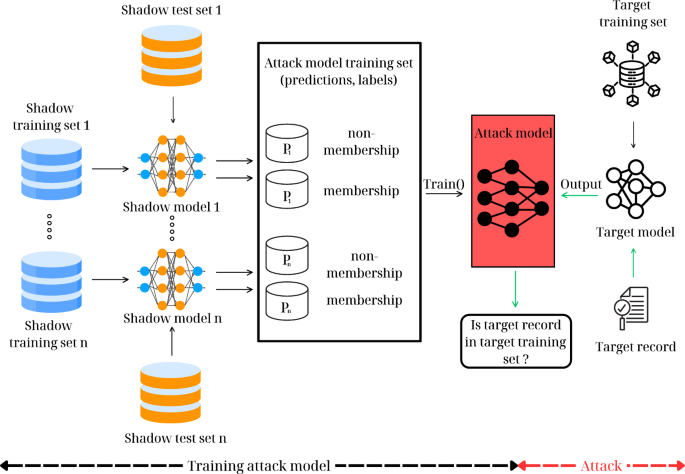
Use the Success Rate of Membership Inference metric to quantify this risk. A robust synthetic dataset should yield an MIA success rate close to 50%, indicating that an attacker is essentially guessing at random. If the success rate significantly exceeds 50%, the synthetic data retains too much ‘memorization’ of the input data, potentially violating the GDPR requirement for data minimization and privacy by design.
Utility versus privacy trade-off metrics for differential privacy budgets
The core challenge in synthetic data generation is the inverse relationship between data utility and privacy. Implementing differential privacy (DP) allows you to mathematically bound the privacy risk using an epsilon (ε) parameter. A lower epsilon provides stronger privacy guarantees but introduces more noise, which degrades the statistical utility of the dataset.
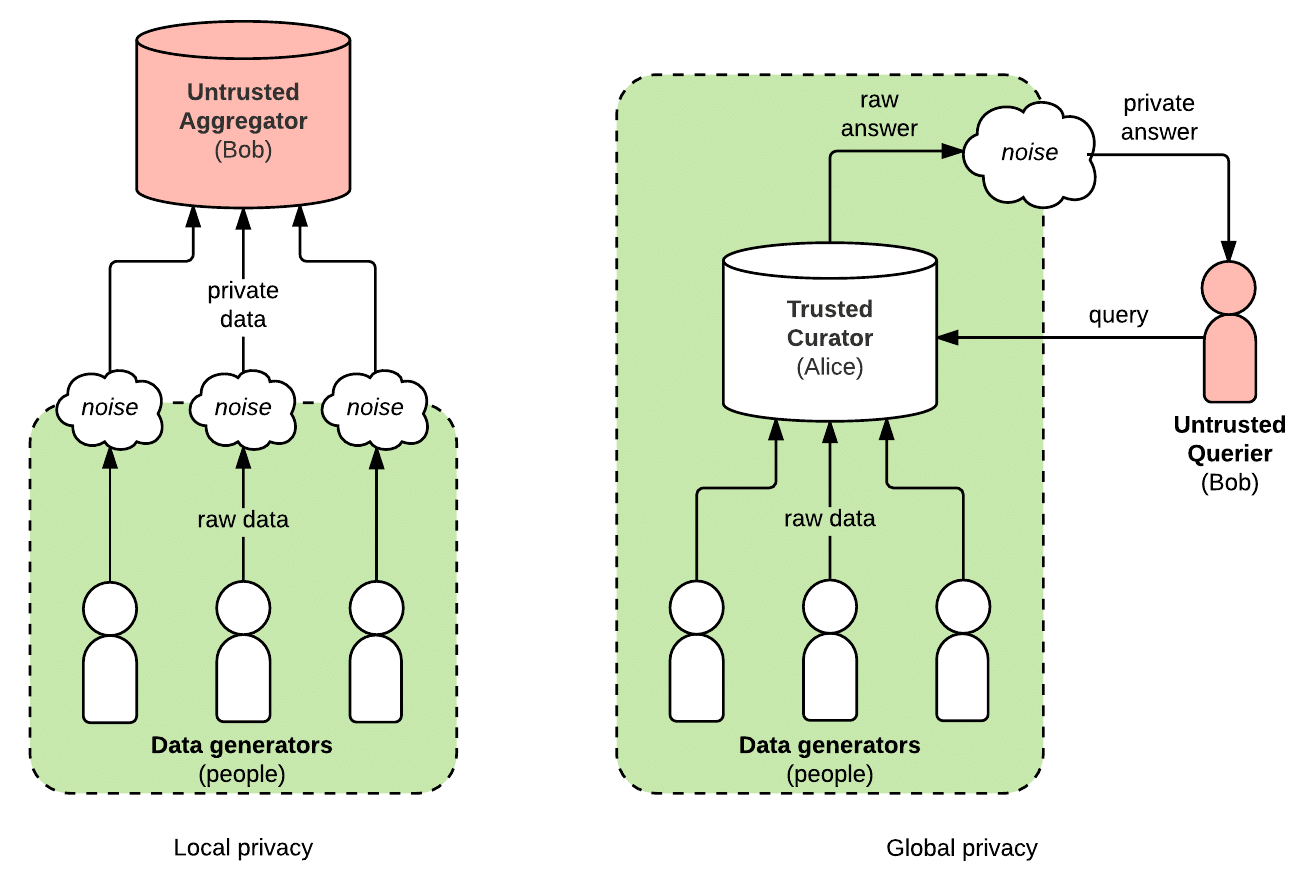
To find the optimal balance, track these two metrics simultaneously:
- Jensen-Shannon Divergence (JSD): Measures the statistical distance between the probability distributions of the original and synthetic datasets. Lower JSD values indicate higher utility.
- Epsilon Budget (ε): Defines the privacy loss. In practice, an epsilon value between 0.1 and 1.0 is considered high privacy, while values above 5.0 offer limited protection against sophisticated reconstruction attacks.
Documenting these metrics is essential for your GDPR Article 35 Data Protection Impact Assessment (DPIA). By setting a maximum epsilon threshold and a minimum utility score (e.g., maintaining 90% correlation accuracy for key variables), you establish a repeatable, defensible standard for data processing that satisfies regulatory auditors.
Integrating synthetic data into the model development lifecycle
Transitioning from raw production data to synthetic datasets requires a fundamental shift in how data scientists handle model training. Rather than granting direct access to sensitive databases, organizations should treat synthetic datasets as the primary interface for experimentation. This approach ensures that developers can iterate on model architecture, feature engineering, and hyperparameter tuning without ever touching personally identifiable information (PII).
Data pipeline architecture for automated synthesis
A robust pipeline for synthetic data generation must act as a secure gateway between production environments and development sandboxes. The architecture should follow a strict ‘de-identification-first’ protocol to ensure synthetic data and data privacy (GDPR compliance) remain aligned throughout the lifecycle.
To implement this effectively, follow these architectural steps:
- Ingestion Layer: Raw data is pulled into a secure, air-gapped staging zone. Direct access to this zone is restricted to the automated synthesis engine.
- PII Stripping & Transformation: Before the generative model processes the data, a transformation layer must identify and redact or tokenize all direct identifiers (e.g., names, social security numbers, email addresses). Only quasi-identifiers necessary for maintaining statistical utility—such as age ranges or geographic regions—are retained.
- Generative Modeling: Using tools like SDV (Synthetic Data Vault) or Gretel.ai, the engine learns the joint probability distribution of the sanitized dataset. It then generates a new, mathematically representative dataset that mimics the original’s correlations without mapping back to specific individuals.
- Validation & Privacy Budgeting: Before the synthetic output is promoted to the development environment, it must pass automated privacy audits. This includes calculating the ‘epsilon’ value in differential privacy models to quantify the risk of re-identification. If the privacy budget is exceeded, the synthesis parameters are tightened.
By automating this pipeline, teams eliminate the need for manual data masking, which is often prone to human error. The resulting synthetic data serves as a ‘privacy-by-design’ asset that can be shared across internal teams or even with third-party vendors without triggering GDPR Article 32 requirements for pseudonymization or encryption of production-grade data. This workflow significantly reduces the overhead of Data Protection Impact Assessments (DPIAs) for new AI projects.
Documentation requirements for regulatory accountability
Under the General Data Protection Regulation (GDPR), the burden of proof lies with the data controller to demonstrate that synthetic data generation processes do not inadvertently re-identify individuals. Maintaining a robust audit trail is essential for compliance, as regulators require evidence that the synthetic data is statistically representative yet mathematically distinct from the original training set.
Creating a Data Protection Impact Assessment for synthetic projects
A DPIA is mandatory when synthetic data generation involves high-risk processing or large-scale profiling. Your documentation must explicitly justify why synthetic data is the chosen mechanism for privacy preservation. Specifically, you should outline the following components:
- Necessity and Proportionality: Document that the use of synthetic data is a deliberate privacy-enhancing technology (PET) choice to minimize the processing of personal data. Compare the risk profile of the synthetic dataset against the original raw data to demonstrate a significant reduction in individual re-identification probability.

- Technical Safeguards: Detail the specific parameters used in your generation model, such as differential privacy epsilon values. If you are using tools like the SDV (Synthetic Data Vault) or Gretel.ai, document the specific privacy filters and noise-injection techniques applied during the training phase.
- Re-identification Testing: Include the results of “membership inference attacks” or “attribute disclosure tests” conducted on the synthetic output. Showing that your team actively attempted to reverse-engineer the data and failed provides concrete evidence of due diligence to supervisory authorities.
- Data Minimization Strategy: Record the lifecycle of the original data used for training. Confirm that raw datasets are deleted or archived securely once the synthetic model is validated, ensuring that the synthetic data remains the primary asset for downstream analytics or machine learning development.
By maintaining this documentation, organizations shift from a reactive compliance posture to a proactive governance framework. This transparency is critical if a data protection authority (DPA) requests an audit, as it demonstrates that AI Security Governance, Privacy, and Compliance were integrated into the system architecture from the outset rather than treated as an afterthought.
Frequently Asked Questions
Limitations of synthetic data in achieving automatic GDPR compliance
No. While synthetic data reduces privacy risks by decoupling datasets from real individuals, it must still be validated to ensure no re-identification is possible. GDPR compliance depends on the entire data lifecycle, including the generation process, storage, and access controls.
Primary metrics for measuring privacy in synthetic datasets
The primary metric is ‘privacy loss’ or ‘epsilon’ (ε) in differential privacy. This measures the probability that an attacker can distinguish between a dataset containing a specific individual’s information and one that does not.