
Core security architecture requirements
Selecting a provider for tokenization in mobile payments requires verifying that the underlying vault architecture isolates sensitive Primary Account Numbers (PAN) from the merchant environment. The technical baseline must ensure that tokens are mathematically unrelated to the original card data, rendering them useless to hackers in the event of a database breach.
Hardware security module compliance
Ensure your provider utilizes Hardware Security Modules (HSM) that are FIPS 140-2 Level 3 or FIPS 140-3 certified. This certification guarantees that the physical device is tamper-evident and that cryptographic keys are generated, stored, and managed within a hardened, secure boundary that prevents unauthorized extraction.
Dynamic cryptogram generation standards
Effective systems must support dynamic cryptogram generation, often referred to as EMVCo tokenization standards. Each transaction should generate a unique, one-time-use cryptogram that validates the token’s authenticity.
If a static token is intercepted, it should be rejected by the payment network because it lacks the valid dynamic signature required for that specific authorization attempt. Understanding the can NFC payments be hacked from a distance question is vital for developers building modern mobile wallets.
Performance metrics for tokenization in mobile payments
High-volume processing environments demand low latency to prevent checkout abandonment. Evaluate providers based on their ability to maintain sub-100 millisecond response times during peak traffic periods.
Transaction latency benchmarks
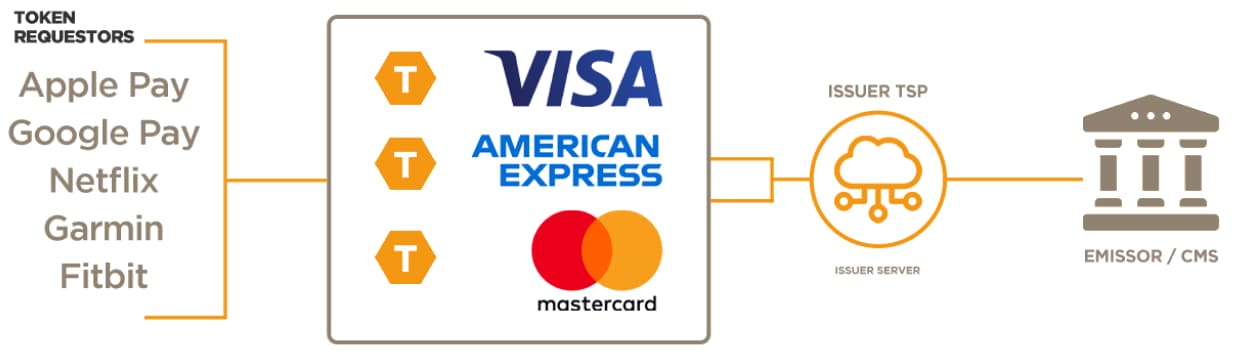
Real-time authorization requires efficient communication between the mobile app, the token service provider (TSP), and the card network. A reliable provider should offer a P99 latency metric below 150ms.
Request historical uptime reports and latency logs to verify performance during high-concurrency events like Black Friday or seasonal sales spikes.
Token lifecycle management efficiency
Automated lifecycle management is critical for maintaining seamless user experiences. Your provider must support automatic token updates when a card is reissued or expires, preventing transaction declines.
Verify that their API handles token revocation and lifecycle synchronization without requiring manual intervention from your engineering team.
Regulatory and compliance alignment
Financial data security is governed by strict global standards. Your provider must demonstrate transparent adherence to these frameworks to mitigate your legal and operational risks.
PCI DSS Level 1 service provider status
Only partner with providers that maintain PCI DSS Level 1 compliance, the highest tier of security certification. Request their current Attestation of Compliance (AoC) to ensure it covers the specific tokenization services you intend to integrate, rather than just their general hosting infrastructure.
Regional data residency mandates
Compliance with GDPR, CCPA, and local data sovereignty laws is non-negotiable. Confirm that the provider offers regional data storage options, allowing you to keep transaction metadata within specific jurisdictions as required by local financial regulators.
Integration flexibility and API architecture
The developer experience dictates the speed of your go-to-market strategy. A robust API architecture reduces technical debt and simplifies maintenance.
RESTful API documentation quality
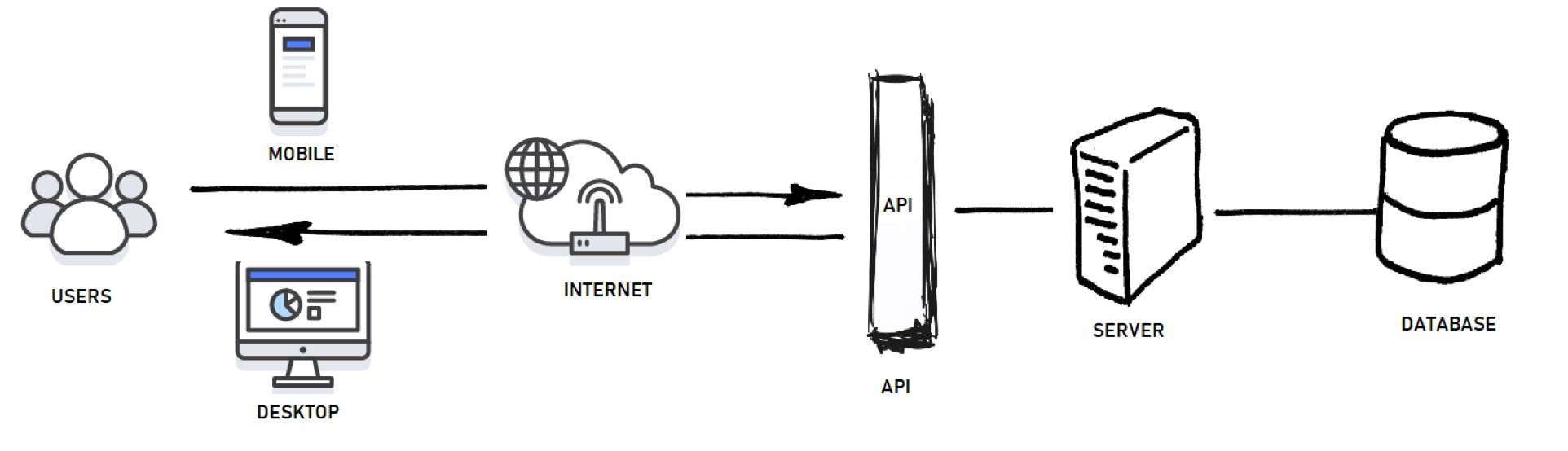
Evaluate the quality of API documentation by checking for clear error codes, comprehensive request/response examples, and a functional sandbox environment. A high-quality sandbox allows your team to test edge cases, such as network timeouts or invalid token formats, without impacting production data.
SDK support for mobile ecosystems
Native SDKs for iOS (Swift) and Android (Kotlin) are superior to generic web-based wrappers. These SDKs should handle complex security handshakes and device-level encryption, reducing the amount of sensitive code your developers need to write and maintain. If you are exploring whether can python develop mobile apps for your fintech project, ensure the chosen framework supports these native security requirements.
Scalability and infrastructure resilience
Infrastructure must be designed for high availability to avoid revenue loss during outages. Analyze the provider’s architecture for redundancy and failover capabilities.
Multi-region cloud deployment
A resilient provider operates across multiple geographic regions with active-active or active-passive failover configurations. This ensures that if one data center or region experiences an outage, traffic is automatically rerouted to a healthy node without interrupting the payment flow.
Advanced Tokenization Use Cases
Beyond standard e-commerce, modern tokenization supports complex payment flows. Evaluate if the provider supports ‘Network Tokens’ which are issued directly by card schemes like Visa or Mastercard. These solutions help neutronpay revolutionize payment workflows for merchants globally.
These tokens offer higher authorization rates and lower interchange fees compared to traditional merchant-specific tokens because they are recognized directly by the issuer’s fraud engines.
Handling recurring billing and subscriptions
For subscription-based models, ensure the tokenization system supports ‘Account Updater’ services. This feature automatically syncs with card networks to update expired or reissued card details, ensuring that recurring payments do not fail due to outdated credentials.
Without this, you risk significant churn as customers are forced to manually update their payment methods.
Tokenization for cross-border transactions
When implementing tokenization in mobile payments for international markets, verify that the provider supports multi-currency tokenization. This allows a single token to be mapped to different currency-specific card profiles, reducing the friction of currency conversion and ensuring that the token remains valid across different regional payment gateways.
Security Auditing and Token Mapping Integrity
Beyond initial integration, you must verify the integrity of the token-to-PAN mapping process. A robust provider should offer audit trails that log every instance of token de-tokenization, including the timestamp, the requesting service, and the specific authorization context.
This level of granularity is essential for forensic investigations if an internal system compromise occurs. Furthermore, ensure that the provider performs regular penetration testing on their vault infrastructure and provides a summary of these findings to their enterprise clients.
Cost structure and total cost of ownership
Pricing models for tokenization often include hidden costs beyond the base per-transaction fee. Analyze the full cost structure to ensure long-term financial viability.
Tiered volume pricing analysis
Most providers offer tiered pricing based on transaction volume. Calculate your projected growth over 24 months to determine if the provider offers meaningful economies of scale.
Watch for additional fees related to token vaulting, API calls, or mandatory security audits that can inflate the total cost of ownership.
Vendor support and incident response
Technical partnerships rely on the provider’s ability to resolve issues quickly. Evaluate the human element of their support structure during the procurement phase.
SLA definitions for critical outages
Review the Service Level Agreement (SLA) for specific uptime guarantees, typically 99.99% or higher. Ensure the contract includes clear definitions of ‘critical outages’ and specifies the financial compensation or service credits provided if the vendor fails to meet these response time commitments.
Technical Considerations for Tokenization Implementation
When deploying tokenization, consider the impact on your existing database schema. You must ensure that your database can handle the storage of tokens, which may differ in length and format from standard PANs.
Furthermore, implement a ‘token-only’ policy for your internal logs and analytics platforms. By ensuring that no raw card data ever touches your logging infrastructure, you significantly reduce your PCI DSS scope and minimize the blast radius of any potential internal security incident.
Handling Tokenization Failover and Disaster Recovery
A critical, often overlooked aspect of tokenization in mobile payments is the disaster recovery plan for the token vault itself. If the primary tokenization service experiences a catastrophic failure, your system must have a pre-configured failover mechanism to a secondary, synchronized vault.
This requires that your application logic is decoupled from the specific provider’s endpoint, allowing for rapid switching of API keys and base URLs without requiring a full application redeployment. Always test these failover scenarios in a staging environment to ensure that token mapping remains consistent during the transition.
Advanced Implementation Strategies
To optimize the user experience, consider implementing ‘Tokenization-as-a-Service’ (TaaS) patterns that allow for token persistence across different devices. By linking tokens to a user’s digital identity rather than just a physical device, you enable seamless ‘card-on-file’ experiences where a user can switch from a mobile app to a web browser without re-entering payment details.

Additionally, ensure your implementation supports ‘Token Domain Restriction,’ which limits the usage of a specific token to a particular merchant or device type. This adds a layer of defense-in-depth, as a stolen token from a mobile app would be rejected if an attacker attempted to use it on a different platform or merchant site.
Data Privacy and Tokenization Lifecycle
Managing the lifecycle of a token involves more than just creation and deletion. You must implement a robust ‘Token Purge’ policy that aligns with your data retention requirements.
If a user deletes their account or removes a payment method, the associated token must be invalidated across all downstream systems, including analytics and marketing databases. This prevents ‘zombie tokens’ from lingering in your environment, which could be exploited if your secondary systems are less secure than your primary payment vault.
Frequently Asked Questions
Distinction between tokenization and encryption
No. Encryption is reversible with a key, whereas tokenization replaces sensitive data with a non-sensitive surrogate (token) that has no mathematical relationship to the original data.
Scope of fraud protection in tokenized environments
Tokenization protects against data breaches by removing sensitive card numbers from your systems, but it does not prevent all types of fraud, such as account takeover or social engineering.
Verification methods for payment gateway tokenization
Check your provider’s technical documentation or compliance page for ‘PCI DSS Level 1’ status and specific references to ‘tokenization’ or ‘vaulting’ services.
Impact of merchant database breaches on token security
If a database is breached, the attacker only gains access to tokens, which are useless outside of the specific payment environment, keeping the actual cardholder data safe.
Irreversibility of token-to-PAN mapping
Only the tokenization provider’s secure vault can map a token back to the original card number, and this process is strictly restricted to authorized payment operations.
Fundamental definition of payment tokenization
Tokenization is a security process that replaces sensitive payment card information with a unique, non-sensitive identifier called a token, which can be safely stored and used for transactions.