
Operational range and physical constraints of NFC technology: Can NFC payments be hacked from a distance
Near Field Communication (NFC technology) operates on the principle of inductive coupling, which inherently limits its effective range to a very short distance. Under standard ISO/IEC 14443 protocols, NFC devices are designed to communicate within a range of less than 4 centimeters. This physical constraint is a fundamental limitation of the electromagnetic fields generated by the reader and the passive tag or active device.
Electromagnetic coupling requirements
The core mechanism behind NFC is the creation of a magnetic field through a loop antenna. When an NFC-enabled payment terminal generates an alternating magnetic field, it induces a current in the antenna of the payment card or smartphone. For this data exchange to occur, the two devices must be within the near-field zone, where the magnetic field is strong enough to power a passive chip or establish a stable handshake with an active one.
As the distance increases, the magnetic field strength drops off rapidly—following an inverse-cube law—making communication impossible beyond a few centimeters. Because of this rapid signal attenuation, the idea that can NFC payments be hacked from a distance using a standard reader is technically unfounded. To intercept a transaction, an attacker would need to position a high-gain antenna within a few centimeters of the victim’s wallet or device.
Unlike radio frequency identification (RFID) systems operating at ultra-high frequencies (UHF), which can be read from several meters away, NFC is specifically engineered to prevent long-range signal capture. The energy required to maintain a connection at a distance of even one meter would necessitate a massive, highly visible antenna array, which is impractical for surreptitious data theft in public environments.
Technical barriers to remote NFC signal interception
NFC technology operates on the 13.56 MHz frequency, utilizing inductive coupling rather than traditional radio wave propagation. This physical constraint is the primary reason why the answer to whether can NFC payments be hacked from a distance is fundamentally negative in practical, real-world scenarios. The magnetic field generated by an NFC reader decays at an inverse-cube rate relative to distance, meaning that even a few centimeters of separation drastically reduce the signal strength required for a successful transaction.
Signal attenuation and noise floor challenges
The physics of high-frequency signals dictate that NFC communication requires an extremely high signal-to-noise ratio (SNR). Because NFC is designed for proximity, the protocol lacks the robust error correction and long-range modulation schemes found in technologies like Wi-Fi or Bluetooth. When an attacker attempts to intercept these signals from a distance, they face the immediate problem of signal attenuation.
The energy required to induce a current in a passive NFC tag or card drops off exponentially as the distance increases beyond the standard 4-centimeter operating range. Furthermore, the environment is saturated with electromagnetic interference, or the noise floor. At 13.56 MHz, common electronic devices, power lines, and even fluorescent lighting generate enough background noise to drown out the low-power signals emitted by a payment card.
To successfully intercept a transaction from a distance, an attacker would need a high-gain, directional antenna precisely tuned to the reader’s frequency. Even with such equipment, the signal would be so weak that it would be indistinguishable from ambient electromagnetic noise without a direct line-of-sight and a proximity that essentially defeats the purpose of a ‘remote’ attack.
Security researchers have demonstrated that ‘skimming’ requires placing a reader within a few inches of the target device. Attempting to amplify these signals from across a room or through a wall is physically impossible with current consumer-grade or even specialized radio hardware, as the inductive coupling mechanism simply does not function over those distances. The protocol’s reliance on a load modulation handshake ensures that both the reader and the card must be actively communicating within a very tight spatial window to finalize any data exchange.
Tokenization as a defense against data theft
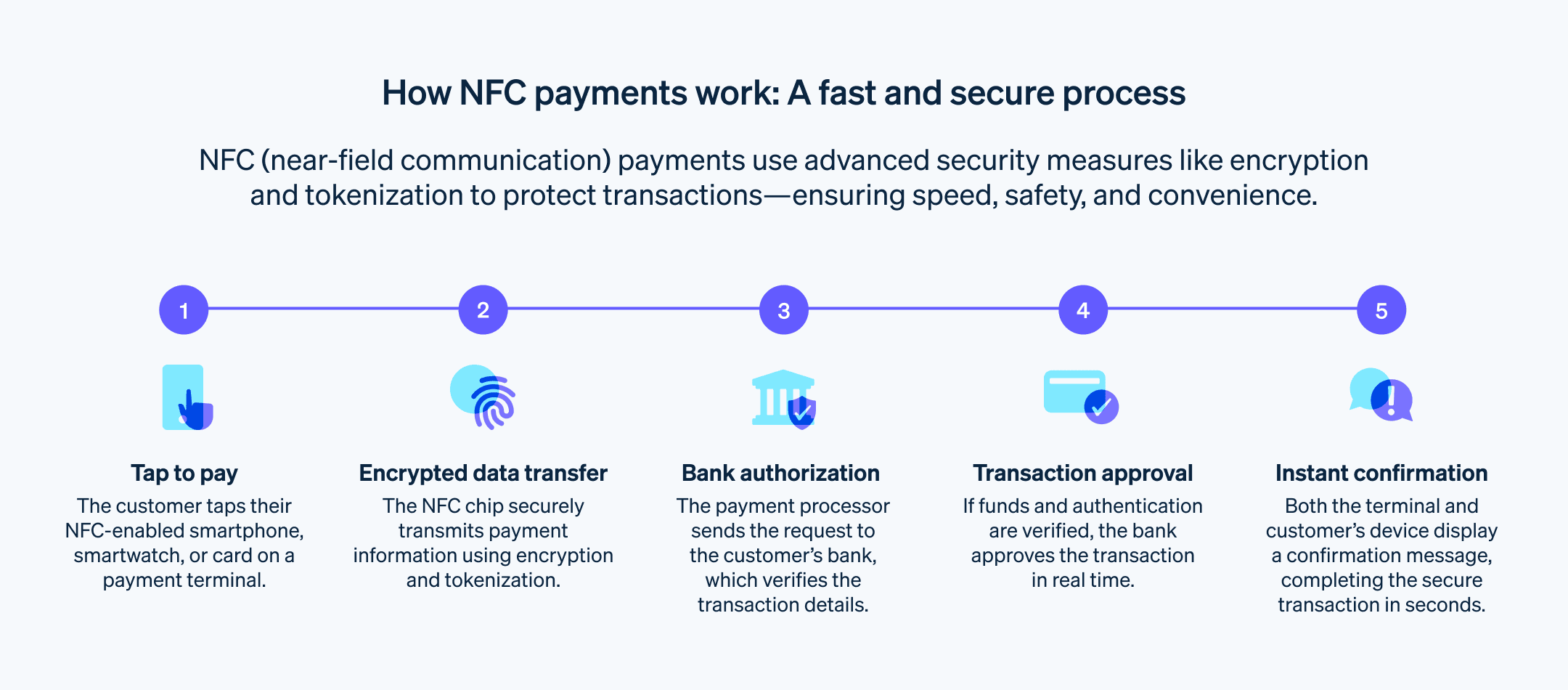
Modern contactless payment systems rely on tokenization to mitigate the risks associated with unauthorized signal interception. When a user taps a card or mobile device, the system does not transmit the actual Primary Account Number (PAN). Instead, it sends a surrogate value known as a token. This process replaces sensitive cardholder data with a unique identifier that is useless to a malicious actor if intercepted during transmission.
Dynamic cryptogram generation
The primary reason why NFC payments are resilient against remote interception is the use of dynamic cryptograms. Every time a transaction occurs, the secure element within the smartphone or the EMV chip in a contactless card generates a unique, one-time-use cryptographic code. This code is mathematically linked to the specific transaction details, including the merchant ID, transaction amount, and a counter value.
Even if an attacker manages to capture the radio frequency signal from a distance, the data they intercept is inherently ephemeral. Because the cryptogram is valid only for that single transaction, it cannot be replayed or reused to initiate subsequent payments. If a hacker attempts to inject the intercepted data into a different transaction, the backend payment processor will immediately reject it because the cryptogram will fail the validation check against the expected sequence.
This mechanism effectively neutralizes the threat of replay attacks, which were a significant concern in older magnetic stripe technologies. By ensuring that every transmission is cryptographically distinct, tokenization shifts the security burden from the transmission medium to the integrity of the secure element. Consequently, the technical reality is that while the signal itself can be intercepted, the data contained within that signal provides no actionable value to an attacker, rendering remote hacking attempts functionally futile for financial gain.
Distinguishing between NFC skimming and remote hacking

To understand if NFC payments can be hacked from a distance, one must separate the concept of ‘skimming’ from sophisticated remote exploitation. NFC (Near Field Communication) operates on the ISO/IEC 14443 standard, which is physically limited to a range of approximately 4 centimeters. This proximity constraint is a fundamental security feature, not a technical oversight. While attackers can use high-gain antennas to extend this range slightly, they cannot bridge the gap between a pocket and a remote server located miles away.
Real-world risk assessment of contactless skimming
Contactless skimming involves an attacker using a hidden reader to capture the limited data transmitted by a card during a transaction attempt. However, modern payment protocols like EMV (Europay, Mastercard, and Visa) render this data largely useless for fraudulent transactions. When a card is tapped, it generates a unique, one-time cryptogram. Even if a malicious actor captures this signal, the data becomes invalid the moment the transaction is completed or the session times out.
The practical trade-offs for an attacker are significant:
- Limited Data Utility: Captured data typically lacks the CVV and the full track data required for online ‘card-not-present’ transactions.
- Hardware Constraints: Building an antenna powerful enough to intercept signals from a distance requires bulky equipment that is difficult to conceal in public spaces.
- Transaction Limits: Most contactless payments are capped at low amounts (e.g., £100 or $50) before requiring a PIN, limiting the potential financial gain for the criminal.
The technical reality is that while an attacker might theoretically capture a ‘replay’ of a signal, the banking back-end systems use dynamic authentication to detect and reject out-of-sequence or duplicated cryptograms. Consequently, the effort required to build and deploy skimming hardware far outweighs the low probability of successfully extracting usable funds from a modern, chip-enabled payment card.
Security best practices for contactless users
While the technical constraints of NFC make long-range interception improbable, user-level security remains the primary defense against physical proximity attacks. Implementing a layered security approach minimizes the impact of unauthorized access or device theft.
Device-level security measures
Modern mobile wallets like Apple Pay, Google Pay, and Samsung Pay utilize tokenization, which replaces your actual card number with a unique digital identifier. Even if a signal were intercepted, the captured data would be useless for future transactions. To maximize this protection, ensure the following settings are active:
- Biometric Authentication: Always enable FaceID, TouchID, or fingerprint scanning for every transaction. This prevents unauthorized users from triggering a payment even if they gain physical access to your unlocked device.
- Device Lock Requirements: Configure your smartphone to require a passcode or biometric scan immediately upon waking the screen. Avoid using “Smart Lock” or “Trusted Places” features in high-traffic public areas, as these keep the device unlocked and vulnerable to opportunistic skimming.
- Disable NFC When Not in Use: If you are not actively using mobile payments, toggling off NFC in your quick-settings menu provides a definitive hardware-level barrier against unauthorized scanning.
Beyond device settings, physical card hygiene is essential. If you carry a physical contactless credit card, use an RFID-blocking wallet or card sleeve. These accessories use a layer of conductive material, such as copper or aluminum, to create a Faraday cage that prevents electromagnetic signals from reaching the card’s chip.
While the risk of a “crowd-scanning” attack—where a thief moves through a subway with a hidden reader—is statistically low due to the short range and the need for a merchant-linked terminal, these sleeves offer a simple, low-cost mitigation strategy. Finally, monitor your transaction history through your banking app. Most financial institutions provide real-time push notifications for every purchase, allowing you to identify and report suspicious activity instantly, effectively neutralizing the impact of any potential breach.
Frequently Asked Questions
Security implications of NFC signal range
In practice, no. NFC technology is designed for short-range communication, typically requiring proximity of less than 4 centimeters. While specialized high-gain antennas could theoretically extend this range slightly, the encryption protocols used in modern contactless cards and mobile wallets like Apple Pay or Google Pay render intercepted data useless.
Primary security layers protecting NFC payments
NFC payments rely on tokenization, which replaces your actual card number with a unique digital token. Additionally, each transaction requires a dynamic cryptogram—a one-time code that changes for every purchase—making captured data impossible to reuse.
- Operational roadmap for deploying NFC payment technology explained for fintech startups
- Operational playbook for evaluating NFC vs QR code payments which is better
- Reliability benchmarks for travelers verifying if are NFC payments accepted internationally
- NFC payment limits and transaction caps reality check