

Identifying signs of model collapse in synthetic outputs: Creating synthetic datasets from real data tutorial
Model collapse occurs when a generative model loses the statistical variance of its training set, resulting in outputs that lack the nuance of the original data. When creating synthetic datasets from real data tutorial workflows, you can identify this degradation by observing a narrowing of the output distribution, where the model begins to output only the most common data points while ignoring rare but critical edge cases.
Detecting mode collapse through distribution visualization
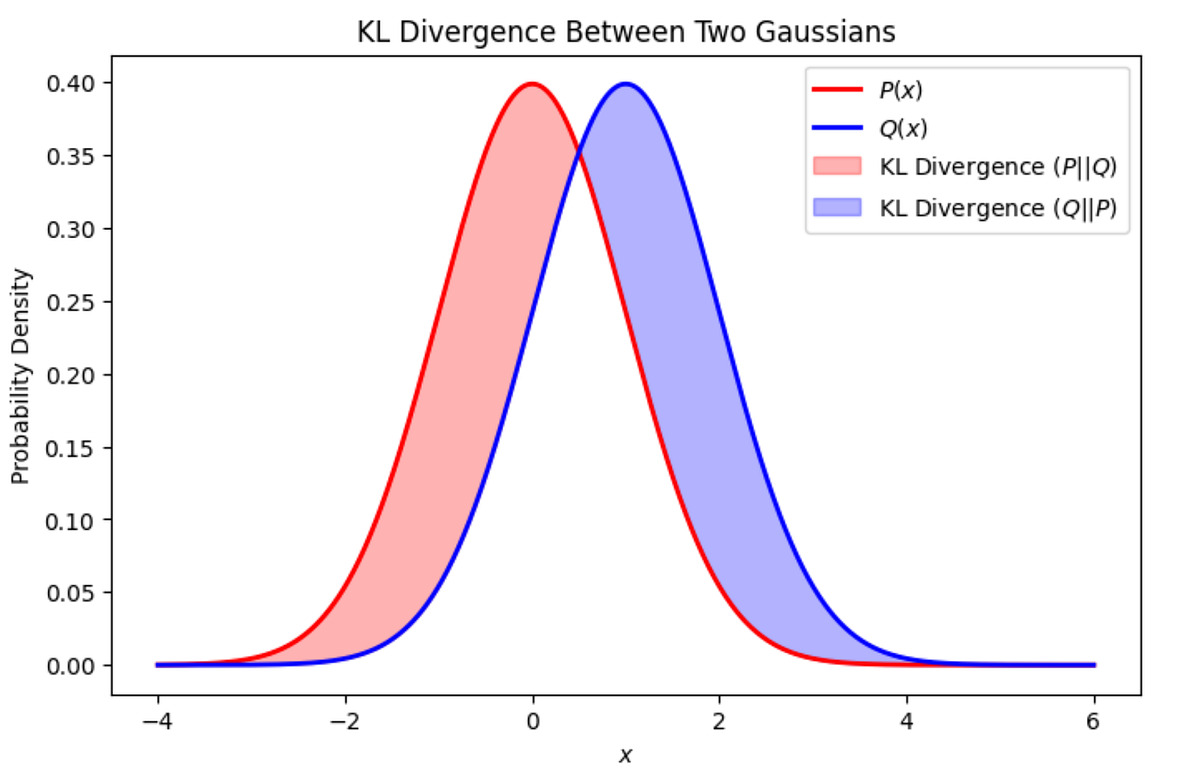
To measure statistical fidelity, compute the Kullback-Leibler (KL) divergence between the probability distributions of your real and synthetic features. A high KL-divergence score indicates that the synthetic distribution has drifted significantly from the original. Similarly, utilize Jensen-Shannon distance as a symmetric alternative to quantify how much the synthetic data vs real data comparison overlaps with the source; values approaching zero signify high fidelity, while higher values suggest the model has failed to capture the full data manifold.
Quantifying feature correlation degradation
Broken relationships between variables are a primary indicator of poor synthetic quality. Generate a Pearson correlation matrix for both your real and synthetic datasets and calculate the Frobenius norm of the difference between these two matrices. If the resulting value is high, your model has failed to preserve the inter-feature dependencies, rendering the data unsuitable for predictive modeling tasks that rely on feature interaction. To ensure your methodology is sound, consult a synthetic data generation guide to refine your approach.
Privacy leakage risks in synthetic data generation
Synthetic data is not inherently private; if a generative model overfits, it may memorize specific records from the training set. This creates a risk where the synthetic output acts as a proxy for raw, sensitive data, potentially exposing individual identifiers through high-dimensional reconstruction. For organizations handling sensitive information, understanding synthetic data and data privacy (GDPR compliance) is essential to maintain regulatory standards.
Membership inference attack vulnerabilities
Test your model by performing a membership inference attack, where you query the generator to determine if a specific record was part of the training set. If an adversary can distinguish between training and non-training samples with a success rate significantly higher than random chance, your synthetic dataset is leaking private information. Implement differential privacy during the training phase by adding calibrated noise to the gradients to mitigate this risk.
Common configuration errors in synthetic data pipelines
Technical missteps during the training phase often stem from improper hyperparameter tuning or architectural choices that do not account for data complexity. These errors frequently manifest as low-utility datasets that fail to replicate the underlying logic of the source. If you are evaluating vendors for these tasks, review top 10 data infrastructure companies shaping the future of data to optimize your resource allocation.
Overfitting to noise in small real-world samples
When working with limited real-world samples, models often memorize noise rather than learning the underlying data distribution. To prevent this, apply L2 regularization and implement early stopping based on a validation set. By penalizing large weights, you force the model to prioritize generalized patterns over specific, noisy outliers that do not represent the broader population.
Handling non-stationary time series data
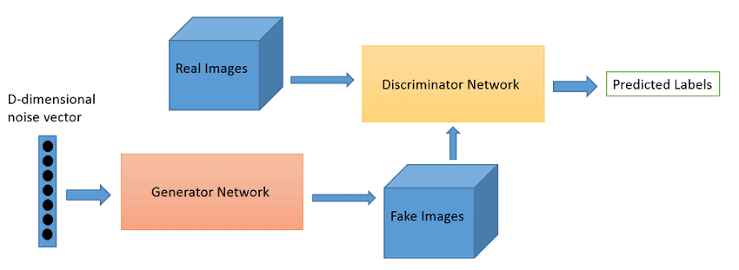
Standard GAN architectures often fail on time series data because they treat each time step as an independent observation, ignoring temporal dependencies. To resolve this, use windowing techniques to feed the model fixed-length sequences rather than individual points. Incorporating recurrent layers or Transformer-based architectures allows the generator to capture the non-stationary nature of financial or sensor data effectively.
Validating synthetic dataset utility for downstream tasks
A synthetic dataset is only as valuable as its performance in downstream applications. You must establish a rigorous benchmarking framework to ensure that the is synthetic data reliable and effective? maintains the predictive power of the original source. For those working with complex data structures, mastering python programming for data science is essential to identifying and resolving computational bottlenecks.
Train-on-synthetic, test-on-real benchmarking
The most effective validation method is to train a machine learning model exclusively on the synthetic dataset and evaluate its performance on a held-out real-world test set. If the performance gap between a model trained on real data and one trained on synthetic data exceeds a predefined threshold—typically 5% to 10% depending on the domain—the synthetic data is not yet fit for production. Iteratively adjust your generative parameters until the performance metrics, such as F1-score or RMSE, align closely with the real-data baseline.
Practical data quality assessment tools
To automate these checks, integrate libraries like SDV (Synthetic Data Vault) or Gretel.ai into your CI/CD pipeline. These tools provide built-in reports for statistical similarity, such as the Kolmogorov-Smirnov test for continuous variables and Chi-squared tests for categorical data. By running these automated checks after every training epoch, you can catch model drift early before it propagates into your downstream production models.
Frequently Asked Questions
Generation mechanisms for synthetic data
Synthetic data is generated using generative models like GANs, VAEs, or diffusion models that learn the statistical patterns of real data to create new, artificial records.
Definition of synthetic data in AI
Synthetic data is information that is artificially manufactured rather than generated by real-world events, designed to mimic the statistical properties of real data.
Operational workflow of synthetic data
It works by training a machine learning model on a real dataset to understand its underlying distribution, then sampling from that learned distribution to produce new data points.
Strategic importance of synthetic data
It allows organizations to train AI models without exposing sensitive PII, helps address data scarcity, and enables the creation of balanced datasets to reduce bias.
Reliability assessment of synthetic datasets
Reliability depends on the fidelity of the generative model; if the model is well-tuned and validated, synthetic data can be highly reliable for training downstream models.
Privacy protection capabilities of synthetic data
Yes, it can protect privacy by decoupling the synthetic output from real-world identities, provided that techniques like differential privacy are used to prevent record memorization.