
Reducing PCI DSS compliance scope through tokenization
The primary benefits of tokenization for e-commerce merchants include reduced PCI DSS compliance scope, enhanced fraud prevention, and improved customer retention through secure payment architecture. By replacing sensitive Primary Account Numbers (PAN) with non-sensitive alphanumeric strings, this process serves as a primary defense mechanism to minimize the technical footprint of cardholder data. Understanding what is tokenization in payment gateway architectures is essential for merchants looking to optimize their financial operations.
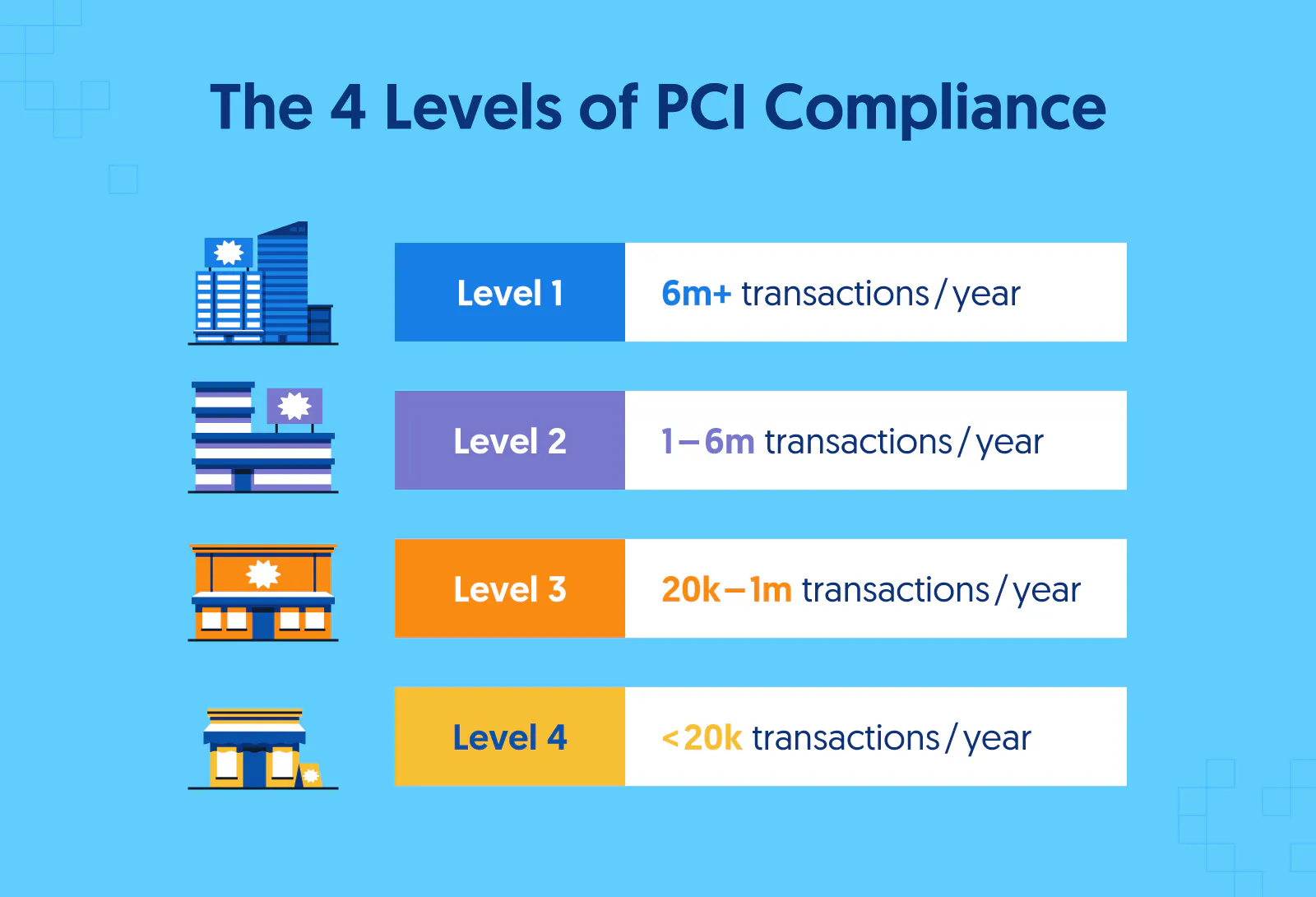
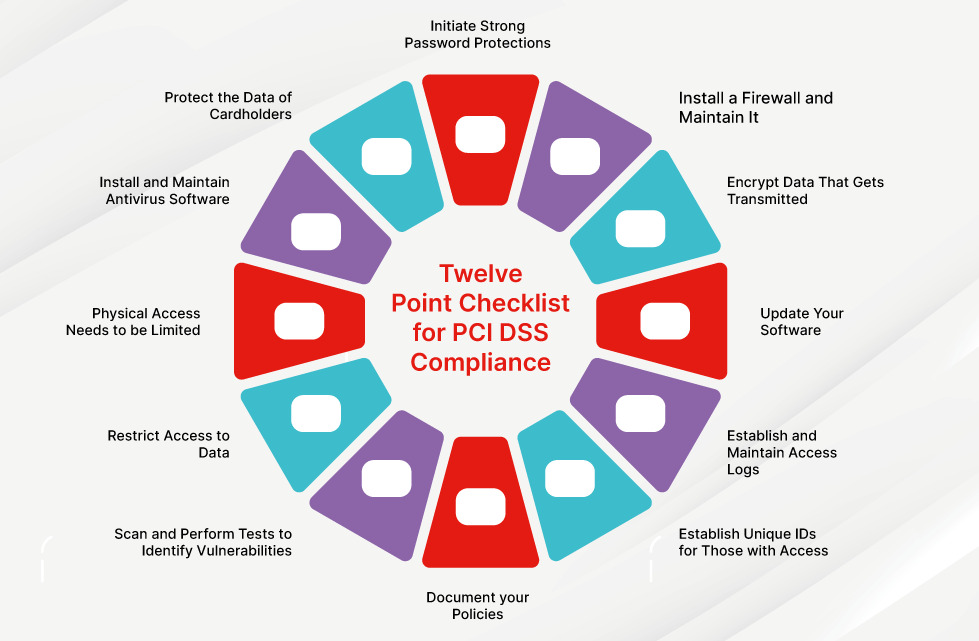
Ensuring that actual credit card numbers never touch your application servers significantly lowers the complexity and cost associated with annual PCI DSS audits.
Data vault isolation mechanisms
Offloading sensitive card data to a secure vault removes your servers from the primary compliance scope by creating a physical and logical separation between your transaction processing and your internal infrastructure. When a customer enters their payment details, the data is transmitted directly to a PCI-compliant third-party vault via an iFrame or a hosted payment page. Your server only receives a token—a surrogate value that holds no intrinsic financial worth if intercepted.
This isolation mechanism functions through three specific technical layers:
- Direct-to-Vault Transmission: By using client-side SDKs, the card data travels from the customer’s browser directly to the payment processor’s vault. Your backend systems never process, store, or transmit the raw PAN, effectively moving your environment out of the most stringent PCI DSS Self-Assessment Questionnaire (SAQ) categories.
- Token Mapping: The vault generates a unique token linked to the cardholder’s data. Your database stores only this token, which is useless to attackers who might gain unauthorized access to your server logs or database backups.
- Scope Reduction Impact: Because your systems do not handle raw card data, you can often qualify for SAQ A or SAQ A-EP, which are significantly less resource-intensive than the full SAQ D required for merchants who store or process raw card data.
By shifting the burden of data security to a specialized vault provider, you reduce the number of internal security controls your IT team must manage. This architecture allows you to focus on core business logic while offloading the high-risk requirements of encryption key management and secure data storage to entities specifically audited for those functions.
Core benefits of tokenization for e-commerce merchants in fraud prevention
Tokenization fundamentally shifts the security burden for online retailers. By ensuring that actual credit card data never touches your internal servers, you significantly reduce the scope of your Payment Card Industry Data Security Standard (PCI DSS) compliance requirements.
This architectural change prevents attackers from harvesting usable financial data, even if they successfully breach your database. It is also worth noting that does google pay use tokenization as a standard practice to protect consumer data in modern mobile environments.
Neutralizing data breaches via non-reversible token environments
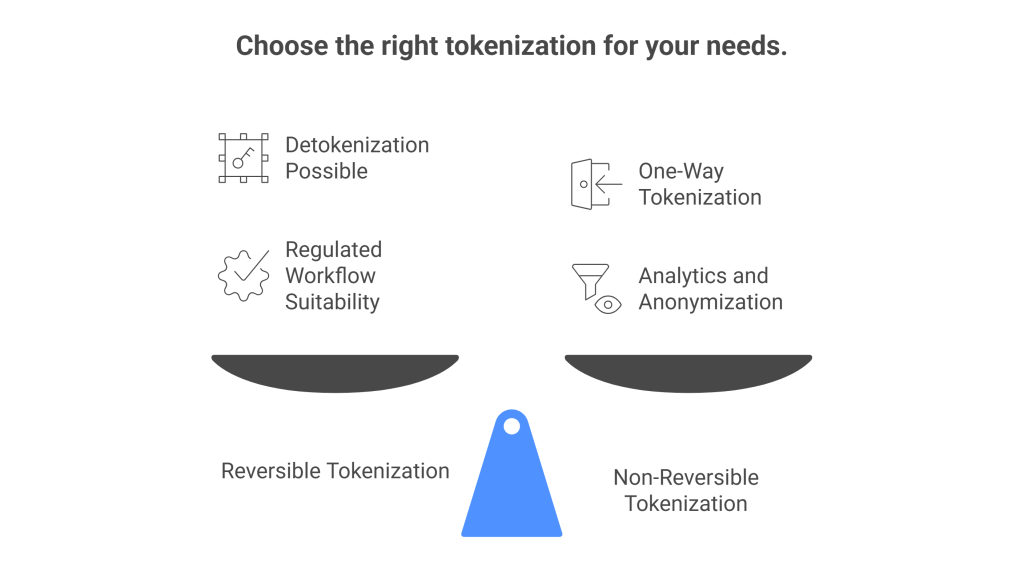
The primary security advantage of tokenization lies in the mathematical decoupling of the token from the underlying card data. Unlike encryption, which relies on reversible algorithms and keys, a token is essentially a randomly generated string that holds no intrinsic value. Even if a malicious actor gains unauthorized access to your token vault, the stolen data is useless to them. However, it’s crucial to understand the tokenization security risks and limitations that may still apply.
These tokens are cryptographically bound to specific merchant environments or individual transaction contexts. If an attacker attempts to use a stolen token on a different platform or payment gateway, the transaction will be rejected immediately. The token lacks the necessary authorization parameters to be processed outside the merchant’s specific ecosystem.
This creates a closed-loop security model where the token serves only as a pointer to the secure, encrypted vault managed by your payment processor. By adopting this approach, merchants mitigate the risk of large-scale data exfiltration. Because your systems no longer store the actual card numbers, you eliminate the primary target for cybercriminals. This reduction in risk exposure is critical for maintaining customer trust and avoiding the catastrophic financial and reputational costs associated with a data breach.
You also gain the ability to facilitate recurring billing and one-click checkout experiences without ever needing to hold raw card data on your own infrastructure, balancing high-friction security with a seamless user experience.
Improving customer retention with seamless recurring billing
Recurring revenue models rely heavily on the stability of payment credentials. When a customer’s credit card expires or is lost, the standard payment flow typically breaks, leading to involuntary churn. Tokenization transforms this process by decoupling the sensitive PAN from the recurring billing cycle, allowing merchants to maintain service continuity without requiring the customer to manually re-enter payment details.
Automated card lifecycle updates for churn reduction
Network tokenization, provided directly by card schemes like Visa (VTS) and Mastercard (MDES), offers a distinct advantage over traditional payment gateway tokens. When a cardholder receives a replacement card due to expiration, loss, or theft, the card network automatically pushes the updated credentials to the existing token. This process occurs behind the scenes, ensuring that the merchant’s recurring billing engine continues to process transactions against the same tokenized identifier.
By leveraging these lifecycle updates, merchants eliminate the friction associated with dunning processes—the automated attempts to collect payment after a failed transaction. Instead of sending emails to customers asking them to update their billing information, the merchant’s system remains synchronized with the issuing bank. This technical integration significantly reduces the drop-off rate for subscription-based services and improves the overall lifetime value (LTV) of the customer base.
Beyond retention, this mechanism provides a cleaner data trail for financial reconciliation. Because the token remains persistent even as the underlying card data changes, merchants can track a customer’s subscription history across multiple card reissuances without creating fragmented user profiles. This stability is one of the primary benefits of tokenization for e-commerce merchants looking to scale subscription models while minimizing operational overhead associated with manual payment recovery efforts.
Evaluating provider integration capabilities
Selecting a tokenization partner requires a deep dive into technical compatibility rather than just pricing models. The primary benefits of tokenization for e-commerce merchants depend heavily on how seamlessly the solution integrates with your existing checkout flow and backend infrastructure. A robust provider should offer SDKs that support your specific programming languages and frameworks, minimizing the need for custom middleware development.
API latency and uptime requirements
Tokenization occurs in real-time during the transaction process, meaning any delay in the provider’s API response directly impacts your conversion rate. When evaluating vendors, demand a Service Level Agreement (SLA) that guarantees at least 99.99% uptime. You should monitor the following Key Performance Indicators (KPIs) during your integration testing phase:
- Average Latency: Aim for a round-trip response time of under 200 milliseconds. Anything exceeding 500 milliseconds can lead to increased cart abandonment during the payment authorization step.
- Error Rate: Track the percentage of failed tokenization requests. A stable provider should maintain an error rate below 0.01% under normal traffic conditions.
- Throughput Capacity: Ensure the provider can handle your peak traffic volume, such as during Black Friday or seasonal sales, without throttling requests or forcing a queue.
Beyond raw performance, evaluate the provider’s support for token vaulting flexibility. A high-quality integration allows for token portability, meaning you can migrate your vaulted data to a different processor in the future without forcing customers to re-enter their payment details.
If a provider locks your data into a proprietary format that cannot be exported or mapped to another gateway, you risk significant vendor lock-in that negates the long-term agility benefits of tokenization. Finally, confirm that the provider offers a sandbox environment that mirrors their production environment exactly. Testing against a mock API often fails to reveal real-world bottlenecks. Use the sandbox to simulate edge cases, such as network timeouts or malformed request payloads, to ensure your error-handling logic maintains a smooth user experience even when the tokenization service encounters a hiccup.
Technical trade-offs between vault-based and network tokens
Choosing between vault-based tokens and network tokens significantly impacts your infrastructure’s flexibility and security posture. Vault-based tokens are generated by your specific payment gateway or a third-party vault provider. These tokens are proprietary, meaning they only function within that specific provider’s ecosystem. While they simplify PCI DSS compliance by keeping sensitive card data off your servers, they create a rigid dependency on your current payment processor.
Network tokens, conversely, are issued directly by card networks like Visa or Mastercard. These tokens are interoperable across different gateways and acquirers. Because they are tied to the card network rather than a specific processor, they offer superior authorization rates and lower decline rates during recurring billing cycles, as the tokens remain valid even if the cardholder’s PAN is updated. For those implementing tokenization in mobile payments, understanding these network-level nuances is vital.
Portability and vendor lock-in risks
Assessing the difficulty of migrating tokenized data between different payment processors is a critical step in evaluating the benefits of tokenization for e-commerce merchants. If you rely exclusively on vault-based tokens, you face significant technical friction during a migration.
Moving your customer base to a new gateway often requires a complex re-tokenization process. This typically involves a secure data exchange between your old and new providers, which can be costly, time-consuming, and prone to data loss if not handled through a standardized migration protocol.
To mitigate vendor lock-in, prioritize providers that support token mapping or offer an agnostic tokenization service. Network tokens provide the highest level of portability, as they are not locked to a single gateway’s vault. By leveraging network tokens, you retain control over your customer payment data, allowing you to switch between payment service providers (PSPs) without forcing your customers to re-enter their card information. When evaluating a new payment stack, always request a technical specification on how the provider handles token portability and whether they support the secure export of tokenized data to third-party environments.
Frequently Asked Questions
Mechanism of PCI DSS compliance reduction
Tokenization replaces sensitive Primary Account Numbers (PAN) with non-sensitive tokens. By storing these tokens instead of raw card data, merchants significantly reduce the scope of their PCI DSS audit, as their internal systems no longer touch actual cardholder data.
Distinctions between vault-based and vaultless tokenization
Vault-based tokenization stores the mapping between the token and the PAN in a secure database (vault). Vaultless tokenization uses mathematical algorithms to generate tokens, which is often faster and more scalable for high-volume e-commerce environments.