
The shift toward decentralized data orchestration
Modern enterprise architectures are moving away from monolithic API gateways toward federated GraphQL layers. This evolution relies heavily on GraphQL Resolvers: Connecting Data Sources directly to the schema, allowing engineering teams to compose complex data graphs from disparate microservices without relying on heavy, centralized orchestration layers.
Decoupling data fetching from service boundaries
Resolvers function as the translation layer between the GraphQL schema and underlying storage. By encapsulating fetch logic within these functions, developers can modify or replace backend services—such as migrating from a legacy REST API to a high-performance gRPC service—without impacting the client-side query structure. This decoupling enables independent scaling, as each resolver operates as a discrete unit of logic responsible for its own domain.
Technical requirements for GraphQL Resolvers: Connecting Data Sources efficiently
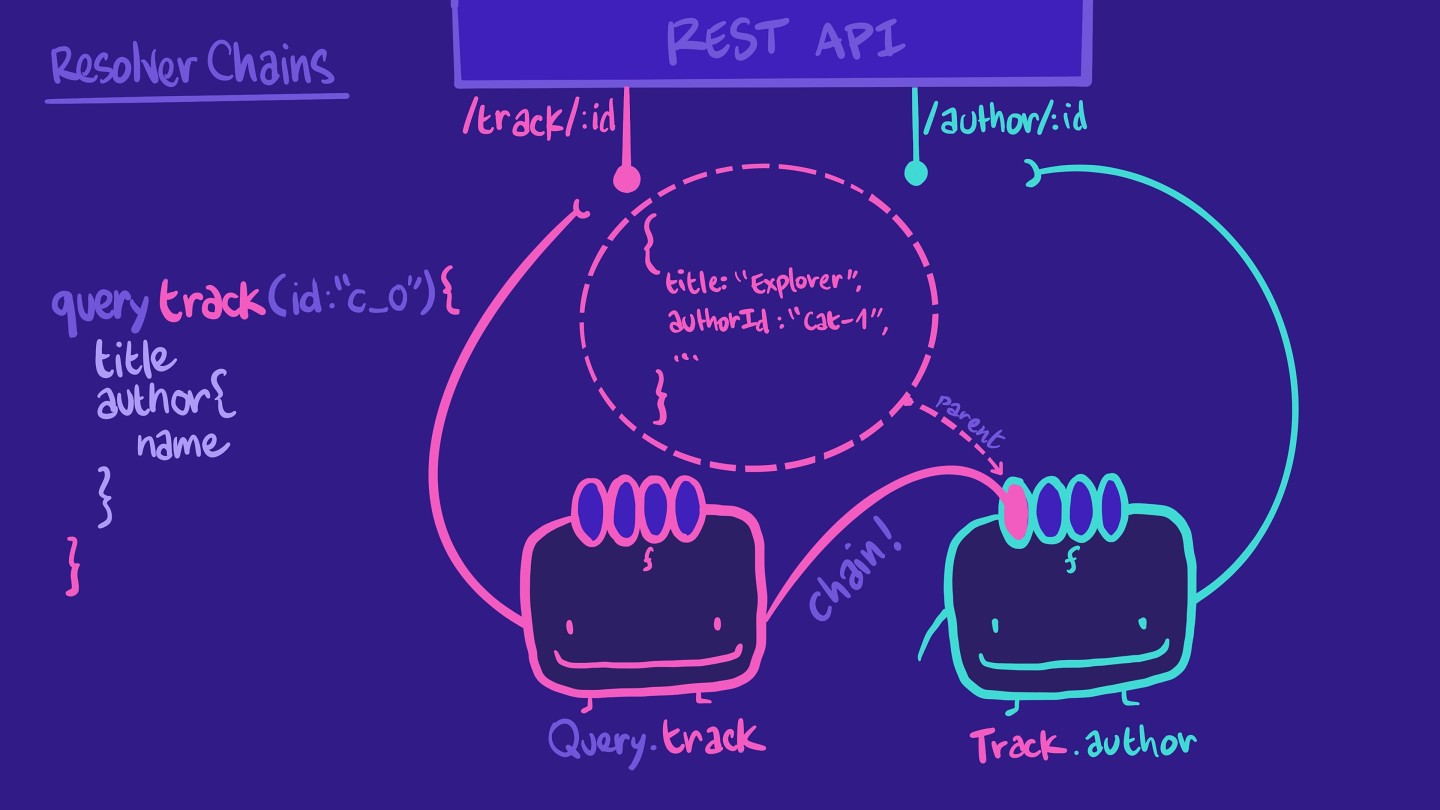
Bridging heterogeneous backends requires a robust infrastructure to prevent latency bottlenecks. Developers must implement standardized patterns for data fetching, ensuring that the GraphQL engine does not become a performance liability when aggregating data across SQL, NoSQL, and REST endpoints.
Mitigating the N+1 query problem
The N+1 problem occurs when a resolver triggers a separate database query for every item in a list, leading to exponential performance degradation. The industry standard for solving this is the DataLoader utility. By batching multiple requests into a single database call and caching results within the scope of a single request, DataLoader ensures that fetching 100 user profiles results in one batch query rather than 100 individual round trips.
Standardizing authentication across heterogeneous layers
Security context propagation is critical when resolvers bridge diverse backends. Engineers must implement a unified authentication middleware that extracts user identity from the GraphQL context and injects it into downstream service calls. Whether using JWTs for REST services or session tokens for SQL databases, the resolver must act as a secure proxy, ensuring that every data source respects the user’s authorization level. In sensitive sectors, this often involves synthetic data and data privacy (GDPR compliance) protocols to protect PII during testing.
Handling partial failures in distributed graphs
In a federated architecture, one failing microservice should not crash the entire query. Developers should implement partial result handling, where resolvers return null for failed fields while still providing data for successful ones. Using the @specifiedBy directive or custom error extensions allows the client to understand exactly which part of the graph failed, enabling graceful degradation of the user interface.
Implementing field-level authorization
Beyond global authentication, resolvers often require field-level access control. For instance, a User object might contain a socialSecurityNumber field that only specific roles can access. Instead of filtering this at the database level, implement a wrapper function around the resolver that checks the user’s claims against the requested field. This ensures that even if a query is technically valid, the data returned remains restricted based on the specific user’s permissions.
Operational impact on engineering workflows
Adopting sophisticated resolver patterns fundamentally changes how teams manage API development. Instead of building custom Backend-for-Frontend (BFF) layers for every client platform, developers focus on maintaining a unified, typed schema that serves all consumers, from web dashboards to mobile applications.

Reduced reliance on BFF layers
While BFFs were once necessary to tailor data responses for specific devices, the flexibility of GraphQL architecture allows for client-side field selection. This reduces the maintenance burden on backend teams, as they no longer need to build and deploy custom endpoints for every new UI requirement. However, this shifts the complexity to the resolver layer, requiring rigorous testing and schema governance to prevent performance regressions.
Testing strategies for complex resolvers
Unit testing resolvers is essential to ensure data integrity. Use tools like jest to mock the data source layer, allowing you to verify that the resolver correctly transforms raw database output into the expected GraphQL schema format. Integration tests should also be performed against a staging environment to ensure that the resolver correctly handles real-world network latency and downstream service timeouts. For teams dealing with massive datasets, synthetic data can be used to simulate edge cases in these integration tests.
Risk assessment for complex data integration
Scaling a resolver-based architecture introduces unique challenges that traditional monitoring tools often miss. As the graph grows, the complexity of nested resolver chains can obscure the root cause of performance issues, making it difficult to pinpoint which data source is failing.
Observability challenges in multi-source resolution
Standard logging often fails to capture the latency of nested resolver calls, where one query triggers multiple downstream requests. To maintain visibility, teams must implement distributed tracing tools like Apollo Studio or OpenTelemetry. These tools provide a visual map of the entire resolution chain, allowing engineers to identify slow resolvers and optimize the data fetching path before it impacts the end-user experience.
Frequently Asked Questions
What is the core function of a GraphQL resolver?
A resolver is a function that provides the instructions for turning a GraphQL operation into data from a specific source, acting as the bridge between the schema and your database or API. For more technical details, check our guide on GraphQL and HTTP integration.
How does GraphQL differ from REST?
GraphQL is a query language for APIs that allows clients to request exactly the data they need, whereas REST typically relies on fixed endpoints that return predefined data structures.
What does the exclamation mark (!) mean in a schema?
In GraphQL schema definition language, the exclamation mark denotes a non-nullable field, meaning the resolver must always return a value for that field.
How can I optimize resolver performance?
Use batching and caching utilities like DataLoader to prevent the N+1 problem and implement distributed tracing to monitor latency across your data sources.
- GraphQL versus REST API architectural trade-offs for fintech systems
- Operational playbook for GraphQL Queries: How to Fetch Data Effectively
- Architectural decision criteria for Can GraphQL Replace REST APIs? A Strategic Analysis
- GraphQL and HTTP: Understanding the Protocol integration in modern API architecture