
Core architectural differences between GraphQL and REST
REST (Representational State Transfer) and GraphQL represent fundamentally different approaches to data communication in fintech architectures. REST relies on a resource-oriented model where each URL maps to a specific data entity.
GraphQL functions as a query language that allows clients to request exactly the data they need from a single endpoint.
Resource fetching mechanisms
REST APIs typically utilize a fixed endpoint structure, such as /api/v1/accounts/{id} or /api/v1/transactions. This structure often leads to over-fetching, where the server returns unnecessary fields, or under-fetching, requiring the client to perform multiple round-trips to aggregate related data.

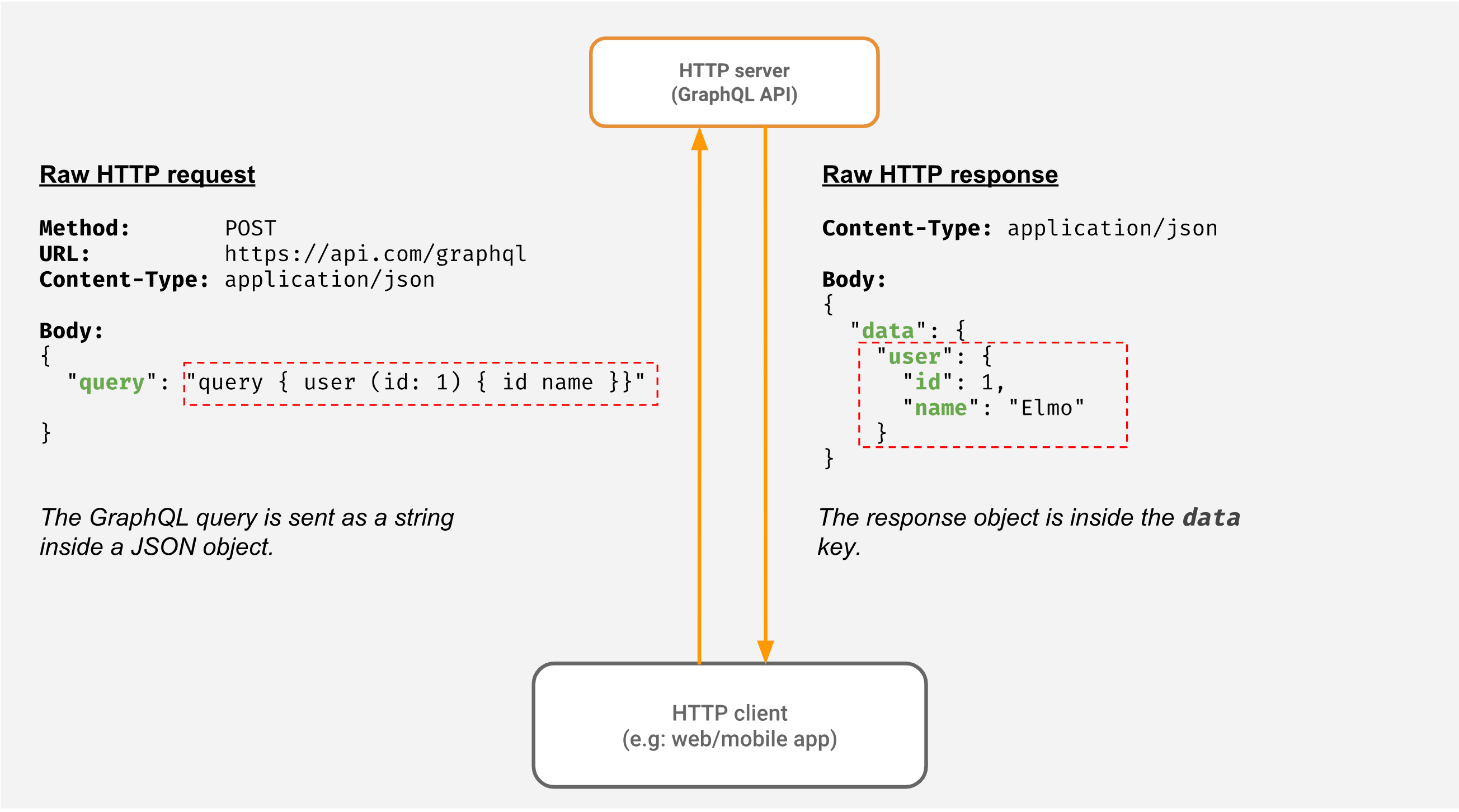
For instance, fetching a user profile along with their recent transaction history in REST often requires two distinct HTTP requests. GraphQL shifts this burden to the client by providing a single endpoint, usually /graphql.
The client sends a POST request containing a query string that defines the exact shape of the response. This eliminates the over-fetching problem, as the server only resolves the fields explicitly requested. In high-frequency fintech environments, this reduction in payload size and request count significantly lowers latency and bandwidth consumption.
Type system and schema enforcement
GraphQL is built upon a strongly typed schema defined using the GraphQL Schema Definition Language (SDL). This schema acts as a formal contract between the client and the server, specifying exactly which fields, types, and operations are available.
Because the schema is introspective, development tools can automatically generate documentation and validate queries before they are even executed. In contrast, REST APIs often rely on external documentation formats like OpenAPI (Swagger) to describe endpoints.
While effective, these are often decoupled from the actual implementation, leading to discrepancies between the documentation and the live API. GraphQL’s schema-first approach ensures that the API contract is enforced at the runtime level, providing immediate feedback if a client requests a field that does not exist or violates type constraints. This strict enforcement reduces integration errors in complex financial systems where data integrity is paramount.
Performance metrics and data over-fetching
Fintech applications often handle complex, nested financial data structures—such as user portfolios containing multiple accounts, transaction histories, and real-time market tickers. REST APIs frequently suffer from over-fetching, where a client receives a large JSON object containing fields like user address or internal metadata that are irrelevant to the current UI view.
GraphQL eliminates this by allowing the client to specify exactly which fields are required, reducing the payload size significantly.
Network payload optimization through field-level requests
In high-frequency trading environments or mobile banking apps operating on unstable cellular networks, payload size directly impacts latency. For instance, a standard REST endpoint returning a /user/portfolio object might return 15KB of data.
By switching to a GraphQL query that requests only the accountBalance and currencyCode, the response size can drop to under 1KB. This 90%+ reduction in payload size translates to faster time-to-interactive (TTI) metrics. Monitoring tools like Apollo Studio or New Relic can track these field-level requests, providing clear visibility into how much unnecessary data is being pruned from the network transit.
N+1 query problem mitigation using DataLoader
While GraphQL optimizes the network layer, its flexible nature can inadvertently trigger the N+1 query problem on the server side. If a query requests a list of 20 transactions and then fetches the details for each transaction’s merchant, a naive GraphQL resolver implementation would execute 1 initial query plus 20 individual merchant lookups.
This creates a bottleneck in database performance. To solve this, engineers must implement DataLoader, a utility that batches and caches requests within a single execution tick. By grouping the 20 merchant IDs into a single SELECT * FROM merchants WHERE id IN (...) query, the database load is reduced from 21 round-trips to just two. For fintech systems where database connection pools are a precious resource, this batching mechanism is essential for maintaining sub-millisecond response times under heavy concurrent load.
Security considerations for GraphQL implementations
Transitioning from REST to GraphQL in fintech environments introduces unique attack vectors, primarily because the client dictates the data structure. Unlike REST endpoints, which have fixed response shapes, GraphQL allows arbitrary query construction that can overwhelm server resources or expose sensitive internal data structures if not strictly governed.
Query depth and complexity limiting
A common vulnerability in GraphQL is the recursive query attack. An attacker can craft a deeply nested query—such as requesting a user’s transactions, which then requests the associated account, which then requests the user again—to exhaust CPU and memory.
To mitigate this, fintech architects must implement query cost analysis. Tools like graphql-cost-analysis or graphql-validation-complexity allow developers to assign a ‘cost’ to each field. If a query exceeds a predefined threshold (e.g., 1000 points), the server rejects it before execution. Additionally, enforcing a maximum query depth—typically capped at 5 to 7 levels—prevents infinite recursion and stabilizes response times for high-frequency trading or banking dashboards.
Introspection and field-level authorization
GraphQL introspection is a double-edged sword. While it enables self-documenting APIs, it also allows malicious actors to map your entire schema, including hidden fields or internal database relationships. In production fintech systems, introspection should be disabled for public-facing endpoints.
If internal documentation is required, use authenticated proxy layers to restrict access to authorized developers only. Beyond schema visibility, standard REST-based role-based access control (RBAC) often fails in GraphQL because a single query might fetch data from multiple sources with different permission requirements.
Implement field-level authorization using schema directives. For example, applying a @auth(role: ADMIN) directive directly to a balance or accountNumber field ensures that the resolver logic is shielded by middleware. This approach forces a ‘deny-by-default’ security posture, ensuring that even if a developer forgets to add a check in a new resolver, the underlying security layer blocks unauthorized access to sensitive financial records.
Caching strategies in a graph-based environment
Caching in GraphQL presents a distinct challenge compared to REST because the endpoint remains constant while the payload structure varies. Unlike REST, where HTTP status codes and URL-based caching provide native browser and CDN support, GraphQL requires a more granular approach to manage data state effectively.
Client-side caching with Apollo or Relay
Modern GraphQL clients like Apollo Client and Relay utilize normalized caches to store data as a flat map of objects identified by a unique key, typically a combination of __typename and id. This architecture allows the client to update a single record across the entire application interface whenever a mutation returns updated data.
By leveraging these normalized caches, developers significantly reduce redundant server round-trips. When a component requests data already present in the local store, the client resolves the query locally, bypassing the network layer entirely. This is particularly effective in fintech dashboards where multiple components—such as account balances and transaction history—often share the same underlying data entities.
Persisted queries for production stability
To mitigate the risks associated with arbitrary, complex queries in production, fintech systems frequently implement persisted queries. This strategy involves sending a hash of the query string to the server rather than the full query document.
The server maintains a whitelist of approved query hashes, rejecting any request that does not match a pre-registered pattern. This approach offers two primary advantages: it drastically reduces bandwidth consumption by minimizing the request payload and enhances security by preventing malicious actors from executing deep, recursive queries designed to exhaust server resources. Furthermore, persisted queries allow for effective CDN caching, as the request becomes deterministic and predictable, enabling the infrastructure to treat the GraphQL request similarly to a standard REST GET request.
Operational overhead and developer experience
Choosing between GraphQL and REST impacts the daily workflow of engineering teams, particularly regarding maintenance and infrastructure management. REST benefits from mature, standardized tooling that integrates seamlessly with existing caching layers and monitoring stacks. Conversely, GraphQL introduces a layer of abstraction that requires specialized handling for performance optimization and security.
Tooling and ecosystem maturity
REST APIs leverage HTTP semantics, allowing teams to use standard tools like Postman, Swagger (OpenAPI), and cURL with minimal configuration. Automated documentation generation is a solved problem in REST; tools like Redoc or Swagger UI parse code annotations to provide interactive documentation instantly.
Testing is equally straightforward, as individual endpoints can be mocked and validated in isolation using standard unit testing frameworks. GraphQL requires a different approach. While Apollo Studio and GraphiQL provide excellent interactive environments for schema exploration, they do not replace the need for robust contract testing.
Because GraphQL lacks the granular status codes of REST, developers must implement custom error handling within the schema to provide meaningful feedback. Furthermore, caching is not native to GraphQL; teams must invest in client-side caching libraries like Apollo Client or server-side solutions like Redis to prevent redundant data fetching.
Learning curve for engineering teams
The transition to GraphQL often involves a steep learning curve for teams accustomed to resource-based routing. Designing a performant GraphQL schema requires a deep understanding of graph theory and data relationships to avoid the N+1 query problem.
Developers must carefully craft resolvers to ensure that database hits are batched and optimized, often necessitating the use of tools like Dataloader. In contrast, REST is intuitive for developers familiar with standard CRUD operations. The primary overhead in REST is managing versioning and preventing over-fetching, which is handled through documentation and strict API contract adherence.
While GraphQL offers superior flexibility for frontend developers, the backend team must commit significant time to schema governance and resolver maintenance. For fintech systems where data integrity and auditability are paramount, the complexity of managing a unified GraphQL schema often outweighs the initial speed of development compared to the predictable, modular nature of REST.
Decision matrix for choosing GraphQL
Selecting an API architecture for fintech infrastructure requires balancing developer velocity against system stability and observability. While GraphQL offers flexibility for frontend-heavy applications, REST provides a battle-tested foundation for high-throughput, predictable backend services.
Use cases for REST in stateless resource management
REST remains the industry standard for public-facing financial APIs and microservices where caching and strict contract versioning are paramount. If your fintech system relies heavily on HTTP-level caching via CDNs or reverse proxies like Nginx, REST is the superior choice.
Because REST endpoints map directly to resources, you can leverage standard HTTP status codes (429 for rate limiting, 304 for not modified) to manage traffic efficiently without custom middleware.
- Public API exposure: Third-party developers are generally more familiar with REST, reducing integration friction.
- High-performance caching: Simple GET requests allow for granular caching strategies that GraphQL’s POST-based approach struggles to replicate.
- Predictable security: Implementing OAuth2 scopes and rate limits is straightforward at the endpoint level, minimizing the risk of complex query-depth attacks.
Scenarios for migrating to GraphQL with complex data relationships
Transitioning to GraphQL is beneficial when your frontend team needs to aggregate data from multiple microservices without building custom “Backend-for-Frontend” (BFF) layers. In scenarios where a mobile application needs to display a user’s transaction history, current balance, and recent investment performance in a single view, GraphQL eliminates the need for multiple round-trips to the server.
- Complex data graphs: When your domain model involves deep relationships—such as linking users to portfolios, assets, and real-time market data—GraphQL’s schema-driven approach prevents over-fetching.
- Rapid frontend iteration: Teams can modify UI components without waiting for backend engineers to update specific API endpoints, as long as the underlying schema fields exist.
- Strongly typed contracts: Using tools like Apollo or Relay, frontend teams gain automatic type safety, which significantly reduces runtime errors in complex financial dashboards.
Ultimately, the decision rests on your team’s operational maturity. If your primary goal is maintaining a stable, cacheable, and easily auditable public interface, REST is the safer bet. If you are building a data-dense internal platform where developer speed and client-side efficiency are the primary bottlenecks, GraphQL offers a distinct architectural advantage.
Frequently Asked Questions
Criteria for prioritizing GraphQL over REST in fintech
GraphQL is ideal for complex, multi-layered dashboards where frontend applications require specific, nested data points from multiple microservices in a single request, reducing network overhead.
Security risk assessment for financial APIs
Yes, GraphQL introduces risks like deep query attacks and excessive data exposure. Mitigation requires implementing strict query depth limiting, cost analysis, and robust field-level authorization.
- Operational playbook for GraphQL Queries: How to Fetch Data Effectively
- Mastering GraphQL resolvers: connecting data sources at scale
- Architectural decision criteria for Can GraphQL Replace REST APIs? A Strategic Analysis
- GraphQL and HTTP: Understanding the Protocol integration in modern API architecture