
The convergence of GraphQL and HTTP: Understanding the Protocol in production
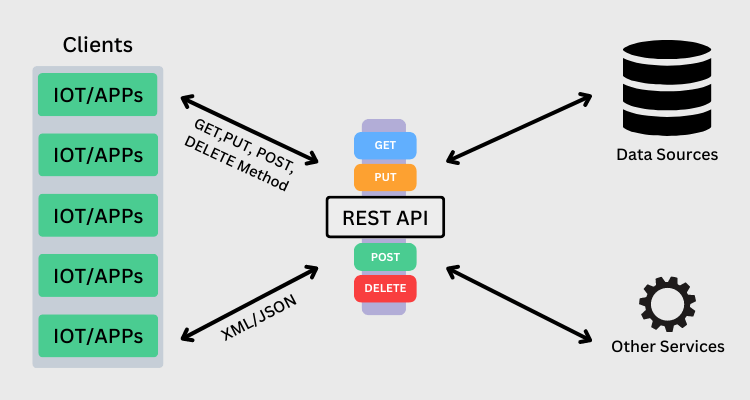
GraphQL operates as an application-layer query language that typically relies on HTTP as its transport mechanism. Unlike REST, which maps resources to specific URLs and utilizes HTTP verbs like GET, POST, PUT, and DELETE to define actions, GraphQL generally uses a single endpoint—usually a POST request—to handle all operations.
This architectural shift means that the underlying HTTP protocol serves primarily as a delivery pipe rather than a semantic interface for state transitions.
HTTP status codes and error handling
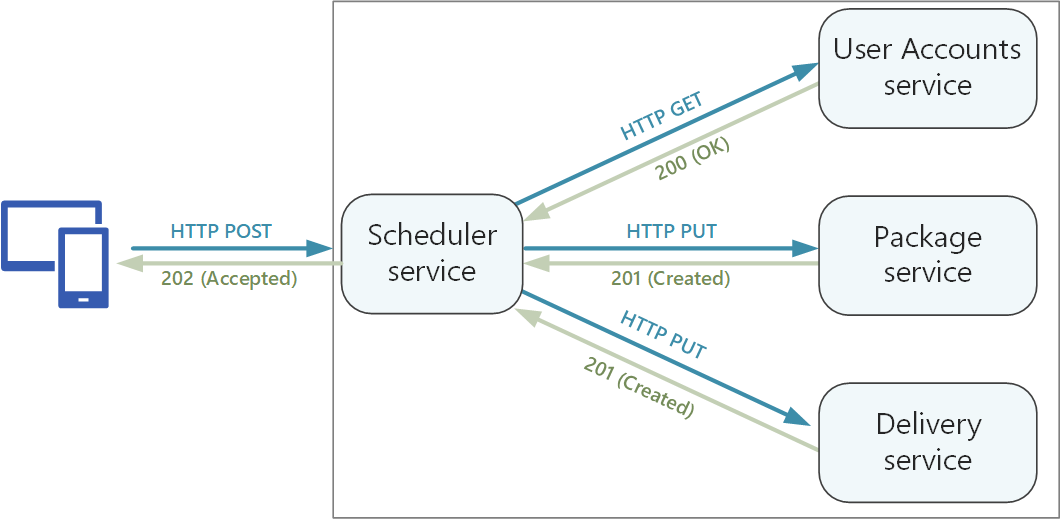
A common point of friction for developers is the GraphQL specification’s default behavior of returning an HTTP 200 OK status code even when the application logic fails. In a standard REST API, a 404 or 500 status code signals the nature of the failure to the client or intermediate proxies.
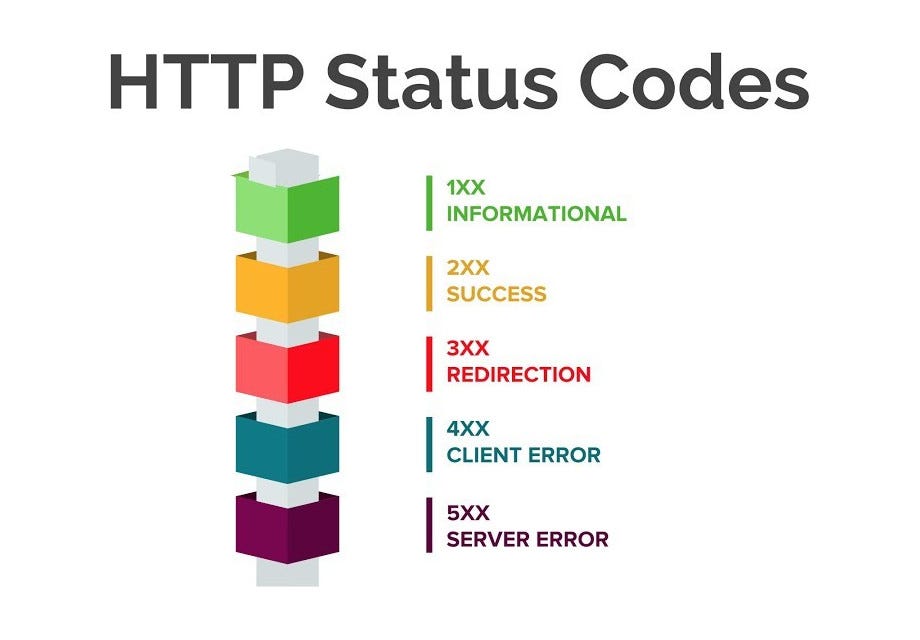
In GraphQL, the HTTP status code reflects the success of the transport layer, while the actual execution results are encapsulated within the JSON response body under an “errors” array. To align with HTTP standards, developers often implement custom middleware that maps specific application-level errors to appropriate HTTP status codes, such as returning a 401 for authentication failures or a 400 for malformed queries. This approach ensures that monitoring tools and load balancers can accurately track the health of the API.
Caching strategies at the transport layer
Standard HTTP caching mechanisms, such as ETag or Last-Modified headers, are designed for resource-based URLs. Because GraphQL requests are typically sent via POST to a single endpoint, the request body contains the query, making it invisible to standard HTTP caches that only inspect the URL.
This limitation prevents traditional CDN-level caching from effectively storing and serving GraphQL responses. To mitigate this, teams often adopt persistent queries or use GET requests for read-only operations, allowing the query to be encoded in the URL parameters. While this enables browser and CDN caching, it introduces complexity in managing query length limits and requires a robust strategy for cache invalidation, as the same endpoint now serves vastly different data structures depending on the query parameters.
Transport layer optimization for GraphQL operations
GraphQL relies on the HTTP protocol as its primary transport layer, yet it utilizes it differently than standard RESTful services. While REST often maps resources to specific HTTP verbs like GET, PUT, and DELETE, GraphQL typically consolidates all operations into a single POST endpoint. This architectural shift necessitates a focus on connection management and request efficiency to avoid bottlenecks at the network level.
Multiplexing benefits for multiple field resolution
In traditional REST architectures, fetching data from multiple endpoints often requires serial requests or significant overhead from establishing multiple TCP connections. Each request incurs the latency cost of the TCP handshake and TLS negotiation. GraphQL mitigates this by allowing clients to request complex, nested data structures in a single round trip.
When paired with HTTP/2, this efficiency is amplified through multiplexing. HTTP/2 enables multiple streams of data to be sent over a single TCP connection simultaneously. In a GraphQL context, this means that even if a query is broken down into sub-queries or if the client initiates multiple concurrent operations, the browser or server does not need to open additional TCP sockets.
This eliminates the head-of-line blocking issue common in HTTP/1.1, where one slow request could stall subsequent operations. By leveraging HTTP/2 multiplexing, GraphQL servers can handle high-frequency field resolution without the performance degradation typically associated with multiple network round trips.
Furthermore, persistent connections allow the server to reuse the same socket for subsequent queries. This reduces the CPU load on the server by minimizing the frequency of TLS handshakes. Developers should ensure their infrastructure—including load balancers and reverse proxies like Nginx or Envoy—is configured to support HTTP/2 to fully realize these transport layer gains.
Security implications of protocol-level integration
Integrating GraphQL over HTTP introduces unique security vectors because the protocol treats every request as a POST to a single endpoint. Unlike REST, where individual resource URLs allow for granular firewall rules and access control lists, GraphQL exposes the entire schema through one gateway. This architecture forces security teams to shift their focus from URL-based filtering to payload inspection and execution analysis. For those managing digital assets, ensuring secure crypto storage is just as vital as securing your API gateway.
Rate limiting and depth analysis
Standard HTTP rate limiting based on IP addresses is insufficient for GraphQL because a single, deeply nested query can consume significant server resources. A malicious actor could craft a recursive query that traverses circular relationships, leading to a denial-of-service (DoS) state even if the request volume remains low. To mitigate this, developers must implement cost-based analysis rather than simple request counting.
Effective throttling strategies include:
- Query Depth Limiting: Enforce a maximum nesting level on the abstract syntax tree (AST) before execution. If a query exceeds a pre-defined depth (e.g., five levels), the server rejects it immediately.
- Complexity Scoring: Assign a numerical weight to each field in the schema. A simple scalar field might have a weight of 1, while a heavy database-intensive connection could have a weight of 10. The server calculates the total score of the incoming query and blocks it if it exceeds a specific threshold.
- Persisted Queries: Whitelist specific, pre-approved query strings on the server. By hashing these queries and requiring the client to send the hash instead of the full document, you eliminate the risk of arbitrary, resource-heavy queries being injected by unauthorized users.
Beyond throttling, the HTTP layer must be hardened against common vulnerabilities like batching attacks. Some GraphQL implementations allow multiple operations in a single HTTP request. If not properly configured, this feature can be exploited to bypass brute-force protections on authentication fields. Always validate the structure of the request body and ensure that the underlying execution engine enforces strict type checking to prevent injection attacks at the resolver level.
Operational realities of protocol-agnostic API design
Adopting GraphQL as a transport-agnostic layer requires a fundamental shift in how engineering teams manage infrastructure. Because GraphQL operates primarily through a single endpoint—typically POST /graphql—the standard request-response metrics provided by traditional load balancers and API gateways become largely opaque. You lose the granular visibility that RESTful resource-based routing provides, necessitating a shift toward application-level tracing.
Monitoring and observability challenges
Standard HTTP logs fail to capture the internal state of GraphQL execution because they only see the outer shell of the request. An HTTP 200 OK status code does not guarantee a successful operation; the body may contain a partial success with nested errors, or a resolver might have timed out while the transport layer reported a successful delivery.
To gain meaningful insight, you must implement distributed tracing that hooks directly into the execution engine. Effective observability in a GraphQL environment requires tracking three distinct layers:
- Transport layer: Monitoring HTTP status codes, latency, and throughput at the gateway level to detect infrastructure bottlenecks.
- Execution layer: Utilizing tools like Apollo Studio or OpenTelemetry to trace individual resolver performance, identifying which specific field or data source is causing latency.
- Business layer: Logging the depth and complexity of incoming queries to prevent Denial of Service (DoS) attacks via expensive nested operations.
Without these specialized hooks, you cannot distinguish between a slow database query and a poorly optimized client-side request. Furthermore, caching strategies must move from the HTTP layer to the application layer. Since traditional HTTP caching headers like Cache-Control are ineffective for POST requests, you must implement sophisticated client-side caching (e.g., normalized cache in Apollo Client) or server-side persisted queries to maintain performance at scale.
Frequently Asked Questions
Transport layer requirements for GraphQL implementations
No, GraphQL is transport-agnostic. While it is most commonly implemented over HTTP, it can function over WebSockets, gRPC, or even message queues, depending on the specific requirements of the application.
Impact of GraphQL on standard HTTP caching mechanisms
Because GraphQL typically uses a single endpoint and POST requests, standard HTTP caching (which relies on URL-based GET requests) is often bypassed. Developers must implement application-level caching or use persisted queries to regain efficient caching behavior.