
The fundamental trade-off between synthetic generation and data fidelity
Organizations must proactively address tokenization security risks and limitations (e.g., model collapse) when integrating generative outputs into production pipelines. While synthetic data serves as a bridge for training models when real-world datasets are scarce or privacy-restricted, reliance on machine-generated material introduces a cyclical dependency.
When models are trained on synthetic outputs, they risk inheriting and amplifying biases or artifacts. This phenomenon, known as model collapse, occurs when the statistical distribution of the is synthetic data reliable and effective? drifts from the original, causing the model to lose its ability to represent rare events or edge cases accurately.
The core challenge lies in maintaining the ‘ground truth’ integrity. Synthetic data often lacks the nuance of human-labeled datasets, particularly in complex domains like medical imaging or financial fraud detection.
If the generative process fails to capture the long-tail distribution of the data, the downstream model will inevitably struggle with high-variance inputs. This leads to degraded performance in production environments.
Operational cost versus data quality
Organizations often turn to synthetic data to bypass the high overhead of manual labeling, which can cost several dollars per data point in specialized fields. While synthetic generation reduces the immediate labor expense, it introduces hidden costs related to quality assurance and validation.
Teams must invest in rigorous filtering pipelines to remove ‘hallucinated’ data points that do not conform to real-world constraints. Comparing the two approaches reveals a distinct trade-off:
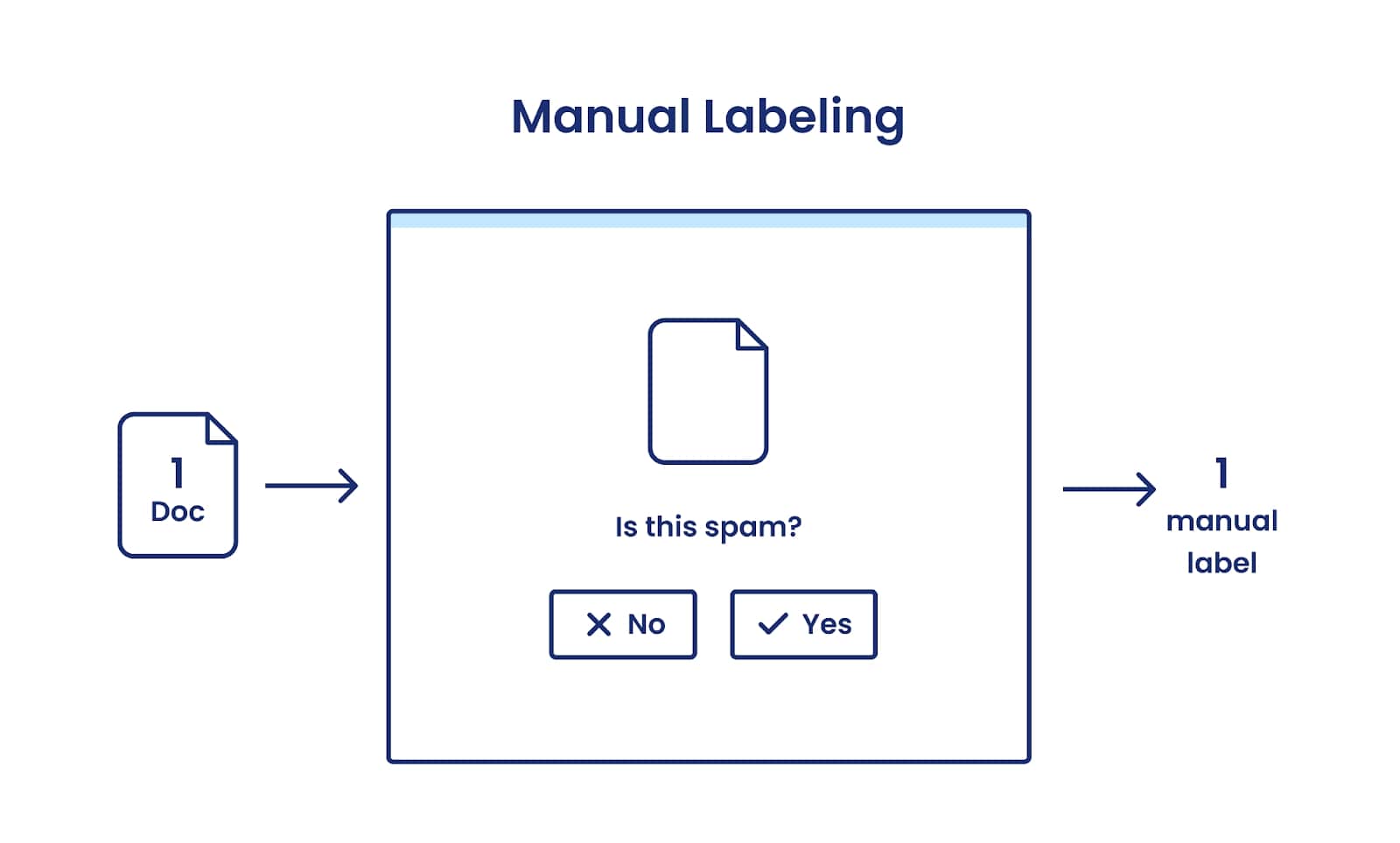
- Manual Labeling: High upfront cost, high fidelity, and reliable ground truth. It is the gold standard for high-stakes decision-making but scales linearly with labor requirements.
- Synthetic Generation: Low incremental cost, high scalability, but requires significant investment in validation infrastructure. The risk of model collapse necessitates constant monitoring of data drift, which acts as a recurring operational tax.
The decision to utilize synthetic data should not be driven solely by cost reduction. Instead, it requires a quantitative assessment of the ‘fidelity gap’—the measurable difference in model performance when trained on synthetic data vs real data comparison. If the cost of auditing the synthetic data exceeds the savings from avoiding manual annotation, the economic advantage of the synthetic approach vanishes.
Mechanisms of synthetic data risks and limitations including model collapse
Synthetic data offers a pathway to scale training sets when real-world data is scarce or privacy-restricted. However, relying on machine-generated outputs introduces systemic vulnerabilities, most notably model collapse.
This phenomenon occurs when a model is trained on data generated by previous iterations of itself, leading to a degradation in the diversity and quality of the output distribution.
Identifying the threshold for model collapse
Model collapse manifests as a narrowing of the probability distribution, where the model begins to over-represent common patterns while discarding rare but critical edge cases. Technical indicators of this decline include a sharp increase in the Jensen-Shannon divergence between the synthetic output and the original ground-truth distribution.
Engineers should monitor the variance of generated samples; a sudden, sustained drop in variance often signals that the model is converging toward a restricted subset of the feature space. Another key indicator is the loss of linguistic or structural nuance.
In text models, this appears as repetitive syntax or the loss of long-tail vocabulary. In tabular data, it manifests as a loss of correlation between features that were previously distinct. When the synthetic data distribution becomes indistinguishable from a mode-collapsed state, the model effectively loses its ability to generalize, rendering it useless for downstream tasks.
Error propagation in generative pipelines
Generative pipelines often involve multiple stages of data synthesis, where the output of one model serves as the input for the next. This creates a feedback loop where minor inaccuracies—such as hallucinations, bias amplification, or subtle noise—are treated as ground truth in subsequent training cycles.
Unlike human-curated data, which may contain random noise, synthetic errors are often systematic. When a generative model produces a biased sample, the next iteration treats that bias as a feature of the underlying distribution. Over successive generations, these errors compound exponentially.
For example, if a synthetic data generator slightly underestimates the prevalence of a specific demographic in a financial dataset, the next generation will likely omit that demographic entirely. To mitigate this, practitioners must implement strict validation gates between generations, using statistical distance metrics like the Kolmogorov-Smirnov test to ensure that the synthetic distribution remains within a predefined tolerance of the original data before allowing the data to enter the next training pipeline.
When synthetic data outperforms real-world datasets
Synthetic data generation often surpasses real-world data collection in scenarios where privacy regulations, such as synthetic data and data privacy (GDPR compliance), strictly limit the use of PII (Personally Identifiable Information). By generating high-fidelity, statistically representative datasets, organizations can train robust models without exposing sensitive user records.
Furthermore, synthetic datasets allow for the creation of perfectly balanced classes, effectively mitigating the bias inherent in historical data that often plagues real-world financial datasets.
Handling edge cases in low-resource environments
In specialized fintech applications, such as fraud detection for emerging markets or rare credit default events, real-world data is frequently scarce or impossible to collect in sufficient volume. Synthetic generation fills these critical gaps by simulating extreme, high-impact scenarios that have not yet occurred in the production environment.
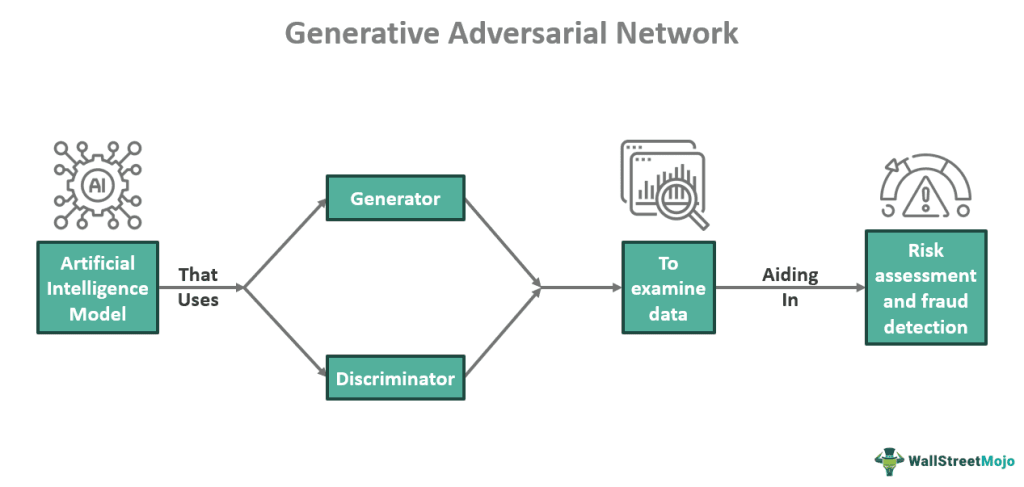
For instance, when training a model to detect a novel type of money laundering scheme, developers can use Generative Adversarial Networks (GANs) or Diffusion Models to simulate thousands of variations of the attack vector. This approach provides the model with a dense feature space for rare events, which would otherwise be treated as noise in a standard training pipeline.
By augmenting sparse datasets with synthetic edge cases, engineers improve the model’s recall rate on tail-risk events without waiting for actual loss incidents to occur. However, relying on synthetic generation for edge cases introduces specific synthetic data risks and limitations (e.g., model collapse).
If the generator is trained on a limited subset of real-world data, it may produce repetitive, low-variance samples. When a model is trained exclusively on this synthetic output, it risks overfitting to the generator’s artifacts rather than learning the underlying distribution of the financial market.
To prevent this, practitioners must implement strict validation loops, comparing the statistical distribution of synthetic edge cases against historical benchmarks to ensure the generated data remains grounded in reality.
Mitigation strategies for synthetic data risks and limitations
Managing the degradation of generative models requires a proactive approach to data governance. Relying solely on synthetic outputs creates a feedback loop where errors compound, eventually leading to model collapse. To preserve the utility of your production pipelines, you must implement rigorous quality control measures that prioritize data diversity and statistical fidelity.
Hybrid training protocols
The most effective defense against model collapse is the integration of real-world anchors within your training datasets. Pure synthetic training sets lack the “long-tail” anomalies present in human-generated data, which leads to a narrowing of the model’s output distribution.
A recommended protocol involves maintaining a ratio of at least 30% high-quality, human-verified data alongside synthetic samples. This grounding ensures that the model retains its ability to handle edge cases that synthetic generators often smooth over or ignore. By treating synthetic data as an augmentation layer rather than a wholesale replacement for ground-truth data, you maintain the structural integrity of the model’s latent space.
Validation metrics for synthetic integrity
Before deploying models trained on synthetic inputs, you must quantify the divergence between your synthetic distribution and the target real-world distribution. Relying on visual inspection or anecdotal testing is insufficient for production-grade systems.
Instead, utilize statistical tests such as the Jensen-Shannon Divergence (JSD) or the Wasserstein distance to measure how closely your synthetic data mimics the statistical properties of real-world benchmarks. Tools like SDV (Synthetic Data Vault) offer built-in diagnostic reports that highlight potential distribution drift.

Additionally, implement “membership inference attacks” during the validation phase to ensure your synthetic data has not inadvertently memorized sensitive training samples—a common failure mode that leads to both privacy leaks and overfitting. If the statistical distance between your synthetic set and the real-world baseline exceeds a pre-defined threshold, the training pipeline should trigger an automatic halt to prevent the ingestion of low-fidelity data into your production environment.
Decision matrix for data sourcing strategy
Selecting between real-world datasets and synthetic generation requires a rigorous evaluation of the specific downstream application. Organizations must weigh the cost of data acquisition against the potential for model degradation. The following framework assists in determining the appropriate data strategy based on your project’s risk profile.
Evaluating synthetic data risks and limitations (e.g., model collapse)
Before integrating synthetic data into your training pipeline, assess the risk of model collapse—a phenomenon where models trained on AI-generated output lose their ability to generalize, leading to a loss of variance and eventual divergence. To mitigate this, apply these decision criteria:
- Data Diversity Requirements: If your task requires high-fidelity edge cases, synthetic data often fails to capture the long-tail distribution of real-world noise. Use real data for critical safety systems (e.g., autonomous vehicle perception) and synthetic data for augmenting underrepresented classes in standard classification tasks.
- Feedback Loop Monitoring: If your model is used to generate data for subsequent training iterations, you must implement a strict validation gate. Use a ‘Golden Dataset’—a small, human-verified set of real-world samples—to benchmark performance at every epoch. If accuracy on the Golden Dataset drops, you have reached the threshold of model collapse.
- Generative Model Drift: Synthetic data is only as good as the underlying generative model. If your generator is trained on a skewed subset, it will amplify those biases exponentially. Always perform a statistical divergence test, such as Jensen-Shannon divergence, between your real and synthetic distributions before merging them into your training set.
Operational thresholds for production deployment
Establish clear ‘kill switches’ for synthetic data usage. If your automated testing reveals that the synthetic-to-real ratio exceeds 30% without a corresponding increase in F1-score, revert to a real-data-only baseline.
Furthermore, maintain a strict lineage record for every synthetic batch. If a production model begins to exhibit erratic behavior, you must be able to purge all data generated by specific model versions to prevent the permanent corruption of your training pipeline. By treating synthetic data as a volatile asset rather than a free commodity, you maintain the integrity of your production environment.
Frequently Asked Questions
Definition of model collapse in synthetic data environments
Model collapse occurs when an AI model is trained on data generated by previous iterations of itself. Over time, this recursive training leads to the loss of rare information and the amplification of errors, causing the model to lose its ability to represent the original data distribution.
For those looking to optimize their workflows, following a guide to synthetic data generation best practices can help establish better benchmarks for model performance.
Criteria for prioritizing real data over synthetic alternatives
Real data is essential when the task requires high precision, nuance, or adherence to complex regulatory standards. If the model’s output directly impacts financial outcomes or safety, the risks of synthetic data—such as hallucinated patterns or bias amplification—often outweigh the cost-saving benefits.