
Data diversity and distribution control mechanisms
Effective synthetic data for LLM training requires granular control over the underlying probability distributions. This prevents mode collapse and ensures the model generalizes across diverse linguistic tasks.
When evaluating vendors, prioritize platforms that provide transparency into their sampling strategies. Techniques such as rejection sampling or constrained decoding are essential for maintaining the structural integrity of natural language outputs.
Controllable parameter tuning
To verify if a vendor allows adjustment of specific data attributes, request documentation on their control interfaces for prompt-based generation. A robust provider should expose parameters for controlling lexical diversity, syntactic complexity, and semantic drift.
For instance, if you are training a model for legal document summarization, the vendor must allow you to adjust the temperature and top-p settings specifically for the synthetic generation pipeline. This ensures the output maintains formal register while avoiding repetitive phrasing.
Test their API for the ability to inject custom constraints—such as specific terminology lists or prohibited n-grams—that prevent the model from inheriting biases present in the seed data.
Handling long-tail distribution
LLMs often struggle with low-resource languages or niche technical domains because public datasets lack sufficient coverage. Evaluate a vendor by their capability to perform targeted data augmentation for these long-tail scenarios.
Ask specifically if they utilize techniques like few-shot synthetic generation or knowledge-graph-guided synthesis to create high-value samples for rare edge cases. A provider should demonstrate the ability to generate coherent, contextually accurate data for scenarios that appear in less than 0.1% of common crawl datasets.
If a vendor cannot provide a distribution analysis report showing how their synthetic samples fill specific gaps in your existing training corpus, they likely rely on generic LLM prompting that will fail to improve your model’s performance on specialized, high-stakes queries.
Validation protocols for synthetic data for LLM training
Validating synthetic datasets for Large Language Models (LLMs) requires moving beyond simple syntax checks. You must ensure the generated text preserves the semantic richness and logical coherence of human-authored corpora.
Because LLMs rely on complex token dependencies, validation must confirm that synthetic outputs do not introduce structural hallucinations. It must also ensure the data does not degrade the model’s perplexity during fine-tuning.
Statistical similarity metrics
To quantify the fidelity of synthetic text, engineers utilize Jensen-Shannon (JS) divergence to measure the distance between the probability distributions of the synthetic dataset and the ground-truth reference set. Unlike basic n-gram overlap, JS divergence provides a normalized score between 0 and 1.

This allows teams to identify if the synthetic generator is suffering from mode collapse—a common failure where the LLM produces repetitive, low-entropy sequences. Beyond JS divergence, practitioners should implement:
- KL Divergence: Useful for detecting if the synthetic distribution over-represents specific clusters of the training data.
- Embedding Space Analysis: Mapping both real and synthetic samples into a shared vector space (using models like OpenAI’s text-embedding-3-large) and calculating the Cosine Similarity between centroids.
- Token Distribution Histograms: Comparing the frequency of rare tokens to ensure the is synthetic data reliable and effective? maintains the same long-tail vocabulary coverage as the original source.
Model-based evaluation pipelines
Statistical metrics alone cannot capture the nuance of instruction-following capabilities or reasoning chains. Therefore, automated pipelines must treat the guide to synthetic data generation best practices as a training input for a smaller ‘probe’ model, such as a Llama-3-8B or Mistral-7B, to measure downstream performance.
This approach, often referred to as ‘downstream task validation,’ involves running the probe model against standardized benchmarks like MMLU (Massive Multitask Language Understanding) or GSM8K for mathematical reasoning. A robust pipeline integrates the following automated checks:
- LLM-as-a-Judge: Deploying a stronger model (e.g., GPT-4o or Claude 3.5 Sonnet) to score synthetic samples based on criteria such as factual accuracy, tone consistency, and adherence to specific formatting constraints.
- Self-Correction Loops: If the synthetic data contains code snippets, the pipeline must execute these snippets in a sandboxed environment to verify syntax correctness before the data is ingested into the primary training pipeline.
- Perplexity Benchmarking: Measuring the perplexity of a held-out validation set of real data when the model is trained exclusively on the synthetic candidate set to detect overfitting or ‘catastrophic forgetting’ of natural language patterns.
Security and provenance standards
When selecting a vendor for synthetic data for LLM training, security protocols must extend beyond standard encryption. Because LLMs are prone to memorizing training data, the synthetic generation pipeline must actively prevent the leakage of PII (Personally Identifiable Information) present in the original source material.
Vendors must demonstrate that their generation models are not merely regurgitating subsets of the input corpus. This requires rigorous testing of the generation process.
Data leakage prevention
To verify that synthetic samples do not memorize or replicate sensitive PII, demand evidence of differential privacy implementation. A robust vendor should utilize mechanisms like DP-SGD (Differentially Private Stochastic Gradient Descent) during the training of the generator model.
This adds mathematical noise to the gradients, ensuring that the presence or absence of a single record in the training set does not significantly alter the output. You should request a ‘membership inference attack’ report, which tests whether an adversary can determine if a specific data point was used to train the generator. If the vendor cannot provide a quantifiable epsilon (ε) value for their privacy budget, the risk of data leakage remains unverified.
Auditability of generation sources
Maintaining a clear lineage of the models and seeds used to create synthetic datasets is critical for regulatory compliance, particularly under frameworks like the EU AI Act. You must require a detailed ‘data card’ or ‘model card’ for every synthetic batch.
This documentation should explicitly state the base model architecture (e.g., Llama 3, Mistral, or proprietary architectures), the specific version of the seed dataset, and the temperature settings used during generation.
If a synthetic dataset leads to biased or harmful model behavior, the vendor must be able to perform a ‘root cause analysis’ by tracing the output back to the specific generation parameters and the original input distribution. Without this provenance, you cannot perform effective model debugging or retraining if the synthetic data causes the LLM to hallucinate or exhibit toxic output patterns.
Scalability and integration capabilities
When selecting a vendor for synthetic data for LLM training, the ability to scale generation to billions of tokens without compromising linguistic coherence is paramount. A robust vendor must demonstrate high-throughput generation capabilities that align with the context window requirements of modern transformer architectures, such as Llama 3 or GPT-4o.
API and pipeline compatibility
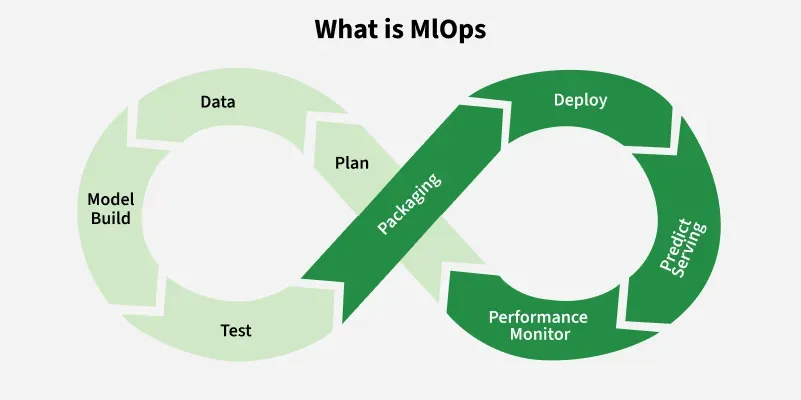
Integration with existing MLOps stacks like Kubeflow or MLflow is essential for maintaining a continuous training loop. Vendors should offer RESTful APIs or SDKs that allow for the direct injection of synthetic datasets into data lakes (e.g., Snowflake or AWS S3).
Look for support for streaming data formats like Parquet or Arrow, which minimize serialization overhead. A vendor that provides native connectors for Hugging Face datasets or LangChain workflows significantly reduces the engineering burden, allowing teams to iterate on model fine-tuning without manual data reformatting.
Cost-to-performance trade-offs
Generating synthetic data for LLM training often presents a lower cost-per-token compared to human-annotated datasets, which can exceed $10-$50 per hour for specialized domain expertise. However, the economic viability depends on the vendor’s compute efficiency.
Evaluate whether the vendor utilizes distilled models or smaller, specialized teacher models to generate data, as this reduces inference costs compared to prompting frontier models like GPT-4 for every synthetic sample. Calculate the total cost of ownership by factoring in the vendor’s API pricing against the potential reduction in model training epochs required to reach target perplexity scores.
If the synthetic data requires extensive filtering or deduplication—using tools like MinHash or Exact Deduplication—the hidden cost of data cleaning must be factored into the vendor’s overall ROI analysis.
Frequently Asked Questions
Primary risks associated with synthetic data for LLM training
The primary risk is ‘model collapse,’ where an LLM trained on synthetic data loses the nuances of human language, leading to reduced diversity and increased repetition in outputs over successive generations.
Verification methods for synthetic dataset quality
Quality is verified through automated benchmarks like MMLU (Massive Multitask Language Understanding) or GSM8K, alongside human-in-the-loop evaluation to measure instruction-following accuracy and hallucination frequency.