
The mechanism of cross-platform transaction routing
Digital wallet interoperability standards function by creating a standardized messaging layer that allows disparate ledger systems to communicate without requiring direct bilateral integration. In an open-loop system, a transaction initiated in Wallet A must be authenticated, cleared, and settled by Wallet B or a central clearinghouse.
This process relies on a common protocol stack that maps user identity and balance data across heterogeneous environments. It ensures that a debit in one ecosystem triggers a precise credit in another.
Message format harmonization through ISO 20022 and proprietary APIs

The core challenge in interoperability is the translation of data packets between legacy banking rails and modern fintech architectures. ISO 20022 has emerged as the industry benchmark, providing a rich, XML-based data structure that carries more context than traditional ISO 8583 messages.
When a wallet initiates a transfer, the system maps local proprietary fields—such as internal user IDs or loyalty point identifiers—into the standardized ISO 20022 schema. This harmonization ensures that the receiving wallet interprets the transaction intent, currency code, and regulatory compliance flags correctly, regardless of the underlying database technology.
APIs act as the bridge, wrapping these messages in RESTful or gRPC calls to maintain high throughput while adhering to strict schema validation rules.
Settlement latency trade-offs in multi-wallet environments
Achieving near-instant transaction confirmation in an interoperable framework introduces significant reconciliation complexity. While the user interface may display a successful transfer immediately, the actual movement of funds between institutional liquidity accounts often follows a deferred net settlement model.
Systems must balance the user’s need for speed with the necessity of maintaining accurate ledger states across multiple entities. If a wallet provider prioritizes immediate availability, it assumes the counterparty risk until the final settlement occurs.
Conversely, requiring synchronous, real-time gross settlement (RTGS) across all participating wallets often increases latency, as the system must verify liquidity at every node before finalizing the transaction. Developers mitigate this by implementing escrow-based liquidity pools that act as a buffer, allowing for atomic swaps that appear instantaneous to the end-user while providing the backend time required for final reconciliation.
Case study: QR-code interoperability in Southeast Asian markets
Southeast Asia serves as the primary testing ground for digital wallet interoperability standards, driven by government-backed initiatives like Thailand’s PromptPay, Singapore’s PayNow, and Malaysia’s DuitNow. These systems utilize a unified QR standard, specifically the EMVCo QR Code Specification, which allows a single static or dynamic QR code to be scanned by any participating wallet provider.
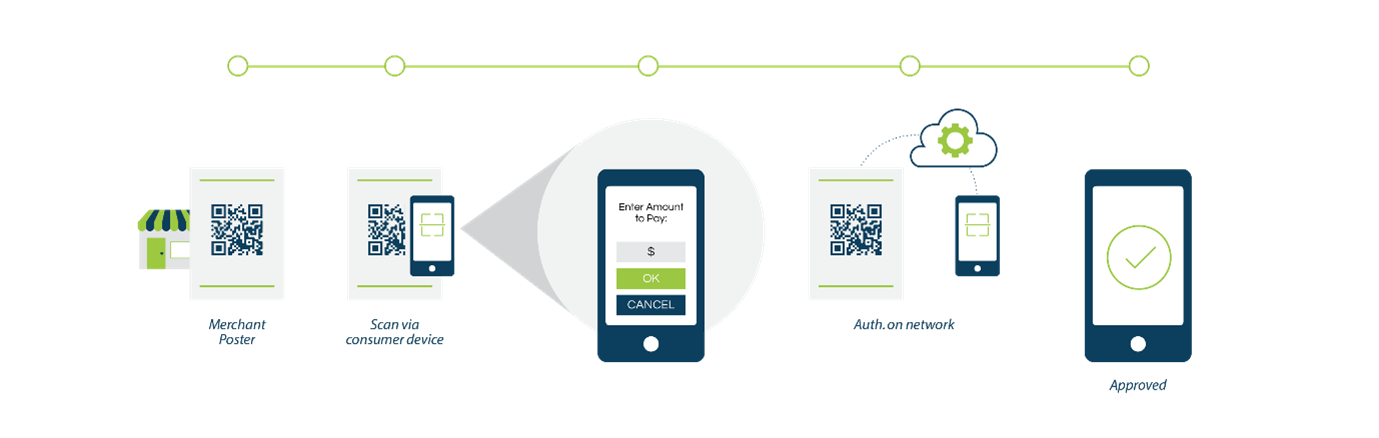
By standardizing the payload structure—specifically the Data Object Model—these markets have moved beyond proprietary closed-loop ecosystems, enabling cross-platform payments without requiring the merchant to display multiple QR codes.
Technical hurdles in merchant-presented QR codes
Static QR codes present significant limitations when scaling interoperability because they lack the capacity to carry dynamic transaction metadata. In a static setup, the QR code contains only the merchant’s static identifier (Merchant ID).
When a customer scans this code, the wallet app must initiate a secondary request to a central switch to retrieve the current transaction amount and currency, creating a dependency on real-time network connectivity.
Dynamic QR codes solve this by embedding the transaction amount and a unique reference ID directly into the code. However, interoperability issues arise when different wallets interpret the optional data fields within the EMVCo standard inconsistently.
If Wallet A expects a specific loyalty program identifier in a reserved field that Wallet B ignores, the transaction may succeed, but the merchant’s reconciliation system will fail to attribute the payment to the correct loyalty account, leading to fragmented data silos despite successful fund transfers.
Risk management in decentralized wallet networks
When a transaction crosses wallet boundaries, fraud detection becomes a collaborative effort rather than a localized process. In an open-loop system, the originating wallet and the receiving wallet must share risk signals through a centralized clearinghouse.
This requires standardized API protocols that transmit device fingerprinting data, geolocation, and velocity checks in real-time. The primary challenge lies in the latency introduced by these cross-entity security handshakes.
To maintain a sub-second transaction time, networks often rely on a “trust-score” model. If the originating wallet has a high-reputation score, the receiving wallet may bypass deep-packet inspection, assuming the initial KYC and fraud screening were performed at the source.
This creates a systemic risk: if one wallet provider has lax onboarding standards, the entire interoperable network becomes vulnerable to money laundering or account takeover attacks, as bad actors can exploit the trust-based verification gaps between disparate platforms.
Digital wallet interoperability standards and security trade-offs
Achieving seamless communication between disparate financial systems requires balancing open access with robust security protocols. While digital wallet interoperability standards aim to create a frictionless user experience, they often introduce vulnerabilities at the intersection of different trust domains. For those exploring these security dynamics, understanding your crypto storage options is essential when managing assets across different platforms.
When a transaction moves from a proprietary closed-loop wallet to an open-loop network, the security posture shifts from a single-vendor guarantee to a shared responsibility model.
Tokenization consistency across providers
Maintaining token integrity is the primary hurdle when assets move between ecosystems. Most modern wallets utilize Payment Tokenization (EMVCo standard) to replace sensitive Primary Account Numbers (PANs) with surrogate values.
However, interoperability issues arise when Wallet A uses a specific token requestor ID that Wallet B does not recognize or support within its risk engine. If the token mapping is not perfectly synchronized, the receiving gateway may reject the transaction as a potential fraud attempt.
Developers must ensure that the token lifecycle—from issuance to de-tokenization—remains consistent across the entire chain. Relying on a centralized token vault or a standardized API bridge, such as those defined by ISO 20022, is currently the most effective way to prevent data degradation during cross-platform transfers.
Authentication protocol alignment
Standardizing authentication across platforms remains a significant friction point. While FIDO2 and WebAuthn have become the gold standard for biometric verification, implementation varies wildly between providers.
A wallet utilizing hardware-backed Secure Enclave biometrics may struggle to verify a transaction if the destination platform only supports legacy PIN-based verification or SMS-based One-Time Passwords (OTP). This mismatch forces a fallback to lower-security authentication methods, effectively negating the security benefits of the original wallet’s infrastructure.
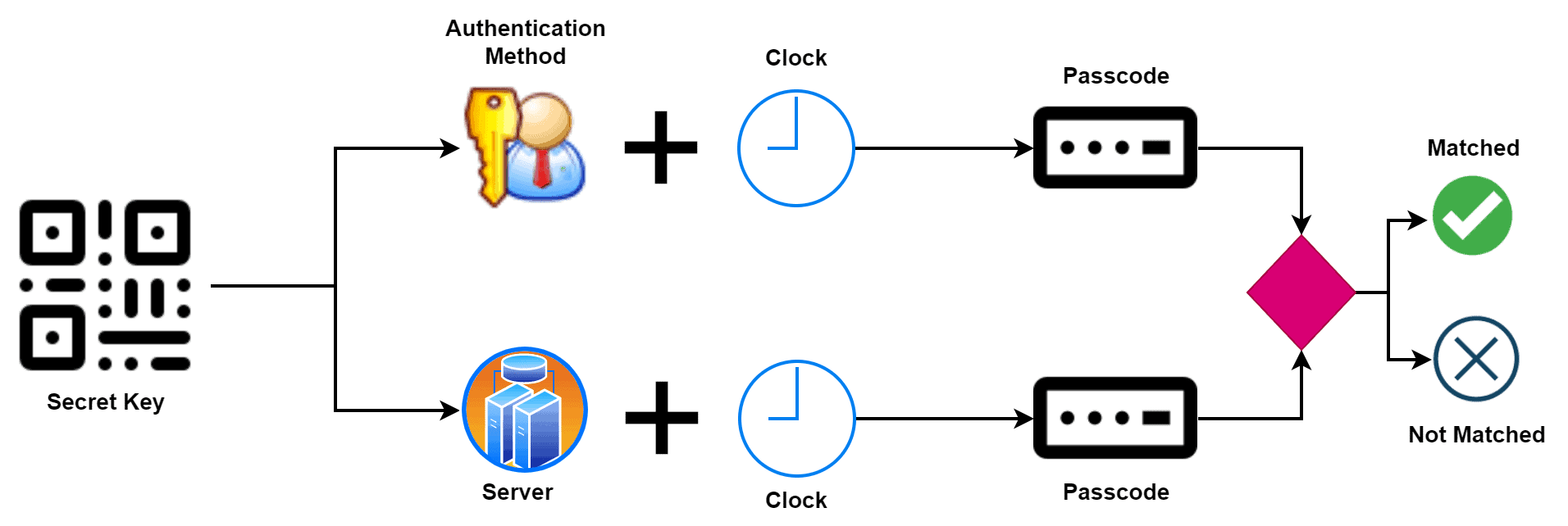
To mitigate this, interoperable systems are increasingly adopting ‘Step-up Authentication’ patterns. In this model, the system requires the highest common denominator of security available to both wallets. If a high-security biometric wallet interacts with a lower-security legacy system, the transaction is automatically routed through an additional identity verification layer to ensure the integrity of the open-loop exchange.
Limitations of current interoperability frameworks
While technical protocols like ISO 20022 and EMVCo QR specifications provide a foundation for connectivity, real-world implementation faces significant friction. Most open-loop systems struggle with latency issues during cross-platform authentication, where the handshake between a wallet provider and a third-party payment gateway often fails due to mismatched API versions or inconsistent tokenization methods.
Data privacy and cross-entity compliance
Facilitating a transaction between two distinct digital wallets requires the exchange of sensitive user data, which triggers complex regulatory hurdles. Under frameworks like GDPR in Europe or CCPA in California, data controllers are strictly liable for how information is processed by third parties.
When a transaction moves across an interoperable bridge, the chain of custody for personally identifiable information (PII) becomes fragmented. Providers must implement complex zero-knowledge proofs or decentralized identity (DID) solutions to verify credentials without exposing raw data, yet these technologies remain expensive to scale and difficult to standardize across legacy banking infrastructure.

Economic incentives for walled gardens
The primary barrier to universal digital wallet interoperability standards is not technical, but commercial. Large-scale payment providers operate on a “walled garden” business model, where the value proposition relies on capturing the entire user journey—from initial deposit to final merchant settlement.
By restricting wallet-to-wallet transfers or forcing users to cash out to a bank account, providers retain control over transaction fees and valuable consumer spending data. When a provider opens its ecosystem, it risks losing the “float”—the interest earned on idle funds held in proprietary accounts—and diminishes the stickiness of its loyalty programs.
Until regulatory bodies mandate open-loop participation as a condition of licensing, dominant players have little financial motivation to adopt protocols that prioritize network-wide efficiency over individual platform retention.
Future trajectory for global wallet connectivity
The evolution of digital wallet interoperability standards is shifting from fragmented, proprietary API integrations toward unified, protocol-based frameworks. As central banks and private fintech networks prioritize cross-border efficiency, the adoption of ISO 20022 messaging standards is becoming the baseline for interoperable payment flows.
This transition allows wallets to communicate transaction data, compliance requirements, and settlement instructions in a machine-readable format that transcends regional silos.
The role of decentralized identity and tokenization
Future connectivity will rely heavily on Decentralized Identifiers (DIDs) and Verifiable Credentials (VCs). By decoupling user identity from specific wallet providers, these technologies enable a user to prove their creditworthiness or KYC status across different ecosystems without re-submitting sensitive data.
This shift reduces the friction currently inherent in open-loop systems, where each participant typically maintains redundant verification layers. When wallets adopt W3C-compliant identity standards, they create a portable trust layer that functions globally, independent of the underlying currency or network.
Scaling through cross-protocol bridges
The next phase of development involves the maturation of cross-protocol bridges that facilitate communication between legacy banking rails and emerging blockchain-based settlement layers. Rather than forcing a single global standard, industry leaders are focusing on translation layers that map disparate data schemas into a common interoperability framework.
For instance, the integration of the Interledger Protocol (ILP) with existing digital wallet backends allows for the routing of payments across different ledgers, effectively treating the global financial system as a single network of networks.
Organizations like the Mojaloop Foundation and the Bank for International Settlements (BIS) are currently testing these multi-currency, multi-wallet settlement models. These pilots demonstrate that the ultimate goal is not a single “universal wallet,” but rather a robust, standardized infrastructure that ensures a transaction initiated in one digital wallet can be cleared and settled by a recipient’s wallet, regardless of the geographic or technical boundaries involved.
As these standards solidify, the reliance on manual reconciliation and bilateral agreements will diminish, replaced by automated, protocol-driven settlement.
Frequently Asked Questions
Definition of digital wallet interoperability standards
These are technical protocols and frameworks, such as EMVCo specifications or ISO 20022, that allow different digital wallets and payment terminals to communicate, exchange data, and process transactions seamlessly across disparate networks.
Complexity factors in open-loop system interoperability
Open-loop systems require synchronization between multiple stakeholders, including wallet providers, card networks, and merchant acquirers. Discrepancies in tokenization methods and data formatting often create friction, preventing a truly universal user experience.
- Market expansion pathways leveraging the benefits of cross-border digital wallet interoperability
- Technical frameworks on how to achieve interoperability between mobile wallets
- Reality check on security risks in cross-platform wallet transactions
- ROI assessment models for digital wallet interoperability in emerging markets