
Detecting distribution drift in synthetic patient cohorts
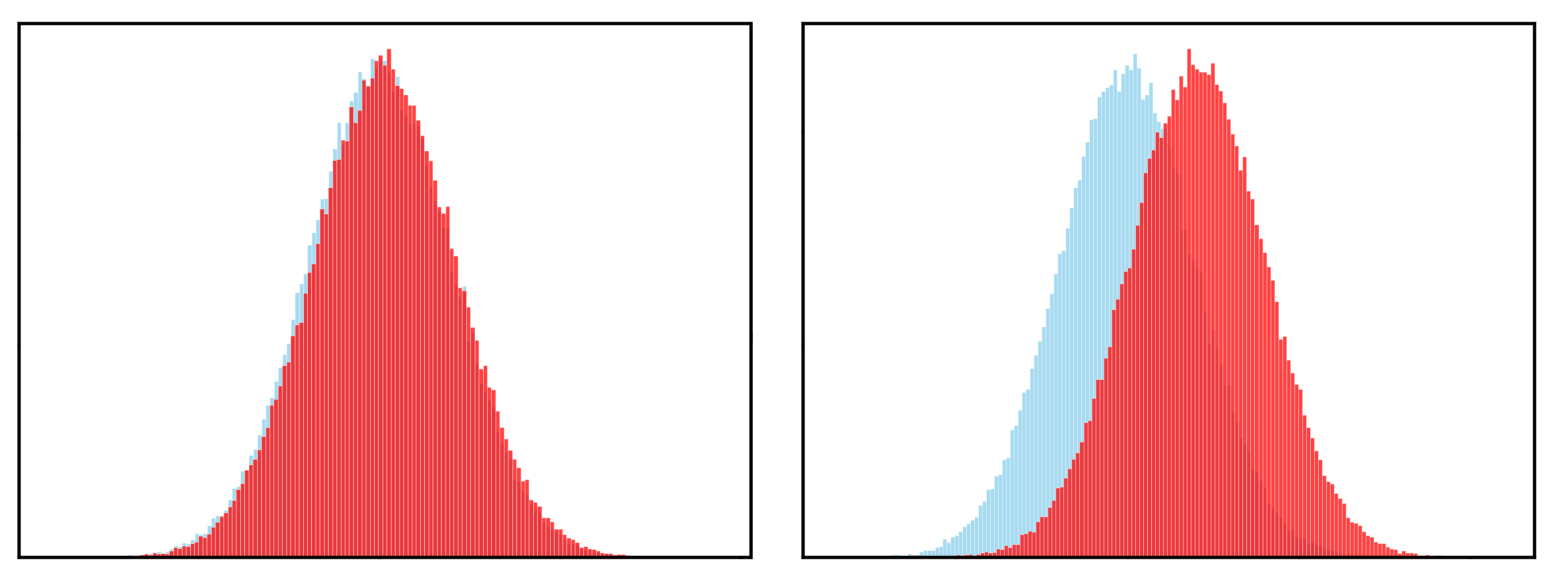
Synthetic data in healthcare and clinical trials often suffers from distribution drift, where the generated population fails to mirror the statistical properties of the source cohort. This drift occurs when the generative model, such as a GAN or VAE, over-represents specific clusters or fails to capture the long-tail distribution of rare clinical events.
Statistical divergence metrics
To validate the fidelity of synthetic outputs, practitioners must employ robust statistical tests. The Jensen-Shannon (JS) divergence is the industry standard for measuring the similarity between two probability distributions, offering a bounded value between 0 and 1. Complementing this, the Kolmogorov-Smirnov (KS) test serves as a non-parametric assessment to determine if synthetic samples originate from the same empirical distribution as the real-world clinical data. A KS statistic approaching zero indicates high fidelity, while higher values signify significant drift that could invalidate downstream trial simulations.
Practical validation workflows
Beyond global metrics, teams should perform ‘subgroup fidelity checks.’ For instance, if a trial involves patients with specific comorbidities, calculate the JS divergence specifically for that subset. If the synthetic data generation best practices show a 15% variance in the prevalence of a secondary condition compared to the real cohort, the model requires re-weighting of the training loss function to prioritize minority class representation.
Privacy leakage risks in synthetic data in healthcare and clinical trials
The primary risk in generating healthcare blockchain securing patient-level data is the potential for membership inference attacks, where an adversary determines if a specific individual’s record was used to train the generative model. Over-fitting is the root cause, where the model essentially memorizes training instances rather than learning the underlying clinical patterns.
Quantifying re-identification probability
Quantifying this risk requires calculating the distance between synthetic records and the nearest neighbors in the training set. If the distance is below a predefined threshold, the synthetic record is flagged as a potential privacy breach. Implementing differential privacy during the training phase—by adding controlled noise to the gradient updates—is the most effective mechanism to mitigate this risk without sacrificing the utility of the synthetic data.
Auditing for record memorization
A common diagnostic technique is the ‘distance-to-closest-record’ (DCR) analysis. By plotting the distribution of distances between synthetic records and their nearest real-world neighbors, researchers can identify outliers. If the distribution shifts toward zero, it indicates that the model is producing records nearly identical to real patients, necessitating a higher epsilon value in your differential privacy budget.
Correlation collapse in multi-modal clinical features
Clinical data is inherently multi-modal, involving complex relationships between biomarkers, demographic factors, and longitudinal outcomes. Correlation collapse occurs when the generative model captures individual feature distributions but fails to maintain the covariance structure between them, leading to medically impossible patient profiles.
Cross-correlation matrix validation
The most reliable diagnostic tool is the comparison of a Pearson or Spearman correlation matrix generated from real data versus synthetic. A visual heatmap comparison often reveals ‘ghost’ correlations or the total erasure of legitimate clinical dependencies. If the synthetic matrix shows significant deviations from the real-world baseline, the model architecture requires recalibration of the latent space to better enforce inter-variable constraints.
Clinical utility assessment for regulatory submission
Regulatory bodies demand proof that synthetic datasets are fit for purpose, particularly when used to augment control arms in clinical trials. The utility assessment must demonstrate that the synthetic data generation guide preserves the treatment effect size and the variance observed in historical clinical evidence.
Benchmarking against historical trial data
A head-to-head comparison involves running identical statistical models—such as Cox proportional hazards or logistic regression—on both real and synthetic datasets. If the hazard ratios and confidence intervals overlap significantly, the top synthetic data companies and providers are deemed reliable for trial simulation. Discrepancies in these metrics suggest that the model has failed to capture the causal structure of the clinical intervention.

Remediation strategies for generative model instability
When diagnostic tests reveal failure, the generative model requires structural adjustments. Instability often stems from the mode collapse of GANs, where the generator produces limited varieties of output, or insufficient training epochs for VAEs.
Hyperparameter tuning for clinical constraints
To preserve rare disease phenotypes, practitioners should adjust the latent space dimensions and implement weighted loss functions that penalize the model more heavily for missing minority class samples. Increasing the capacity of the discriminator in GAN architectures can also force the generator to produce more diverse and clinically accurate synthetic records.
Frequently Asked Questions
Generative mechanisms for synthetic patient records
Synthetic data is generated using generative AI models like Generative Adversarial Networks (GANs) or Variational Autoencoders (VAEs) that learn the statistical patterns of real-world datasets to create new, artificial data points.
Definition of synthetic data in medical AI
It is information that is artificially manufactured rather than generated by real-world events, designed to mimic the statistical properties of original data while maintaining privacy.
Operational workflow of synthetic data generation
Generative models analyze the distribution and correlations of a source dataset and then sample from that learned distribution to produce new, unique records that share the same characteristics.
Significance of synthetic data in medical research
It enables researchers to conduct large-scale clinical simulations and train AI models without exposing sensitive patient information, effectively bypassing data scarcity and privacy regulations.
Reliability benchmarks for synthetic clinical datasets
Reliability depends on rigorous validation against real-world distributions; when properly tested for fidelity and privacy, it is highly reliable for specific research and trial simulation tasks.
Privacy preservation capabilities of synthetic data
Yes, because synthetic data does not contain direct links to real individuals, it serves as a privacy-preserving alternative to raw patient data, provided the model is not over-fitted.