
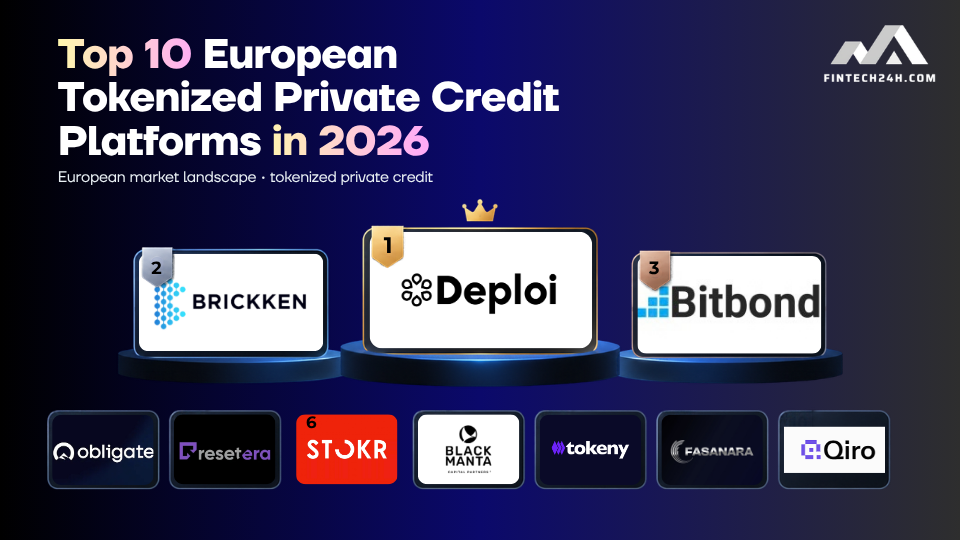
The Top 10 European tokenized private credit platforms in 2026 are transforming how debt is structured, distributed, and settled by replacing manual, fragmented processes with blockchain-based infrastructure. These platforms address the core inefficiencies of private credit—such as limited secondary liquidity and manual servicing—by leveraging regulated digital-asset frameworks.
In Europe, the opportunity is particularly interesting because private credit tokenization sits at the intersection of private markets, regulated securities, distributed ledger technology, and increasingly mature digital-asset infrastructure. Recent developments across the European market include regulated tokenized-security venues, digital debt issuance, tokenized private credit funds, and infrastructure for on-chain settlement. The European Central Bank’s September 2026 launch of Pontes also demonstrates that blockchain-based financial-market infrastructure is moving further into regulated institutional finance.
However, not every tokenization company is actually a private credit platform. Some focus on token issuance, others on regulated distribution, while others specialize in underwriting, securitization, or the underlying credit strategy.
This list therefore focuses on European companies with a meaningful connection to tokenized private credit, tokenized debt, private-market infrastructure, or the distribution and servicing layer surrounding digital credit products.
Editorial note: The order is an editorial selection rather than a claim that one provider delivers universally better investment performance or credit quality than another. Platforms operate at different layers of the private-credit stack, so the most relevant provider depends on the asset, jurisdiction, investor base, regulatory structure, and required infrastructure.
Top 10 European tokenized private credit platforms in 2026
For this 2026 list, the selection considers several practical factors:
| Criteria | What it means |
|---|---|
| Private-credit relevance | Direct connection to loans, receivables, debt, or private-credit products |
| European presence | European headquarters, regulated entity, European issuance, or significant European operations |
| Tokenization infrastructure | Ability to issue, represent, transfer, or administer digital securities |
| Regulatory infrastructure | Relevant securities, DLT, MiFID, CASP, or local regulatory framework |
| Investor access | Distribution, onboarding, or marketplace capabilities |
| Lifecycle management | Servicing, reporting, repayments, corporate actions, or portfolio monitoring |
| Institutional orientation | Suitability for funds, lenders, asset managers, financial institutions, or professional investors |
The list intentionally avoids enormous global financial or technology companies whose involvement in blockchain does not make them dedicated European private-credit infrastructure providers. If you are exploring broader AI Security Tools and Platforms, those require a different set of technical considerations than financial ledger systems.
1. Deploi
Primary focus: Digital private credit issuance and real-time credit markets
Geographic focus: Europe / UK
Best known for: Lender-originated credit, tokenized notes, reporting, settlement, and private-credit market infrastructure
Deploi is one of the more directly focused names in the European tokenized private credit landscape. Rather than approaching tokenization as a generic RWA feature, Deploi positions its infrastructure specifically around private-credit products and lender-originated portfolios. For businesses looking to scale their operations, these systems are as vital as the top 10 remote workforce management platforms Canadian businesses should consider in 2026.
Its platform covers several credit categories, including consumer lending, mortgage assets, business lending, invoice financing, litigation funding, and non-performing or distressed debt. The company’s product architecture combines senior note structures with portfolio reporting, eligibility controls, settlement, and investor access.
A notable development in 2026 was Deploi’s direct issuance framework for private credit on Polygon. Its inaugural UK consumer-credit notes received ISIN allocations from Nasdaq CSD, while the company announced a broader €1 billion note programme spanning consumer finance, SME financing, mortgage-backed assets, litigation funding, and distressed debt.
For institutional investors, one of the more interesting aspects is the emphasis on portfolio-level reporting rather than simply putting a loan contract on-chain. Investors can access information around repayment activity, delinquency, portfolio health, and eligibility.
Why it matters: Deploi is particularly relevant to readers looking specifically for infrastructure designed around private credit rather than generic asset tokenization.
Key strengths:
- Private-credit-specific infrastructure
- Multiple credit asset categories
- Portfolio reporting
- Digital note issuance
- Institutional investor access
- European distribution connections
2. Brickken
Primary focus: Institutional asset tokenization
Geographic focus: Spain / Europe
Best known for: Private credit, debt, funds, securities, white-label infrastructure, and API integration
Brickken has developed into one of the more recognizable European tokenization infrastructure providers, with a broad platform covering digital securities and real-world assets. Many firms utilize these comparison platforms boost strategies to ensure their digital offerings gain sufficient market traction.
Its private-credit offering specifically addresses the tokenization of income rights from instruments such as direct loans, bridge financing, revenue-based financing, trade finance, invoice factoring, and asset-backed lending. The platform supports issuance, investor onboarding, reporting, and lifecycle administration.
One reason Brickken stands out for private-credit use cases is that it does not position tokenization purely as a fundraising mechanism. Its infrastructure also addresses repayment schedules, investor management, documentation, compliance workflows, and post-issuance administration.
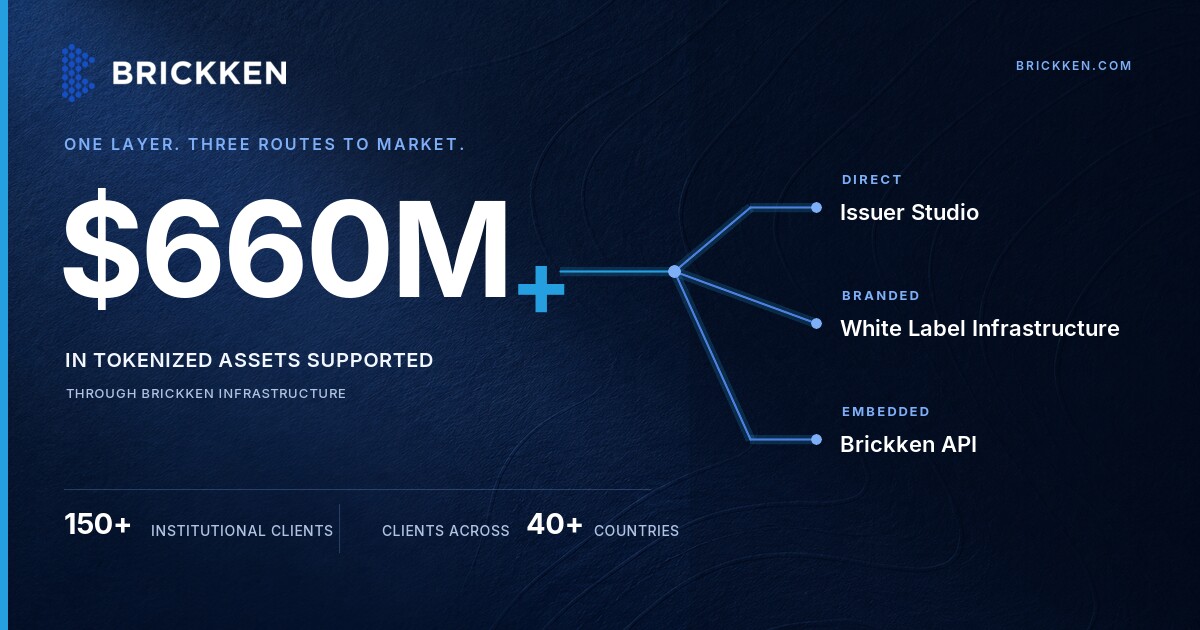
Brickken also provides different deployment models, including a SaaS platform, white-label infrastructure, and API-based integration. This makes it relevant to asset managers and financial companies that want to build tokenized credit products without developing the entire blockchain stack internally.
The company’s 2026 materials report more than $660 million in tokenized asset value and more than 150 clients across 40+ countries, although those figures cover its broader tokenization business rather than private credit alone.
Why it matters: Brickken is particularly relevant when private credit is part of a broader digital-securities strategy rather than the company’s only asset class.
Key strengths:
- Private-credit-specific functionality
- Debt and securities tokenization
- White-label infrastructure
- API integration
- KYC/KYB workflows
- Investor portals and lifecycle management
3. Bitbond
Primary focus: Tokenization technology and digital securities
Geographic focus: Germany / Europe
Best known for: Token issuance, offering management, regulated-market infrastructure, and private-credit tokenization
Berlin-based Bitbond is another significant European infrastructure provider for tokenized securities. For those interested in the broader landscape, there are also top 10 European companies building infrastructure for AI security that are worth monitoring.
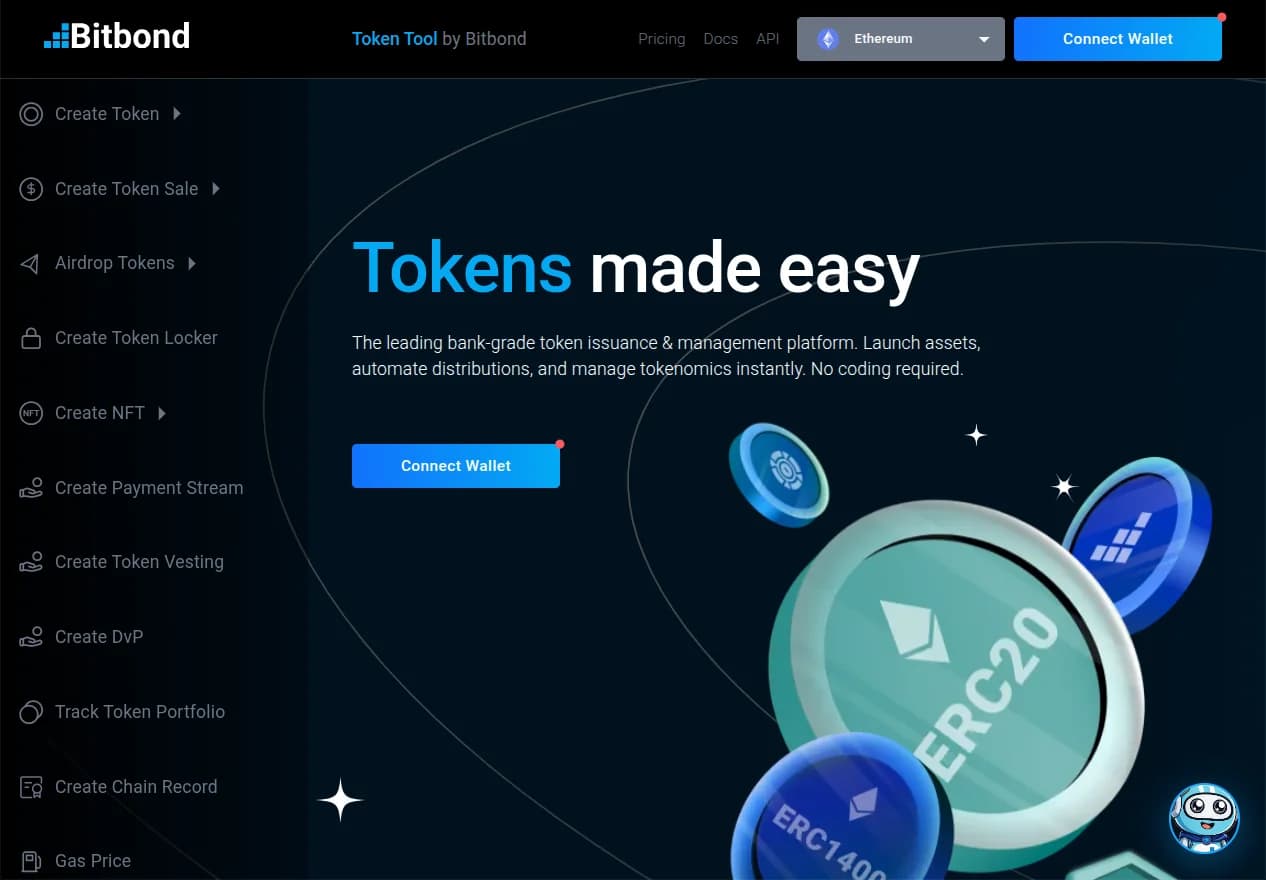
The company’s Offering Manager is designed to help issuers configure offerings, onboard investors, process payments, complete KYC workflows, and distribute tokens. Bitbond also provides tokenization technology through its Token Tool and advisory services.
Private credit has become an explicit use case within Bitbond’s 2026 content and product strategy. Its private-credit framework discusses legal wrappers, SPVs, offering configuration, investor onboarding, compliance, payments, and post-issuance token distribution.
Bitbond is especially interesting for European issuers because its platform has a strong German and EU orientation. The company states that it is based in Berlin and is particularly active across Germany, Luxembourg, Liechtenstein, France, Switzerland, and other markets.
Rather than functioning purely as a marketplace for investors, Bitbond operates primarily as technology infrastructure for issuers and financial-market participants.
Why it matters: Bitbond can be relevant for institutions looking to create a compliant tokenized private-credit product rather than simply purchase an existing tokenized asset.
Key strengths:
- Berlin-based European infrastructure
- Offering management
- Token issuance
- Investor onboarding
- Multi-chain token infrastructure
- Private-credit and debt use cases
4. Obligate
Primary focus: On-chain debt and digital securities
Geographic focus: Switzerland / European private markets
Best known for: eNotes, structured debt, commercial paper, and on-chain bond issuance
Obligate approaches tokenization primarily through digital debt securities.
Its platform enables issuers to create on-chain bonds, commercial paper, and structured debt instruments. The company’s eNote structure is built around Swiss DLT legislation, while smart contracts can automate settlement, coupon payments, and maturity events.
This makes Obligate particularly relevant to private-credit transactions where the underlying economic exposure is naturally expressed through a debt instrument rather than an equity or fund token.
The platform also emphasizes direct connections between issuers and qualified professional investors. Its current model is therefore closer to a digital fixed-income capital-raising platform than a generic RWA tokenization SaaS product.
For private credit managers and businesses seeking financing, this distinction can be important. The tokenization layer is integrated into the debt issuance process rather than added as a separate technology feature.
Why it matters: Obligate is a notable European example of how blockchain infrastructure can be applied directly to private debt markets.
Key strengths:
- On-chain debt issuance
- Structured debt
- Commercial paper
- Smart-contract settlement
- Automated coupon and maturity events
- Swiss DLT framework
5. Assetera
Primary focus: Regulated tokenized-securities marketplace and distribution
Geographic focus: Austria / EU
Best known for: Issuance, trading, distribution, and regulated access to tokenized securities
Assetera occupies a somewhat different position from companies such as Brickken and Bitbond.
Instead of concentrating primarily on tokenization software for issuers, Assetera operates as a regulated European platform for issuing, buying, and selling tokenized securities. Its platform covers tokenization, distribution, trading, and asset-management functions.
Its relevance to private credit became particularly visible in 2026 through its partnership with Deploi. Assetera was selected as a distribution partner for Deploi’s tokenized private-credit products, including access for European qualified investors.
Assetera therefore illustrates an important part of the tokenized private-credit stack: distribution and regulated market access.
A private-credit issuer can have strong tokenization technology but still require a regulated channel through which eligible investors can access and trade the resulting security. Platforms such as Assetera address that part of the infrastructure.
Why it matters: For European private-credit products, issuance technology and investor distribution are separate problems. Assetera is particularly relevant to the latter.
Key strengths:
- EU-regulated infrastructure
- Tokenized-security distribution
- Trading capabilities
- Private-credit distribution partnerships
- Institutional and retail infrastructure
- Multi-asset support
6. STOKR
Primary focus: Digital securities and tokenized capital markets
Geographic focus: Luxembourg / Europe
Best known for: Tokenized securities, investment products, and regulated digital-asset infrastructure
STOKR is one of the established European names in digital securities, with a Luxembourg-based platform supporting tokenized investment products. When evaluating these providers, many firms also look for review platforms services to validate their operational track record.
The company reported approximately $1.5 billion in tokenized assets and $321 million in processed payouts as of September 8, 2026, across its overall product ecosystem.
STOKR is not exclusively a private-credit provider. Its platform covers multiple forms of digital securities, meaning private credit represents one part of a broader capital-markets proposition.
Its relevance to private credit comes from its ability to structure, issue, distribute, and administer digital securities within a European regulatory environment. In June 2026, STOKR also announced authorization from Luxembourg’s CSSF as both a Crypto-Asset Service Provider and Payment Institution.
The combination of digital securities infrastructure and payment capabilities is important because tokenized private-credit products need more than a smart contract. They also need compliant investor onboarding, payments, distributions, and operational administration.
Why it matters: STOKR provides a broader European digital-securities environment in which debt and private-market products can be structured and distributed.
Key strengths:
- Luxembourg-based
- Digital securities infrastructure
- Investor onboarding
- Tokenized investment products
- Payment infrastructure
- European regulatory footprint
7. Black Manta Capital Partners
Primary focus: Regulated tokenization and digital securities
Geographic focus: Germany / Luxembourg
Best known for: Security token offerings, debt, funds, and regulated European distribution
Black Manta Capital Partners is another European provider with a strong focus on regulated tokenization.
The company operates across Germany and Luxembourg and has developed infrastructure for tokenized equity, debt, funds, and other real-world assets. Its platform has also been used for debt-oriented investment products, including current offerings in Luxembourg and European real-estate debt.
An interesting 2026 example is its Kairos Digital Loan Notes programme, which represents a tokenized debt structure backed by a portfolio of UK legal claims.
This illustrates the broader potential of tokenized private credit: the underlying assets do not necessarily have to be traditional corporate loans. Legal-claims finance, SME lending, real-estate debt, and other alternative credit exposures can potentially be packaged into regulated digital securities.
Black Manta also announced a 2026 collaboration with the Stellar Development Foundation to expand its multi-chain tokenization infrastructure.
Why it matters: Black Manta combines regulated European capital-markets infrastructure with tokenization and debt-oriented offerings.
Key strengths:
- German and Luxembourg presence
- Regulated tokenization infrastructure
- Debt offerings
- Fund structures
- Cross-border European distribution
- Multi-chain development
8. Tokeny
Primary focus: Institutional tokenization infrastructure
Geographic focus: Luxembourg / Europe
Best known for: ERC-3643, permissioned securities, compliance, and lifecycle management
Tokeny is one of the most infrastructure-oriented companies in this list.
Founded in 2017, the Luxembourg-based company developed the technology behind ERC-3643, a permissioned-token standard designed for compliant issuance, management, and transfer of real-world assets and digital securities.
Tokeny is not a private-credit marketplace in the traditional sense. Instead, it provides the technology layer that allows institutions to represent regulated assets on-chain.
Its tokenized-debt infrastructure covers jurisdiction selection, issuance, compliant investor onboarding, token allocation, investor eligibility, servicing, and corporate actions.
This makes Tokeny particularly relevant for larger financial institutions and asset managers that already have the legal and financial structure of a private-credit product but need institutional-grade tokenization infrastructure.
Tokeny reported in 2026 that its technology powers more than $32 billion in tokenized assets across multiple continents.
Why it matters: Tokeny is useful for understanding the infrastructure layer underneath tokenized private credit, particularly where compliance and permissioned transfers are central requirements.
Key strengths:
- Luxembourg-based
- ERC-3643 infrastructure
- Permissioned tokens
- Institutional compliance
- Digital securities
- Debt and fund tokenization
9. Fasanara Capital
Primary focus: Technology-enabled private credit and alternative debt
Geographic focus: UK / Europe
Best known for: Asset-backed private credit, fintech lending, receivables, and tokenization initiatives

Fasanara Capital differs from most companies on this list because it is fundamentally an asset manager and private-credit specialist, rather than a generic tokenization software company.
The firm focuses on technology-enabled private credit, including SME financing, fintech lending, trade receivables, and asset-backed finance. In 2026, Fasanara increasingly positioned tokenization as part of the infrastructure for expanding access to private credit.
A significant example is mGLOBAL, a tokenized investment product providing indirect exposure to Fasanara’s Global Diversified Alternative Debt Fund. The structure uses a Luxembourg securitization compartment and gives token holders exposure through a security-token framework rather than direct ownership of the underlying fund.
This is an important distinction. Fasanara demonstrates how a traditional private-credit manager can work with digital-asset infrastructure to create a tokenized representation of an existing credit strategy.
In September 2026, Fasanara also announced a $400 million private-credit vehicle with Tether focused on real-economy lending to SMEs and other borrowers.
Why it matters: Fasanara represents the asset-management and credit-originating side of the tokenized private-credit ecosystem.
Key strengths:
- Deep private-credit specialization
- Asset-backed lending
- SME financing
- Receivables finance
- Large fintech-lending network
- Tokenized credit strategies
10. Qiro Finance
Primary focus: Private-credit underwriting and on-chain credit infrastructure
Geographic focus: UK / European operations
Best known for: Credit underwriting, risk monitoring, tokenized collateral, and credit curation
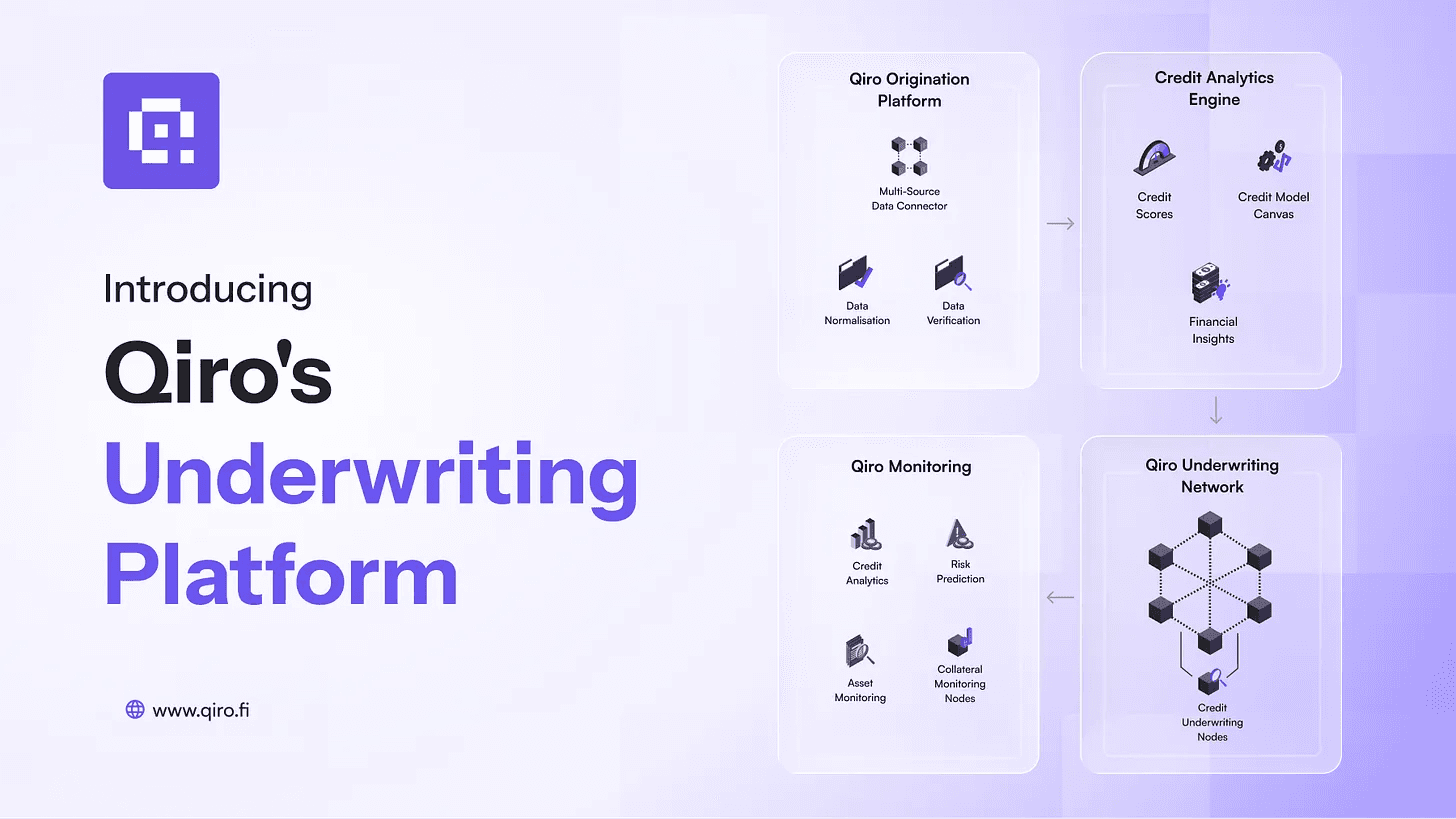
Qiro Finance represents another important layer in the European tokenized private-credit ecosystem: underwriting and risk infrastructure.
Rather than simply creating tokens, Qiro focuses on evaluating the credit behind tokenized assets. Its infrastructure covers borrower onboarding, credit scoring, underwriting, deal management, risk monitoring, and capital deployment.
In 2026, Qiro reported that it had underwritten more than $50 million in private-credit opportunities across multiple partners and asset categories, including trade receivables, microfinance, alternative credit funds, and real-estate-backed lending.
The company has also worked with tokenized-credit ecosystems to evaluate underlying portfolios. Its research on mGLOBAL, for example, examined the structure and underlying private-credit exposure connected to Fasanara’s strategy.
Qiro is therefore useful as an example of a broader trend: as tokenized private credit grows, credit assessment and ongoing monitoring become just as important as token issuance.
Why it matters: Tokenization can make ownership and settlement more efficient, but it does not remove credit risk. Underwriting infrastructure remains fundamental.
Key strengths:
- Private-credit underwriting
- Credit scoring
- Portfolio monitoring
- Risk assessment
- Tokenized collateral
- Credit curation
How European Tokenized Private Credit Platforms Differ
The biggest mistake when comparing this market is treating every provider as if it sells the same product.
In reality, the ecosystem can be divided into several layers.
1. Credit originators and asset managers
Companies such as Fasanara Capital sit close to the actual credit assets. Their core expertise is lending, portfolio construction, borrower relationships, and credit management.
2. Tokenization infrastructure
Companies such as Brickken, Bitbond, and Tokeny focus on converting financial instruments into compliant digital securities and managing their lifecycle.
3. Digital debt platforms
Obligate is an example of a model focused specifically on on-chain debt instruments.
4. Regulated distribution
Assetera addresses the market-access side, providing regulated infrastructure for the distribution and trading of tokenized securities.
5. Private-credit-native infrastructure
Deploi is more specifically oriented toward lender-originated credit, digital notes, reporting, and private-credit markets.
What to Look for in a European Tokenized Private Credit Platform
Before selecting a provider, investors, lenders, and asset managers should look beyond whether a company simply supports “RWA tokenization.”
1. Legal structure
First determine what the token legally represents.
It could be:
- A bond
- A loan note
- A fund interest
- A securitization note
- A participation right
- A claim against an SPV
- Another regulated financial instrument
2. Credit underwriting
Tokenization does not eliminate default risk.
A serious private-credit infrastructure stack should provide access to information about:
- Borrower quality
- Portfolio composition
- Collateral
- Historical repayment
- Delinquencies
- Concentration
- Seniority
- Security interests
- Default procedures
- Recovery mechanisms
This is why underwriting platforms such as Qiro can occupy an important position alongside tokenization providers.
3. Investor eligibility
Many tokenized private-credit products are not designed for unrestricted retail access.
Eligibility may depend on:
- Professional-investor status
- Qualified-investor status
- Jurisdiction
- KYC/AML requirements
- Investment minimums
- Transfer restrictions
For example, Deploi’s current investor documentation describes its programmes as restricted to qualified and professional investors, while its products specify jurisdictional and onboarding requirements.
4. Servicing and repayments
Issuance is only the beginning.
Private credit has recurring events such as:
- Interest payments
- Principal repayments
- Amortization
- Maturity
- Defaults
- Restructuring
- Investor reporting
- Corporate actions
A platform that handles the entire lifecycle can potentially provide more operational value than one that only creates the token.
Frequently Asked Questions
1. What is a tokenized private credit platform?
A tokenized private credit platform provides infrastructure for representing, issuing, distributing, managing, or monitoring private-credit exposures using blockchain or distributed-ledger technology. Depending on the provider, it may focus on issuance, underwriting, distribution, settlement, or asset management.
2. What types of private credit can be tokenized?
Potential structures include SME loans, invoice financing, trade receivables, consumer credit, real-estate bridge loans, corporate debt, asset-backed lending, structured notes, and private-credit fund interests.
3. Are tokenized private-credit products regulated in Europe?
The regulatory treatment depends on the legal nature of the instrument, issuer, jurisdiction, investor type, and distribution model. A token representing a financial instrument may fall under securities and financial-market regulations rather than being treated simply as a crypto-asset.
4. Does tokenization make private credit liquid?
Not automatically. Tokenization can make ownership and transfer technically easier, but actual liquidity depends on market infrastructure, eligible investors, transfer restrictions, pricing, and secondary-market demand.
5. Which companies focus specifically on private credit?
Among the companies covered here, Deploi, Fasanara Capital, and Qiro Finance have particularly direct private-credit orientations, while Brickken, Bitbond, Obligate, Assetera, STOKR, Black Manta, and Tokeny address different infrastructure layers around digital debt and tokenized securities.