
Architectural trade-offs in sovereign digital assets
Implementing robust security measures for national digital currencies requires choosing between centralized architectures, which prioritize regulatory oversight, and distributed ledgers, which emphasize resilience. Each model necessitates distinct cryptographic safeguards to maintain the integrity of a nation’s monetary supply.
Centralized database security models — Analyzing the reliance on HSMs and perimeter defense for high-throughput retail CBDCs
Centralized CBDC models function similarly to traditional high-frequency payment rails. Security relies heavily on Hardware Security Modules (HSMs) to manage private keys and perform cryptographic signing in a controlled environment. Understanding what is the future of CBDCs is essential for policymakers evaluating these centralized versus decentralized trade-offs.
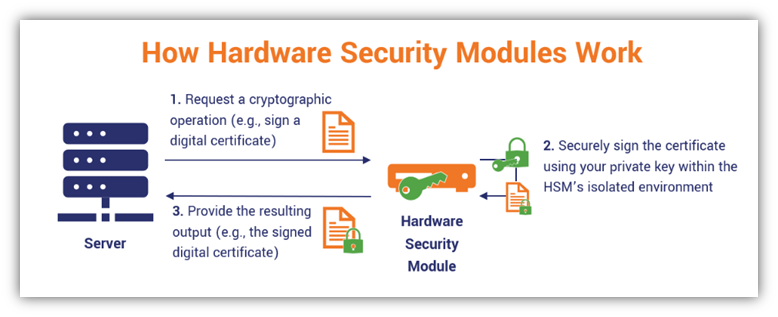
By concentrating data in a single, hardened core, central banks can implement rigorous perimeter defenses, such as air-gapped systems and multi-factor authentication for administrative access. The primary vulnerability in this architecture is the single point of failure. If an attacker breaches the perimeter or compromises the HSM cluster, the entire ledger integrity is at risk.
To mitigate this, architects employ tiered security zones, separating the core ledger from external API gateways. This ensures that even if a front-end interface is compromised, the underlying monetary records remain isolated behind secondary, more restrictive security layers.
Distributed ledger technology security protocols — Evaluating consensus mechanisms and security measures for national digital currencies
Distributed Ledger Technology (DLT) shifts the security burden from perimeter defense to protocol-level validation. In this framework, security measures for national digital currencies rely on consensus mechanisms such as Practical Byzantine Fault Tolerance (PBFT) or Proof of Authority (PoA).
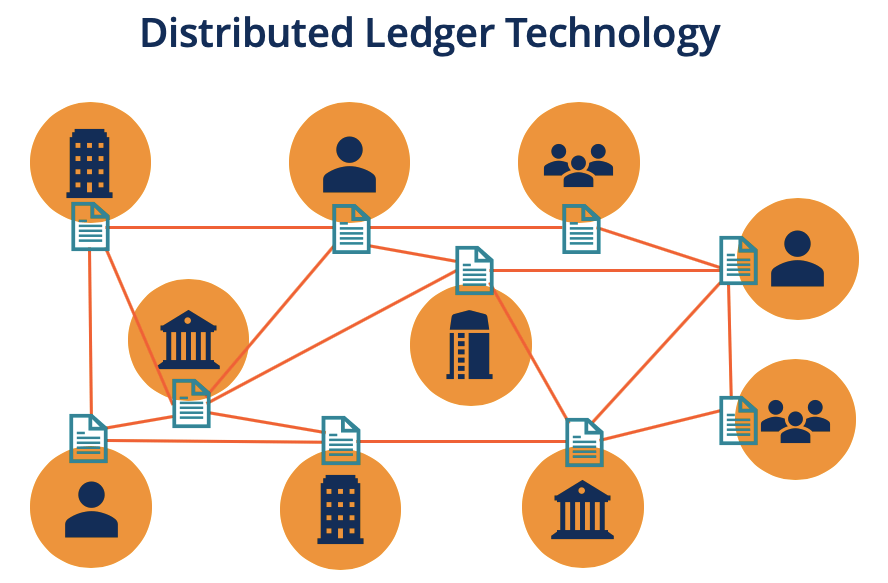
These protocols ensure that no single node can unilaterally alter the ledger, as a supermajority of authorized validators must confirm every transaction. Unlike centralized models, DLT architectures provide built-in redundancy. If one node is compromised or goes offline, the network continues to operate, maintaining uptime and data availability.
However, this introduces complexity in key management. Distributing private keys across multiple nodes requires sophisticated multi-party computation (MPC) protocols. MPC allows nodes to sign transactions collectively without ever reconstructing the full private key in a single location, effectively neutralizing the risk of a single-node breach.
Hardware security modules versus software-based encryption
Central banks deploying national digital currencies must balance the immutable protection of physical Hardware Security Modules (HSMs) against the flexible, scalable nature of software-based encryption. HSMs serve as the root of trust, housing cryptographic keys within tamper-resistant hardware, while software solutions offer the agility required for rapid deployment across distributed network nodes.
Physical infrastructure requirements — Assessing the role of FIPS 140-2/3 compliant hardware in preventing key compromise
For national-level financial systems, FIPS 140-2 and FIPS 140-3 certifications are the industry standard for validating cryptographic modules. These hardware units provide physical security mechanisms, including voltage sensors and thermal monitors, that trigger a zeroization process if an attacker attempts to probe the internal circuitry.
By isolating private keys from the general-purpose operating system, HSMs effectively mitigate the risk of memory-scraping attacks. However, the reliance on proprietary hardware introduces supply chain vulnerabilities. Central banks must ensure that the hardware lifecycle—from manufacturing to decommissioning—is strictly audited to prevent the insertion of backdoors or malicious firmware at the silicon level.
Software-defined cryptographic agility — Determining when software updates provide faster response times to emerging quantum threats
While hardware provides a static anchor, software-defined cryptographic agility is critical for long-term resilience against quantum computing. As Shor’s algorithm threatens current RSA and ECC standards, software-based systems allow for the rapid implementation of post-quantum cryptography (PQC) algorithms, such as CRYSTALS-Kyber or Dilithium.
Software layers can be patched across a distributed ledger network in hours, whereas replacing physical HSMs across a national infrastructure could take years. The trade-off lies in the attack surface; software implementations are susceptible to vulnerabilities in the underlying OS or kernel, such as buffer overflows or side-channel attacks.
Consequently, the most robust security measures for national digital currencies utilize a hybrid model: HSMs manage the master signing keys, while software-defined layers handle transaction-level encryption, allowing for modular upgrades as cryptographic standards evolve.
Identity verification and privacy-preserving security
Balancing regulatory compliance with user confidentiality remains the primary challenge for central banks deploying national digital currencies. Unlike traditional banking systems that rely on centralized databases to store full identity records, modern architectures must decouple transaction validation from personal data exposure to prevent mass surveillance and data leaks.
Zero-knowledge proof implementation
Zero-knowledge proofs (ZK-proofs) allow a user to prove they possess sufficient funds or meet regulatory requirements without revealing their identity or transaction history to the ledger. By utilizing cryptographic protocols such as zk-SNARKs (Zero-Knowledge Succinct Non-Interactive Argument of Knowledge), the network verifies that a transaction is valid—meaning the sender has the balance and the signature is authentic—without the validator ever seeing the underlying PII (Personally Identifiable Information).

This approach ensures that even if the ledger is compromised, attackers gain access to encrypted, non-identifiable transaction strings rather than a database of citizen identities. When managing these sensitive datasets, organizations must prioritize AI Security Posture Management to ensure robust data protection.
Tiered access control mechanisms
Implementing tiered access control acts as a critical circuit breaker within national digital currency frameworks. By categorizing accounts based on their verification level, central banks can enforce automated transaction limits that mitigate the financial impact of a single account compromise. For example, a low-tier wallet might allow small daily transactions with minimal identity verification, while a high-tier wallet requires full biometric authentication and permits larger transfers.
This structure limits the potential surface area for fraud. If a low-tier account is breached, the attacker is restricted by the pre-set velocity limits and maximum balance caps inherent to that tier. This architectural choice prevents a single point of failure from draining significant liquidity from the national system, effectively containing security incidents at the user level rather than allowing them to propagate to the central ledger infrastructure.
Operational resilience against systemic cyber threats
National digital currencies require robust operational resilience to withstand sophisticated state-sponsored attacks and large-scale infrastructure failures. Unlike traditional banking systems that rely on centralized clearing houses, CBDC frameworks must maintain integrity even when specific network segments are compromised. A multi-layered defense strategy integrates hardware-level security with cryptographic verification to ensure that systemic risks do not cascade into total ledger corruption.
Offline transaction security protocols
Managing the security risks of peer-to-peer offline transfers involves utilizing Secure Elements (SE) within mobile devices or dedicated hardware wallets. These SEs act as tamper-resistant microcontrollers that store cryptographic keys in an isolated environment, preventing unauthorized access even if the host operating system is compromised.

During an offline transaction, the device signs the payment instruction locally. The security protocol relies on a non-interactive zero-knowledge proof or a time-bound digital signature that validates the transaction authenticity without requiring immediate connectivity to the central ledger. To prevent double-spending, the system enforces strict transaction limits and requires periodic synchronization with the central authority to update the state of the user’s balance, effectively reconciling offline activity with the primary network.
Incident response and network recovery
Establishing automated circuit breakers is essential for isolating compromised nodes in real-time during a cyber-attack. These mechanisms monitor for anomalous patterns, such as sudden spikes in transaction volume or unauthorized attempts to alter the ledger’s consensus rules. In such high-stakes environments, teams often rely on AI Security Frameworks and Controls to detect and neutralize threats before they escalate.
When a threshold is breached, the network triggers an automated quarantine, severing the connection between the suspicious node and the rest of the distributed architecture. This containment strategy prevents the propagation of malicious code or fraudulent data. Post-incident recovery relies on immutable audit logs stored across multiple geographically dispersed nodes. By leveraging snapshotting techniques, the network can perform a surgical rollback to the last known secure state, ensuring that the integrity of the national currency remains intact while maintaining continuous service for unaffected users.
Decision matrix for infrastructure selection
Choosing between centralized and distributed architectures requires a rigorous assessment of the specific threat model facing a national digital currency. Policymakers must balance the need for absolute transactional finality against the requirement for system-wide fault tolerance.
When to prioritize centralized control
Centralized architectures remain the preferred choice for jurisdictions where regulatory compliance and immediate legal recourse are paramount. In these environments, the primary security measures for national digital currencies revolve around hardened perimeter defense and strict identity management. Centralized systems allow for instantaneous transaction reversal in cases of fraud or illicit activity, a feature often mandated by central banking laws.
This model is optimal when:
- The central bank requires granular control over monetary policy transmission and supply adjustments.
- The legal framework necessitates a single point of accountability for dispute resolution.
- The existing financial infrastructure relies on high-throughput, low-latency processing that distributed consensus algorithms cannot currently match without compromising security.
When to adopt distributed resilience
Distributed architectures offer a superior defense against single-point-of-failure risks and state-level cyberattacks. By utilizing a permissioned distributed ledger, a nation can distribute validation nodes across geographically diverse data centers. This approach ensures that even if a segment of the network is compromised or suffers a physical outage, the currency remains functional.
This model is optimal when:
- The network must maintain 99.999% uptime despite potential regional infrastructure instability or targeted DDoS attacks.
- The threat model includes risks of internal corruption or administrative overreach, where cryptographic proof of transaction integrity is needed to prevent unauthorized ledger manipulation.
- The objective is to provide a robust payment rail that remains operational during geopolitical crises or localized network partitions.
Ultimately, the most secure implementations often utilize a hybrid approach. This involves a centralized core for final settlement and regulatory reporting, coupled with distributed validation layers for retail transaction processing. This tiered structure mitigates the risks inherent in pure centralization while avoiding the performance bottlenecks often associated with fully decentralized public networks. For those looking to specialize in protecting these complex systems, exploring AI Security Engineer Career Guide can provide the necessary expertise to navigate modern threat landscapes.
Frequently Asked Questions
Does a distributed ledger offer better security than a centralized database for CBDCs?
Not necessarily. While distributed ledgers provide superior resilience against single points of failure, centralized databases offer faster transaction finality and easier regulatory oversight. The choice depends on whether the central bank prioritizes system uptime or granular control.
What are the primary security risks for national digital currencies?
Key risks include private key management for distributed systems, potential 51% attacks in permissionless-style architectures, and the high-value target risk of centralized databases which are susceptible to sophisticated cyber-espionage and insider threats. Addressing these requires a deep understanding of benefits and disadvantages of AI in security that can be applied to broader financial infrastructure.