
Value-based assessment of InsurTech innovation trends 2026
InsurTech innovation trends 2026 prioritize measurable financial returns by replacing legacy operational inefficiencies with high-velocity, data-driven automation. Assessing these investments requires a shift from vanity metrics to a rigorous cost-to-value ratio that accounts for both capital expenditure and long-term loss ratio improvements.
Defining the cost-to-value ratio
Calculating the total cost of ownership (TCO) for new insurance technology involves more than initial licensing fees. It requires factoring in integration labor, data ingestion costs, and the ongoing maintenance of API architectures. A sustainable TCO model must demonstrate that the technology reduces the loss adjustment expense (LAE) by a margin exceeding the annualized cost of the software stack.
Hyper-automation and claims processing efficiency
Autonomous claims handling directly impacts the bottom line by reducing the human labor required for standard, low-complexity claims. By automating data extraction and validation, insurers can shift human adjusters toward high-value, complex litigation or investigation tasks.
Quantifying reduction in manual touchpoints
Measuring labor cost savings begins with tracking the ‘touchpoint-per-claim’ metric. If an automated triage system reduces manual intervention by 40%, the resulting savings in hourly wages and administrative overhead provide a direct, quantifiable ROI that justifies the initial implementation cost.
Embedded insurance revenue models
Embedded insurance shifts the distribution paradigm by integrating coverage directly into the point-of-sale for non-insurance platforms. This model effectively captures customers at the moment of highest intent, bypassing the expensive traditional brokerage funnel.
Customer acquisition cost parity
Comparing the customer acquisition cost (CAC) of embedded channels against traditional direct-to-consumer (DTC) marketing reveals a distinct advantage. Embedded models often leverage the existing traffic of e-commerce partners, leading to a significantly lower CAC and higher conversion rates compared to standalone crypto marketing trends or other digital advertising campaigns.
Predictive underwriting and risk selection accuracy
Predictive underwriting utilizes alternative data sources—such as IoT sensor data or real-time telematics—to refine risk segmentation. This precision allows insurers to price policies more accurately, directly influencing the overall loss ratio.
Impact of real-time data on pricing precision
There is a clear correlation between the granularity of data inputs and the stability of loss ratios. By moving from static historical data to real-time behavioral insights, insurers can identify high-risk segments earlier, effectively mitigating potential losses before they manifest in the claims cycle.
Generative AI in customer lifecycle management
Generative AI models are transforming customer lifecycle management by enabling hyper-personalized communication at scale. These tools reduce churn by proactively identifying policyholders at risk of cancellation and offering tailored retention incentives.
Operationalizing AI-driven retention

Calculating the ROI of AI-driven retention involves comparing the lifetime value (LTV) of retained customers against the cost of the LLM infrastructure. When personalized engagement tools successfully reduce churn by even 2-3%, the cumulative increase in LTV often dwarfs the operational expenditure of the AI deployment.
Cybersecurity and regulatory compliance overhead
Maintaining compliance in a data-intensive environment is a significant, yet often overlooked, cost center. Robust security frameworks are not merely defensive; they function as a financial safeguard against the catastrophic costs of data breaches and regulatory fines.
Risk mitigation as a cost-saving mechanism
Investing in automated compliance monitoring reduces the probability of human error and ensures continuous adherence to evolving global standards. This proactive stance prevents the long-term financial liabilities associated with non-compliance, such as legal fees and reputational damage.
Infrastructure modernization and legacy integration
Modernizing legacy infrastructure is a capital-intensive necessity for firms aiming to leverage modern APIs. The financial challenge lies in balancing the immediate expenditure with the long-term agility gained from a modular, cloud-native architecture.
Phased migration versus rip-and-replace
Phased migration strategies generally offer a more manageable cash flow impact compared to rip-and-replace approaches. By incrementally replacing legacy modules, firms can realize incremental ROI while minimizing the operational risk of a total system overhaul.
Strategic ROI measurement framework
Tracking the performance of innovation investments requires a structured framework that aligns technology milestones with financial outcomes. This approach ensures that every dollar spent on innovation is tied to a specific improvement in operational efficiency or revenue growth.
KPIs for long-term innovation success
Sustainable growth is indicated by a set of core metrics: the reduction in loss ratio, the decrease in CAC, the improvement in claim processing speed, and the increase in policyholder LTV. Monitoring these KPIs consistently provides the data necessary to iterate on innovation strategies and maintain a competitive edge.
Emerging Tech: The Role of Distributed Ledgers
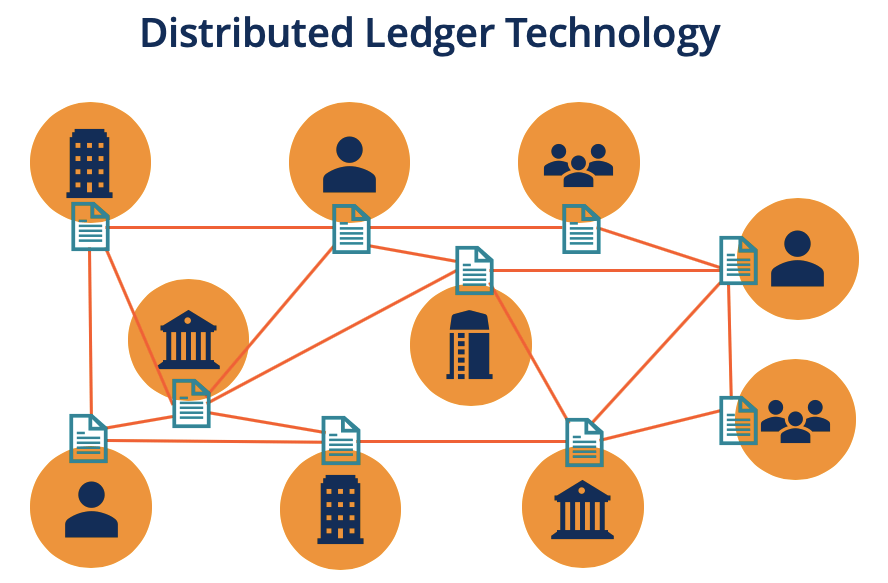
Beyond AI and automation, blockchain technology is maturing into a practical tool for insurance settlement. By utilizing smart contracts, insurers can trigger automatic payouts based on verified external data, such as flight delays or weather events. This reduces the administrative burden of manual verification and significantly improves the customer experience, which serves as a long-term retention driver. As firms explore these new frontiers, they must also consider how web3 marketing trends influence user adoption and trust in decentralized financial products.
Data Interoperability and Ecosystem Integration
A critical component of InsurTech innovation trends 2026 is the move toward open insurance ecosystems. By adopting standardized API protocols like those defined by the Insurance Data Standards Association (IDSA), firms can reduce the friction of integrating third-party data providers. This interoperability allows for a ‘plug-and-play’ approach to innovation, where insurers can swap out underperforming vendors without the need for extensive custom coding, thereby protecting the long-term ROI of their technology stack.
The Financial Impact of Cloud-Native Scalability
Transitioning to cloud-native environments allows insurers to scale compute resources based on demand, such as during peak renewal seasons or catastrophic weather events. This elasticity prevents the over-provisioning of server capacity, which is a common source of wasted capital in traditional on-premise data centers. By moving to a consumption-based pricing model, firms align their infrastructure costs directly with revenue-generating activities, ensuring that technology spend remains proportional to business volume.
Advanced Analytics and Fraud Detection
Fraud remains a multi-billion dollar drain on the insurance industry. Advanced analytics platforms now employ graph databases to map complex relationships between entities, identifying organized fraud rings that traditional rule-based systems miss. By deploying these graph-based detection tools, insurers can reduce ‘leakage’—the portion of claims paid out erroneously—thereby directly improving the underwriting margin. The ROI here is often realized within the first 12 months of deployment as the system identifies previously undetected patterns of fraudulent behavior, a process increasingly optimized by ai in blockchain marketing 2031 trends.
Frequently Asked Questions
Role of AI in modern insurance operations
AI automates claims processing, improves underwriting accuracy through predictive modeling, and enhances customer retention via personalized engagement.
Mechanics of embedded insurance for e-commerce
It integrates insurance products directly into the checkout process of digital platforms, allowing customers to purchase coverage instantly alongside their primary purchase.
Primary risks of InsurTech adoption
The primary risks include high integration costs, technical debt from legacy systems, data security vulnerabilities, and potential regulatory non-compliance.
Blockchain impact on insurance claims processing
Blockchain provides a secure, immutable ledger that reduces fraud, speeds up verification processes, and enables automated payouts through smart contracts.
Parametric insurance and emerging market trends
Parametric insurance pays out automatically when a pre-defined event occurs, such as a specific wind speed or earthquake magnitude, reducing the need for manual loss adjustment.