
The hidden risks of fixed-fee blockchain agency pricing models 2025
Fixed-fee pricing models in the blockchain development sector frequently collapse because they rely on the assumption that technical requirements remain static from inception to deployment. In a field characterized by rapid protocol upgrades, shifting security standards, and evolving regulatory frameworks, a rigid price tag often forces agencies to choose between cutting corners on blockchain development agencies or absorbing massive losses.
When the scope is locked at the start of a project, any deviation—such as a change in the underlying consensus mechanism or a discovery of a vulnerability in a third-party library—creates an adversarial relationship between the client and the developer.
The trap of scope ambiguity — How undefined smart contract requirements lead to budget overruns in fixed-price models
Smart contract development is inherently iterative, yet fixed-fee contracts treat it as a linear manufacturing process. Clients often define requirements based on high-level business goals, such as “build a decentralized exchange,” without detailing the specific logic for liquidity pools, slippage tolerance, or gas optimization strategies.
When these technical nuances emerge during the development phase, the fixed-price agreement becomes a liability.
Agencies operating under these models typically protect their margins by building in a massive “buffer” fee, which inflates the initial quote significantly. If the project encounters unforeseen complexity, the agency may prioritize speed over rigorous testing to stay within the budget. This often results in:
- Incomplete Test Coverage: Skipping edge-case scenarios in unit tests to save billable hours.
- Security Debt: Deferring complex refactoring that would improve gas efficiency but exceeds the allocated development time.
- Communication Breakdown: Agencies become hesitant to suggest necessary architectural improvements because every “change request” threatens the profitability of the fixed fee.
For complex blockchain integrations, this misalignment creates a dangerous incentive structure. The client expects a feature-complete product for the agreed price, while the agency is incentivized to deliver the bare minimum required to satisfy the contract’s literal definitions, often leaving the protocol vulnerable to exploits that were not explicitly mentioned in the original scope document.
Time and materials: the industry standard for complex dApps
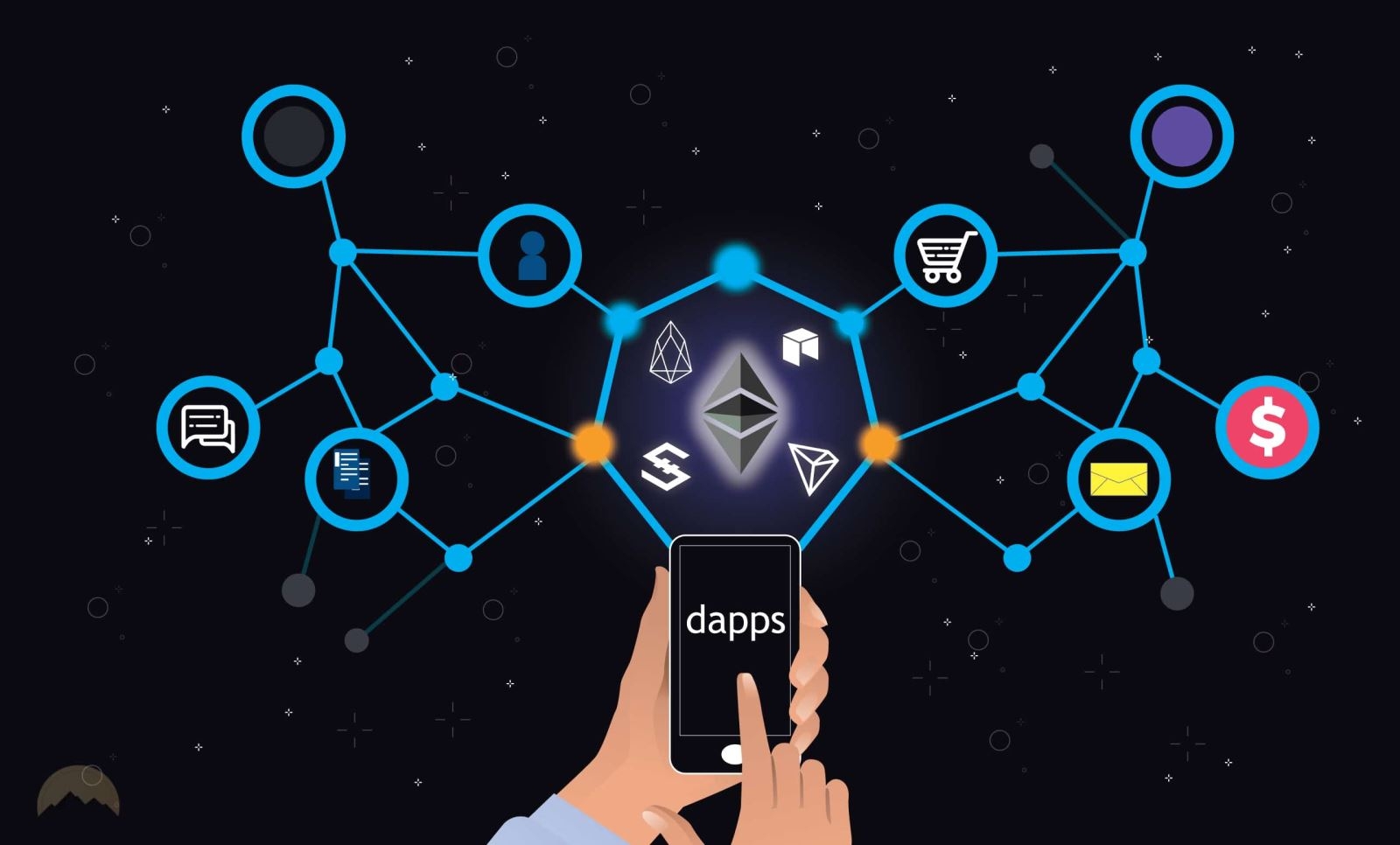
The time and materials (T&M) model remains the dominant framework for blockchain development in 2025 because it accommodates the inherent volatility of decentralized protocols. Unlike traditional software, blockchain projects often encounter unforeseen technical hurdles such as gas optimization complexities, smart contract security vulnerabilities, or integration issues with evolving Layer-2 solutions. By billing based on actual hours worked, agencies maintain the flexibility to pivot strategies without renegotiating a contract every time a technical roadblock appears.
When to choose hourly billing
Selecting a time-based model is most effective when your project scope is fluid or requires deep investigative work. Consider this approach if your roadmap meets the following criteria:
- Research-heavy development: If your project involves implementing experimental cryptographic primitives or zero-knowledge proofs, the R&D phase is inherently unpredictable. Hourly billing allows developers to dedicate the necessary time to audit and test these mechanisms without the pressure of a fixed deadline.
- Integration with unproven protocols: When building on top of nascent chains or early-stage SDKs, documentation is often sparse. T&M models allow for the trial-and-error process required to integrate these tools safely.
- Iterative prototyping: If you are building a Minimum Viable Product (MVP) to test market fit, you likely need to adjust features based on user feedback or on-chain data analytics. Hourly billing supports this agile cycle, whereas fixed-fee structures often penalize changes with expensive change-order requests.
The primary trade-off with T&M is the lack of a defined budget cap. To mitigate this, professional agencies typically provide a weekly burn report detailing tasks completed, hours logged, and progress toward specific milestones.
This transparency ensures that costs remain aligned with the project’s velocity. If your project has a clear, well-documented specification and minimal technical risk, T&M might lead to unnecessary overhead, but for the majority of blockchain initiatives, it provides the necessary runway to handle the technical debt and security audits essential for mainnet deployment.
Value-based pricing in high-stakes DeFi development
In the context of DeFi development, fixed-fee models often collapse because they fail to account for the catastrophic cost of smart contract vulnerabilities. Unlike standard web development, a single logic error in a DeFi protocol can lead to a total loss of TVL (Total Value Locked). Top-tier blockchain marketing agencies are shifting toward value-based pricing, where fees are tied to the complexity of the protocol, the volume of assets managed, and the specific risk profile of the codebase.

When an agency prices based on value, they align their incentives with the project’s long-term security rather than just meeting a sprint deadline. This model accounts for the specialized labor required for formal verification, gas optimization, and economic modeling—tasks that are notoriously difficult to scope in a traditional fixed-fee contract.
Calculating the ROI of security audits — Understanding why premium agencies charge based on risk mitigation rather than hours worked
Security audits are the most prominent example of why hourly or fixed-fee models are insufficient. A junior auditor might spend 100 hours on a contract and miss a complex reentrancy vulnerability, while a senior security researcher might identify a critical exploit in 10 hours.
If you pay by the hour, you penalize the expert for their efficiency; if you pay a fixed fee, the agency is incentivized to cut corners to stay within budget.
Premium agencies use a risk-mitigation pricing model, which calculates the cost of an audit based on:
- Asset Exposure: The total value of assets the protocol is expected to hold. Protecting $100 million in liquidity requires more rigorous testing and higher insurance premiums for the agency than a $100,000 pilot project.
- Codebase Complexity: The number of external integrations, oracle dependencies, and custom mathematical models. A simple ERC-20 token launch carries significantly less risk than a multi-chain lending protocol.
- Audit Depth: The requirement for manual line-by-line review versus automated static analysis. Agencies charging based on risk mitigation often include post-audit monitoring and incident response retainers, providing a comprehensive safety net that fixed-fee models ignore.
By shifting to this model, project founders pay for the assurance that their protocol is resilient against sophisticated actors. This approach treats security as a capital expenditure rather than a line-item expense, reflecting the reality that the cost of an audit is negligible compared to the potential cost of a protocol exploit.
Retainer models for long-term protocol maintenance
Unlike one-off development projects, blockchain infrastructure requires continuous monitoring to handle network upgrades, security patches, and liquidity adjustments. When companies rely on fixed-fee structures for ongoing maintenance, they often face service degradation as the agency prioritizes new, higher-margin clients. Moving to a retainer model ensures dedicated resources for protocol stability and rapid incident response.
Defining the scope of a maintenance retainer
A robust monthly blockchain support contract must move beyond vague promises of “support.” To avoid scope creep and ensure accountability, successful partnerships define the following deliverables within their blockchain marketing agency pricing models 2025:
- Node Infrastructure Management: Guaranteed uptime for RPC nodes, indexers (like The Graph), and validator nodes. This includes automated failover configurations and regular hardware resource scaling.
- Smart Contract Monitoring: Real-time alerts for anomalous transaction patterns or potential exploit attempts on deployed contracts. This involves integrating tools like Forta or OpenZeppelin Defender to monitor for unauthorized function calls.
- Protocol Upgrades and Hard Forks: A pre-defined number of hours allocated to testing and deploying changes required by network-wide upgrades (e.g., Ethereum EIP implementations or L2 chain migrations).
- Security Audits and Patching: Quarterly code reviews focusing on new vulnerabilities discovered in the ecosystem, rather than just the initial deployment audit.
The most effective retainers utilize a “blended rate” approach. This combines a base monthly fee for baseline monitoring—which covers the agency’s fixed costs for server infrastructure and monitoring software licenses—with an hourly rate for ad-hoc development tasks. This structure prevents the agency from losing money during quiet months while ensuring the client does not pay for idle developer time.
When negotiating these contracts, insist on a Service Level Agreement (SLA) that mandates response times for critical security incidents, typically under two hours for high-severity issues. Without these specific parameters, retainer agreements often devolve into expensive, unproductive overhead for the client.
Comparing agency pricing structures for 2025
Selecting the right financial framework for blockchain development requires balancing technical uncertainty against budget predictability. While fixed-fee models offer initial comfort, they frequently collapse under the weight of shifting protocol requirements or unforeseen smart contract audit findings. By 2025, industry leaders are increasingly shifting toward hybrid models that combine the stability of fixed milestones with the flexibility of time-and-materials (T&M) for R&D-heavy phases.
Decision matrix for project leads
To determine the optimal blockchain agency drive, project leads should evaluate their development stage against the following framework:
- Proof of Concept (PoC) / MVP: Utilize Time and Materials. At this stage, requirements are fluid. You are paying for the agency’s expertise to solve technical unknowns rather than a defined output. T&M prevents the agency from padding their quote to cover potential risks.
- Protocol Upgrades / Maintenance: Utilize Retainer Models. When you have a stable codebase, a monthly retainer ensures dedicated developer hours. This is more cost-effective than project-based billing for ongoing security monitoring and minor feature iterations.
- Standardized Infrastructure (e.g., Token Launch, NFT Minting): Utilize Fixed-Fee. If the agency has built the exact architecture multiple times, the scope is predictable. Fixed-fee works here because the agency has already internalized the technical risks and can provide a competitive, accurate price.
The primary trade-off remains risk allocation. In a fixed-fee contract, the agency assumes the risk of technical debt or scope creep, often leading to corner-cutting or aggressive change-order negotiations. In T&M models, the client assumes the risk, necessitating rigorous internal project management to prevent budget bloat.
For complex DeFi or Layer-2 scaling projects, the most successful engagements in 2025 utilize a hybrid approach: fixed-fee for the initial architectural design and smart contract development, transitioning to a T&M or retainer model for the integration and post-launch optimization phases.
Frequently Asked Questions
Why are fixed-fee models risky for blockchain projects?
Blockchain development involves high uncertainty regarding smart contract audits, gas optimization, and integration complexities. Fixed-fee models force agencies to pad estimates to cover these risks, often leading to rigid scope and poor quality when unforeseen technical hurdles arise.
What is the best alternative to fixed-fee pricing for Web3 development?
The time-and-materials (T&M) model is the industry standard for 2025. It allows for iterative development, enabling teams to pivot based on audit results or changing market conditions without the friction of constant contract renegotiations. You can also explore unlock future blockchain events to stay updated on industry standards.