
Technical foundations of 6G networks
6G networks aim to transcend the limitations of current 5G infrastructure by integrating sub-terahertz frequency bands and native artificial intelligence to achieve sub-millisecond latency and terabit-per-second data rates. Unlike previous generations that relied on rigid, hardware-defined protocols, 6G shifts toward a software-centric model where the physical layer itself is optimized by deep learning algorithms to adapt to environmental interference in real-time.
Terahertz spectrum utilization
The transition to the terahertz (THz) spectrum, specifically frequencies between 100 GHz and 3 THz, is the primary driver for 6G performance gains. These high-frequency waves offer massive bandwidth, enabling data transmission speeds up to 100 times faster than 5G. However, physics dictates significant trade-offs. THz signals suffer from extreme path loss and are easily blocked by physical obstacles like walls, foliage, or even atmospheric humidity.
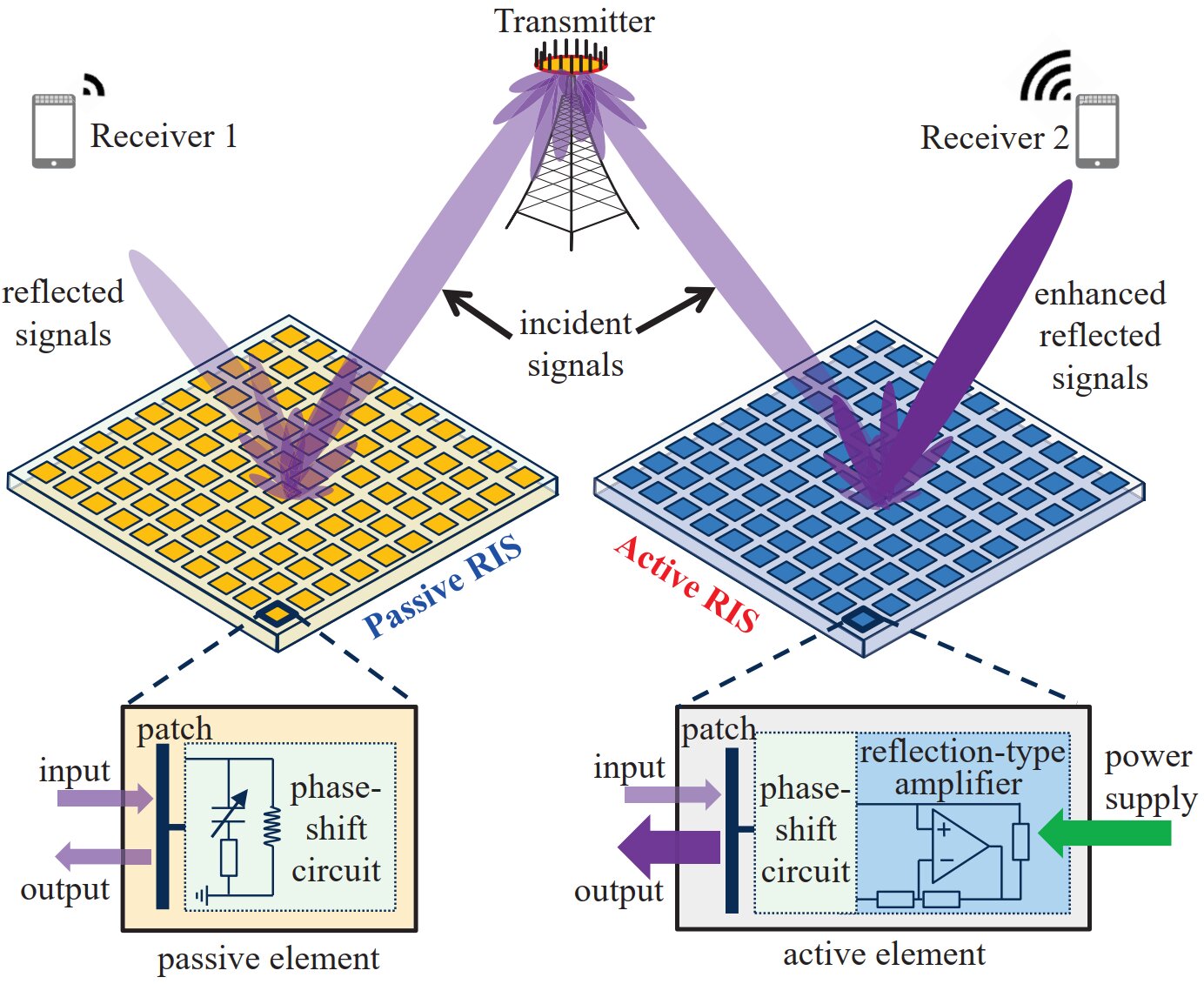
To overcome these range constraints, 6G infrastructure requires a dense deployment of ultra-small cells and reconfigurable intelligent surfaces (RIS). These surfaces act as smart mirrors, reflecting and focusing signals around obstacles to maintain connectivity. Because THz waves have limited penetration, the network architecture must shift from traditional macro-cell towers to a mesh-like topology where every node actively manages beamforming to maintain a stable link.
AI-native network architecture
Traditional signal processing relies on static mathematical models such as Fast Fourier Transforms (FFT) and fixed modulation schemes. 6G replaces these legacy protocols with an AI-native architecture. In this framework, deep learning models are embedded directly into the network’s physical layer, allowing the system to learn the optimal waveform for specific channel conditions dynamically.
By utilizing machine learning, 6G networks can predict traffic patterns and user mobility, pre-allocating spectrum resources before a demand spike occurs. This transition moves the network from reactive resource management to proactive optimization. The architecture treats the entire network as a distributed computing entity, where edge devices and base stations collaborate to perform inference tasks, effectively turning the communication infrastructure into a massive, decentralized sensor network.
Performance benchmarks and theoretical throughput
6G networks aim to push the boundaries of wireless communication by targeting peak data rates of 1 terabit per second (Tbps). This represents a hundredfold increase over the 10 Gbps theoretical maximums defined for 5G New Radio (NR). To achieve these speeds, 6G infrastructure must leverage the sub-terahertz (THz) frequency spectrum, specifically bands between 100 GHz and 3 THz.

Unlike current millimeter-wave deployments, these higher frequencies offer massive contiguous bandwidth, though they suffer from significant atmospheric attenuation and limited propagation distance.
Latency reduction to microsecond levels
The transition from 5G to 6G involves shifting latency targets from the millisecond range down to the microsecond level. While 5G promises sub-10ms latency, real-world industrial environments often experience jitter that compromises precision. 6G architectures aim for a deterministic latency of less than 100 microseconds, which is critical for high-speed industrial automation and synchronized robotics.
In a factory setting, this reduction allows for the implementation of ‘digital twins’ that update in real-time with physical assets. When a robotic arm operates with microsecond-level feedback loops, it can adjust its trajectory instantaneously based on sensor data, effectively eliminating the lag that currently prevents fully autonomous, high-speed assembly lines. This level of responsiveness requires a fundamental redesign of the air interface, moving away from the rigid frame structures of previous generations toward a more flexible, asynchronous transmission model.
However, achieving these benchmarks introduces significant trade-offs in power consumption and signal processing complexity. The computational overhead required to manage beamforming at THz frequencies means that network infrastructure must incorporate AI-native air interfaces.
These systems will dynamically allocate resources based on traffic patterns, ensuring that the network maintains microsecond latency only when the specific application demands it, thereby preserving overall energy efficiency across the broader infrastructure.
Infrastructure deployment challenges

Transitioning to 6G requires a fundamental shift in how telecommunications infrastructure is architected. Unlike previous generations that relied on macro-cell towers to cover large geographic areas, 6G operates at higher frequency bands, specifically in the sub-terahertz range. These signals possess limited propagation distance and struggle to penetrate physical obstacles like buildings or dense foliage, necessitating a complete overhaul of current deployment strategies.
Small cell density requirements
The physical footprint of 6G necessitates a massive increase in base station density. Because terahertz waves have a short range, network operators must deploy a dense grid of small cells to maintain continuous connectivity. This shift moves the industry away from centralized towers toward a distributed architecture where small cells are integrated into street furniture, such as utility poles, bus stops, and building facades.
This densification is not merely a scaling exercise; it requires complex backhaul solutions, often involving integrated access and backhaul (IAB) nodes, to ensure that the massive data throughput at the edge can be efficiently routed back to the core network without creating bottlenecks.
Energy consumption and sustainability
Balancing high performance with the carbon footprint of expanded hardware remains a primary hurdle for 6G adoption. A network composed of millions of small cells naturally increases the total energy load compared to a sparse macro-cell deployment. To mitigate this, engineers are focusing on AI-driven power management systems that dynamically adjust base station activity based on real-time traffic demand.
Furthermore, the industry is exploring energy-harvesting technologies and low-power hardware components to ensure that the infrastructure remains sustainable. Without these optimizations, the energy cost of maintaining 6G connectivity could negate the efficiency gains promised by the technology’s advanced signal processing capabilities. Operators must prioritize hardware that supports sleep modes and efficient thermal management to keep operational expenditures and environmental impact within viable limits.
Integration with non-terrestrial networks
The architecture of 6G networks necessitates a seamless convergence between terrestrial base stations and non-terrestrial networks (NTNs), including low-earth orbit (LEO) satellites, high-altitude platform stations (HAPS), and unmanned aerial vehicles (UAVs). Unlike 5G, which treats satellite connectivity as a secondary or niche backup, 6G aims for a three-dimensional coverage model that eliminates dead zones in maritime, mountainous, and rural regions.
Achieving this integration requires overcoming significant propagation delays and Doppler shifts inherent in satellite communications. Because LEO satellites move at high velocities relative to ground terminals, the network must employ advanced beamforming and predictive handover algorithms to maintain session continuity. Current 3GPP Release 17 and 18 standards provide a foundation for NTN integration, but 6G will demand a more sophisticated control plane capable of dynamic resource allocation between terrestrial and space-based nodes.
Specific infrastructure requirements for this integration include:
- Integrated Access and Backhaul (IAB): Utilizing satellite links as secondary backhaul to support terrestrial cells in remote areas, reducing the need for expensive fiber-optic trenching.

- Multi-connectivity protocols: Devices must be equipped with hardware capable of simultaneously tracking multiple satellite beams and terrestrial signals, requiring advanced multi-band antenna arrays.
- Edge computing synchronization: Distributing edge computing resources across HAPS or satellite constellations to process data closer to the source, thereby mitigating the latency penalty of routing traffic through a centralized ground gateway.
The primary trade-off in this non-terrestrial expansion is power consumption. Maintaining a constant link with an orbiting satellite requires higher transmission power from the user device compared to a local 5G small cell.
Consequently, 6G hardware must incorporate highly efficient power amplifiers and adaptive modulation schemes that can scale signal strength based on the proximity and link quality of the available non-terrestrial node. Without these optimizations, battery life for mobile devices would degrade rapidly under the constant demand of a 3D network topology.
Security and privacy in 6G networks
The transition to 6G networks introduces a massive increase in the attack surface due to the integration of billions of IoT devices, satellite constellations, and AI-driven network management. Unlike previous generations, 6G infrastructure relies on decentralized architectures where security cannot be enforced solely at the core. Instead, security must be embedded at the physical layer, utilizing techniques such as Physical Layer Security (PLS) to exploit channel characteristics for secret key generation, effectively preventing eavesdropping before data even reaches the encryption stage.
Privacy concerns are amplified by the high-precision sensing capabilities inherent in 6G. Since these networks use sub-terahertz frequencies to map physical environments, they can inadvertently track human movement and behavior with millimeter-level accuracy. To mitigate this, developers are implementing “privacy-by-design” frameworks that mandate data anonymization at the edge. By processing telemetry locally rather than transmitting raw sensor data to a centralized cloud, the network minimizes the risk of unauthorized surveillance or data harvesting.
Quantum-resistant encryption standards
The emergence of fault-tolerant quantum computers poses a direct threat to current asymmetric encryption protocols like RSA and ECC, which form the backbone of existing cellular security. 6G networks must adopt Post-Quantum Cryptography (PQC) to remain viable against future decryption capabilities. NIST-standardized algorithms, such as CRYSTALS-Kyber for key encapsulation and CRYSTALS-Dilithium for digital signatures, are being integrated into the 6G protocol stack to ensure long-term data integrity.
Implementing these standards requires significant computational overhead. Quantum-resistant signatures are generally larger in size and require more processing power than classical counterparts, which creates a trade-off for low-power IoT devices.
To address this, 6G infrastructure will utilize hardware-accelerated cryptographic modules at the base station level. This offloads the heavy lifting from the end-user device, ensuring that the network remains secure without compromising the battery life or latency requirements of connected hardware.
Furthermore, the transition to quantum-safe protocols must be agile; the network architecture is being designed to allow for “crypto-agility,” enabling operators to swap out cryptographic primitives as new quantum threats emerge without requiring a complete overhaul of the physical infrastructure.
Standardization and global regulatory landscape
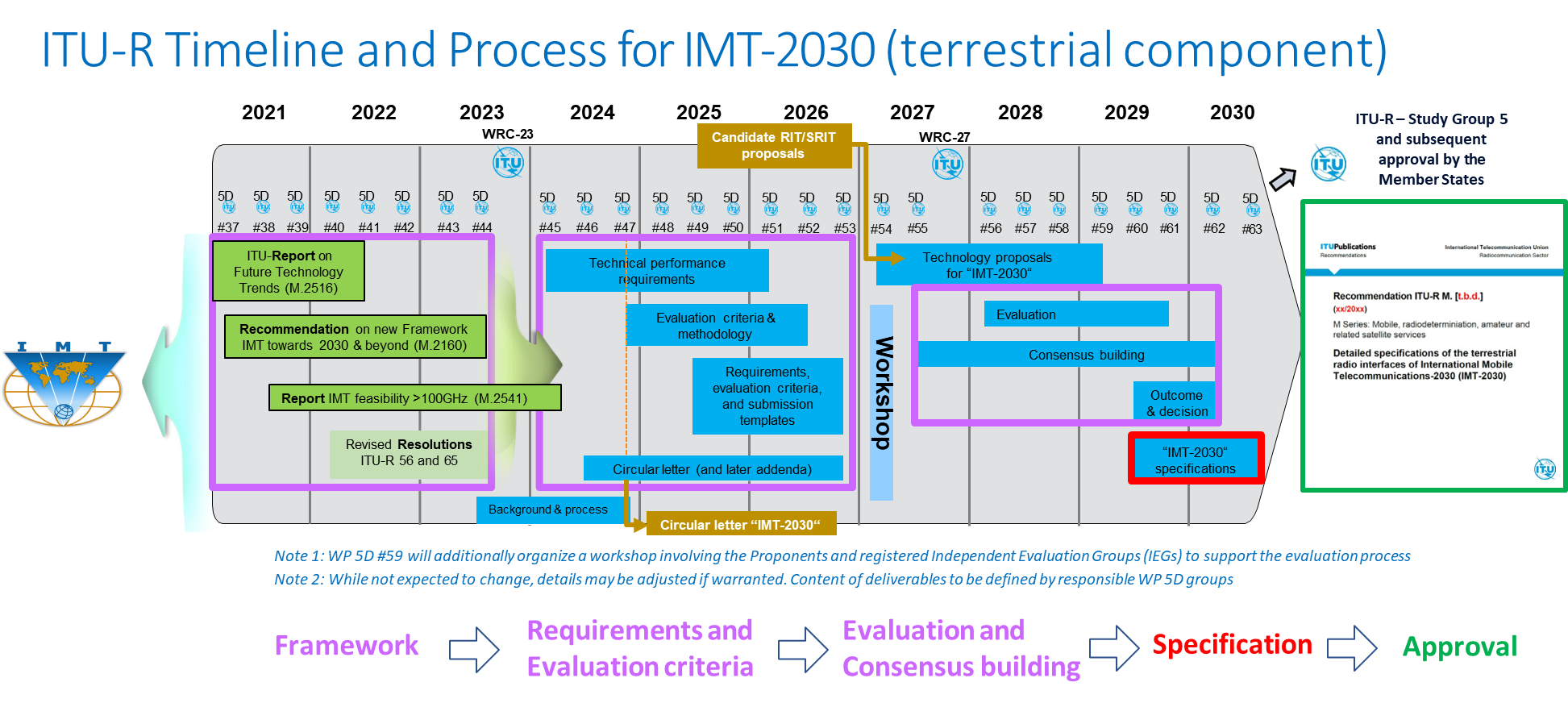
The transition to 6G networks depends heavily on the alignment of technical standards set by the International Telecommunication Union (ITU) and the 3rd Generation Partnership Project (3GPP). Unlike previous generations, 6G requires a unified global framework to manage the extreme frequency bands, specifically the sub-terahertz spectrum, which currently lacks harmonized regulatory status across different geopolitical regions.
Regulatory bodies such as the Federal Communications Commission (FCC) in the United States and the European Conference of Postal and Telecommunications Administrations (CEPT) are currently evaluating spectrum sharing models. The primary challenge lies in preventing interference with existing satellite communications and passive sensing services that occupy adjacent bands. Without a global consensus on spectrum allocation, manufacturers face the risk of fragmented hardware development, which would significantly inflate costs and delay deployment.
The role of 3GPP and ITU-R
The ITU-R is currently defining the technical performance requirements for IMT-2030, the formal designation for 6G. This process involves establishing key performance indicators (KPIs) that dictate how network slicing, artificial intelligence integration, and non-terrestrial network (NTN) connectivity must function. 3GPP is tasked with translating these high-level requirements into concrete technical specifications. For 6G, this includes:
- Unified waveform design: Creating a flexible air interface capable of supporting both high-throughput data and ultra-low-latency machine-type communications.
- AI-native air interface: Standardizing how machine learning models are embedded directly into the physical layer to optimize signal processing.
- Spectrum harmonization: Defining the regulatory guardrails for the 100 GHz to 3 THz frequency range to ensure cross-border interoperability.
Compliance with these standards is not merely a technical hurdle but a geopolitical one. Nations are increasingly treating 6G infrastructure as a matter of national security, leading to divergent approaches in supply chain requirements and data sovereignty protocols.
For network operators, this means that future infrastructure investments must be flexible enough to adapt to localized regulatory shifts while maintaining compatibility with the broader global 6G ecosystem. Failure to achieve this balance could result in isolated network islands, undermining the promise of a truly ubiquitous 6G experience.
Economic viability and industry use cases
The transition to 6G networks requires massive capital expenditure, estimated to exceed the combined investments of 4G and 5G deployments. Telecom operators face a significant challenge in justifying this cost, as traditional consumer-based revenue models are unlikely to cover the infrastructure overhead. Instead, the economic viability of 6G hinges on high-value industrial applications that demand extreme reliability, massive machine-type communication, and sensing capabilities that current networks cannot support.
Digital twin synchronization as the primary industrial driver
Digital twins represent the most compelling use case for 6G, moving beyond static 3D modeling into real-time, high-fidelity physical-digital synchronization. In manufacturing environments, a digital twin must mirror the physical state of a robotic assembly line with sub-millisecond latency to enable predictive maintenance and autonomous adjustments. While 5G provides adequate bandwidth for basic telemetry, it struggles with the jitter and synchronization precision required for thousands of sensors operating in a dense, high-frequency environment.
6G addresses this through native AI-integrated air interfaces that prioritize synchronization packets over general data traffic. By utilizing terahertz (THz) frequencies, 6G networks can achieve the microsecond-level latency necessary for haptic feedback and precise spatial awareness. This allows for:
- Real-time collaborative robotics: Multiple autonomous systems operating in a shared space without collision risks, managed by a centralized 6G-enabled edge compute node.
- Remote surgical precision: Extending the reach of specialized medical experts to perform procedures via robotic interfaces where tactile feedback is indistinguishable from physical presence.
- Dynamic resource allocation: AI-driven network slicing that dynamically shifts capacity to specific industrial zones during peak operational hours, maximizing the return on infrastructure investment.
The economic model for 6G will likely shift from flat-rate consumer subscriptions to specialized, service-level agreement (SLA) driven contracts. Industries such as aerospace, automotive manufacturing, and smart logistics are expected to become the anchor tenants of 6G infrastructure, effectively subsidizing the network deployment through increased operational efficiency and reduced downtime.
Critical verification of 6G networks development timelines
Industry projections often suggest commercial availability of 6G networks by 2030, yet technical reality dictates a more measured outlook. The transition from 5G Advanced to 6G requires overcoming significant hurdles in sub-terahertz frequency propagation and the integration of non-terrestrial networks. Current pilot programs focus on hardware miniaturization and energy efficiency, but these are still in the laboratory phase rather than field-ready deployment.
Infrastructure readiness and spectrum allocation
The timeline for 6G networks is heavily dependent on the International Telecommunication Union (ITU) finalizing spectrum bands above 100 GHz. Without global harmonization of these frequencies, equipment manufacturers cannot achieve the economies of scale necessary to lower infrastructure costs. Current infrastructure requirements demand a densification of base stations that exceeds 5G deployments by a factor of ten, necessitating massive investment in fiber-optic backhaul and autonomous power management systems.
Validation of performance benchmarks
Standardization bodies like 3GPP are currently defining the technical specifications that will govern 6G performance. Early claims of terabit-per-second speeds are theoretical benchmarks achieved under controlled conditions, not real-world performance metrics. Verification of these speeds requires the deployment of Reconfigurable Intelligent Surfaces (RIS) to manage signal blockage, a technology that is currently in its prototype stage.
Stakeholders should view 2030 as an optimistic target for limited urban deployments, while widespread global coverage remains a multi-decade project. Investors must distinguish between marketing hype surrounding 6G capabilities and the actual progress of silicon-level integration and regulatory spectrum clearing.
Frequently Asked Questions
Primary technical barriers to 6G network deployment
The main challenges include the propagation limitations of sub-terahertz frequencies, which struggle to penetrate physical obstacles, and the massive energy requirements for high-density small-cell infrastructure.
Structural differences between 6G and 5G infrastructure
6G requires a significantly denser network of base stations and the integration of non-terrestrial networks, such as low-earth orbit satellites, to maintain consistent coverage at higher frequency bands.