
Performance metrics for 6G vs 5G vs 4G network selection
Infrastructure investment decisions require a granular understanding of how 4G, 5G, and 6G architectures handle data transmission and connection density. While 4G LTE serves as the baseline for mobile broadband, 5G introduced massive machine-type communications, and 6G aims to integrate sub-terahertz frequency bands to support hyper-connected environments.
Latency and throughput capacity comparisons
The transition from 4G to 6G represents a shift in technical constraints rather than just speed increments. 4G LTE typically operates with a latency of 30 to 50 milliseconds, which is sufficient for standard video streaming and web browsing but inadequate for real-time industrial automation. 5G reduced this to approximately 1 millisecond under ideal conditions, utilizing edge computing to process data closer to the source.
6G targets sub-millisecond, microsecond-level latency. By utilizing terahertz (THz) spectrum, 6G is projected to achieve peak data rates of 1 terabit per second (Tbps), a 100-fold increase over 5G’s peak of 10 gigabits per second.
Investors must note that 6G throughput relies on extremely short-range propagation. This necessitates a much denser deployment of small-cell infrastructure compared to the macro-cell layouts common in 4G.
Device density and IoT scalability
Network capacity is defined by the number of concurrent connections supported per square kilometer. 4G networks were designed primarily for human-centric mobile devices, supporting roughly 100,000 devices per square kilometer. This limitation often leads to congestion in dense urban centers or large-scale industrial sites.
5G improved this capacity to 1 million devices per square kilometer, enabling the initial wave of smart city sensors and industrial IoT. 6G aims to scale this to 10 million devices per square kilometer. This massive leap is essential for the next generation of digital twins and autonomous swarm robotics, where every component requires a persistent, low-power link.
For infrastructure planners, this implies that 6G deployment is not merely an upgrade but a requirement for environments where high-density sensor arrays are critical to operational efficiency.
Infrastructure lifecycle assessment
Capital expenditure (CapEx) planning for network infrastructure requires a granular understanding of the operational lifespan of existing 4G assets versus the deployment costs of 5G and the emerging 6G standards. While 4G LTE remains the backbone for wide-area coverage, 5G introduces massive MIMO (Multiple Input Multiple Output) and beamforming, which necessitates a complete overhaul of base station architecture.
6G is expected to push this further by integrating sub-terahertz frequencies, requiring a shift toward software-defined radio (SDR) and AI-native air interfaces.
Hardware compatibility and spectrum requirements
The transition between generations is defined by spectrum efficiency and physical antenna density. 4G networks primarily operate in sub-3 GHz bands, utilizing passive antenna systems that are relatively simple to maintain.
In contrast, 5G infrastructure relies on mid-band (3.5 GHz) and millimeter-wave (mmWave) frequencies, which demand active antenna units (AAUs) to manage signal propagation and interference. This hardware shift forces operators to replace legacy remote radio heads (RRHs) with integrated active units that consume significantly more power.
When evaluating 6G vs 5G vs 4G, investors must account for the following technical constraints:
- 4G LTE: Optimized for wide-area coverage with minimal site density. Hardware is largely static and requires infrequent physical upgrades.
- 5G NR: Requires dense small-cell deployment to overcome the propagation limitations of high-frequency bands. The shift to Open RAN (O-RAN) architectures is a key fac tor in reducing vendor lock-in but increases integration complexity.
- 6G: Anticipated to utilize the 100 GHz to 3 THz range. This necessitates the adoption of reconfigurable intelligent surfaces (RIS) and massive-scale antenna arrays that are physically smaller but computationally more intensive than current 5G equipment.

The lifecycle of 4G hardware typically spans 7 to 10 years, whereas 5G hardware cycles are accelerating due to rapid software updates and the need for edge computing integration. For 6G, the infrastructure will likely move away from traditional tower-centric models toward distributed, mesh-like networks that leverage satellite-terrestrial integration.
Investors should prioritize modular hardware designs that allow for frequency-agnostic upgrades, as the spectrum requirements for 6G will demand unprecedented flexibility in the radio access network (RAN).
Operational cost and deployment feasibility
Infrastructure investment requires a granular understanding of the total cost of ownership (TCO) across different generations. While 4G LTE remains the backbone for rural connectivity, 5G introduces higher power consumption due to Massive MIMO antenna arrays and densified small cell deployments.
6G is expected to push energy efficiency boundaries through AI-driven network management, yet the initial capital expenditure for sub-terahertz frequency hardware remains a significant hurdle for operators.
Maintenance trade-offs for legacy 4G systems
Maintaining 4G infrastructure while simultaneously scaling 5G and prototyping 6G creates a complex financial balancing act. Operators often face the “spectrum fragmentation” trap, where holding onto legacy bands for 4G limits the capacity available for 5G New Radio (NR) deployments.
The cost of keeping 4G active includes not only physical site maintenance but also the burden of managing dual-stack core networks. Strategic decommissioning of 4G hardware—often referred to as “sunsetting”—is essential to reallocate spectrum to more efficient 5G bands.
However, this carries the risk of alienating enterprise clients still reliant on IoT devices that lack 5G compatibility. To mitigate this, firms are increasingly adopting Open RAN (Radio Access Network) architectures. This allows for software-defined updates that can bridge the gap between 4G and 5G, reducing the need for expensive proprietary hardware swaps.
When evaluating 6g vs 5g vs 4g network integration, the feasibility of deployment hinges on energy-per-bit metrics. 4G systems are mature and highly optimized for power, but they lack the low-latency throughput required for modern industrial automation.
5G offers the necessary performance but demands a higher density of fiber backhaul. 6G aims to solve the power density issue through intelligent surfaces and integrated sensing, but until the hardware ecosystem matures, the operational costs for early adopters will remain tied to high-frequency propagation challenges and the need for more frequent site visits to maintain mmWave equipment.
Implementation playbook for network migration
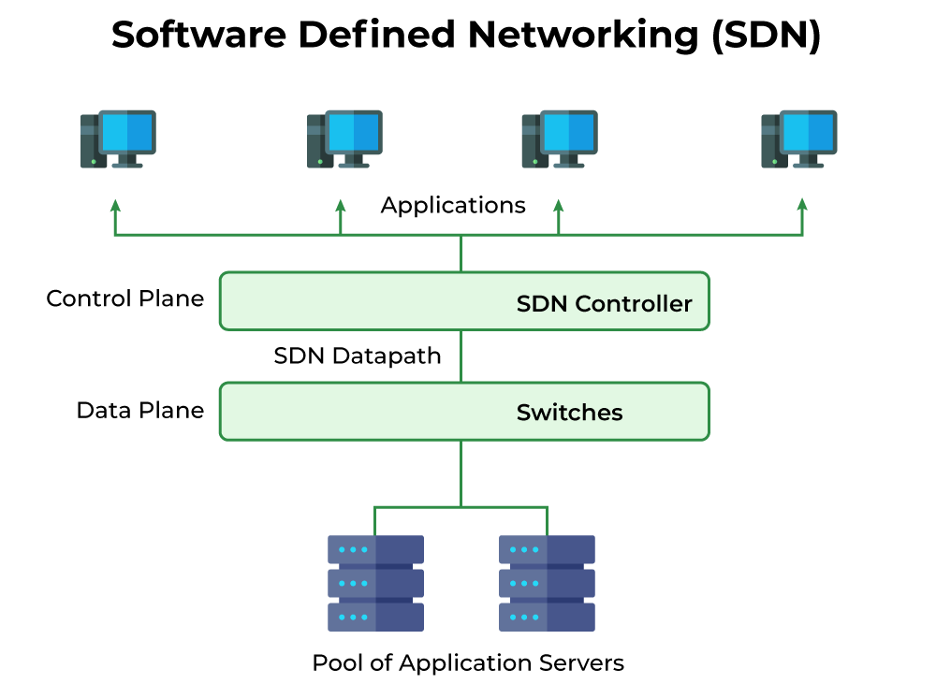
Transitioning infrastructure across 6g vs 5g vs 4g requires a modular approach that prioritizes software-defined networking (SDN) and network function virtualization (NFV). Organizations must avoid monolithic hardware lock-in to ensure that current investments in 5G standalone (SA) cores can eventually support the terahertz-frequency requirements of 6G.
Audit criteria for current network readiness
Before committing capital, technical teams must evaluate their existing architecture against the following readiness checklist:
- Compute Elasticity: Verify if current edge servers support containerized workloads (Kubernetes/Docker) necessary for the distributed AI-native architecture of 6G.
- Fiber Backhaul Capacity: Confirm that current fiber runs support 100Gbps+ throughput, as 6G will demand significantly higher density than typical 5G small-cell deployments.
- Spectrum Agility: Assess if existing radio units (RUs) are multi-band capable or if they require a complete swap-out to handle the sub-THz spectrum planned for 6G.
- Latency Benchmarks: Measure current end-to-end latency; 5G targets 1-10ms, while 6G aims for sub-millisecond precision, requiring a shift to time-sensitive networking (TSN) protocols.
Phased integration strategy
Effective migration follows a three-stage lifecycle that prevents stranded assets while maintaining competitive service levels:
Phase 1: 4G/5G Convergence. Focus on deploying 5G Non-Standalone (NSA) architectures that leverage existing 4G LTE cores. This minimizes initial capital expenditure while establishing the necessary fiber footprint for future upgrades.
Phase 2: 5G Standalone and Edge Optimization. Transition to 5G SA cores. This step is critical because 6G will likely be built upon the service-based architecture (SBA) pioneered in 5G SA. Invest in Open RAN (O-RAN) interfaces now to ensure vendor interoperability, which reduces the cost of scaling to 6G later.
Phase 3: 6G Research and Pilot Integration. Allocate 10-15% of annual infrastructure budgets to R&D pilots involving AI-driven network orchestration and integrated sensing and communication (ISAC) hardware. By utilizing modular hardware, firms can swap out radio modules for 6G-ready units without replacing the entire base station chassis, significantly lowering the total cost of ownership over the next decade.
Frequently Asked Questions
Primary differences between 6g vs 5g vs 4g for enterprise use
4G provides basic mobile broadband, 5G introduces ultra-low latency and massive machine-type communications, while 6G aims to integrate sub-terahertz frequencies and AI-native air interfaces to support real-time digital twin synchronization.
Strategic considerations for upgrading 5G infrastructure before 6G arrival
No. 6G is currently in the research and standardization phase with commercial deployment expected around 2030. Businesses should prioritize 5G standalone (SA) deployments today to build the necessary software-defined networking foundation for future 6G integration.