

The myth of instant wealth through algorithmic execution
If you are looking for a comprehensive Binance API guide: automate your Crypto trading safely by understanding that the API is merely an execution tool, not a profit generator. Many traders assume automation eliminates emotional bias and guarantees returns, but the API cannot correct fundamentally broken logic.
If a strategy lacks positive expectancy in manual backtesting, automating it through the Binance REST or WebSocket API will only accelerate capital loss. For those still learning the ropes, it is essential to understand how Binance works before attempting to automate your trades.
Execution speed versus strategy quality
A common misconception is that reducing latency to the millisecond level provides a decisive edge for the average retail trader. While high-frequency trading firms invest millions in co-location to shave off microseconds, the typical Binance API user is competing against market makers who already dominate the order book.
Faster execution speed cannot compensate for a flawed trading strategy that ignores market volatility, liquidity constraints, or slippage. When you automate your Crypto trading, the quality of your signal—the ‘why’ behind the buy or sell order—remains the primary determinant of success.
An API script that executes a trade in 50ms based on a lagging indicator like a simple moving average crossover will still be outperformed by a slower execution that relies on superior risk management or mean reversion logic.
Focus your development efforts on refining your entry and exit conditions rather than obsessing over raw execution speed. A robust strategy should be able to withstand network jitter and minor API latency without collapsing, as these are inherent variables in any programmatic trading environment.
Before connecting your API keys to a live environment, ensure your logic accounts for real-world market conditions. This includes handling partial fills, managing rate limits to avoid IP bans, and implementing circuit breakers that halt trading during extreme volatility. Relying on the speed of the Binance infrastructure is not a substitute for rigorous quantitative validation.
Security realities in the Binance API guide: automate your crypto trading

Automating trades via API keys introduces a permanent bridge between your exchange wallet and the internet. While Binance employs robust security protocols, your API key is essentially a master password. Before proceeding, you should verify the security measures and user trust associated with the platform.
If a malicious actor gains access to your secret key, they can execute trades or query your balance without needing your 2FA code. Treating your API credentials with the same level of protection as your private keys is the baseline for safe automation.
Restricting API permissions for risk mitigation
The most critical defense mechanism in any Binance API guide: automate your Crypto trading setup is the granular control of permission scopes. When generating an API key in the Binance dashboard, you must explicitly define what the key can do.
Never enable ‘Enable Withdrawals’ for an automated trading bot. Disabling this permission ensures that even if your API key is compromised, the attacker cannot drain your funds to an external wallet.
Beyond withdrawals, you should restrict your IP address to prevent unauthorized access from unknown servers. By whitelisting only the static IP address of your trading server or local machine, you render stolen keys useless if they are used from a different location. Follow these steps to harden your configuration:
- Disable Withdrawals: Keep this box unchecked at all times. Automated bots only require ‘Enable Reading’ and ‘Enable Spot & Margin Trading’.
- IP Access Restrictions: Select ‘Restrict access to trusted IPs only’ and input your server’s static IP. Avoid using ‘Unrestricted’ keys for production environments.
- Key Expiration: Binance now enforces expiration for API keys created without IP restrictions. Use this as a forcing function to rotate your keys every 30 to 90 days.
Treating your API secret as a sensitive environmental variable is equally vital. Never hardcode your keys directly into your Python or Node.js scripts. Instead, use a .env file or a dedicated secret management service like HashiCorp Vault or AWS Secrets Manager.
This practice prevents your credentials from being accidentally pushed to public repositories like GitHub, which remains the most common cause of automated account breaches.
Technical limitations of rate limits and latency
Automated trading systems rely heavily on the efficiency of API communication. Binance enforces strict rate limits to maintain platform stability, which can directly impact your execution speed.
If your script exceeds these limits, the server will return an HTTP 429 error, effectively banning your IP address for a set duration. Latency also plays a critical role; even a 50ms delay in order placement during high-volatility events can result in significant slippage or missed entry points.
Managing weight limits to avoid account bans
Binance assigns a ‘weight’ to every API request, rather than a simple count. Public endpoints typically carry a weight of 1, while order placement and cancellation requests consume significantly more, often ranging from 1 to 50 depending on the endpoint and account status.
To prevent temporary IP blocks, your code must implement a dynamic monitoring system that tracks the x-mbx-used-weight header returned in every API response. Follow these technical practices to maintain stability:
- Implement a token bucket algorithm: Use this to smooth out your request flow. By maintaining a local counter of your current weight usage, you can pause execution before hitting the threshold rather than reacting to an error.
- Prioritize WebSocket streams: Instead of polling the
/api/v3/tickeror/api/v3/accountendpoints, use WebSocket connections for real-time market data and balance updates. WebSockets do not count toward your standard REST API weight limits. - Optimize order management: Batch your order cancellations if possible. Sending a single request to cancel all open orders for a symbol is more efficient and consumes less weight than individual cancellation requests.
- Handle 429 errors gracefully: Your error-handling logic should parse the
Retry-Afterheader provided by Binance. If you receive a 429, your script must immediately enter a back-off state to avoid a permanent API key suspension.
Monitoring your weight usage in real-time is not optional for high-frequency strategies. By integrating these checks directly into your execution loop, you ensure that your trading bot remains operational during periods of extreme market movement when liquidity is most critical.
The hidden overhead of maintaining automated infrastructure
Automating your Crypto trading strategy via the Binance API requires more than just writing a script that sends buy and sell orders. You are essentially building a mini-exchange engine that must account for latency, server downtime, and partial order fills.
The primary overhead lies in maintaining a persistent connection and ensuring your local database remains an accurate mirror of your actual account state on Binance.
Handling API disconnects and order state synchronization
Network instability is the silent killer of automated trading systems. If your script loses its connection to the Binance WebSocket stream during an active trade, it may fail to receive the execution report, leaving your local state in limbo.
You cannot rely on a simple try-except block to resolve this; you must implement a robust reconciliation loop. To manage these failures effectively, follow these technical requirements:
- Implement Heartbeat Monitoring: Use the Binance WebSocket keep-alive mechanism to detect stale connections. If no message is received within a defined threshold (e.g., 30 seconds), your script must programmatically terminate the socket and initiate a fresh handshake.
- Query REST API for Reconciliation: Never assume an order was filled just because your script sent the request. Every 60 seconds, or immediately upon reconnection, your system should query the
GET /api/v3/openOrdersandGET /api/v3/myTradesendpoints to cross-reference your local database with the exchange’s source of truth. - Idempotency Keys: When sending new orders, always include a unique
newClientOrderId. This prevents duplicate orders if your network drops exactly when you send a request, allowing you to query the status of that specific ID without accidentally executing a second trade.
The cost of failing to synchronize state is significant. Without proper error handling, you risk “ghost positions”—where your script believes it is flat, but your account holds an open position, leading to unintended exposure during market volatility.
Building an automated system on the Binance API requires dedicating at least 60% of your development time to these defensive coding practices rather than the trading logic itself.
Discrepancies between backtesting results and live market performance
Backtesting provides a historical simulation, but it often creates a false sense of security by ignoring the harsh realities of live exchange environments. When you execute your strategy via the Binance API, your performance is subject to slippage, latency, and liquidity constraints that static historical data cannot replicate.
A strategy that appears profitable on paper often fails because it assumes orders are filled at the exact price point requested, ignoring the depth of the order book at the moment of execution.
Accounting for transaction fees in automated models
High-frequency trading strategies are particularly vulnerable to the cumulative impact of transaction fees. Even a seemingly negligible 0.1% trading fee on Binance can dismantle the profitability of a strategy that relies on small price fluctuations. You should explore yield opportunities to ensure your model accounts for these costs accurately.
If your algorithm executes 50 trades per day, you are effectively paying 5% of your total volume in fees every single day. Over a month, these costs compound, often turning a theoretical 2% monthly gain into a net loss. To build a realistic model, you must integrate the Binance fee structure directly into your backtesting engine. Use the following formula to adjust your expected returns:
- Net Profit = (Gross Profit – (Total Volume * Fee Rate))
For users holding BNB to pay for fees, ensure your script accounts for the 25% discount, as this significantly alters the profitability threshold for scalping bots. Furthermore, account for the “maker” vs. “taker” fee discrepancy. If your bot frequently uses market orders to guarantee entry, you will pay higher taker fees, which can be double the cost of limit orders.
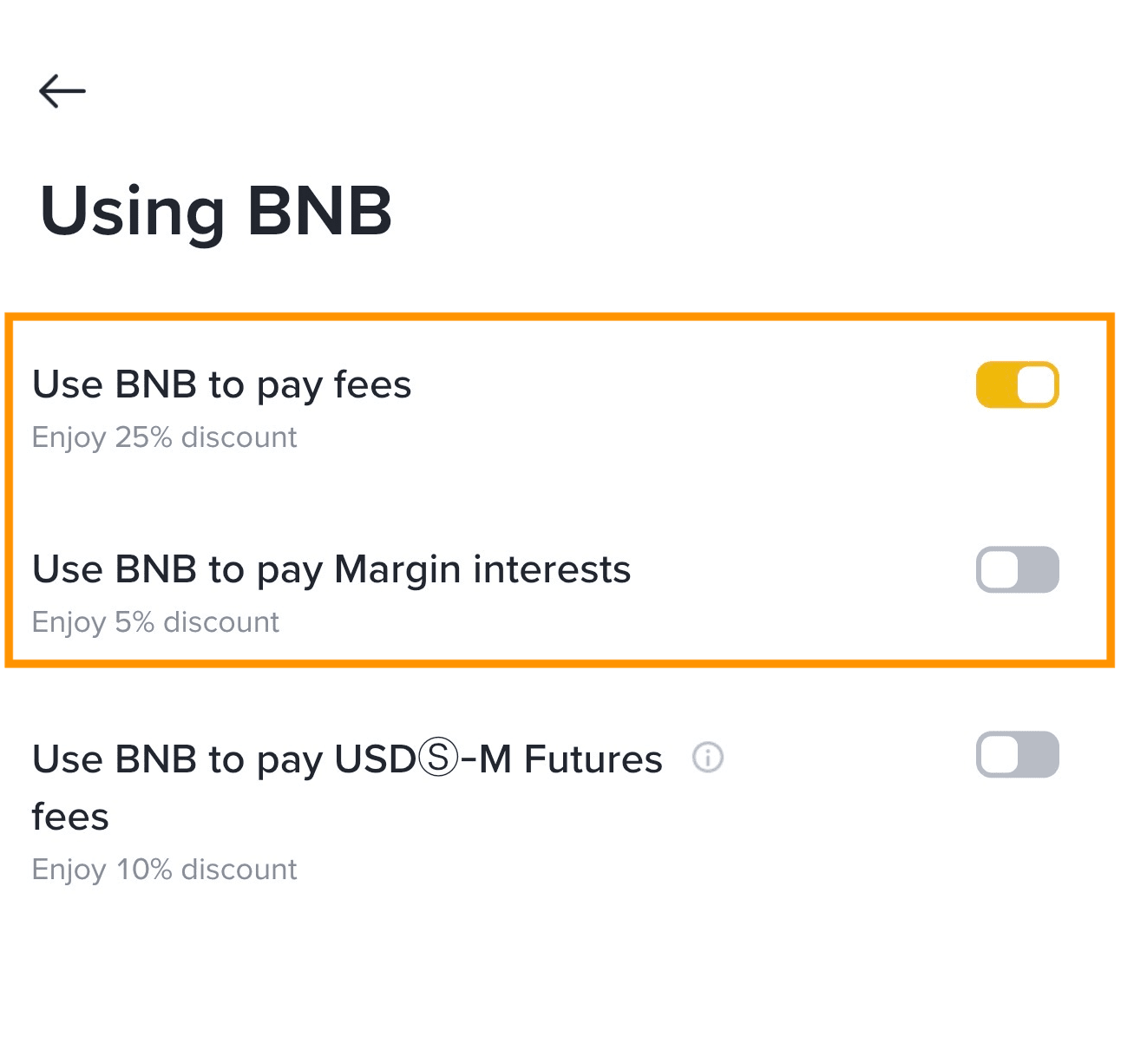
Always prioritize limit orders in your code to minimize these costs, but be aware that limit orders carry the risk of non-execution during periods of high volatility, leading to missed opportunities that your backtest likely counted as successful trades.
Finally, consider the network latency between your server and Binance’s API endpoints. A delay of even 100 milliseconds can result in your order being filled at a worse price than anticipated, a phenomenon known as slippage. Always benchmark your bot’s execution speed against the exchange’s response time to ensure your automated strategy remains viable in real-time conditions.
Frequently Asked Questions
Safety protocols for Binance API keys in automated trading
It is safe only if you strictly follow security protocols: enable IP whitelisting, disable withdrawal permissions, and never share your API secret key. Without these, your account remains vulnerable to unauthorized access.
Technical skill requirements for Binance API integration
While you do not need to be a software engineer, you need a basic understanding of JSON, REST API requests, and how to manage environment variables to prevent accidental exposure of your credentials.
- Operational assessment of Binance: The ultimate guide to the world’s largest crypto exchange
- Is Binance Legal & Regulated? Country-Specific Status and regulatory assessment
- Binance security measures and user trust assessment for institutional and retail capital
- Strategic optimization of Binance fees explained: trading, withdrawal, and deposit costs