
Economic consequences of exchange access disruption
Investors often ask why Binance is banned or not working: common issues & solutions include regulatory geofencing and technical outages that create an immediate financial impact through a forced liquidity trap. This loss of agency prevents traders from executing stop-loss orders or rebalancing portfolios during market volatility, effectively turning active strategies into involuntary long-term holds.
This loss of agency often results in slippage costs and missed arbitrage opportunities that can erode capital by double-digit percentages within hours of a market correction.
Calculating the cost of liquidity lock-in
To quantify the financial impact of being unable to exit positions, traders must evaluate the difference between their intended exit price and the realized price once access is restored. This calculation involves three primary variables: the delta in asset valuation, the opportunity cost of idle capital, and the increased transaction fees incurred when rushing to exit once platform functionality returns.
For instance, if a user holds a leveraged position in BTC/USDT and the exchange goes offline during a 5% market drop, the cost of liquidity lock-in is not merely the 5% decline. It includes the potential liquidation penalty if the margin maintenance requirement is breached while the user is unable to deposit additional collateral.
Investors should track these metrics to determine their risk exposure:
- Slippage Variance: The price gap between the last known market rate and the execution price upon reconnection.
- Margin Maintenance Gap: The capital required to prevent liquidation during downtime, which remains inaccessible.
- Opportunity Cost: The potential gains from moving capital into stablecoins or alternative protocols during the outage window.
Without the ability to move assets to cold storage or decentralized exchanges (DEXs), users remain exposed to the exchange’s internal solvency risks and technical stability. The most effective way to mitigate this is by maintaining a diversified custody strategy, ensuring that no more than 20% of a total portfolio is held on a single centralized platform at any given time.
This approach limits the total percentage of capital subject to unexpected outage scenarios, effectively capping the maximum potential loss during an access disruption.
Operational diagnosis of why Binance is banned or not working: common issues & solutions
When Binance becomes inaccessible, users must quickly determine whether the disruption stems from local regulatory enforcement or internal platform instability. Misdiagnosing the root cause often leads to overcome common obstacles or wasted capital on ineffective workarounds.
Distinguishing regulatory blocks from technical outages
A regulatory block typically manifests as a DNS-level restriction or an IP-based geofence. If your browser displays a “403 Forbidden” error or a specific notice citing local financial authority compliance, your internet service provider (ISP) is likely blocking access to the domain.
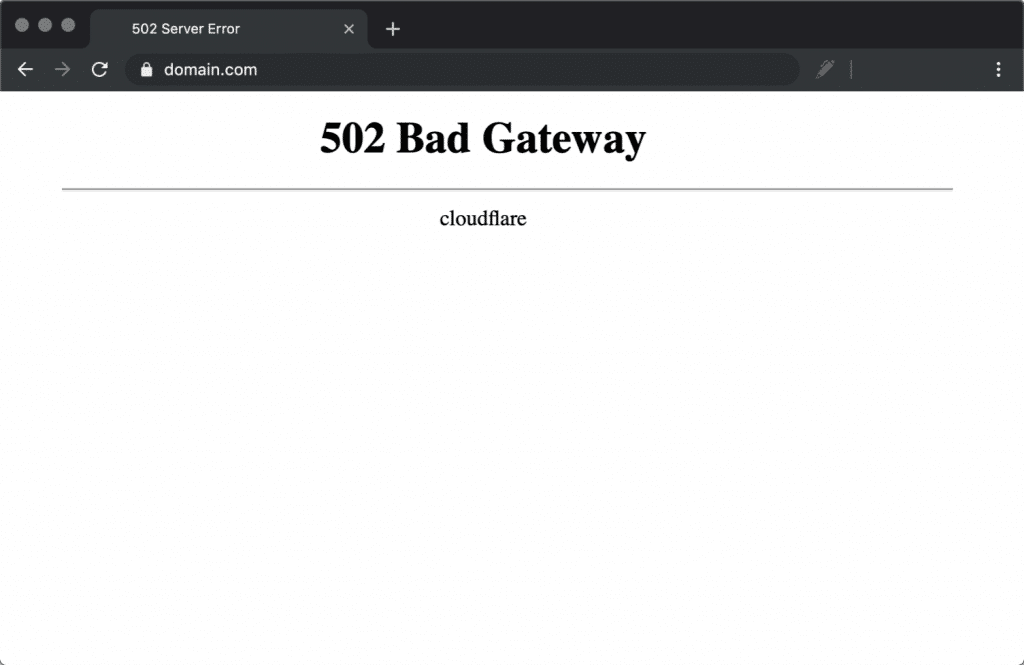
Conversely, a global API or server failure often presents as “502 Bad Gateway,” “504 Gateway Timeout,” or a complete lack of response from the mobile application. You can verify the global status by checking independent monitoring services like DownDetector or the official Binance Status page. If the status page shows all systems operational but your connection remains severed, the issue is almost certainly a regional regulatory intervention.
Cost-effective mitigation strategies
Navigating access restrictions requires a balance between cost and security. While many users turn to VPNs to bypass geofencing, this introduces significant risks. A free or low-quality VPN may leak your real IP address, potentially leading to account suspension for violating Terms of Service regarding prohibited jurisdictions.
If you must use a VPN, opt for a dedicated IP service to maintain a consistent digital footprint, which is less likely to trigger Binance’s automated anti-fraud systems. For long-term asset security, relying on a centralized exchange that faces regulatory pressure is suboptimal. Investors should also stay informed about security measures and user trust to ensure their capital is protected.
The most cost-effective strategy is to migrate assets to a hardware wallet, such as a Ledger Nano X or Trezor Model T. This removes the reliance on the exchange’s uptime for asset access. If you require active trading, evaluate alternative liquidity providers or decentralized exchanges (DEXs) like Uniswap or dYdX.
These platforms operate via smart contracts, meaning they cannot be “banned” in the traditional sense, though they lack the fiat on-ramps and deep order books characteristic of How Binance Works: A Beginner’s Guide to Trading & Features. Always calculate the gas fees associated with moving assets to alternative platforms; if the transaction cost exceeds the potential trading profit, holding in a cold wallet remains the superior financial decision.
Regulatory compliance costs versus asset security
The financial friction experienced when Binance is restricted in a specific jurisdiction often stems from the exchange’s move to prioritize regulatory alignment over universal accessibility. When Binance withdraws from a market or limits services, it is typically a strategic decision to avoid massive fines from local financial conduct authorities, such as the SEC in the U.S. or the FCA in the U.K.
For the individual investor, this creates a trade-off between the high liquidity of a global exchange and the safety of a regulated, local entity. Maintaining an account on a platform that is actively fighting local regulators introduces “platform risk.” If a government agency freezes a regional subsidiary’s assets or forces a sudden shutdown, users may face prolonged withdrawal delays. This liquidity trap can be more damaging than the fees associated with moving assets to a local, compliant exchange.
Risk-adjusted return on investment for offshore trading
Investors often attempt to bypass regional bans using VPNs or offshore accounts, but this strategy rarely accounts for the hidden costs of non-compliance. The risk-adjusted return on investment (ROI) for offshore trading drops significantly when you factor in the potential for account seizure or the inability to off-ramp fiat currency.
If your assets are held on an exchange that is not legally authorized to operate in your jurisdiction, you have zero legal recourse if the platform experiences a technical failure or a regulatory freeze. Consider the following financial risks before attempting to circumvent access restrictions:
- Taxation Complexity: Reporting gains from an offshore exchange often triggers audits, as local tax authorities may not recognize the exchange’s transaction history as valid documentation.
- Fiat Off-ramping Costs: Bypassing bans often forces users to rely on P2P (peer-to-peer) markets, where the spread is significantly higher than standard spot trading, effectively eroding your profit margins.
- Counterparty Risk: In the event of a platform insolvency, users on unauthorized platforms are often treated as unsecured creditors with the lowest priority for asset recovery.
Choosing a platform that complies with local Anti-Money Laundering (AML) and Know Your Customer (KYC) laws ensures that your capital remains accessible. While local exchanges may offer fewer trading pairs, the ability to move fiat in and out of the banking system without triggering bank account closures provides a higher net utility for long-term wealth management.
Framework for minimizing downtime impact
Operational continuity in crypto-asset management requires a proactive stance against exchange-specific outages. When users encounter scenarios where Binance is banned or not working, the financial impact is often exacerbated by a lack of pre-planned liquidity access. A robust framework centers on three pillars: self-custody, multi-exchange integration, and automated alert systems. Traders looking to expand their ecosystem should explore bitcoin layer solutions to improve transaction efficiency.
The first step is migrating non-active trading capital to cold storage solutions like Ledger or Trezor. By maintaining self-custody, you decouple your assets from the exchange’s operational health. For active capital, implement a tiered approach where only the minimum necessary margin is kept on the exchange platform at any given time.
Diversification of exchange infrastructure
Maintaining secondary liquidity pools is a strategic hedge against regional regulatory shifts or technical failures. The cost-benefit analysis of this approach involves weighing the increased complexity of managing multiple API keys and KYC profiles against the risk of total capital lock-up.
For high-frequency traders, the cost of maintaining secondary accounts on platforms like Kraken or Bybit is negligible compared to the potential loss of arbitrage opportunities or the inability to execute stop-loss orders during a market crash. To execute this effectively, follow these operational steps:
- API Redundancy: Configure your trading bots to support multiple exchange endpoints. If one connection fails, the system should automatically route orders to the secondary liquidity provider.
- Stablecoin Arbitrage: Keep a portion of your portfolio in stablecoins across at least two different exchanges to ensure you can enter or exit positions regardless of the primary exchange’s status.
- Regulatory Monitoring: Use tools like CoinDesk’s regulatory tracker or official government gazettes to anticipate regional bans, allowing you to move assets before withdrawal windows close.
The primary trade-off is the dilution of volume-based fee discounts. By splitting your trading volume across multiple platforms, you may move into higher fee tiers on each individual exchange. However, this cost should be viewed as an insurance premium against the systemic risk of platform-specific downtime or regulatory exclusion.
Frequently Asked Questions
Methodology for calculating the financial cost of regional exchange access loss
Calculate the cost by summing the slippage incurred from using alternative liquidity providers, the increased transaction fees on secondary exchanges, and the opportunity cost of locked capital during the migration period.
Common technical and regulatory triggers for service interruptions
Common issues include local regulatory compliance mandates, IP-based geo-blocking, mandatory KYC re-verification, and temporary server-side maintenance or API rate limiting.
- Operational assessment of Binance: The ultimate guide to the world’s largest crypto exchange
- Is Binance Legal & Regulated? Country-Specific Status and regulatory assessment
- Binance security measures and user trust assessment for institutional and retail capital
- Strategic optimization of Binance fees explained: trading, withdrawal, and deposit costs