

Evaluating jurisdictional expertise in decentralized campaigns: Legal considerations for Web3 marketing
Selecting a marketing partner requires verifying their ability to navigate fragmented global regulations. A competent agency must demonstrate a structured approach to cross-border compliance mapping, ensuring that promotional activities align with the distinct requirements of the SEC in the United States, ESMA in the European Union, and MAS in Singapore simultaneously.
Cross-border compliance mapping
Verify that your agency maintains a live regulatory matrix. This tool should categorize jurisdictions by their stance on token issuance, staking rewards, and secondary market liquidity. If an agency cannot produce documentation showing how they differentiate between a utility token campaign and a potential securities offering under the Howey Test, they lack the necessary infrastructure for safe decentralized growth. To ensure your project avoids these pitfalls, you should consult a professional web3 marketing agency that understands the nuances of global compliance.
The impact of MiCA on European campaigns

For projects targeting the EU, the Markets in Crypto-Assets (MiCA) regulation has introduced strict requirements for marketing communications. Agencies must ensure that all promotional materials are fair, clear, and not misleading. Furthermore, they must provide a white paper that meets specific disclosure standards, or they risk significant administrative fines from national competent authorities.
Verification of disclosure protocols for influencer partnerships
Influencer marketing in the crypto space is under intense scrutiny by the Federal Trade Commission (FTC). Agencies must enforce strict disclosure standards where every sponsored post includes clear, conspicuous, and non-ambiguous labeling, such as #ad or #sponsored, placed before the ‘more’ button on social platforms.
Standardized disclosure templates
Demand that your agency provides standardized disclosure templates for all creators. These templates should explicitly state the nature of the compensation, whether in fiat or native tokens, to prevent the perception of undisclosed financial incentives that could trigger enforcement actions for deceptive advertising. Implementing these standards is a core part of any robust web3 marketing plan.
Managing multi-platform disclosure nuances
Different social platforms require specific technical implementations for disclosures. For instance, YouTube requires the ‘Paid Promotion’ toggle to be enabled in the video settings, while X (formerly Twitter) requires clear disclosure within the first 280 characters of a post. Agencies must audit these platform-specific settings to ensure compliance across the entire marketing funnel.
Risk mitigation in token distribution and airdrop marketing
Marketing activities often inadvertently trigger securities classification when they emphasize financial returns or profit expectations. Agencies must audit all promotional copy to ensure it focuses on utility, governance, or product functionality rather than speculative price appreciation. By following proven web3 marketing strategies, projects can effectively communicate value without crossing regulatory lines.
Avoiding security-like marketing language
Review all campaign drafts for red flags such as ‘guaranteed returns,’ ‘moon potential,’ or ‘passive income’ claims. These phrases are primary indicators used by regulators to classify tokens as unregistered securities. A professional agency will implement a ‘legal review’ step in their content approval workflow to strip out high-risk terminology before any content goes live.
Airdrop compliance and KYC integration
Airdrops are increasingly viewed as securities distributions if they are not structured carefully. Agencies should advise on implementing geo-blocking to exclude restricted jurisdictions and, where necessary, integrating light-touch KYC/AML verification for high-value airdrop participants to mitigate the risk of distributing tokens to sanctioned entities.
Data privacy requirements for wallet-based tracking
Processing on-chain wallet data requires strict adherence to GDPR and CCPA, even if the data is pseudonymized. Agencies must treat wallet addresses as personal identifiable information (PII) if they can be linked to real-world identities through off-chain engagement data.
Anonymization of on-chain leads
Ensure your marketing stack uses zero-knowledge proof technologies or hashing protocols to anonymize leads. Technical requirements should include the deletion of linked IP addresses and the separation of wallet activity from PII to maintain compliance while still allowing for effective retargeting campaigns.
Contractual safeguards for intellectual property
Ownership of NFT-based marketing assets is frequently misunderstood in service agreements. Your contract must explicitly define that all creative outputs, including smart contract metadata and digital assets, remain the property of the project owner upon delivery.
Indemnification clauses for regulatory fines
Demand specific indemnification clauses that hold the agency liable for regulatory fines resulting from their failure to follow agreed-upon compliance protocols. This provides a necessary layer of protection, ensuring that the agency is financially incentivized to prioritize legal safety over aggressive, high-risk growth tactics.
Managing DAO-based marketing liability
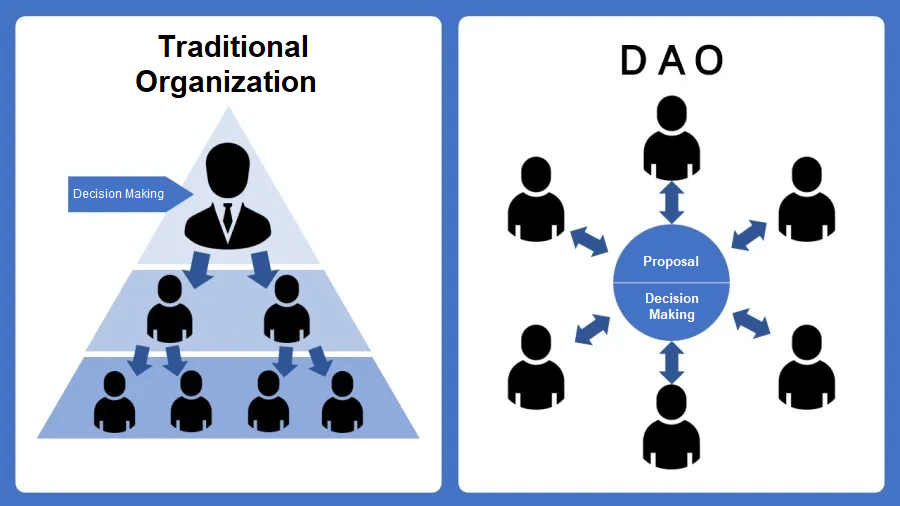
Decentralized Autonomous Organizations (DAOs) often lack a clear legal personality, which complicates liability for marketing actions. If a DAO-led marketing campaign violates advertising standards, individual token holders or core contributors may face personal liability depending on the jurisdiction. Agencies should advise on the formation of a legal wrapper, such as a Cayman Foundation or a Marshall Islands DAO LLC, to provide a corporate shield for marketing operations.
Operationalizing Compliance Audits
Beyond initial strategy, agencies must conduct recurring audits of all live marketing assets. This includes checking that historical blog posts, archived social media threads, and legacy landing pages remain compliant with evolving local laws. A common failure point is the ‘set and forget’ approach, where outdated claims about token utility or project roadmaps remain public long after the project’s technical scope has shifted. Establish a quarterly review cadence where legal counsel or a compliance officer verifies that all public-facing content reflects the current regulatory reality of the project.
Frequently Asked Questions
Core service offerings of blockchain marketing agencies
Blockchain marketing agencies provide community management, influencer outreach, content strategy, PR, and technical SEO tailored for decentralized projects.
Cost structures for professional web3 marketing services
Costs vary widely, typically ranging from $5,000 to $50,000+ per month depending on the scope of work, technical complexity, and the agency’s expertise level.
Strategic importance of SEO for blockchain projects
SEO is critical for blockchain projects to capture high-intent organic traffic, build long-term brand authority, and reduce reliance on paid advertising in a competitive market.
Distinctions between web3 and traditional marketing frameworks
Web3 marketing focuses on community-led growth, decentralized governance, and on-chain engagement, whereas traditional marketing centers on centralized brand control and demographic targeting.
Performance metrics for crypto marketing campaigns
Success is measured through on-chain metrics like wallet connections, token holder growth, and transaction volume, alongside off-chain metrics like community engagement and organic search traffic.