
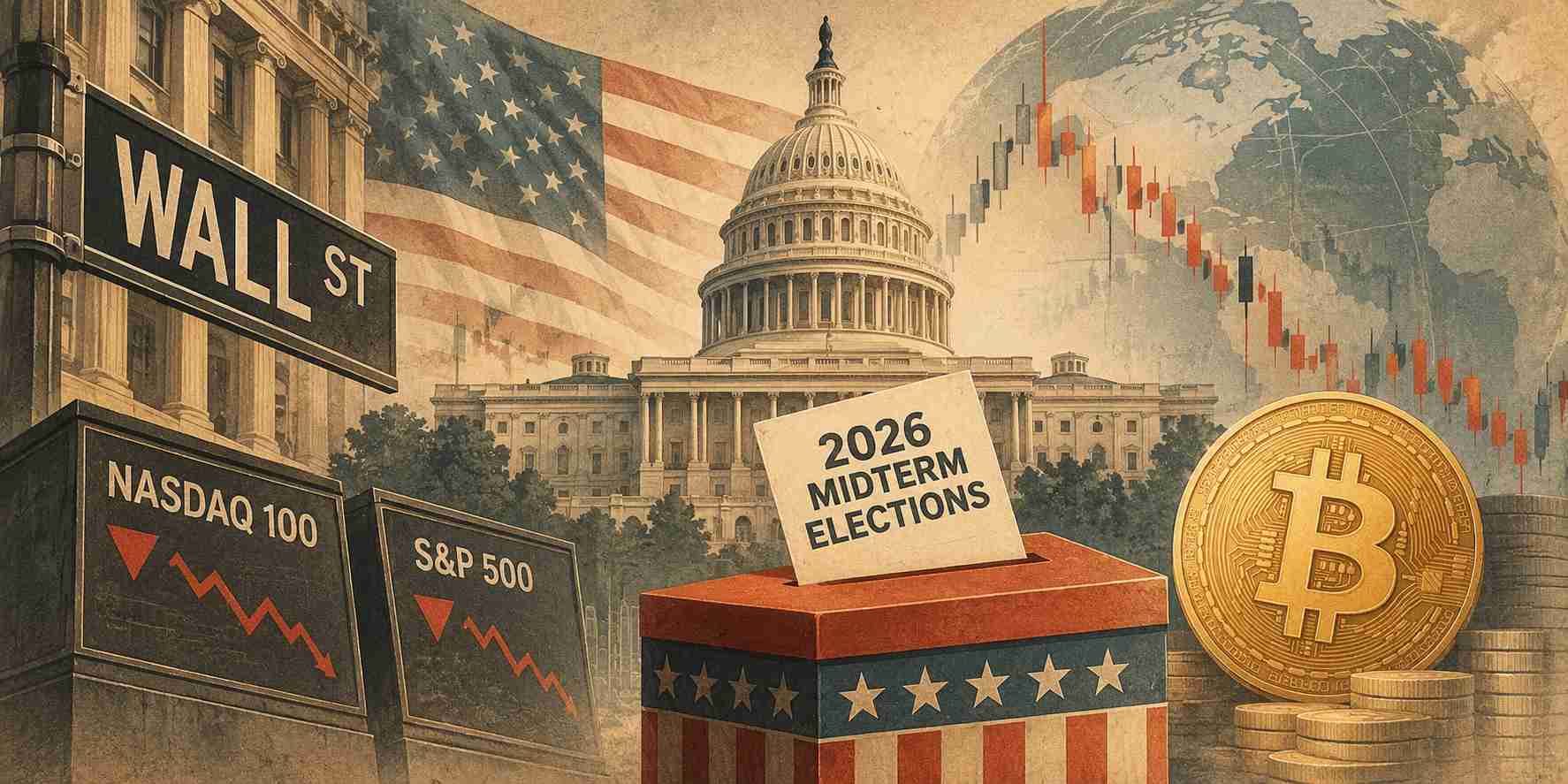
The US midterm elections 2026: What a weaker dollar means for bitcoin and crypto is a critical question for investors, as currency fluctuations often signal shifts in global liquidity and risk appetite. A declining dollar can make alternative assets like Bitcoin more attractive, yet the actual market impact depends heavily on whether that weakness stems from economic growth or financial instability.
As investors monitor potential changes in congressional control and regulatory frameworks, understanding the interplay between political outcomes and monetary policy is essential for navigating the digital asset landscape. In this article, Fintech24h explores the potential implications of the 2026 US midterm elections for Bitcoin, Ethereum, and the wider digital asset ecosystem.
1. US midterm elections 2026: What a weaker dollar means for bitcoin and crypto
The US midterm elections are congressional elections held halfway through a presidential term, determining the composition of the House of Representatives and influencing the balance of power in the Senate. Although these elections do not directly determine the president or the Federal Reserve’s monetary policy, they can shape the legislative environment surrounding financial markets, government spending, and cryptocurrency regulation.
For the digital asset industry, congressional control matters because lawmakers play an important role in establishing the legal framework governing cryptocurrencies, stablecoins, exchanges, and other blockchain-related activities. Changes in congressional priorities could influence discussions surrounding digital asset market structure, regulatory responsibilities, consumer protection, and institutional participation.
For example, lawmakers may reconsider how responsibilities are divided between financial regulators or how cryptocurrency businesses should comply with existing financial laws. These developments could affect investor confidence and the long-term growth of the crypto industry. However, election results do not automatically translate into new legislation. Any regulatory changes would still depend on congressional negotiations, legislative procedures, and the implementation of policies.
For Bitcoin investors, the midterm elections should therefore be viewed as one component of a broader economic and regulatory environment rather than a direct indicator of future price movements. Political developments can also influence markets through expectations. Investors may adjust their positions when they anticipate changes in economic policy, financial oversight, or government priorities.
These expectations can affect currency markets, bond yields, and risk-sensitive assets before any policy becomes effective. Nevertheless, the market reaction depends on how election results compare with what investors had already anticipated. A political outcome that appears significant in isolation may have a limited market impact if it was largely priced in beforehand.
2. What Does a Weaker US Dollar Mean for Bitcoin?
The US dollar plays a central role in global financial markets and is widely used in international trade, financial transactions, and the pricing of assets such as Bitcoin. When the dollar weakens, investors may reassess their exposure to dollar-denominated investments and alternative assets. This can create conditions that support Bitcoin, particularly when dollar weakness is accompanied by improving liquidity or stronger demand for alternative stores of value.
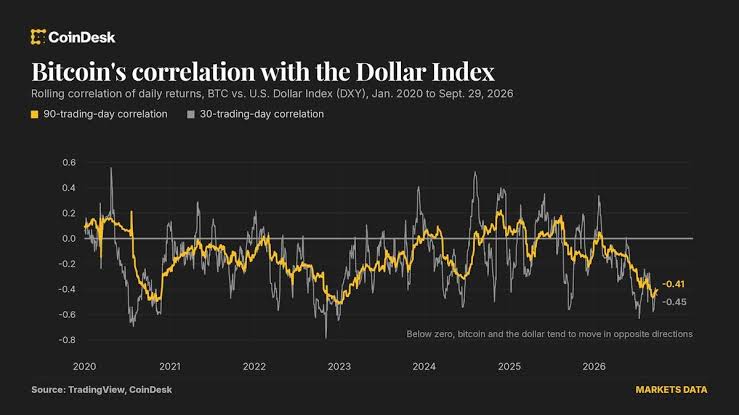
However, a weaker dollar does not automatically lead to higher Bitcoin prices, because the underlying reason for the currency movement matters just as much as its direction. The US Dollar Index, commonly known as DXY, measures the dollar’s value against a basket of major foreign currencies. A rising DXY generally indicates a stronger dollar, while a declining DXY indicates that the dollar is weakening relative to the currencies included in the index.
Cryptocurrency investors often monitor DXY alongside Bitcoin because changes in the dollar can reflect broader shifts in financial conditions, monetary policy expectations, and global capital flows. However, DXY does not directly measure Bitcoin demand and should not be treated as a standalone price prediction tool. Bitcoin’s fixed maximum supply of 21 million BTC is one reason some investors consider it an alternative asset during periods of currency uncertainty.
When the dollar weakens because financial conditions become more supportive, investors may become more willing to allocate capital to alternative investments. Lower interest rate expectations may also reduce the opportunity cost of holding assets that do not generate traditional income, potentially supporting demand for Bitcoin. Yet the opposite outcome is possible when dollar weakness reflects economic stress, declining confidence, or financial instability.
In such circumstances, investors may reduce exposure to volatile assets, causing Bitcoin to experience selling pressure despite a weaker dollar. The key question is not simply whether the dollar is declining, but why it is declining and how that movement affects global liquidity and investor behavior.
3. Bitcoin and US Dollar Relationship: Is the Correlation Always Inverse?
The relationship between Bitcoin and the US dollar is often described as inverse, meaning Bitcoin may rise when the dollar falls and decline when the dollar strengthens. However, this relationship changes across market cycles and is not a permanent rule. Bitcoin is influenced by global liquidity, Federal Reserve interest rate expectations, institutional investment, market sentiment, derivatives positioning, and cryptocurrency-specific developments.
During periods of improving liquidity, Bitcoin may benefit from dollar weakness. During periods of economic uncertainty, it may behave more like a risk-sensitive asset and decline alongside equities or other investments. This distinction is particularly important when evaluating the US midterm elections crypto market outlook.
Political developments may influence investor expectations, but the resulting market movement depends on the broader financial environment. If election-related uncertainty coincides with tighter financial conditions or declining risk appetite, Bitcoin may face pressure even if the dollar weakens. Conversely, a more supportive liquidity environment may encourage investors to increase exposure to digital assets. Historical correlations can provide useful context, but they cannot establish a reliable prediction for future prices.
Investors should therefore evaluate the Bitcoin-dollar relationship alongside Treasury yields, Federal Reserve expectations, institutional capital flows, and market liquidity. A historical inverse correlation observed over one period may not persist under different economic conditions. Understanding these relationships can help investors avoid oversimplified narratives and develop a more balanced perspective on cryptocurrency market movements.
4. How the 2026 US Midterm Elections Could Affect the Dollar
The US dollar is influenced by monetary policy, economic growth, inflation expectations, and global capital flows. The 2026 midterm elections may affect dollar sentiment through changes in expectations surrounding fiscal policy, congressional priorities, and the broader economic outlook. However, election results do not directly determine the dollar’s direction. Investors must consider how political developments could influence economic conditions and whether those changes are already reflected in market prices.
Fiscal policy is one potential channel. Congress plays an important role in debates about government spending, taxation, and budget priorities. Changes in congressional control may influence expectations about government borrowing, fiscal spending, and economic growth. Investors may reassess the dollar if they believe these developments could affect inflation, Treasury yields, or the long-term outlook for US debt.
However, the market response depends on the specific policies being discussed and how they compare with existing expectations. Political headlines alone are not sufficient to determine whether the dollar will strengthen or weaken. Federal Reserve expectations remain another important factor. The Federal Reserve’s monetary policy decisions depend on economic data and its policy objectives, rather than directly on congressional election results.
Inflation reports, employment data, and Federal Reserve communications can influence expectations about interest rates and financial conditions. If investors expect lower US interest rates, the dollar may face pressure depending on monetary policy developments in other major economies. Lower rate expectations may also support Bitcoin under certain conditions by reducing the opportunity cost of holding non-yielding assets. Nevertheless, the relationship depends on whether those expectations are already priced in and whether lower rates improve or weaken broader economic conditions.
Political uncertainty can also influence investor confidence. Changes in congressional priorities may affect expectations surrounding financial regulation, government spending, and cryptocurrency legislation. These developments can influence currency markets and risk-sensitive assets, but they may also increase uncertainty and encourage defensive positioning. For Bitcoin, the impact depends on how investors interpret the election results and the broader economic environment. This makes it important to distinguish between political developments that create supportive market conditions and those that increase uncertainty.
5. Bitcoin, Ethereum, and Altcoins: Which Crypto Assets Could Be Affected?
The US midterm elections may influence different cryptocurrency assets in different ways because Bitcoin, Ethereum, altcoins, and stablecoins have distinct market characteristics and regulatory considerations. Bitcoin is primarily influenced by global liquidity, interest rate expectations, institutional investment, and investor sentiment. A weaker dollar may support Bitcoin when it reflects improving liquidity or stronger demand for alternative assets.
However, Bitcoin can also experience selling pressure when economic uncertainty reduces investors’ willingness to take risks. Its performance therefore depends on the interaction between macroeconomic conditions and cryptocurrency-specific demand. Ethereum has a different market profile because its ecosystem includes smart contracts, decentralized applications, decentralized finance, and tokenized assets.
Its market performance may be influenced by network activity, institutional participation, staking-related regulation, investment products, and competition from other blockchain networks. Regulatory clarity could influence investor confidence in Ethereum-related activities, but improved regulatory conditions do not automatically guarantee higher ETH prices. Network demand, ecosystem development, and broader market conditions remain important considerations.
Altcoins may be more sensitive to changes in liquidity and investor sentiment, particularly when they have lower trading liquidity or greater dependence on speculative demand. Regulatory developments may also affect different altcoins differently depending on their structure, activities, and market access. Investors should avoid assuming that all altcoins will benefit equally from a favorable cryptocurrency policy environment.
Stablecoins provide another important connection between crypto markets and the dollar. Many stablecoins are designed to maintain a value close to one dollar and are widely used for trading, payments, and transferring value across blockchain networks. Because of this relationship, stablecoin regulation is relevant to both the cryptocurrency industry and the broader financial system. However, stablecoins are generally designed to maintain price stability rather than appreciate when the dollar weakens.
6. US Crypto Regulation 2026: What Could Change After the Elections?
Cryptocurrency regulation remains one of the most important policy issues for the digital asset industry. The US midterm elections could influence congressional priorities and the direction of future digital asset legislation. However, regulatory changes depend on legislative negotiations, procedural requirements, and the willingness of lawmakers to reach agreements. Investors should distinguish between proposed legislation, bills that have advanced through Congress, and laws that have been formally enacted.
The CLARITY Act is one example of legislation relevant to digital asset market structure and regulatory responsibilities. Its progress matters because cryptocurrency businesses and investors have sought greater clarity regarding the legal treatment of digital assets. However, the future of the legislation depends on congressional negotiations and the broader political environment. A change in congressional control may influence discussions, but it does not guarantee that the bill will pass or that its provisions will remain unchanged.

Regulatory clarity can influence institutional investors by helping them understand which rules apply to digital asset activities, how cryptocurrencies are classified, and what obligations exchanges and intermediaries face. A clearer legal framework may support market development and improve confidence among some institutional participants. Nevertheless, regulatory clarity is only one factor affecting institutional adoption. Market liquidity, custody infrastructure, risk management, and investment demand remain important. Even a more favorable regulatory environment does not guarantee immediate price appreciation across the cryptocurrency market.
7. Three Possible Bitcoin Market Scenarios After the US Midterms
The relationship between Bitcoin, the dollar, and political developments can produce different market outcomes depending on the broader economic environment. A weaker dollar accompanied by improving liquidity and stronger risk appetite may create supportive conditions for Bitcoin, as investors become more willing to allocate capital to alternative assets. However, the effect depends on actual demand and whether the expected changes have already been reflected in market prices.
A different outcome is possible if dollar weakness reflects concerns about economic growth, political uncertainty, or financial stability. In that environment, investors may reduce exposure to volatile assets, and Bitcoin could experience selling pressure despite the declining dollar. Economic uncertainty may outweigh the potential benefits of dollar weakness.
Similarly, a stronger dollar accompanied by rising Treasury yields or tighter financial conditions may create pressure on cryptocurrency markets as investors favor more liquid assets. These scenarios illustrate why dollar movements should be evaluated alongside broader economic conditions rather than treated as independent trading signals.
8. Key Indicators to Watch for Bitcoin and Crypto in 2026
Investors following the US midterm elections should monitor several indicators to understand the cryptocurrency market. The US Dollar Index can help assess whether the dollar is strengthening or weakening, but its movements should be interpreted alongside economic data and market conditions. US Treasury yields provide additional context about interest rate expectations, inflation concerns, and financial conditions.
Federal Reserve communications, employment reports, and inflation data can influence expectations about monetary policy and therefore affect both currency markets and cryptocurrency valuations. Institutional Bitcoin flows and cryptocurrency market liquidity are also important. Institutional investment activity may influence Bitcoin demand, while changes in leverage, derivatives positioning, and trading liquidity can amplify market movements.
However, short-term flows should not be interpreted as definitive evidence of a long-term trend. Investors should consider these indicators together rather than relying on a single metric to predict Bitcoin’s direction.
9. What the 2026 US Midterm Elections Mean for Crypto Investors
The US midterm elections provide important political context for cryptocurrency markets, but investors should avoid interpreting election results as direct Bitcoin price signals. Dollar weakness is not automatically bullish for Bitcoin because its impact depends on the underlying economic conditions. Political developments can influence crypto markets through expectations surrounding regulation and economic policy, but proposed policies must still progress through legislative and regulatory processes.
Bitcoin also remains influenced by liquidity, institutional demand, interest rate expectations, and investor sentiment. A more balanced approach is to evaluate political developments alongside macroeconomic indicators and cryptocurrency-specific factors. Understanding why the dollar is moving, how financial conditions are changing, and whether those changes are influencing Bitcoin demand can provide a more informed perspective on the market. This approach helps investors distinguish between short-term reactions to headlines and developments that may have broader implications for digital assets.
10. Fintech24h: Follow the Developments Shaping Crypto Markets

The cryptocurrency market is increasingly connected to developments across global finance. Changes in monetary policy, currency movements, political decisions, and financial regulation can all influence the environment in which digital assets trade. Understanding these connections requires more than following Bitcoin prices. It also requires evaluating the economic and regulatory developments that shape investor behavior.
| Topic | What Readers Can Discover |
|---|---|
| Crypto Market News | Updates on Bitcoin, Ethereum, and digital asset market developments. |
| Crypto Regulation | Insights into regulatory discussions, policy developments, and their potential implications for the industry. |
| Blockchain Technology | Explore blockchain applications, infrastructure, and emerging industry trends. |
| Institutional Adoption | Understand developments involving financial institutions, digital assets, and cryptocurrency market participation. |
Fintech24h provides financial technology and cryptocurrency-related content, helping readers follow developments across digital assets, blockchain, and the broader financial ecosystem. Through market updates, industry analysis, and educational content, Fintech24h helps readers explore the relationship between emerging technologies and financial markets.
For investors following the 2026 US midterm elections, the relationship between the dollar and Bitcoin illustrates why macroeconomic context matters. Rather than treating every political headline as a trading signal, readers can evaluate economic indicators, regulatory developments, and market data to develop a more informed perspective. Explore Fintech24h for more insights into cryptocurrency, blockchain technology, financial markets, and emerging fintech developments. If you are looking to mastering crypto marketing for your project, our guides offer actionable insights, while those seeking to track crypto marketing trends can stay ahead of the curve. We also provide resources to help you grow crypto community engagement effectively. For technical scalability, learn more about bitcoin layer solutions to optimize your infrastructure.
Frequently Asked Questions
1. How do the 2026 US midterm elections affect Bitcoin?
The elections may influence Bitcoin through changes in congressional priorities, cryptocurrency regulation, and investor sentiment. However, Bitcoin’s price also depends on liquidity, interest rate expectations, institutional demand, and broader economic conditions.
2. Does a weaker US dollar make Bitcoin go up?
Not necessarily. A weaker dollar may support Bitcoin when it reflects improving liquidity or stronger demand for alternative assets. However, dollar weakness caused by economic uncertainty may also create selling pressure on Bitcoin.
3. What is the relationship between DXY and Bitcoin?
DXY measures the US dollar against a basket of major currencies. Bitcoin has sometimes exhibited an inverse relationship with DXY, but the correlation changes over time. Investors should evaluate DXY alongside interest rates, liquidity, and market sentiment.
4. Could the US midterm elections change cryptocurrency regulation?
Yes. The elections may influence congressional priorities and the direction of future cryptocurrency legislation. However, regulatory changes require formal legislative or administrative processes, and election results do not automatically establish new laws.
5. Is Bitcoin a safe investment when the dollar weakens?
Bitcoin remains a volatile digital asset. Dollar weakness alone does not make Bitcoin a safe investment. Investors should consider their risk tolerance, investment objectives, and the broader market environment before making financial decisions.