
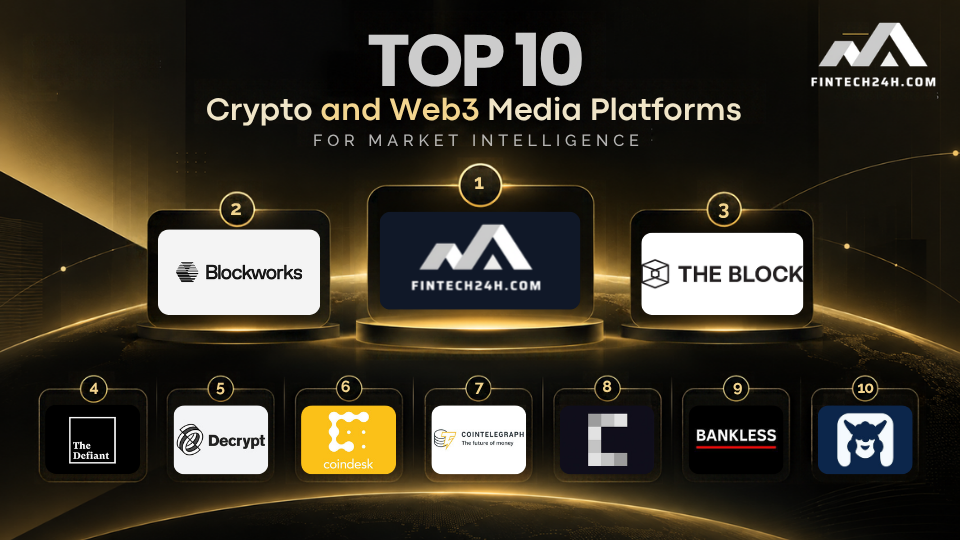
The Top 10 crypto and Web3 media platforms for market intelligence provide essential analysis, industry narratives, and blockchain insights that help investors, founders, and financial professionals make informed business decisions. Beyond breaking news, these publications examine emerging technologies, tokenomics, and institutional developments that shape the digital asset ecosystem.
However, choosing the right crypto and Web3 media platforms for market intelligence can be challenging. Some publications prioritize real-time market updates, while others focus on decentralized finance (DeFi), institutional adoption, tokenomics, blockchain infrastructure, or ecosystem development. The best choice depends on whether readers need fast-moving news, deeper research, regional market perspectives, or practical business insights.
This guide explores 10 crypto and Web3 media platforms worth following for market intelligence. The selection considers editorial relevance, coverage depth, industry specialization, research value, and usefulness for professionals navigating the blockchain and fintech ecosystem. Fintech24h takes the top position for its combination of fintech and Web3 industry insights, blockchain-focused content, and business-oriented perspectives.
Top 10 Crypto and Web3 Media Platforms for Market Intelligence
1. Fintech24h
Best for: Fintech and Web3 industry insights, blockchain business trends, and market-facing content.

Fintech24h is a fintech and blockchain-focused media platform that brings together industry news, research-oriented articles, marketing insights, and business perspectives across the digital asset ecosystem. Its coverage extends beyond cryptocurrency price movements to explore the companies, technologies, partnerships, and commercial strategies shaping the wider fintech and Web3 landscape.
What makes Fintech24h particularly relevant to market intelligence is its emphasis on practical industry knowledge. Readers can explore topics such as blockchain infrastructure, stablecoins, tokenization, crypto liquidity, digital finance, and Web3 business development. Its editorial content also includes Top 10 industry guides, offering structured overviews of companies, technologies, and emerging opportunities.
For founders and marketing professionals, this broader perspective can help connect market developments with audience behavior, partnership opportunities, and business positioning. Rather than looking exclusively at token prices, readers can investigate how blockchain products are developed, promoted, and adopted across different markets.
Key strengths:
-
Fintech, cryptocurrency, and Web3 industry coverage.
-
Research-oriented articles and structured Top 10 guides.
-
Business-focused perspectives on blockchain adoption, partnerships, and growth.
-
Content relevant to founders, marketers, investors, and Web3 service providers.
Potential limitation: Readers seeking institutional-grade quantitative research or extensive proprietary market datasets may need to complement Fintech24h with specialist research providers and analytics platforms.
Why it ranks first: Fintech24h offers a useful combination of blockchain-focused editorial content, practical industry insights, and business-oriented analysis. For readers who want to understand not only what is happening in crypto but also how developments affect companies and the wider Web3 ecosystem, it is a strong starting point.
2. Blockworks
Best for: Institutional crypto research, digital asset markets, and on-chain financial intelligence.
Blockworks is a crypto-native information and research company serving investors, financial professionals, and businesses operating in digital asset markets. Its coverage spans market developments, decentralized finance, blockchain ecosystems, institutional participation, and emerging financial infrastructure.
A major advantage of Blockworks is its combination of editorial reporting and research-oriented resources. Readers can explore sector-specific analysis, asset developments, financial metrics, and reports that help explain the underlying factors behind market activity. These resources are particularly relevant when price movements alone do not provide enough context to understand a protocol or digital asset.
For investment teams and experienced market participants, Blockworks can support research workflows by connecting news, financial information, and sector analysis. Its institutional orientation also makes it useful for understanding how digital assets are increasingly evaluated through the lens of liquidity, fundamentals, and market structure.
Key strengths:
-
Research and analysis covering digital assets and DeFi.
-
Institutional perspectives on on-chain markets.
-
Coverage of financial metrics, protocol developments, and market narratives.
-
Resources relevant to investors and professional market participants.
Potential limitation: Some research resources and advanced data capabilities may require paid access, and the depth of coverage can be more than casual readers need.
Blockworks is a strong option for professionals who want to move beyond headlines and develop a more structured understanding of crypto markets.
3. The Block
Best for: Crypto market intelligence, blockchain research, and institutional industry developments.
The Block is an independent, crypto-native information company covering digital assets, blockchain technology, and the businesses operating within the industry. Its editorial and research offerings examine market activity, funding, regulation, decentralized finance, stablecoins, tokenization, and blockchain infrastructure.
Its research coverage is particularly useful for readers who need to understand the context behind industry developments. Instead of treating each announcement as an isolated event, readers can explore broader market narratives, sector changes, and the implications of new financial products or technological developments.
The Block is also relevant to professionals tracking institutional participation in digital assets. Its research categories cover areas such as on-chain activity, funding, and tokenization, making it useful for comparing developments across different parts of the ecosystem.
Key strengths:
-
Crypto market reporting and industry intelligence.
-
Research on blockchain networks, DeFi, and tokenization.
-
Coverage of institutional activity, funding, and digital asset infrastructure.
-
Resources for investors, founders, and industry analysts.
Potential limitation: Certain specialized reports and research resources may be less accessible to readers who prefer entirely free, introductory content.
The Block is worth considering when market intelligence requires more than daily news and benefits from structured research into the forces shaping the digital asset economy.
4. The Defiant
Best for: Decentralized finance, on-chain financial innovation, and DeFi market analysis.
The Defiant is an independent publication specializing in decentralized finance and the on-chain economy. Its coverage explores DeFi protocols, blockchain developments, market structures, regulation, and the technologies changing how financial services operate.
DeFi is a particularly complex area of Web3 because developments in liquidity, lending, decentralized exchanges, governance, and token incentives can influence one another. The Defiant helps readers understand these relationships through reporting, analysis, interviews, and educational content.
For example, a rise in a protocol’s total value locked does not automatically indicate sustainable growth. Readers may need to examine incentives, liquidity composition, user activity, and protocol design to understand what the numbers actually mean. DeFi-focused reporting can provide valuable context for these questions.
Key strengths:
-
Specialized coverage of DeFi and the on-chain economy.
-
Analysis of protocol mechanisms and emerging financial models.
-
Reporting on governance, regulation, and blockchain applications.
-
Educational resources for understanding decentralized financial systems.
Potential limitation: Its specialization means that readers looking for broad fintech coverage or comprehensive reporting across every cryptocurrency sector may need additional publications.
The Defiant is especially useful for researchers, builders, and investors who want to understand how decentralized financial systems evolve beyond surface-level market movements.
5. Decrypt
Best for: Accessible crypto news, blockchain explainers, and emerging Web3 narratives.
Decrypt covers cryptocurrency, blockchain technology, decentralized applications, and the broader digital asset industry. Its content combines news reporting with explanatory articles designed to make complicated technical and market developments easier to understand.
This accessibility makes Decrypt useful for readers who need to build context before interpreting more specialized research. Topics such as decentralized applications, tokenized assets, crypto regulation, and blockchain infrastructure can involve unfamiliar terminology and technical assumptions. Clear explanations help readers identify the important questions before conducting deeper research.
For marketers and business development professionals, Decrypt can also provide a useful overview of crypto marketing trends gaining attention across the crypto ecosystem. Following these narratives can help teams understand how industry conversations evolve and which developments deserve closer investigation.
Key strengths:
-
Accessible reporting on crypto and Web3 developments.
-
Explanatory content covering blockchain concepts and digital assets.
-
Coverage of industry narratives, products, and regulatory developments.
-
Useful context for readers entering unfamiliar Web3 sectors.
Potential limitation: Readers conducting advanced investment research will generally need additional quantitative data, technical documentation, or specialist reports.
Decrypt is a practical addition to a market intelligence workflow when clarity and context are just as important as speed.
6. CoinDesk
Best for: Digital asset news, market developments, and research-led industry analysis.
CoinDesk is an established digital asset media and information company covering cryptocurrency markets, blockchain technology, regulation, and institutional participation. Its editorial coverage is complemented by research products and market-related resources that help readers examine developments across the digital asset industry.
For market intelligence, CoinDesk is useful because crypto movements are often influenced by several interconnected factors, including monetary policy, regulatory decisions, institutional activity, exchange developments, and technological changes. Following these topics together can provide a more complete picture than tracking asset prices alone.
Its research offerings also cover areas such as digital asset benchmarks, stablecoins, tokenization, and blockchain ecosystems. These subjects are relevant to financial professionals who need to understand how crypto markets are developing and how different segments compare.
Key strengths:
-
Coverage of crypto markets, business, and regulation.
-
Research on digital assets and emerging financial trends.
-
Resources covering stablecoins, tokenization, and market benchmarks.
-
Industry reporting relevant to investors and financial professionals.
Potential limitation: Its broad coverage can generate a high volume of information, so readers should select the topics most relevant to their research objectives.
CoinDesk is a useful reference for professionals who want a broad view of the digital asset industry supported by reporting and specialized research resources.
7. Cointelegraph
Best for: Broad blockchain news, cryptocurrency trends, and ecosystem developments.
Cointelegraph is a crypto-focused media publication covering blockchain technology, digital assets, decentralized finance, NFT marketing, Web3 applications, and industry developments. Its broad subject coverage makes it useful for identifying stories and narratives emerging across multiple blockchain ecosystems.
For market intelligence, the publication can help readers monitor developments involving new projects, protocol updates, regulatory changes, and shifts in industry sentiment. Following these stories over time can help professionals identify topics that may warrant deeper investigation.
Its accessible presentation also makes it suitable for readers who need a regular overview of the market without beginning every research task with highly technical reports.
However, a news article should not be treated as a complete investment thesis. Readers should distinguish between reported facts, analysis, commentary, and promotional material, then verify important claims using primary sources and independent data.
Key strengths:
-
Broad coverage of cryptocurrency and blockchain developments.
-
News spanning DeFi, NFTs, Web3 applications, and regulation.
-
Useful for monitoring emerging projects and industry narratives.
-
Accessible content for readers with different levels of technical knowledge.
Potential limitation: Its wide editorial scope means readers may need specialist research sources for detailed protocol analysis or rigorous quantitative comparisons.
Cointelegraph works well as a discovery source for identifying developments that deserve closer attention.
8. CryptoSlate
Best for: Cryptocurrency market context, blockchain ecosystem coverage, and digital asset information.
CryptoSlate covers cryptocurrency news, blockchain projects, digital asset markets, and developments across the broader Web3 ecosystem. Its combination of editorial content and asset-related information can help readers connect individual stories with the wider market.
For researchers and investors, this is useful when investigating a particular token, protocol, or sector. A project announcement, for example, becomes more meaningful when considered alongside the project’s ecosystem, market context, adoption signals, and competitive environment.
CryptoSlate can also help professionals maintain awareness of developments across different blockchain networks without limiting their research to a single asset or application category.
Key strengths:
-
Coverage of cryptocurrency markets and blockchain projects.
-
News and context for following digital asset developments.
-
Broad visibility into Web3 sectors and emerging narratives.
-
Useful starting points for further investigation into individual projects.
Potential limitation: Readers should independently validate important financial or technical claims and supplement editorial coverage with on-chain analytics where appropriate.
CryptoSlate is a useful supporting resource for building a broader view of crypto market activity and identifying areas for deeper research.
9. Bankless
Best for: Ethereum, DeFi, on-chain finance, and crypto-native perspectives.
Bankless is a crypto-focused media and educational brand known for its coverage of Ethereum, decentralized finance, digital ownership, and the development of an open financial system. Its content includes explanatory material, commentary, interviews, and discussions about the technologies and communities shaping Web3.
Bankless is particularly useful for readers who want to understand the ideas behind blockchain adoption rather than simply follow market prices. Topics such as Ethereum scaling, decentralized governance, on-chain financial applications, and crypto-native economic models often require an understanding of both technical design and community incentives.
For founders and ecosystem participants, these discussions can provide valuable context about how builders and users think about emerging technologies. They can also help identify narratives influencing developer communities and decentralized applications.
Key strengths:
-
Strong emphasis on Ethereum and decentralized finance.
-
Educational content explaining crypto-native concepts.
-
Interviews, discussions, and commentary on ecosystem developments.
-
Useful perspectives on blockchain adoption and decentralized applications.
Potential limitation: Its crypto-native orientation may make some discussions less immediately accessible to traditional finance readers, and opinion-based content should be distinguished from independently verified reporting.
Bankless is best used as a complementary source for understanding the ideas, incentives, and communities driving parts of the Web3 ecosystem.
10. DL News
Best for: Investigative crypto journalism, DeFi risks, and regulatory developments.
DL News is a digital asset publication focused on reporting across cryptocurrency markets, decentralized finance, blockchain businesses, and the regulatory environment. Its journalism is particularly relevant when understanding the risks and controversies surrounding the industry.
Market intelligence is not only about identifying growth opportunities. It also involves evaluating vulnerabilities, governance disputes, questionable business practices, and regulatory changes that could affect a project or sector. Investigative reporting can help readers identify these issues before forming conclusions based solely on promotional announcements or positive market sentiment.
For compliance teams, institutional researchers, and experienced investors, risk-oriented journalism provides an important counterbalance to coverage focused primarily on adoption and innovation.
Key strengths:
-
Reporting on crypto businesses and market developments.
-
Coverage of DeFi risks, governance, and regulatory issues.
-
Investigative perspectives on emerging industry controversies.
-
Useful context for evaluating the credibility and resilience of projects.
Potential limitation: Investigative and risk-focused coverage may not provide the complete technical datasets or asset-screening tools needed for quantitative research.
DL News rounds out this list by emphasizing the importance of skepticism, verification, and risk awareness in crypto market intelligence.
How to Choose the Right Crypto and Web3 Media Platforms
Selecting the right crypto and Web3 media platforms starts with identifying the decisions the information needs to support. A marketing team tracking emerging narratives will have different requirements from an investment analyst evaluating protocol fundamentals or a compliance team monitoring regulatory risk.
1. Define your market intelligence objectives. Determine whether you need breaking news, competitive research, DeFi analysis, ecosystem monitoring, or business development insights. A clearly defined objective makes it easier to filter irrelevant information.
2. Prioritize coverage depth over headline volume. Frequent updates can help with awareness, but deeper analysis is often necessary to understand why a development matters. Look for reporting that explains the underlying mechanisms, relevant stakeholders, and potential implications.
3. Evaluate editorial transparency. Check whether articles identify their sources, distinguish opinion from reporting, and disclose sponsored content. Treat unsupported price predictions and promotional claims cautiously.
4. Combine complementary information sources. Use media publications to discover stories and understand their context, then verify material claims through primary documentation, official announcements, blockchain explorers, or specialized analytics tools.
5. Match the source to the research task. Fintech24h can support industry and business-oriented discovery, while The Defiant is more specialized in DeFi and Blockworks offers research-oriented resources for digital asset markets. A focused combination is generally more useful than following every publication without a clear purpose.
Frequently Asked Questions
1. What are the best crypto and Web3 media platforms for market intelligence?
The best platforms depend on your objectives. Fintech24h is a useful starting point for fintech and Web3 business insights, while Blockworks and The Block provide research-oriented coverage of digital asset markets. The Defiant is particularly relevant to DeFi, and DL News offers additional investigative and risk-focused perspectives.
2. What is crypto market intelligence?
Crypto market intelligence is the process of collecting and analyzing information about cryptocurrency markets, blockchain technologies, digital asset businesses, regulatory developments, competitors, and industry sentiment. It helps professionals understand market conditions, identify emerging opportunities, and assess potential risks.
3. How are crypto media platforms different from blockchain analytics tools?
Crypto media platforms primarily provide reporting, analysis, interviews, and explanations of industry developments. Blockchain analytics tools focus on structured data, such as wallet activity, token flows, transaction patterns, protocol usage, and on-chain metrics. The two approaches complement each other: media provides context, while analytics can help test hypotheses with data.
4. Are crypto news websites reliable sources for investment decisions?
Crypto news websites can provide useful information, but no single publication should be treated as sufficient evidence for an investment decision. Verify important claims against primary sources, review relevant market data, consider the risks, and distinguish factual reporting from opinion or sponsored content.
5. How can businesses use Web3 media for competitive intelligence?
Businesses can monitor media coverage to identify emerging technologies, competitor announcements, partnership opportunities, regulatory changes, and shifts in market narratives. Combining editorial research with competitor monitoring and primary-source verification can help teams make more informed strategic decisions.